Fund Management Strategies: Active vs. Passive Approaches
Explore the key differences between active and passive fund management to align your investment strategy with your financial goals.
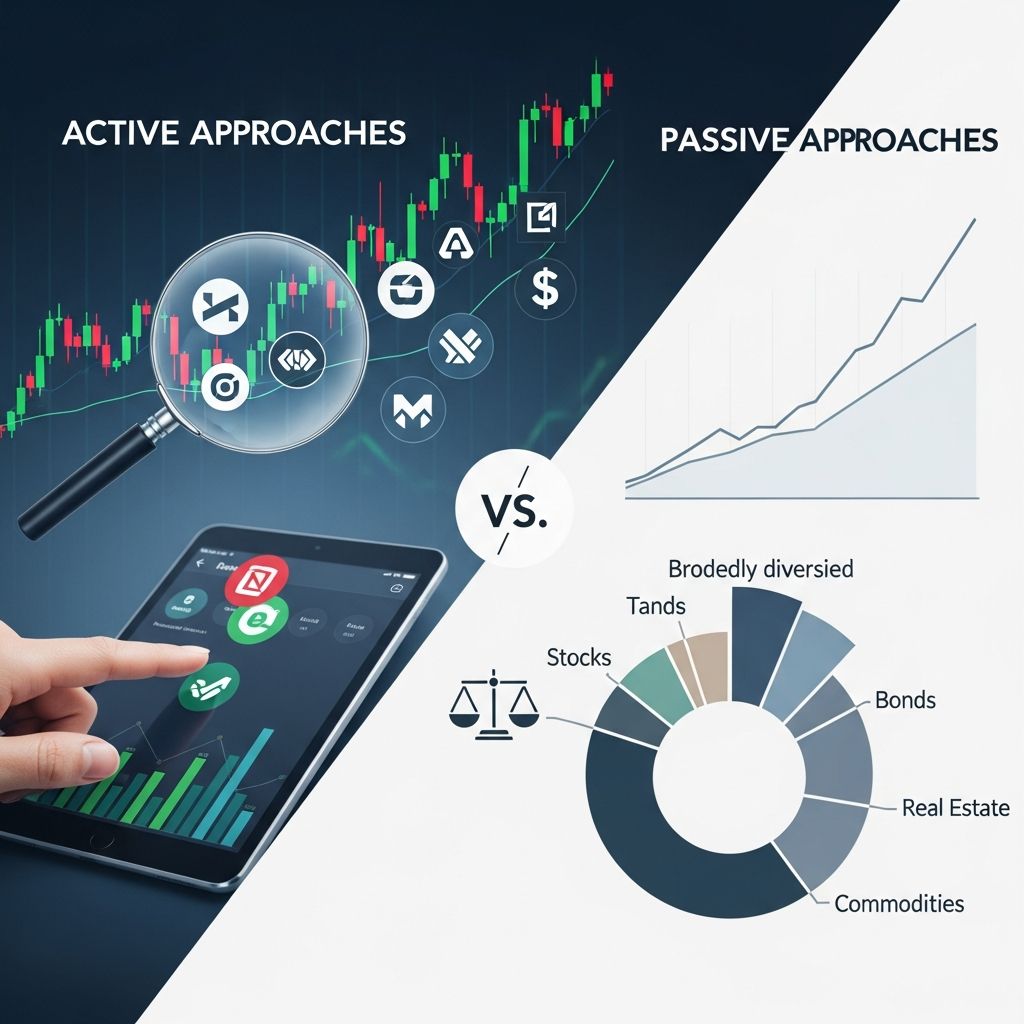
When building an investment portfolio, one of the most fundamental decisions you’ll face involves choosing between funds that are actively managed versus those managed passively. This choice significantly impacts your investment costs, potential returns, and overall financial outcomes. Both approaches have distinct characteristics, advantages, and drawbacks that merit careful consideration based on your individual circumstances.
Understanding the Core Philosophies
The investment management landscape is broadly divided into two philosophies that represent fundamentally different approaches to portfolio construction and maintenance.
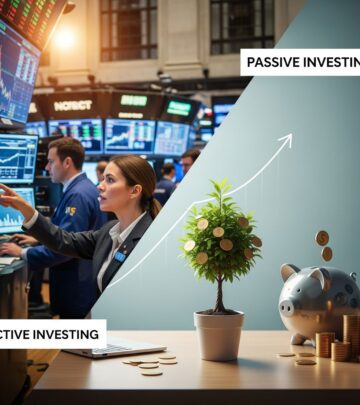
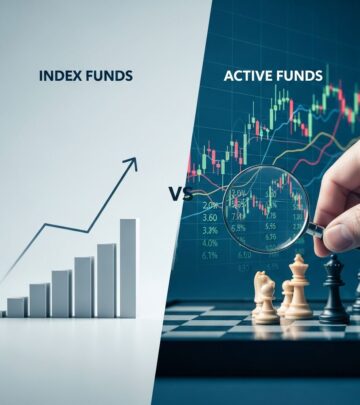
Active management relies on the expertise of professional fund managers who conduct extensive research and make frequent decisions about which securities to buy and sell. These managers attempt to outperform market benchmarks through strategic stock or bond selection, market timing, and tactical portfolio adjustments. The underlying premise is that skilled professionals can identify undervalued opportunities and navigate market cycles more effectively than the broader market.
Passive management takes a contrasting approach by seeking to replicate the performance of a specific market index rather than attempting to surpass it. Passive funds maintain a relatively static portfolio that mirrors an index’s composition, with minimal trading activity. This strategy emphasizes long-term market participation and acceptance of market-level returns rather than seeking to outperform through active selection.
Operational Mechanics and Strategic Differences
The operational distinctions between these two approaches create cascading differences in how portfolios are managed and what outcomes investors should expect.
Active Fund Operations
Active funds employ dedicated research teams that analyze companies, market trends, economic indicators, and other factors to inform investment decisions. Portfolio managers continuously evaluate holdings, identifying which investments to increase, reduce, or eliminate based on their analysis. This hands-on approach enables managers to respond to market developments and reposition portfolios when opportunities arise or risks materialize. Active managers possess the flexibility to concentrate holdings, avoid certain securities entirely, or employ hedging strategies such as short sales and options to manage risk.
Passive Fund Operations
Passive funds operate with predetermined rules that dictate portfolio composition based on index methodology. Once established, these funds require minimal ongoing analysis or decision-making. When index components change or new securities are added to an index, passive funds mechanically update their holdings to maintain alignment. This systematic, rules-based approach eliminates subjective judgment and human discretion from investment decisions.
Fee Structures and Cost Implications
Perhaps no difference between active and passive management is more consequential than the fee structure, as costs directly subtract from investor returns over time.
| Cost Factor | Active Funds | Passive Funds |
|---|---|---|
| Expense Ratios | Typically 0.5% to 2% annually | Often under 0.2%, sometimes under 0.1% |
| Transaction Costs | Higher due to frequent trading | Minimal due to low portfolio turnover |
| Research & Analysis | Significant costs passed to investors | Minimal research expenses |
| Management Fees | Higher compensation for active managers | Lower compensation reflects passive approach |
Active funds charge substantially higher fees to compensate their professional management teams, support their research infrastructure, and cover transaction costs. These expenses can amount to 1%, 2%, or occasionally even 3% of your invested assets annually. Over extended periods, such fees significantly erode returns.
Passive funds maintain remarkably low expense ratios because they require no research analysts, minimal trading activity, and limited management oversight. Many index funds and exchange-traded funds charge less than 0.2% annually, giving passive investors an enormous cost advantage that compounds substantially over decades.
This cost differential represents a critical hurdle that active managers must overcome to justify their fees. An active manager charging 1.5% annually must beat their index by at least 1.5% to provide equivalent returns to an investor in a passive fund charging 0.1%. Research demonstrates this hurdle proves difficult for most active managers to clear consistently.
Performance Analysis and Historical Outcomes
Empirical evidence provides compelling insights into how these competing strategies have performed in real-world conditions.
Active underperformance patterns have become evident in long-term studies. Academic research from major financial institutions reveals that over a 10-year period, active mutual fund managers’ returns trailed passive funds with remarkable consistency. Specifically, managers of large- and mid-cap stock funds underperformed their index counterparts 97% of the time, while small-cap fund managers lagged 77% of the time. These statistics demonstrate that the majority of active managers fail to overcome their cost disadvantage.
Consistency remains elusive among outperformers. Even the rare active managers who do beat their benchmarks in a given year rarely sustain that performance. Research indicates that managers who outperformed in one year had only a 20% probability of repeating that outperformance in the following year, and merely a 10% chance of outperforming three years consecutively. This suggests that short-term outperformance often reflects luck rather than sustainable skill.
Passive strategies deliver consistent alignment with market returns. Because passive funds mechanically track their indexes, they reliably deliver market-level performance, minus minimal fees. This predictability and consistency have made passive investing increasingly attractive to sophisticated institutional investors and individual savers alike.
Tax Efficiency Considerations
Tax consequences represent another dimension where active and passive management diverge significantly.
Passive funds generate minimal taxable events. Because passive funds trade infrequently, they distribute fewer capital gains to shareholders annually. This characteristic makes passive funds particularly tax-efficient in taxable investment accounts. The buy-and-hold methodology minimizes the realization of gains, allowing investments to compound with reduced tax drag.
Active funds may generate larger tax liabilities. The frequent trading activity inherent in active management can trigger capital gains distributions. Shareholders must recognize these gains for tax purposes, potentially creating unexpected tax bills. However, active funds become more tax-efficient when held within tax-advantaged retirement accounts such as IRAs, where trading activity doesn’t trigger immediate tax consequences.
For investors in higher tax brackets or maintaining significant investments in taxable accounts, the tax efficiency advantage of passive funds can substantially enhance after-tax returns.
Risk Profiles and Portfolio Considerations
Different risk dimensions characterize each management approach, and understanding these distinctions helps investors align their choices with their risk tolerance.
Market risk alignment in passive funds. Passive funds directly mirror the risk characteristics of their underlying indexes. If you invest in a broad market index fund, you accept market-level volatility and returns. This transparency and predictability appeal to investors comfortable accepting market performance.
Manager risk in active funds. Active funds introduce an additional risk dimension beyond market risk: the possibility that the portfolio manager underperforms the benchmark. This “manager risk” means your returns depend not just on market movements but on the manager’s skill, decision-making, and judgment. While competent managers may deliver value in specific circumstances, the statistical evidence suggests manager risk typically works against investor returns.
Downside protection possibilities. Active managers possess tools and flexibility that passive managers lack, including the ability to reduce equity exposure, employ hedging strategies, or shift to defensive positions during market downturns. This capacity can help limit losses during bear markets, though it also means missing upside during strong rallies. Passive investors accept full market participation in both directions.
Distinct Advantages of Active Management
Despite statistical evidence favoring passive approaches for most investors, active management retains distinct advantages in specific contexts.
- Flexibility and opportunism: Active managers can quickly capitalize on emerging opportunities or reposition away from deteriorating situations without constraints from index methodologies
- Customization potential: Active strategies can be tailored to specific client needs, values, or investment criteria that standard indexes don’t accommodate
- Specialized market expertise: In certain market segments—particularly illiquid securities, emerging markets, or little-known companies—active management may offer meaningful advantages
- Risk management sophistication: Advanced strategies like short selling and options strategies can provide portfolio insurance and downside protection
- Behavioral discipline: Professional managers may help emotionally-driven investors avoid panic selling or other counterproductive decisions during market turbulence
Key Advantages of Passive Management
Passive management delivers a powerful set of benefits that have driven its explosive growth.
- Cost efficiency: Dramatically lower fees preserve more capital for compound growth
- Predictable outcomes: Passive funds reliably deliver index performance, with no surprises from manager underperformance
- Transparency: Investors know exactly which securities their fund holds at any time
- Tax efficiency: Minimal trading generates fewer taxable events, enhancing after-tax returns
- Diversification simplicity: Single passive funds provide broad exposure to entire market segments or asset classes
- Reduced effort: Passive investing requires minimal ongoing research or monitoring decisions
- Consistent execution: Mechanical application of index rules eliminates human error or bias in security selection
Hybrid Approaches and Portfolio Combinations
Modern investors need not commit exclusively to either philosophy. Many sophisticated portfolios employ hybrid strategies combining active and passive elements.
Core-satellite strategies maintain a substantial passive index fund foundation (the “core”) while allocating a smaller portion to actively managed funds targeting specific opportunities or niches (the “satellites”). This approach provides the cost efficiency and reliability of passive investing while permitting active management in segments where it may add value.
Strategic allocation mixing can assign passive management to large-cap equities where information is widely available and active outperformance proves statistically difficult, while deploying active management to small-cap stocks, emerging markets, or fixed income—segments where specialized expertise may provide greater value relative to fees.
Many investment advisors recommend that even large institutional investors often benefit from using passive investments for the bulk of their holdings while strategically employing active management in specialized circumstances.
Determining Your Optimal Approach
Selecting between active and passive strategies requires honest assessment of your circumstances and preferences.
Time horizon matters significantly. Longer investment periods amplify the impact of cost differences, making passive management particularly advantageous for decades-long holding periods. Shorter timeframes may permit active managers insufficient time to overcome fee disadvantages.
Risk tolerance influences suitability. Conservative investors seeking predictable returns gravitate toward passive funds, while risk-tolerant investors comfortable with manager underperformance risk may employ active strategies.
Financial sophistication affects comfort levels. Investors comfortable with market volatility and index methodology readily adopt passive approaches, while others prefer the active management relationship with professional advisors.
Cost sensitivity proves critical. Investors focused on maximizing after-tax returns recognize the mathematical advantage of passive investing’s lower fees.
Portfolio size and complexity. Larger, more complex portfolios may benefit from active management’s flexibility and customization, while simpler portfolios function well with passive approaches.
Frequently Asked Questions
Can active managers consistently beat the market?
Research demonstrates that very few active managers beat their benchmarks consistently over extended periods. While some managers outperform in specific years, sustaining that outperformance proves remarkably difficult. The statistical evidence suggests that past outperformance provides minimal predictive value for future performance.
Are passive funds truly index funds?
While all index funds are passive, not all passive funds are traditional index funds. Some passive strategies employ rules-based approaches that differ slightly from traditional market-cap weighted indexes, though they maintain the passive philosophy of systematic, predetermined rules rather than active judgment.
Can I mix active and passive funds in my portfolio?
Absolutely. Many investors benefit from combining passive core holdings with selective active positions targeting specific opportunities or niches. This balanced approach can optimize cost efficiency while preserving flexibility where active management may add value.
Which approach performs better in bear markets?
Active managers have the potential to reduce losses during market downturns through defensive positioning and hedging strategies. However, this advantage is inconsistent and comes with the tradeoff of potentially missing upside during recoveries. Passive investors accept full market volatility in both directions.
References
- Active vs. Passive Investing: Key Differences Explained — Navy Federal Credit Union. Accessed 2026-03-31. https://www.navyfederal.org/makingcents/investing/active-vs-passive-investing.html
- Active vs. Passive Investing: Which Approach Offers Better Returns? — Wharton School, University of Pennsylvania, Executive Education. Accessed 2026-03-31. https://executiveeducation.wharton.upenn.edu/thought-leadership/wharton-wealth-management-initiative/wmi-thought-leadership/active-vs-passive-investing-which-approach-offers-better-returns/
- Active vs. Passive Investing — Financial Industry Regulatory Authority (FINRA). Accessed 2026-03-31. https://www.finra.org/investors/insights/active-passive-investing
- Active vs. Passive Investing: Differences & Strategies — NerdWallet. Accessed 2026-03-31. https://www.nerdwallet.com/investing/learn/active-vs-passive-investing
- Index funds vs. actively managed funds — Vanguard. Accessed 2026-03-31. https://investor.vanguard.com/investor-resources-education/understanding-investment-types/index-funds-vs-actively-managed-funds
Similar Articles








Read full bio of Sneha Tete