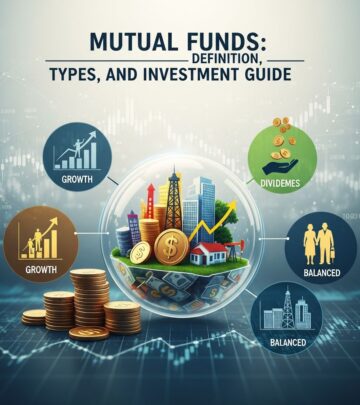
Fund: Definition, Types, and Investment Guide
Complete guide to investment funds: understanding pooled investments and portfolio management.

What Is a Fund?
A fund is a pooled investment vehicle that allows multiple investors to combine their capital to purchase securities collectively. Rather than investing individually in stocks or bonds, investors buy shares or units in a fund managed by professional portfolio managers. This collaborative approach enables individual investors to access diversified investment portfolios, professional management expertise, and economies of scale that might be difficult to achieve on their own.
The concept of funds has become central to modern investing, offering a structured way for both retail and institutional investors to build wealth while minimizing risk through diversification. Funds pool money from thousands or even millions of investors, creating a large asset base that professional managers deploy according to a specific investment strategy.
How Funds Work
The mechanics of fund operations involve several key players and processes:
- Investment Manager: The professional fund manager makes investment decisions and manages the portfolio according to the fund’s stated objectives and strategy.
- Custodian: A financial institution that holds and safeguards the fund’s assets, ensuring they remain separate from the fund company’s own assets.
- Administrator: Handles record-keeping, investor accounting, and regulatory compliance for the fund.
- Shareholders/Unit Holders: Individual or institutional investors who own shares representing their proportionate stake in the fund.
When you invest in a fund, your money is combined with contributions from other investors. The fund manager invests this pooled capital in a variety of securities based on the fund’s investment objective. As the underlying investments generate returns through dividends, interest, capital gains, or appreciation, these gains are distributed to shareholders proportionally, or reinvested to purchase additional fund units.
Types of Funds
Mutual Funds
Mutual funds are the most common type of fund available to retail investors. These are actively managed portfolios that invest in stocks, bonds, or money market instruments. The fund manager makes daily decisions about which securities to buy and sell. Mutual funds are typically open-ended, meaning they continuously issue and redeem shares at net asset value (NAV) prices calculated at the end of each trading day. Investors can buy or sell mutual fund shares directly through the fund company or through brokers.
Exchange-Traded Funds (ETFs)
Exchange-traded funds are investment funds that trade on stock exchanges like individual stocks. ETFs can be passively managed, tracking specific indices like the S&P 500, or actively managed with a fund manager making investment decisions. A key advantage of ETFs is their flexibility—they can be bought and sold throughout the trading day at market prices, unlike mutual funds which trade only at end-of-day NAV. ETFs typically have lower expense ratios and are more tax-efficient than traditional mutual funds.
Index Funds
Index funds are passively managed funds designed to replicate the performance of a specific market index. Rather than attempting to outperform the market through active management, index funds aim to match the returns of their benchmark index by holding the same securities in the same proportions. Examples include funds tracking the S&P 500, NASDAQ-100, or total bond market indices. Index funds appeal to investors seeking lower costs and consistent, market-level returns.
Hedge Funds
Hedge funds are alternative investment funds typically available only to accredited investors with substantial assets. These funds employ sophisticated strategies including short selling, leverage, derivatives, and commodities trading to generate returns that are less correlated with traditional markets. Hedge funds charge higher fees than conventional funds and often require minimum investments of $100,000 or more.
Bond Funds
Bond funds invest primarily in fixed-income securities such as government and corporate bonds. These funds appeal to investors seeking regular income and lower volatility than equity funds. Bond fund managers actively manage the portfolio, adjusting duration and credit exposure based on market conditions and interest rate expectations.
Money Market Funds
Money market funds invest in short-term, highly liquid securities such as Treasury bills, commercial paper, and certificates of deposit. These funds prioritize capital preservation and liquidity over growth, making them suitable for investors parking cash temporarily or seeking stable yields.
Sector and Specialty Funds
These funds focus on specific industries, market segments, or investment themes such as technology, healthcare, emerging markets, or sustainable investing. They allow investors to express convictions about particular sectors while maintaining professional management and diversification within that focus area.
Fund Structure and Characteristics
Open-Ended Funds
Open-ended funds continuously issue and redeem shares at net asset value. The number of shares outstanding can expand or contract based on investor demand. Investors can purchase shares directly from the fund or redeem them back to the fund at daily NAV prices.
Closed-Ended Funds
Closed-ended funds issue a fixed number of shares in an initial public offering and then trade on secondary markets like stocks. After the initial offering period closes, investors buy and sell shares through brokers at market prices, which may differ significantly from the fund’s net asset value.
Net Asset Value (NAV)
NAV represents the per-share value of a fund, calculated by dividing total fund assets minus liabilities by the number of outstanding shares. For mutual funds, NAV is calculated daily after market close and used as the price for all purchases and redemptions that day.
Key Advantages of Investing in Funds
- Diversification: Funds provide instant exposure to a diversified portfolio of securities, reducing unsystematic risk that comes with holding individual securities.
- Professional Management: Experienced fund managers conduct research, monitor investments, and make tactical allocation decisions.
- Accessibility: Funds allow individuals with modest capital to invest in professionally managed portfolios and asset classes that might otherwise be inaccessible.
- Liquidity: Most funds can be bought and sold quickly, particularly ETFs and mutual funds, providing easy access to capital.
- Cost Efficiency: Pooled resources enable funds to negotiate favorable commissions and trading costs, benefiting all shareholders.
- Regulatory Protection: Funds are subject to regulatory oversight designed to protect investor interests and ensure transparency.
- Convenience: Automatic dividend reinvestment, simplified record-keeping, and consolidated reporting make fund investing straightforward.
Fees and Expenses
Understanding fund costs is essential for evaluating investment performance. Key fees include:
- Expense Ratio: Annual operating costs expressed as a percentage of assets under management, including management fees, administrative costs, and distribution expenses.
- Load: Sales charges paid when purchasing or redeeming fund shares. Front-end loads are charged at purchase, while back-end loads apply at redemption.
- Management Fee: The portion of the expense ratio paid to the fund manager for portfolio management services.
- Transaction Costs: Costs from buying and selling securities within the fund portfolio.
Evaluating Funds
When selecting funds for an investment portfolio, consider the following factors:
Investment Objective
Ensure the fund’s stated investment objective aligns with your financial goals. Review the fund prospectus to understand what securities it invests in and what returns it targets.
Historical Performance
Examine the fund’s performance over various time periods (1-year, 3-year, 5-year, 10-year) and compare it to appropriate benchmarks. Remember that past performance does not guarantee future results.
Fund Manager Tenure
Research how long the current fund manager has managed the fund. Managers with longer tenure and consistent performance records may indicate competence and commitment.
Expense Ratios
Lower expense ratios can significantly impact long-term returns. Compare expense ratios among similar funds, as even small differences compound substantially over decades.
Asset Under Management (AUM)
While larger funds benefit from economies of scale, excessively large funds may face challenges executing their investment strategy. Consider whether fund size is appropriate for its investment approach.
Risk Profile
Assess the fund’s volatility, sector concentrations, and portfolio characteristics to ensure alignment with your risk tolerance and overall portfolio diversification needs.
Tax Considerations for Fund Investors
Fund investors should understand the tax implications of their investments. Funds may distribute capital gains from security sales and income from dividends and interest. These distributions are taxable to shareholders even if they choose to reinvest them. ETFs typically generate fewer taxable distributions than mutual funds due to their in-kind redemption mechanism, making them more tax-efficient for taxable accounts. Investors in high tax brackets may prefer tax-efficient index funds or ETFs, or consider holding funds in tax-advantaged retirement accounts.
Funds vs. Individual Stock Investing
The choice between fund investing and building a portfolio of individual stocks depends on several factors. Fund investing offers convenience, diversification, and professional management, making it suitable for most investors. Individual stock investing appeals to those with sufficient knowledge, time, and capital to research and manage their own portfolios. Many investors employ a hybrid approach, using funds as core holdings while allocating a smaller portion to individual stocks for more active management opportunities.
Frequently Asked Questions (FAQs)
Q: What is the difference between a mutual fund and an ETF?
A: Mutual funds trade at end-of-day net asset value and are typically actively managed, while ETFs trade throughout the day like stocks and can be passively or actively managed. ETFs generally have lower fees and are more tax-efficient.
Q: How often should I review my fund holdings?
A: Review your fund portfolio at least annually or when significant life changes occur. Avoid overtrading based on short-term market movements, but ensure your holdings remain aligned with your investment goals and risk tolerance.
Q: Are funds a good investment for beginners?
A: Yes, funds are excellent for beginning investors because they provide instant diversification, professional management, and require lower minimum investments than building a diversified individual stock portfolio. Start with low-cost index funds or target-date funds aligned with your goals.
Q: What does NAV mean in fund investing?
A: Net Asset Value (NAV) is the per-share price of a fund calculated by dividing total assets minus liabilities by the number of shares outstanding. It represents what each share of the fund is worth.
Q: Can I lose money investing in a fund?
A: Yes, fund values fluctuate based on underlying security performance. The only exception is money market funds, which aim to maintain stable NAV. Equity and bond funds can decline in value, though diversification within funds reduces individual security risk.
Q: What are fund loads and should I avoid them?
A: Loads are sales charges on fund purchases or redemptions. Many advisors recommend avoiding funds with loads when no-load alternatives exist, as loads directly reduce your initial investment or final proceeds without benefiting fund performance.
References
- Investment Company Institute (ICI) – Fundamentals of Mutual Funds — Investment Company Institute. 2024. https://www.icifactbook.org
- U.S. Securities and Exchange Commission (SEC) – Mutual Funds and ETFs Guide — U.S. Securities and Exchange Commission. 2024. https://www.sec.gov/investor/pubs/sec-guide-to-mutual-funds.pdf
- Vanguard Research – The Case for Index Fund Investing — Vanguard. 2023. https://investor.vanguard.com/resources/research
- Financial Regulatory Authority (FINRA) – Understanding Investment Risk — FINRA. 2024. https://www.finra.org/investors/insights/understanding-investment-risk
- American Finance Association – Active vs Passive Fund Management — Journal of Finance. 2023. https://www.afajof.org
Similar Articles








Read full bio of medha deb