Family Night Ideas For Fun, Frugal Evenings At Home
Discover creative, low-cost family night ideas that build memories, strengthen bonds, and gently teach kids about money and mindful spending.
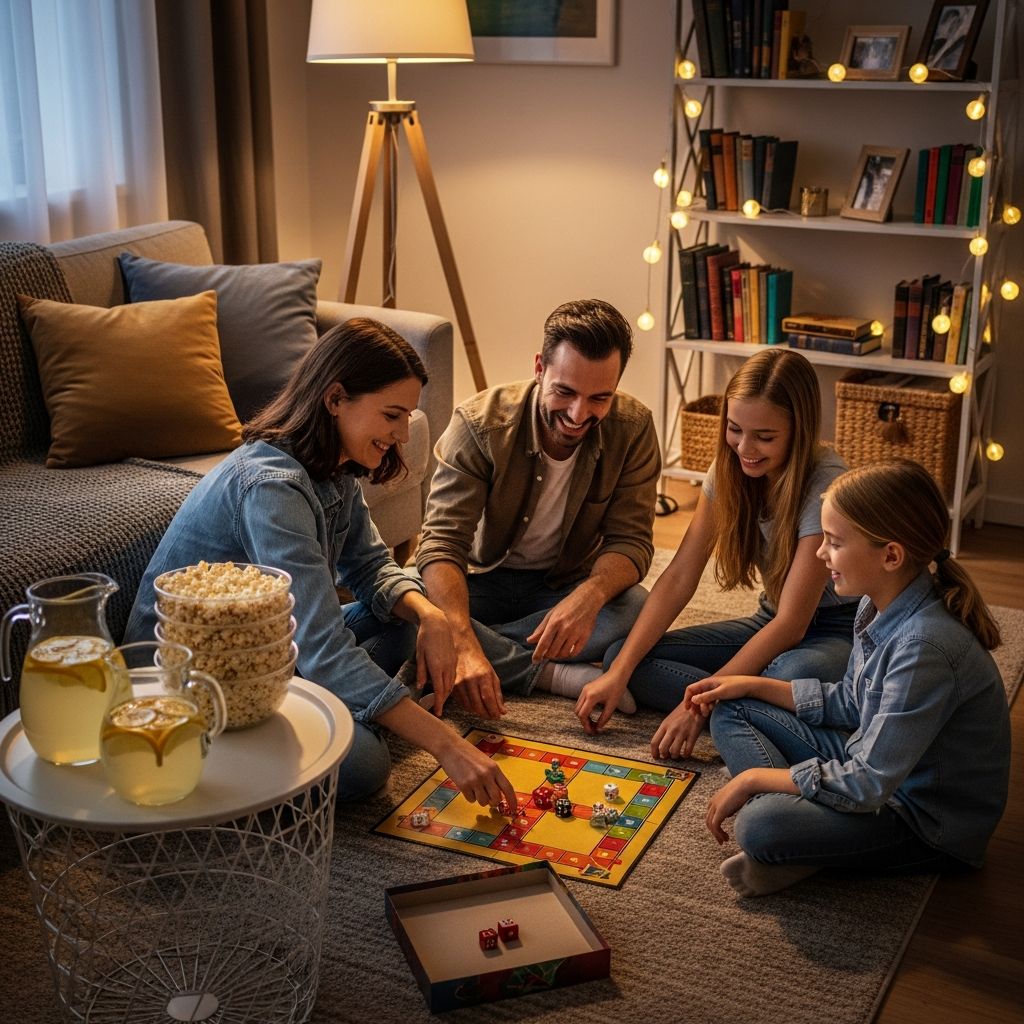
Family night does not need a big budget or fancy plans to be memorable. With a bit of creativity, you can enjoy meaningful, screen-light evenings that strengthen your relationships, support your financial goals, and give your kids positive memories of home.
Research on family routines shows that shared activities such as regular family meals and game nights are linked to better emotional well-being, academic performance, and healthy behaviors in children. Building these habits into your week can be simple, intentional, and fun.
Use these ideas as a starting point. Mix and match, adjust for your kids’ ages, and remember: the goal is connection, not perfection.
Why Family Night Matters (Especially On A Budget)
Between work, school, and activities, it is easy for evenings to pass in a blur of homework, chores, and scrolling. A standing family night helps you:
- Stay connected during busy seasons by setting aside dedicated time together.
- Model your values around money, health, and relationships in a relaxed setting.
- Create low-cost traditions that kids will remember far more than expensive outings.
- Reduce screen time and encourage face-to-face conversation and play.
Many of the ideas below naturally support financial skills like budgeting, saving, and making trade-offs, which aligns with evidence that early, practical exposure to money concepts helps children develop better financial behaviors later in life.
How To Plan A Successful Family Night
You do not need elaborate plans, but a little structure helps family night feel special and consistent.
- Pick a recurring day (for example, every Friday or two Saturdays a month) so everyone can anticipate it.
- Set expectations such as device-free time, rough start/end times, and simple ground rules.
- Rotate who chooses the activity so each family member feels involved and invested.
- Keep it budget-friendly by agreeing on low-cost or no-spend ideas most weeks.
- Prep in advance (snacks, materials, game setup) to avoid last-minute stress.
Below are practical, fun family night ideas organized by theme, with many that can double as subtle money lessons for kids.
Classic Game Night Ideas
A game night is a simple, timeless option that works for almost any age and budget.
- Board game marathon: Pull out favorites or rotate through several short games. Let each person pick one.
- Card game tournament: Play go fish, UNO-style games, or simple strategy games. Keep a friendly scoreboard.
- DIY trivia: Create your own trivia questions about family history, geography, or money basics (like “What is sales tax?”).
- Charades or Pictionary: No purchase needed. Use scrap paper to write prompts related to movies, books, or even money topics like “saving” or “budgeting.”
If you want to tie in money, you can use pretend money or points to “buy” turns, hints, or bonus cards, giving kids a playful way to practice counting and making decisions.
Family Movie Night With A Twist
Movie night can be more than everyone silently staring at a screen.
- Home theater experience: Print or handwrite “tickets” and give each person a small pretend budget to spend on snacks.
- Vote on the feature: Narrow down 3 movie options and let the family vote. Rotate who creates the shortlist.
- Pause for conversation: Briefly pause to ask age-appropriate questions: What would you do in that situation? Was that a smart money choice?
- Theme the snacks: Create a snack tray based on the movie location or characters using what you already have at home.
| Movie Night Element | Budget-Friendly Option |
|---|---|
| Tickets | Hand-drawn tickets kids design themselves |
| Snacks | Air-popped popcorn, cut fruit, homemade cookies |
| Drinks | Infused water (citrus, berries) instead of soda |
| Seating | Blanket fort, cushions, or picnic-style on the floor |
Cook Together: Family Dinner & Kitchen Challenges
Cooking together is both a life skill and an easy way to introduce kids to budgeting and meal planning.
- Build-your-own dinner bar: Think tacos, baked potatoes, or personal pizzas with toppings laid out for everyone to customize.
- Pantry challenge: As a family, plan a meal using only ingredients on hand. Talk about reducing food waste and how this saves money.
- International night: Choose a country and cook a simple dish from that culture. Look up a few fun facts together.
- Dessert lab: Bake cookies or brownies and let kids experiment with toppings or decorating.
For older kids, add a simple budget: give them a small amount (even just a few dollars) and challenge them to help plan or shop for sides or dessert within that limit.
Money-Themed Family Night Ideas
Financial literacy activities do not have to feel like schoolwork. You can turn them into games that spark curiosity and conversation.
- Price guessing game: Show kids common household items (cereal, toothpaste, electricity bill amount) and have them guess prices before revealing the real cost.
- Grocery flyer game: Using local store flyers or apps, give each child a mock budget and see who can plan a basic meal for the best price.
- Savings goal posters: Have each family member pick a small savings goal and create a progress chart or vision board.
- Needs vs. wants sorting: Cut out pictures from old magazines or draw items, then sort into “needs” and “wants” piles together. Discuss how your family prioritizes spending.
These low-pressure conversations help children associate money with planning and values, not just stress, which is consistent with recommendations from financial education experts.
Creative & Artsy Family Night Ideas
Encouraging creativity can be as simple as setting out supplies and a loose theme.
- Craft night: Use recycled materials, paper, and whatever art supplies you have to make cards, decorations, or small gifts.
- Family storybook: Staple blank pages into a booklet and write or draw a story together about your family or a money-smart superhero.
- Photo album evening: Look through digital photos and create a shared digital album or simple scrapbook.
- Talent showcase: Kids can plan short performances (songs, skits, magic tricks). Adults participate too!
You can connect these activities to frugality by focusing on using what you already own instead of buying new materials.
Active & Outdoor Family Night Ideas
Moving your body together is good for physical and mental health, and it does not have to cost anything.
- Neighborhood walk or scavenger hunt: Create a list of things to find (a red door, a bird, a particular flower) and walk together.
- Backyard camp-out: Pitch a tent outside or create an indoor “campsite” with flashlights and stories.
- Dance party: Make a family playlist and take turns choosing songs.
- Sports rotation: Pick one simple activity a week: soccer, catch, jump rope, or relay races.
To include a money angle, talk briefly about free ways to exercise compared with paid activities or memberships, reinforcing that fun and health are possible on any budget.
Learning Nights: Books, STEM & Life Skills
A “learning night” can be hands-on and playful enough that kids do not even realize they are learning.
- Library haul night: Visit the library earlier in the week and use family night to explore new books together.
- Simple science experiments: Try safe, kitchen-table activities like making a baking soda volcano or testing which objects sink or float.
- Life skills lab: Practice things like folding laundry, basic sewing, or reading a recipe together.
- Money basics mini-lesson: Briefly demonstrate how to read a pay stub, a receipt, or a simple budget, then move into a related game.
Kids benefit from learning practical life skills early, and research suggests that involving them in age-appropriate household tasks supports both competence and confidence.
Low-Cost Outing Night Ideas
Family night does not have to stay inside your home. With a small budget or even no spending, you can enjoy your community together.
- Park or playground visit: Bring homemade snacks and simple outdoor toys you already have.
- Free local events: Check your city or library calendar for concerts, story times, or community festivals.
- Museum or zoo discount evenings: Many organizations offer free or discounted admission days; plan ahead to take advantage of them.
- Window-shopping walk: Stroll through a downtown area or market and talk about how you decide when to buy versus browse.
Before you go out, agree on a small spending limit (or decide it will be a true no-spend outing) so everyone shares the same expectations.
Making Family Night A Tradition
Turning family night into a tradition is less about the specific activity and more about consistency and tone.
- Keep it simple: Overcomplicating plans makes it harder to stick with them.
- Allow flexibility: If a particular night is unusually hectic, scale down instead of canceling completely.
- Encourage participation: Ask kids what they liked and what they want to try next time.
- Celebrate small moments: Take a quick photo, say a short gratitude, or end with a family high-five.
Over time, these small, repeated rituals become part of your family story—often without requiring more than a few dollars a week.
Frequently Asked Questions (FAQs)
Q: How often should we have a family night?
A: Aim for at least once or twice a month to start. Weekly is ideal if your schedule allows, but even a regular monthly family night can create meaningful traditions.
Q: What if our kids are different ages and like different things?
A: Rotate who chooses the activity and look for options that can be adapted—like game nights with teams, cooking with simple and advanced tasks, or crafts where each person works at their own level.
Q: How do we keep family night affordable?
A: Focus on home-based activities, use what you already have, and set a small spending cap for any outings. Involve your kids in brainstorming free or low-cost ideas so they see saving as a shared team effort.
Q: How can we include money lessons without making family night feel like a class?
A: Add short, playful elements: guessing prices, using pretend money in games, or comparing the cost of home-cooked meals versus takeout. Keep the tone curious and light, and move quickly back into the fun activity.
Q: What if someone is not in the mood to participate?
A: Acknowledge their feelings, offer a lighter role (such as choosing music or being the photographer), and keep the activity short. Consistency and low pressure usually make participation easier over time.
References
- Family routines and rituals — American Academy of Pediatrics. 2018-11-13. https://publications.aap.org/pediatrics/article/142/6/e20182712/37516/Family-Routines-and-Rituals
- Media and Young Minds — American Academy of Pediatrics. 2016-11-01. https://publications.aap.org/pediatrics/article/138/5/e20162591/60684/Media-and-Young-Minds
- Advancing children’s financial well-being: A report from the Consumer Financial Protection Bureau — Consumer Financial Protection Bureau. 2016-03-01. https://files.consumerfinance.gov/f/201603_cfpb_Advancing-k-12-financial-education.pdf
- Teaching kids to cook can make them healthier eaters — Harvard T.H. Chan School of Public Health. 2014-04-01. https://www.hsph.harvard.edu/news/features/teaching-kids-to-cook-can-make-them-healthier-eaters/
- Physical Activity Guidelines for Americans, 2nd edition — U.S. Department of Health and Human Services. 2018-11-01. https://health.gov/sites/default/files/2019-09/Physical_Activity_Guidelines_2nd_edition.pdf
- Responsibilities and chores for kids — American Academy of Pediatrics / HealthyChildren.org. 2018-11-21. https://www.healthychildren.org/English/family-life/family-dynamics/Pages/Chores-and-Responsibility.aspx
Similar Articles








Read full bio of Sneha Tete