Full Debt Payoff vs. Settlement: Smart Choices
Discover whether paying off debt completely or settling for less protects your credit and finances best in tough situations.
Resolving overdue debts requires weighing options like paying the entire balance or negotiating a reduced settlement. Full repayment preserves credit integrity, while settlement offers cost savings but introduces risks like tax liabilities and prolonged negative marks on credit reports. This guide examines these paths to help you decide based on your circumstances.
Understanding Delinquent Debt Basics
Delinquent debt occurs when payments lapse, leading to charge-offs where lenders deem the amount uncollectible yet pursue recovery. These accounts harm credit scores significantly, staying visible for seven years from the initial delinquency date. Charge-offs signal risk to lenders, dropping scores by up to 100 points or more depending on overall credit health.
Collectors may then acquire these debts, seeking partial recovery. At this stage, borrowers face choices: ignore the debt, pay fully, or settle for less. Ignoring worsens outcomes with potential lawsuits, while proactive steps mitigate damage.
Advantages of Complete Debt Repayment
Paying debts fully stands out as the optimal strategy when feasible. This approach swiftly improves credit profiles, as “paid in full” notations reflect positively, aiding score recovery within roughly two years. Lenders favor this history, viewing it as reliable fulfillment of obligations.
- Accelerated Credit Repair: Full payments remove negative statuses faster, boosting eligibility for loans and favorable rates.
- No Tax Surprises: Unlike settlements, no forgiven amounts trigger IRS reporting, avoiding unexpected tax bills.
- Enhanced Lender Trust: Future applications benefit from clean records, often securing better terms.
Financial stability supports this route, especially with steady income allowing full clearance without strain.
Settlement Process Explained
Debt settlement involves negotiating with creditors or collectors to accept a lump-sum payment below the owed total, typically 20% to 60% of the balance. This suits those unable to afford full amounts, providing relief through reduction.
Debtors often save by halting payments during negotiations, building funds for settlements. Third-party firms may assist for fees, though self-negotiation proves effective and cheaper. Success hinges on debt age, creditor willingness, and borrower leverage like hardship proof.
| Settlement Range | Factors Influencing Offer |
|---|---|
| 20-40% | Older debts, proven hardship |
| 40-60% | Recent delinquencies, strong negotiation |
| Above 60% | Minimal leverage, creditor policies |
Benefits of Opting for Settlement
When full payment proves impossible, settlement delivers key upsides. Primary gain: substantial savings on principal, easing budget pressures. Processes often conclude quicker than court battles or lengthy plans, typically in weeks to months.
- Cost Reduction: Pay fractions of original sums, freeing resources for essentials.
- Avoids Bankruptcy: Less severe than filings, which linger longer on reports.
- Closure Certainty: Ends collections harassment without legal escalation.
Collectors prefer some recovery over none, making agreements viable for charged-off accounts.
Drawbacks and Risks of Settlement
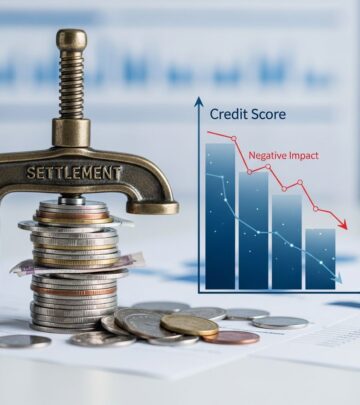
Settlement isn’t without pitfalls. Credit reports mark accounts as “settled for less,” a negative indicator lingering seven years, hindering new credit access. Scores suffer, though less than judgments or defaults.
Tax implications loom large: forgiven portions over $600 count as income, prompting 1099-C forms. A $10,000 debt settled for $4,000 could mean taxing $6,000, inflating liabilities unexpectedly. Fees from settlement services add costs, and halted payments accrue interest or penalties beforehand.
- Credit Damage: “Settled” status signals incomplete obligation.
- Tax Burden: Forgiven debt treated as earnings.
- Added Debt Risk: Delays may increase totals via fees.
Comparing Full Payoff and Settlement Side-by-Side
| Aspect | Full Payoff | Settlement |
|---|---|---|
| Credit Impact | Positive recovery | Negative mark, 7 years |
| Cost | 100% of balance | 20-60% typically |
| Taxes | None | On forgiven amount |
| Timeline | Immediate closure | Weeks to months |
| Suitability | Stable finances | Unmanageable debt |
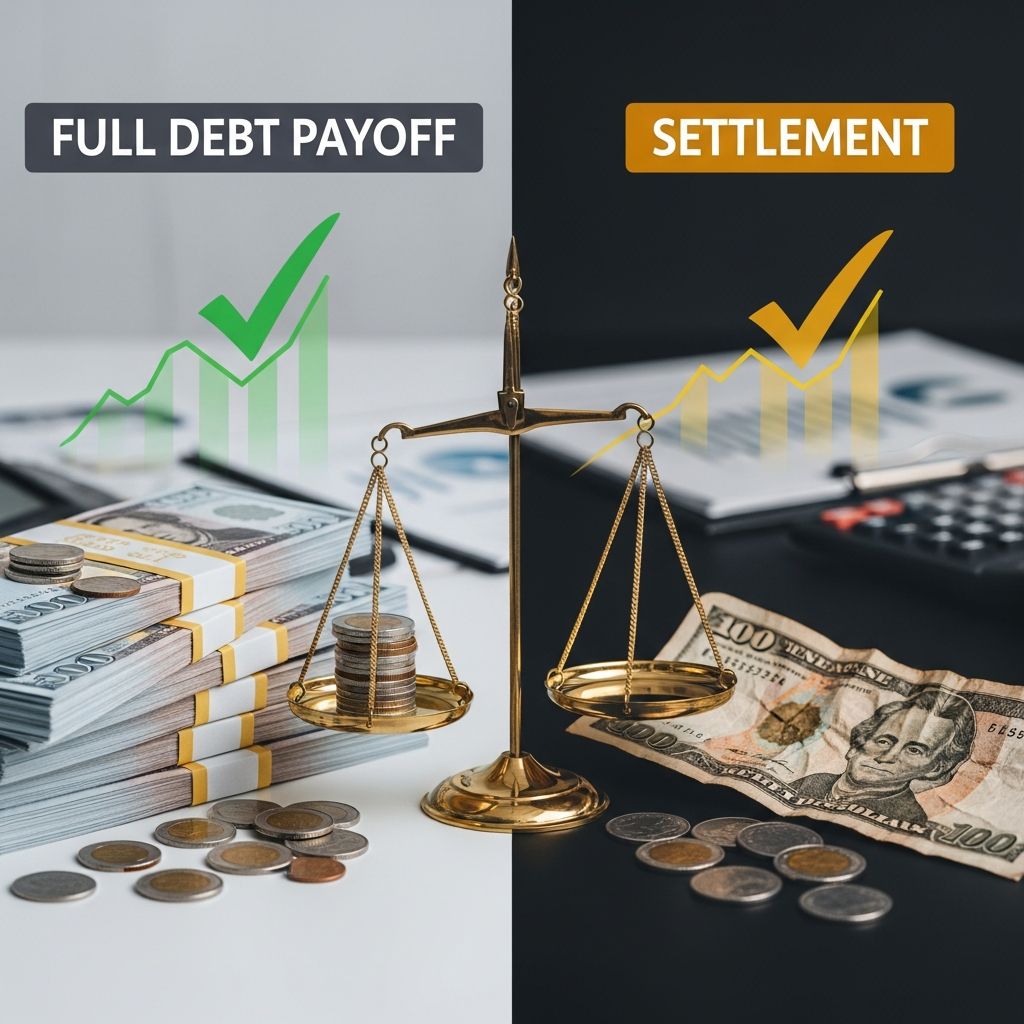
Full payoff excels for credit health; settlement prioritizes affordability.
Factors to Guide Your Decision
Assess income stability, debt totals, and goals. Stable earners favoring credit preservation should aim for full payments or plans. Overwhelmed individuals with delinquent accounts benefit from settlements to avert worse scenarios like judgments.
- Stable Income: Pursue full payoff or structured plans.
- High Delinquency Risk: Settle to reduce exposure.
- Tax Readiness: Prepare for potential IRS notices post-settlement.
Consult nonprofit counselors before committing to firms.
Alternative Debt Relief Strategies
Beyond binaries, options like payment plans spread obligations without reductions, safeguarding credit better than settlements. Nonprofit debt management merges accounts into one payment at lowered rates. Consolidation loans refinance at better terms if credit permits. Bankruptcy serves as last resort, discharging debts but scarring records longer.
Plans suit consistent payers; settlements fit desperate cases.
Steps to Negotiate Settlements Effectively
- Review Accounts: Verify balances, statuses via credit reports.
- Build Savings: Cease payments, amass lump-sum funds.
- Contact Creditors: Propose offers backed by hardship letters.
- Get Agreements Written:
- Consult Pros: Use free counseling for guidance.
Secure “paid as agreed” notations.
Patience and documentation key to favorable terms.
Long-Term Financial Rebuilding Post-Resolution
After payoff or settlement, prioritize budgets, emergency funds, and score monitoring. Dispute errors, limit inquiries, and build positive history. Tools like secured cards aid recovery. Consistent habits ensure sustained health.
Frequently Asked Questions
Does settling debt hurt credit less than defaulting?
Yes, settlement notations damage scores but less severely than unresolved delinquencies or judgments, allowing faster rebound.
Is forgiven debt always taxable?
Amounts over $600 typically trigger 1099-C; consult tax pros, especially if insolvent.
Can I settle recent debts?
Older, charged-off debts settle easier; recent ones demand strong hardship cases.
How long do settlement marks last?
Seven years from first delinquency, fading in impact over time.
Should I use settlement companies?
DIY often saves fees; vet firms via BBB, avoid upfront charges.
References
- Should You Settle Debt or Go to Court? — JG Wentworth. 2023. https://www.jgwentworth.com/resources/should-you-settle-debt-or-go-to-court
- Charge-Offs: Understanding Full Payment vs. Settlement — Debt.org. 2024. https://www.debt.org/settlement/should-i-pay-a-charge-off-in-full-or-settle/
- Is It Better to Pay Off Debt or Settle It? — Experian. 2025-01-15. https://www.experian.com/blogs/ask-experian/is-it-better-to-pay-off-bad-debt-or-to-settle-it/
- Debt Settlement Pros and Cons — InCharge Debt Solutions. 2024. https://www.incharge.org/debt-relief/debt-settlement/debt-settlement-pros-cons/
- What Is Paid in Full vs. Settlement On A Credit Report — Money Management International. 2023. https://www.moneymanagement.org/blog/paid-in-full-versus-paid-off-less-than-full-balance
Similar Articles








Read full bio of Sneha Tete