Understanding Fuel Cost Trends and Market Dynamics
Explore what drives gasoline prices and how they impact your wallet
The Foundation of Pump Prices: What Really Matters
When you pull up to a gas station, the price displayed at the pump reflects far more than simple supply and demand. The retail gasoline price consumers pay is a complex calculation involving multiple interconnected factors. The most significant determinant is crude oil pricing, which typically accounts for the largest portion of the final retail cost. However, understanding gasoline prices requires examining the full spectrum of influences that shape what you ultimately pay per gallon.
Crude oil serves as the foundation for gasoline pricing globally. As the raw material from which gasoline is refined, fluctuations in crude oil markets directly impact what refineries can charge retailers, and subsequently what retailers charge consumers. Beyond crude oil, refinery capacity plays a critical role in determining final prices. When refineries operate at reduced capacity or face maintenance shutdowns, the supply of refined gasoline tightens, potentially pushing prices higher regardless of crude oil costs.
Regional Price Variations: Not All Gas Stations Are Created Equal
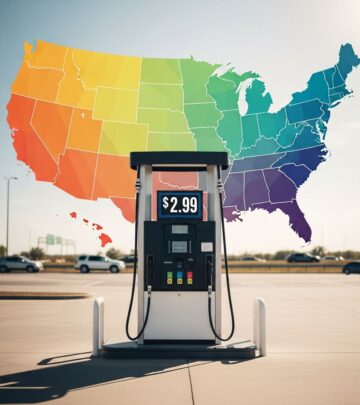
One of the most striking observations about fuel pricing is how dramatically prices vary by geography. The West Coast consistently maintains the highest gasoline prices in the nation, followed by other regions with different supply chains and regulatory environments. This geographic disparity stems from multiple factors including transportation costs, local refinery capacity, state-specific regulations, and existing supply infrastructure.
The Gulf Coast region, by contrast, typically offers the lowest gasoline prices in the country, followed by the Midwest. These regional differences persist because each area has distinct characteristics affecting supply chains. Coastal regions may face transportation premiums, while areas with multiple refineries nearby benefit from competitive pricing. Understanding your regional context helps explain why neighboring states might have noticeably different pump prices.
Key Regional Characteristics:
- West Coast (PADD 5): Highest prices nationally; vulnerable to refinery capacity reductions
- Gulf Coast: Lowest prices; concentrated refinery capacity and efficient distribution
- Midwest: Mid-range pricing; competitive market with multiple supply sources
- Northeast: Prices influenced by import dependency and distribution logistics
Seasonal Demand Patterns and Weather Effects
Gasoline demand exhibits predictable seasonal patterns that directly influence pricing. During warmer months, particularly spring and summer, more drivers take to the roads for recreation, business travel, and leisure activities. This increased demand puts upward pressure on prices as refineries work to meet elevated consumption levels.
Spring break season exemplifies seasonal demand spikes, with gasoline demand increasing substantially as weather improves and travel becomes more appealing. Historical data shows that current spring prices often mirror patterns from previous years, suggesting seasonal predictability. Winter months typically see lower demand and corresponding price reductions, while autumn represents a transitional period.
Supply-Side Dynamics: Production and Inventory Considerations
The relationship between gasoline supply and inventory levels directly affects pricing pressures. When domestic gasoline supplies contract while demand remains stable or increases, prices tend to rise. Conversely, expanding supply relative to demand can moderate price growth.
Gasoline production capacity varies week to week based on refinery operations, maintenance schedules, and equipment availability. When refineries operate at higher utilization rates, they produce more gasoline, which can help stabilize or reduce prices. However, any reduction in refinery capacity—whether temporary for maintenance or permanent due to facility closures—restricts supply and creates upward price pressure.
Global Oil Markets and Geopolitical Influences
International crude oil prices depend on global supply and demand dynamics, often influenced by geopolitical events. Middle East tensions, production disruptions, or policy changes affecting major oil-producing nations can send crude oil prices higher, which cascades to pump prices within days. Conversely, increased global crude oil supply, particularly when production grows faster than worldwide demand, can moderate oil prices and subsequently gasoline costs.
The long-term trend in crude oil markets affects gasoline pricing across multiple years. Energy analysts track global production and consumption trends to forecast how oil markets will evolve, which helps inform gasoline price predictions for upcoming quarters and years.
Expert Price Forecasts: What Analysts Expect
Energy analysts and market specialists regularly publish forecasts predicting gasoline prices for upcoming periods. These predictions incorporate models of crude oil pricing, refinery capacity expectations, seasonal demand patterns, and global economic trends.
2026 and 2027 Outlook:
According to major energy analysis organizations, retail gasoline prices are forecast to decline in 2026 compared to 2025 levels, with an expected decrease of approximately 6% on an annual average basis. This forecast reflects expectations of continued global crude oil supply growth outpacing demand increases. However, the picture becomes more complex when examining regional variations and 2027 projections.
For 2027, analysts expect a modest 1% increase in gasoline prices on a national average basis. Despite this uptick, 2027 prices are predicted to remain below 2025 levels in most regions. The West Coast represents a notable exception, where upcoming refinery capacity reductions may result in 2027 prices roughly equivalent to 2025 levels, even accounting for inflation.
Crude Oil’s Diminishing Contribution:
An important trend emerging in gasoline price forecasts concerns crude oil’s proportional impact on retail prices. In 2026 and 2027, crude oil is expected to represent less than 45% of the retail average gasoline price on an annual average basis. This shift suggests that refining margins, distribution costs, and other factors will play proportionally larger roles in determining final prices.
Historical Context: The Long-Term Price Perspective
Understanding current and future gasoline prices requires historical perspective. The United States experienced historically elevated gasoline prices reaching $5 per gallon in mid-2022, marking a significant peak. Since that pinnacle, prices have followed a declining trend over subsequent years, though with periodic fluctuations based on seasonal factors and geopolitical events.
This downward trajectory from 2022 highs reflects moderating crude oil prices and gradual market stabilization. The forecasted 20-cents-per-gallon decrease expected in 2026 represents a continuation of this normalization process, comparable to price decreases observed during 2024 and 2025.
Factors Beyond Your Control vs. Observable Trends
While individual drivers cannot influence global oil markets or geopolitical events, they can recognize patterns and plan accordingly. Understanding seasonal price cycles allows drivers to anticipate when gas prices typically rise or fall. Recognizing that regional differences persist enables drivers to make informed decisions about fuel purchases when traveling.
Refinery maintenance schedules, typically planned during spring and fall, often precede price increases in affected regions. Monitoring refinery status reports can provide advance warning of potential price spikes. Similarly, tracking crude oil prices through news sources offers insights into directional price movements for retail gasoline.
Market Data and Current Observations
Recent market data provides concrete examples of how these factors operate in practice. Spring season demand increases have driven notable price movements, with national average gasoline prices fluctuating significantly over short periods. Week-to-week comparisons show the sensitivity of prices to changing supply and demand conditions.
| Time Period | National Average Price | Change from Prior Week |
|---|---|---|
| Early March 2026 | $3.25 | +$0.27 |
| Mid March 2026 | $3.60 | +$0.35 |
| Late March 2026 | $4.10 | Variable |
These price movements reflect both seasonal demand increases and temporary supply adjustments, demonstrating the real-time responsiveness of fuel markets to changing conditions.
Strategic Considerations for Consumers
Understanding gasoline pricing fundamentals empowers consumers to make more informed decisions about fuel purchases and travel planning. Recognizing that spring and summer typically bring higher prices suggests strategic fueling during winter months when feasible. Awareness of regional price differences can influence travel route planning or vacation timing decisions.
For those tracking long-term trends, the forecasted moderation in gasoline prices through 2027 suggests that extreme price levels seen in 2022 are unlikely to return imminently. However, individual events and market disruptions can always create short-term exceptions to broader trends.
Looking Ahead: Energy Market Evolution
The energy market continues evolving with changing production patterns, refinery capacity modifications, and shifting global demand dynamics. These structural changes will influence gasoline pricing for years to come. While predicting exact prices remains impossible, understanding the underlying drivers—crude oil markets, refinery capacity, seasonal demand, and regional factors—provides a framework for comprehending price movements and anticipating directional trends.
Frequently Asked Questions
Why do gas prices vary so much week to week?
Gasoline prices respond rapidly to changes in crude oil markets, refinery operations, demand fluctuations, and inventory levels. Because crude oil represents the largest component of retail prices, and crude markets trade globally with constant price adjustments, retail gasoline prices reflect this underlying volatility.
Why is gas more expensive on the West Coast?
The West Coast faces geographic isolation from major refining centers, resulting in higher transportation costs. Additionally, state-specific fuel regulations and limited local refinery capacity compared to demand create supply constraints that push prices higher than other regions.
Will gas prices continue declining through 2027?
Analysts forecast declining prices in 2026 followed by modest increases in 2027, with most regions remaining below 2025 levels. However, geopolitical events, unexpected refinery closures, or demand surges could alter these projections.
How much does crude oil affect pump prices?
Crude oil represents the single largest factor in retail gasoline pricing, though its proportional contribution varies by region and time period. In 2026-2027, crude oil is expected to represent less than 45% of retail prices, meaning refining costs and distribution account for more than 55% of what consumers pay.
References
- Short-Term Energy Outlook — U.S. Energy Information Administration. 2026. https://www.eia.gov/outlooks/steo/
- EIA Expects Lower Gasoline Prices in 2026 and 2027 as Crude Oil Projections Ease — U.S. Energy Information Administration. March 2026. https://www.eia.gov/todayinenergy/
- Rising Pump Prices, Higher Gas Demand as Spring Break Begins — AAA Gas Prices. March 12, 2026. https://gasprices.aaa.com/
- US Retail Gas Price (Weekly) — YCharts. March 2026. https://ycharts.com/indicators/us_gas_price
- Jump at the Pump as National Average Goes Up Nearly 27 Cents — AAA Gas Prices. March 5, 2026. https://gasprices.aaa.com/
Similar Articles








Read full bio of Sneha Tete