FSA Changes During The Pandemic: What You Need To Know
How COVID-19 altered Flexible Spending Accounts: Key rules, extensions, and strategies to maximize your FSA funds before they expire.
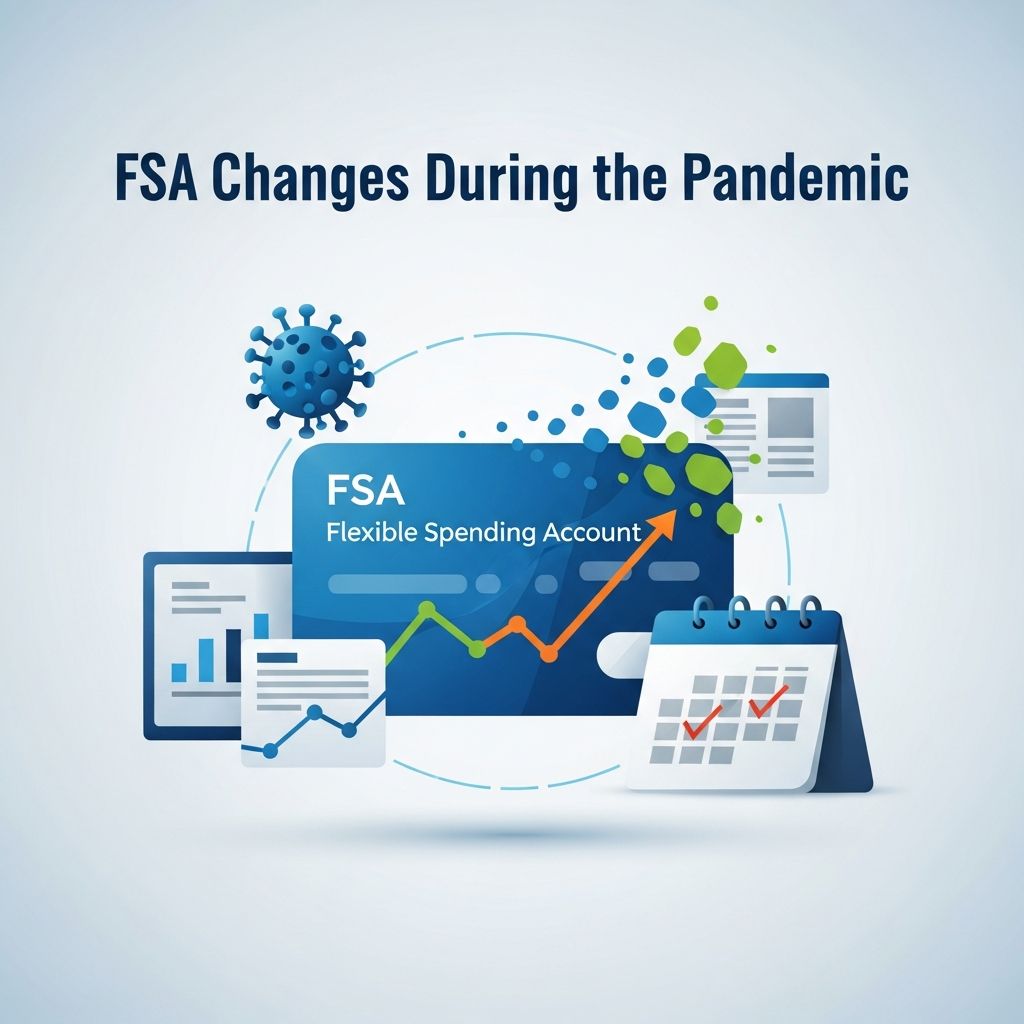
Flexible Spending Accounts (FSAs) allow employees to set aside pre-tax dollars for qualified medical and dependent care expenses, but COVID-19 prompted significant rule changes to prevent fund forfeiture during uncertain times. These adjustments, including carryover provisions and extended grace periods, helped millions navigate healthcare disruptions while addressing broader savings challenges exposed by the pandemic.
What Is a Flexible Spending Account?
A
Flexible Spending Account (FSA)
is an employer-sponsored benefit where workers contribute pre-tax income to cover eligible out-of-pocket costs. There are two main types:Healthcare FSAs
for medical expenses like copays, deductibles, and prescriptions, andDependent Care FSAs
for childcare or eldercare. Contributions reduce taxable income, offering immediate savings—typically 20-30% depending on your tax bracket—but unused funds traditionally forfeit by year-end under the ‘use-it-or-lose-it’ rule.Prior to the pandemic, annual limits were $2,750 for healthcare FSAs (2020) and $5,000 for dependent care. The CARES Act and subsequent IRS guidance relaxed these rules, providing relief as Americans faced job losses, clinic closures, and skyrocketing healthcare needs.
Pandemic-Era Changes to FSA Rules
The COVID-19 crisis exposed vulnerabilities in pre-tax savings plans. With elective procedures halted and telehealth surging, the IRS issued Notice 2020-29, allowing expanded uses and preventing widespread forfeitures. Key modifications included:
- Carryover Provision: Up to $550 (2020 amount, indexed annually) of unused healthcare FSA funds can roll over to the next plan year, a permanent change post-pandemic.
- Grace Period Extension: Plans may offer a 2.5-month window to spend prior-year funds, now standard for many employers.
- **Dependent Care FSA Uniform Coverage: The ‘use-it-or-lose-it’ was suspended for 2020-2021, letting families use contributions through 2022 regardless of employment status.
These shifts aligned with survey data showing 17% of Americans saved less for retirement due to pandemic hardships, underscoring the need for flexible benefits.
COVID-19 Specific Relief Measures
Direct pandemic responses included reimbursements for
over-the-counter (OTC) medications
like masks, hand sanitizer, and COVID tests without prescriptions—a lasting change via IRS Notice 2020-50. Telehealth and remote services qualified retroactively, benefiting the 58% living paycheck-to-paycheck who delayed care.Employers like those surveyed by The Penny Hoarder adapted: 35% of Millennials ramped up savings amid uncertainty, but Gen Xers (45-54) cut back most, highlighting FSA’s role in bridging gaps.
| Change | Pre-Pandemic Rule | Pandemic Adjustment | Current Status (2026) |
|---|---|---|---|
| Carryover Limit | $0 (use-it-or-lose-it) | $550 | Permanent, $610 for 2023+ (inflation-adjusted) |
| Grace Period | Optional 2.5 months | Mandatory option | Available |
| OTC Items | Rx required | No Rx for masks/tests | Permanent |
| Dependent Care | Strict annual use | Extended 2021-2022 | Phased out |
Healthcare FSA: Eligible Expenses Expanded
**Healthcare FSAs** saw the broadest updates. Eligible expenses now encompass menstrual products, sunscreen (SPF 15+), and COVID-related gear. Families reimbursed childcare for COVID quarantines if medically necessary.
In a tough economy where 42% lack $1,000 in emergency savings, FSAs provide tax-free buffers—critical as 33% faced income loss. Use funds for orthodontia, therapy, or eyeglasses before deadlines.
2026 Contribution Limits and Strategies
For 2026, healthcare FSA max is $3,300 (projected), dependent care $5,000 (individual)/$2,500 (married filing separately). Pro-rate if mid-year enrollment. Tip: Max out to cover predictable costs like LASIK ($2,000-$3,000) or braces ($3,000-$7,000).
Dependent Care FSA: Navigating Childcare Disruptions
**Dependent Care FSAs** fund daycare, nannies, or summer camps for kids under 13. Pandemic closures led to IRS relief: Funds usable for non-traditional care like after-school programs during hybrid learning.
Women, 41% of increased savers vs. men’s 59%, bore childcare burdens, exacerbating retirement gaps. Current rules require care enabling work; post-pandemic, verify eligibility amid rising costs (34% cite as savings barrier).
How to Maximize Your FSA Funds
Avoid forfeitures with these steps:
- Plan Ahead: Estimate annual expenses in November; adjust contributions Q1.
- Stock Up: Buy contacts, sunscreen before March 15 (grace end).
- Submit Claims Promptly: Keep receipts; apps like FSA Store simplify.
- Uniform Reimbursement: If offered, spread costs evenly.
- HSA Alternative: Rollover-friendly for high-deductible plans.
71% save for big purchases cash—apply to FSAs for tax wins.
State and Regional Variations in FSA Use
Savings behaviors varied: Northeast (44% saved more) leveraged FSAs amid high costs (35% saved less), while South (31% less) lagged due to tourism hits. Check state mandates; e.g., California extends grace periods.
Common FSA Mistakes to Avoid
48% save only leftovers—set fixed FSA amounts like 27% do successfully. Errors: Ineligible expenses (cosmetics), late claims, forgetting reimbursements. Penalty: Forfeited funds average $200-$500/person.
Frequently Asked Questions (FAQs)
What happens to unused FSA money in 2026?
Up to $610 carries over; rest forfeits unless grace period applies. Spend by March 15.
Can I use FSA for COVID tests now?
Yes, OTC antigen tests qualify tax-free, permanent post-CARES Act.
Is gym membership FSA-eligible?
Only with Letter of Medical Necessity for conditions like obesity.
What if I change jobs mid-year?
Forfeit remaining balance unless prior plan allows COBRA-like continuation.
Dependent Care FSA for elderly parents?
Yes, if qualifying relative unable to self-care and care enables work.
Tips for Submitting FSA Reimbursements
Gather EOBs, receipts; submit via portal/HR. Track deadlines—many plans auto-forfeit after 12 months. Apps integrate with employers for seamless claims.
Amid savings crises (45% drained accounts), FSAs offer stability. Northeast savers exemplify: High costs, high utilization.
Future of FSAs Post-Pandemic
Inflation ticked up 2025; expect limit hikes. Proposals expand to student loans, but core remains healthcare/dependent care. With 17% retirement savers down, FSAs counter economic stress.
Surveys reveal 35% financial stress from income; leverage FSAs.
References
- A Deeper Dive into COVID’s Impact on Retirement Saving — ASPPA. 2022-01-01. https://www.asppa-net.org/news/2022/1/deeper-dive-covids-impact-retirement-saving/
- The State of Savings in America — The Penny Hoarder. 2025-12-19. https://www.thepennyhoarder.com/save-money/state-of-savings/
- COVID Put a Dent in Americans’ Ability to Save for Retirement — The Penny Hoarder. 2021-10-01. https://www.thepennyhoarder.com/retirement/covid-retirement-savings/
Similar Articles








Read full bio of medha deb