Freelancers and Business Checking Accounts: Essential Guide
Discover why freelancers should consider business checking accounts for better financial management, tax efficiency, and professional growth.
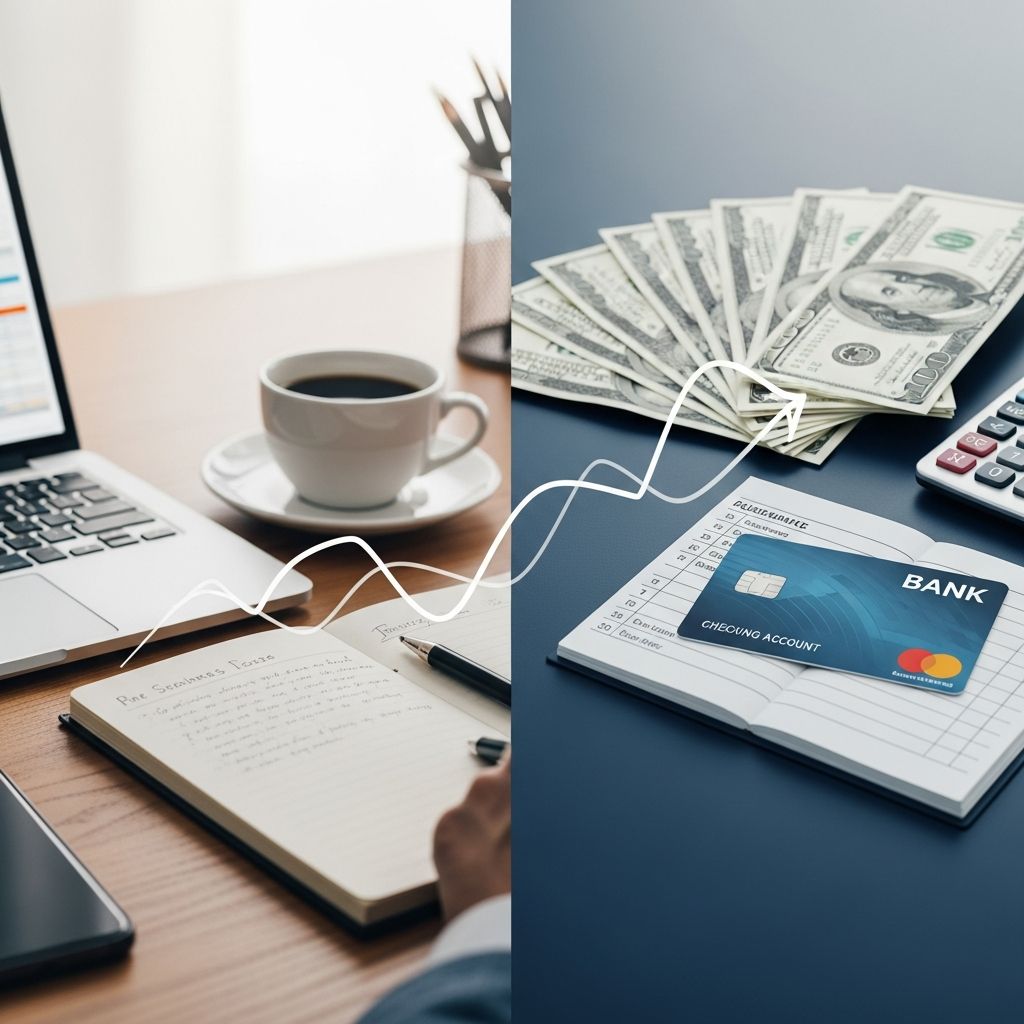
Freelancers often operate as their own bosses, managing everything from client projects to payments. A key decision is whether to use a personal checking account or open a dedicated business checking account. While not always legally required, a business account offers substantial benefits for organizing finances, simplifying compliance, and projecting professionalism.
Why Financial Separation Matters for Independent Workers
Maintaining distinct personal and business finances is foundational for freelancers. Mixing transactions in one account complicates tracking income, expenses, and tax obligations. A business checking account creates a clear boundary, making it simpler to monitor business health without personal spending interference.
- Clear Transaction Visibility: All client payments and vendor bills stay in one place, providing an instant snapshot of revenue and outflows.
- Reduced Audit Risks: Tax authorities prefer separated records, lowering scrutiny during reviews.
- Better Budgeting: Isolating funds helps allocate earnings toward business growth, savings, or reinvestments.
This separation is particularly vital for sole proprietors, who lack corporate structures but still need robust financial hygiene.
Streamlining Tax Compliance and Deductions
Taxes represent a major challenge for freelancers, who must pay estimated quarterly payments and track deductible expenses. A business checking account transforms this process by consolidating relevant data.
Business statements serve as primary records for categorizing costs like software, marketing, or home office setups. This organization maximizes deductions, potentially reducing taxable income significantly.
| Expense Type | Common Examples | Tracking Benefit with Business Account |
|---|---|---|
| Office Supplies | Paper, ink, furniture | Automatic statement logging for easy claims |
| Software/Tools | Adobe Suite, QuickBooks | Recurring charges clearly separated |
| Travel/Marketing | Conferences, ads | Receipt matching without personal mix-ups |
| Professional Fees | Accountants, legal | Precise reimbursement tracking |
Many banks integrate with accounting tools, automating categorization and estimated tax calculations, saving hours during filing season.
Enhancing Cash Flow and Payment Efficiency
Irregular income defines freelancing, making cash flow management critical. A business account centralizes inflows from diverse sources—ACH transfers, wires, checks—enabling quick identification of delays.
- Multi-Payment Support: Accept cards, PayPal, or Stripe seamlessly, accommodating client preferences.
- Overdraft Protection: Tailored features prevent disruptions from timing mismatches.
- Forecasting Tools: Dashboards reveal patterns, aiding proactive invoicing.
With everything consolidated, freelancers chase overdue payments faster, stabilizing revenue streams for sustainable operations.
Building a Professional Image and Access to Credit
Clients perceive freelancers with business accounts as established entities. Invoicing from a company-named account, rather than personal, instills confidence and facilitates larger contracts.
Banks view consistent business account activity as evidence of reliability. This history bolsters applications for business credit cards, lines of credit, or loans—options often unavailable or costlier via personal accounts.
- Credibility Boost: Vendor negotiations improve with professional banking details.
- Scalability: Prepares for team hires or expansion by establishing financial infrastructure.
- Liability Shield: Though not full protection, separation aids in legal disputes.
Comparing Personal vs. Business Checking Accounts
Personal accounts suffice for hobbyists but falter under business volumes. Business accounts offer higher limits, specialized tools, and fee structures suited to frequent transactions.
| Feature | Personal Account | Business Account |
|---|---|---|
| Transaction Limits | Low (e.g., 200/month) | High or unlimited |
| Payment Integrations | Limited | Full (ACH, wires, cards) |
| Tax Tools | None | Often built-in estimates |
| Fees | Overdraft heavy | Waivable with balances |
| Professional Use | Informal | Branded checks/debit |
Freelancers exceeding minimal activity find business accounts more cost-effective long-term.
Steps to Open and Optimize a Business Checking Account
Opening requires basic documentation: EIN (or SSN for sole props), business name, ID, and address proof. Online banks streamline this for remote workers.
- Research Providers: Compare fees, APYs, and freelancer perks like free wires.
- Gather Docs: Ensure compliance for quick approval.
- Fund Initially: Deposit startup capital to activate features.
- Link Tools: Connect to invoicing apps for automation.
- Monitor Monthly: Review statements for optimizations.
Opt for accounts with no monthly fees, unlimited transactions, and integrations to match freelance workflows.
Potential Drawbacks and How to Mitigate Them
Business accounts may incur fees or minimum balances. Shop digital banks like Novo or Mercury, which waive these for freelancers. Higher scrutiny during setup is offset by long-term gains in efficiency.
Transitioning involves redirecting payments—notify clients early to avoid gaps.
Real-World Impact: Freelancer Success Stories
Graphic designers report 20-30% time savings on bookkeeping post-switch. Writers leverage credit access for equipment upgrades, accelerating careers. Data shows separated finances correlate with higher earnings retention.
Frequently Asked Questions (FAQs)
Is a business checking account mandatory for freelancers?
No, but it’s strongly recommended for those earning over $5,000 annually to simplify taxes and professionalism.
Can sole proprietors use personal accounts legally?
Yes, but the IRS advises separation for accurate reporting.
What documents do I need to open one?
Typically EIN/SSN, business license (if any), ID, and proof of address.
Are there free business checking options?
Yes, many online banks offer no-fee accounts with direct deposit requirements.
How does it affect my personal credit?
Business activity can build separate credit profiles, benefiting future financing.
Advanced Strategies for Freelance Financial Mastery
Beyond basics, pair accounts with high-yield savings for reserves. Use sub-accounts for projects or taxes (e.g., 25-30% auto-allocation). Integrate AI tools for predictive analytics, forecasting dry spells.
For international freelancers, prioritize accounts with global transfers at low costs. As income grows, consider treasury management for multi-currency handling.
Regular audits—quarterly reconciliations—ensure accuracy. Consult CPAs annually to refine deductions, leveraging account data for precision.
References
- 7 Ways Freelancers Can Benefit From a Business Bank Account — Lendesca. 2023-05-15. https://www.lendesca.com/7-ways-freelancers-can-benefit-from-a-business-bank-account/
- 7 Ways Freelancers Can Benefit From a Business Bank Account — Found. 2024-02-20. https://found.com/resources/7-ways-freelancers-can-benefit-from-a-business-bank-account
- Why Small Businesses Need a Business Checking Account — Texas Bay Credit Union. 2023-11-10. https://www.texasbaycu.org/articles/why-you-should-use-a-business-checking-account-over-a-personal-checking-account
- Business Checking Account Pros and Cons — Academy Bank. 2024-01-08. https://www.academybank.com/article/business-checking-account-pros-and-cons
- 5 Reasons Freelancers Need a Business Bank Account — Novo. 2023-09-12. https://www.novo.co/blog/reasons-freelancers-need-a-business-bank-account
Similar Articles








Read full bio of medha deb