Freelancer Tax Guide 2026
Master your 2026 taxes as a freelancer: estimated payments, self-employment rates, deductions, and filing essentials to avoid penalties.

Freelancers and gig workers in the United States face unique tax obligations that differ significantly from traditional employees. If your net earnings from self-employment exceed $400 in a year, you must file a tax return, covering both income taxes and self-employment contributions for Social Security and Medicare. This guide breaks down everything you need to know for the 2026 tax year, including payment schedules, essential forms, deduction strategies, and avoidance of common errors.
Understanding Your Tax Filing Threshold
The IRS mandates filing if you earn at least $400 in net profit from freelance activities. This threshold applies regardless of whether the work is your primary job or a side hustle, such as driving for rideshares, delivering food, or providing services on platforms like Upwork or Fiverr. Even without a Form 1099, all income must be reported.
- Part-time gigs: Occasional tasks count toward the $400 limit.
- Multiple sources: Combine earnings from all freelance ventures.
- No W-2: Unlike employees, freelancers receive 1099 forms or none at all.
Breaking Down Self-Employment Tax
Self-employment tax funds your Social Security and Medicare at a combined rate of 15.3% on net earnings: 12.4% for Social Security (up to the wage base limit) and 2.9% for Medicare. As a freelancer, you cover the full amount, unlike employees where employers pay half.
You can deduct half of this tax (7.65%) as an adjustment to income, slightly reducing your overall burden. For example, in a 22% bracket, effective rates hover around 37% before deductions.
| Component | Rate | Purpose |
|---|---|---|
| Social Security | 12.4% | Retirement benefits |
| Medicare | 2.9% | Health insurance |
| Total | 15.3% | Full self-employment tax |
Quarterly Estimated Tax Payments: Key Dates for 2026
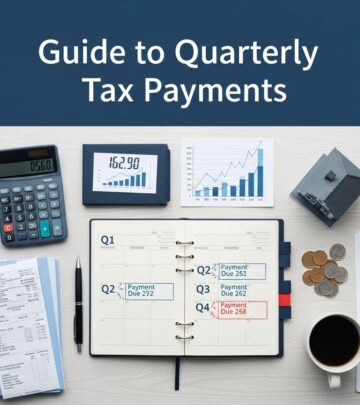
Without automatic withholding, freelancers must pay estimated taxes quarterly to avoid underpayment penalties. Use Form 1040-ES to calculate amounts based on prior-year tax liability or current estimates. A practical tip: reserve 25-30% of each payment in a dedicated account.
| Earnings Period | Payment Deadline |
|---|---|
| Jan 1 – Mar 31 | April 15 |
| Apr 1 – May 31 | June 16 |
| Jun 1 – Aug 31 | September 15 |
| Sep 1 – Dec 31 | January 15, 2027 |
Payments cover income and self-employment taxes if you expect to owe $1,000 or more annually. Monthly payments can ease cash flow.
Essential IRS Forms for Freelancers
Filing involves several forms integrated into your personal return. Start with gathering income records and receipts.
- Form 1040/1040-SR: Main individual tax return.
- Schedule C: Details business profit/loss, income, and expenses.
- Schedule SE: Calculates self-employment tax.
- Form 1099-NEC/K: Issued for non-employee compensation or third-party payments (threshold: $20,000+ and 200+ transactions in 2025).
Even without a 1099-K, report all income. File electronically via IRS Free File or software for accuracy.
Maximizing Deductions to Lower Your Tax Bill
Deductions reduce taxable income on Schedule C. Track expenses meticulously with apps or spreadsheets. Common categories include:
- Home office: Square footage percentage of rent/mortgage, utilities.
- Supplies and equipment: Computers, software, office items.
- Travel and mileage: 67 cents per mile standard rate or actual costs.
- Marketing: Website, ads, business cards.
- Professional fees: Accountants, lawyers, subscriptions.
Separate business and personal accounts to simplify audits. The home office must be exclusively for work.
State Taxes and Additional Obligations
Beyond federal, check state requirements. Many mirror federal schedules but have unique rates and deadlines. Some states require separate business returns or sales tax for services.
- Sales tax on digital goods in certain states.
- State estimated payments aligned with federal quarters.
- Local business licenses or fees.
Top Tax Mistakes Freelancers Make and How to Avoid Them
Avoid these pitfalls to prevent IRS notices and penalties:
- Skipping estimates: Leads to underpayment fines; set reminders.
- Ignoring self-employment tax: Budget for the full 15.3%.
- Poor recordkeeping: Use cloud storage for receipts.
- Missing deductions: Review annually with software.
- Commingling funds: Maintain business-only banking.
Recent Changes Impacting 2026 Filings
The Form 1099-K threshold reverted to $20,000 and 200 transactions for 2025 reporting (received in 2026), easing burdens for smaller earners. Always self-report regardless.
Tools and Strategies for Smooth Filing
Leverage software like TurboTax Self-Employed or QuickBooks for tracking. Consult CPAs for complex situations. File extensions via Form 4868 by April 15, but pay owed amounts to avoid interest.
Frequently Asked Questions
What if I earn under $400 freelancing?
No self-employment filing required, but include in total income if over standard deduction.
Do I need to pay quarterly if taxes are low?
Only if owing $1,000+; safe harbor uses 100-110% of prior year.
Can I deduct my internet bill?
Business-use portion only, with records.
What about health insurance?
Self-employed deduction available above-the-line.
How do international clients affect taxes?
Report all USD equivalent; potential treaty benefits.
References
- A Guide to Filing Taxes for Freelancers and Gig Workers in 2026 — Boxelder Consulting. 2025. https://boxelderconsulting.com/a-guide-to-filing-taxes-for-freelancers-and-gig-workers-in-2025/
- Top 5 Freelancer Tax Mistakes to Avoid in 2026 — Crescent Tax Filing. 2025. https://crescenttaxfiling.com/freelancer/top-5-freelancer-tax-mistakes-2026/
- Tax Deadlines Every Self-Employed Professional Should Know — Insureon. 2025. https://www.insureon.com/blog/self-employment-tax-deadlines
- Independent Contractor Tax Guide for 2026 — NCH Inc. 2025. https://nchinc.com/blog/tax-accounting/the-independent-contractors-guide-to-the-2026-tax-year/
- What is a tax return for Small Businesses and Freelancers in 2026? — Akaunting. 2025. https://akaunting.com/blog/what-is-a-tax-return-for-small-businesses-and-freelancers
- Do Freelancers Pay Taxes? A 2026 Guide for Independent Pros — Upwork. 2025. https://www.upwork.com/resources/do-freelancers-pay-taxes
Similar Articles








Read full bio of Sneha Tete