Understanding Why Free Trials Require Credit Card Information
Discover the reasons behind credit card requirements for free trials and how to protect yourself
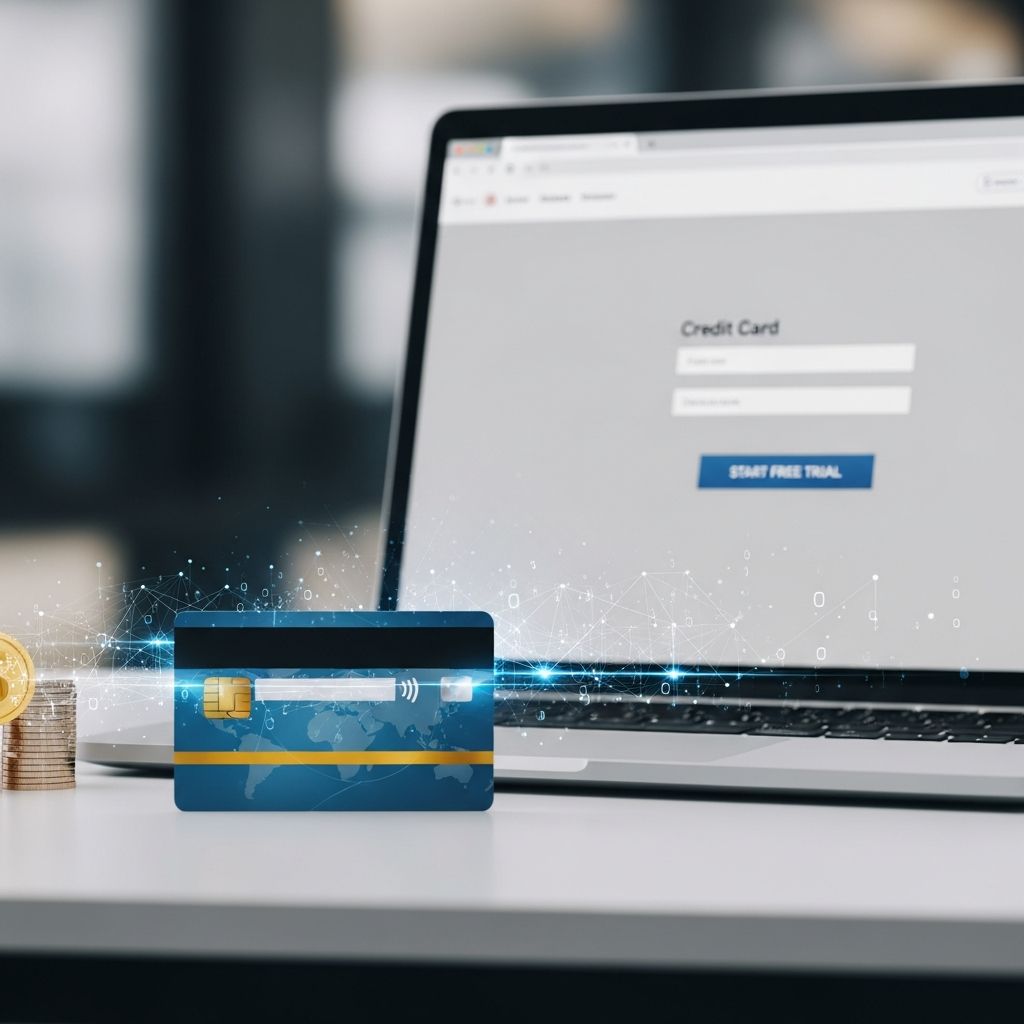
Free trial offers have become ubiquitous across digital services, streaming platforms, and membership-based businesses. While they present an attractive opportunity to test products and services without immediate payment, the requirement to provide credit card information raises important questions about safety and consumer protection. Understanding the mechanics behind this practice and the potential risks involved is essential for anyone considering signing up for a trial offer.
The Business Logic Behind Credit Card Requirements
Companies request credit card information during free trial sign-ups for several interconnected business reasons. The primary motivation is to facilitate seamless conversion to paid subscriptions once the trial period expires. By collecting payment details upfront, businesses streamline the transition process and reduce friction that might otherwise prompt users to actively choose not to continue service.
Credit card collection also serves as a verification mechanism. Requiring valid payment information creates a barrier to entry, filtering out individuals who might register for trials without genuine interest. This helps businesses maintain more accurate metrics about trial users who represent realistic conversion potential. Additionally, having a credit card on file allows companies to implement subscription models with automatic renewal features, which have become standard across the industry.
From a business perspective, the collection of payment information demonstrates commitment from the user. A person who inputs their credit card details exhibits stronger purchase intent than someone who signs up without any financial connection. This metric helps companies distinguish between casual browsers and serious prospects when analyzing trial signup data.
Risk Assessment: The Hidden Dangers of Credit Card Submission
Despite the legitimate business reasons for requesting credit card information, significant risks emerge from this practice. The most obvious concern involves unauthorized charges that occur after the free trial period concludes. According to consumer protection data, many users fail to cancel their subscriptions before the trial ends, resulting in unexpected monthly charges. This problem intensifies when cancellation processes are deliberately obscured or complicated, making it difficult for users to stop recurring payments.
Additional risks associated with providing credit card information include:
- Identity theft exposure: Sharing credit card details with multiple trial services increases vulnerability to data breaches and fraudulent account access.
- Data aggregation: Many companies sell or share customer information with third parties, leading to increased spam emails and targeted marketing.
- Unauthorized add-on charges: Beyond the base subscription, companies may charge fees for premium features, expedited shipping, or digital goods without explicit consent.
- Cross-platform billing: Third-party platforms offering free trials may bill through subsidiary companies with unfamiliar names, making it harder to identify fraudulent charges.
Automatic Renewal Mechanisms and Consumer Vulnerability
The auto-renewal feature represents perhaps the most problematic aspect of modern free trials. Once the trial period concludes, businesses automatically charge the credit card on file without requiring explicit reauthorization. This practice, while legal when properly disclosed, exploits consumer behavior patterns where users forget to cancel before the deadline.
The automatic renewal model benefits companies substantially. Statistics show that a significant percentage of trial users forget to cancel, generating revenue from inactive accounts. Companies have little incentive to simplify the cancellation process or remind users as their trial period approaches, knowing that forgetting creates revenue opportunities.
Cancellation can be deliberately cumbersome, requiring phone calls during business hours, written requests, or navigation through multi-step online processes. Some companies claim to process cancellations while continuing to charge accounts, leaving consumers frustrated and forced to dispute transactions directly with their credit card issuers.
Financial Monitoring and Consumer Responsibility
While companies bear responsibility for transparent billing practices, consumers must actively monitor their financial statements to catch unauthorized charges promptly. Many people don’t review credit card statements regularly, allowing unauthorized charges to accumulate over weeks or months before discovery.
The burden of vigilance falls disproportionately on consumers. Those who don’t maintain meticulous records of their trial subscriptions—marking cancellation deadlines, tracking confirmation numbers, and monitoring statements—become vulnerable to expensive surprises. This asymmetry of information and responsibility creates an environment where companies profit from user inattention.
Comparative Analysis: Trial Models and Their Trade-offs
| Trial Type | Verification Method | Conversion Mechanism | Consumer Risk Level |
|---|---|---|---|
| Credit Card Required | Payment information on file | Automatic renewal | High |
| Email-Only Trial | Email address verification | Manual conversion | Low |
| Freemium Model | Minimal information needed | Upgrade option available | Very Low |
Red Flags in Free Trial Offers
Consumers can identify potentially problematic free trials by recognizing specific warning signs. Offers with vague cancellation policies, unclear trial durations, or buried fine print deserve heightened scrutiny. Pre-checked boxes that automatically enroll users in additional services indicate questionable business practices.
Companies that make it harder to cancel than to sign up exhibit red flag behavior. Similarly, offers that charge additional fees beyond the advertised trial cost—such as shipping and handling charges—misrepresent their true expense. Third-party platforms that broker free trials often create confusion about which company is actually charging the customer’s card.
Protective Strategies and Best Practices
Several practical approaches help consumers minimize risks when engaging with free trials. Before entering payment information, thoroughly research the company online, reading customer reviews and investigating complaints. Specialized credit card products, such as virtual card numbers that assign unique transaction identifiers with spending limits, provide a technological solution to this problem.
Documentation and calendar management prove essential. Setting phone reminders or calendar alerts for cancellation deadlines prevents accidental subscription continuation. Creating a dedicated spreadsheet tracking all active trials, their end dates, cancellation URLs, and confirmation numbers centralizes this information and reduces the likelihood of forgetting to cancel.
Reading terms and conditions completely, while time-consuming, reveals important details about cancellation procedures, billing cycles, and add-on fee possibilities. Consumers should uncheck all pre-selected boxes during signup, confirming that only the intended trial is enabled.
Regular credit card statement reviews catch unauthorized charges quickly. Consumers should investigate any unrecognized charges immediately, contacting both the company and their credit card issuer to dispute transactions they didn’t authorize.
Industry Regulations and Consumer Protections
Regulatory bodies have implemented rules addressing deceptive free trial practices. The Negative Option Rule and similar regulations require companies to clearly disclose all material terms before charging customers. However, enforcement remains inconsistent, and many companies continue employing confusing practices that technically comply with regulations while remaining user-unfriendly.
Consumer protection agencies encourage reporting deceptive practices to the Federal Trade Commission and Better Business Bureau, creating accountability for bad actors within the industry. Credit card companies increasingly dispute unauthorized charges aggressively, protecting cardholders from clear violations of regulations.
Alternatives to Credit Card-Based Trials
Some companies have adopted alternative models that reduce consumer friction. Email-only trials that don’t require payment information demonstrate company confidence in their product while minimizing user anxiety. Freemium models offering limited permanent access with optional paid upgrades represent another consumer-friendly approach, allowing users to explore services without ever entering payment information.
The Future of Free Trial Practices
Industry trends suggest increasing scrutiny of free trial practices as consumer awareness grows. Companies that adopt transparent, user-friendly trial models gain competitive advantages by building consumer trust. As regulatory pressure increases and consumers demand clearer practices, the most successful businesses will likely simplify cancellation processes and improve disclosure transparency.
Frequently Asked Questions
- Why do all free trials require a credit card?
- Not all do, but credit card requirements serve multiple purposes: verifying user identity, reducing signup fraud, facilitating automatic billing, and streamlining the conversion process when trials expire.
- Can companies charge my card without permission after the trial ends?
- Yes, if you agreed to automatic renewal in the terms and conditions. However, they must disclose this clearly before charging. If they didn’t, you can dispute the charge.
- How do I cancel a free trial effectively?
- Before signing up, locate and save the cancellation method. Set a calendar reminder days before the trial ends. Follow the exact cancellation procedure and save confirmation numbers. Monitor your statement to confirm the charges stop.
- What should I do if I’ve been charged after canceling?
- Contact the company immediately requesting a refund. If they refuse, dispute the charge with your credit card issuer and report the company to consumer protection agencies.
- Are virtual credit card numbers helpful for free trials?
- Yes, virtual card numbers that assign unique identifiers with spending limits prevent unauthorized charges from escalating beyond your set limit, effectively protecting you from surprise billing.
Key Takeaways
- Credit card requirements serve legitimate business purposes but create consumer vulnerabilities when not carefully managed
- Automatic renewal practices exploit user forgetfulness and difficult cancellation procedures
- Aggressive financial monitoring and documentation help prevent unexpected charges
- Pre-trial research and protective technologies minimize risk exposure
- Regulatory oversight is improving but remains inconsistent across the industry
References
- The Risks of Free Trial Offers — Pennsylvania State Employees’ Credit Union. 2020. https://www.psecu.com/learn/financial-tips-for-every-stage-in-life/2020/03/05/the-risks-of-free-trial-offers
- Beware of Free Trial Offers — Iowa Legal Aid. https://iowalegalaid.org/resource/beware-of-free-trial-offers/
- Consumers Beware of Free-Trial or Risk-Free Offers — Sina Law Group. http://sinalawgroup.com/consumers-beware-of-free-trial-or-risk-free-offers/
- 7 Essential Facts About “Risk-Free” Trials & Hidden Costs — BillShark. https://www.billshark.com/blogs/7-things-to-know-about-risk-free-trials
- The Pros and Cons of Free Trials, Auto-renewals, and Subscriptions — Federal Trade Commission Consumer Alerts. 2023. https://consumer.ftc.gov/consumer-alerts/2023/03/pros-cons-free-trials-auto-renewals-subscriptions
Similar Articles








Read full bio of Sneha Tete