Free Trade Agreements: Types, Examples, And Key Benefits
Understand free trade agreements: types, structures, and real-world examples shaping global commerce.

Understanding Free Trade Agreements: Types and Examples
Free trade agreements (FTAs) have become fundamental instruments in shaping modern international commerce. These agreements establish frameworks through which countries reduce or eliminate trade barriers, facilitating the movement of goods, services, and capital across borders. Understanding the different types of free trade agreements and their real-world applications is essential for businesses, policymakers, and anyone interested in global economic relations.
A free trade agreement is a formal pact between two or more countries designed to reduce or eliminate barriers to trade, such as tariffs and quotas, on goods and services. These agreements typically cover a broad range of economic activities beyond simple tariff reduction, including investment protection, intellectual property rights, and government procurement opportunities. By creating preferential trading relationships, FTAs enable participating nations to enhance economic growth, increase business opportunities, and strengthen diplomatic ties.
Types of Trade Agreements
Trade agreements come in various forms, each serving different economic objectives and involving different numbers of countries. The primary classification distinguishes between unilateral, bilateral, and multilateral agreements, each with distinct characteristics and implications.
Unilateral Trade Agreements
Unilateral trade agreements represent one-sided arrangements where one country grants trade benefits to another without requiring reciprocal concessions. These agreements are typically designed to support developing nations and promote their economic growth. The United States operates unilateral trade policies under the Generalized System of Preferences (GSP), which eliminates duties on thousands of products when imported from 119 designated beneficiary countries and territories. This approach aims to spur development in some of the world’s poorest nations by providing preferential market access without requiring the developing countries to open their own markets to the same extent.
Bilateral Trade Agreements
Bilateral trade agreements occur between two countries or customs territories and are generally easier to negotiate than multilateral arrangements. These agreements allow two nations to establish mutually beneficial trade terms that reflect their specific economic interests and complementary needs. Many of the world’s most prominent trade relationships operate under bilateral frameworks, including the United States-Australia Free Trade Agreement and various agreements between the United States and individual nations such as Chile, Colombia, and South Korea. Bilateral agreements offer flexibility and the ability to tailor terms to suit the particular circumstances of each trading partner.
Multilateral Trade Agreements
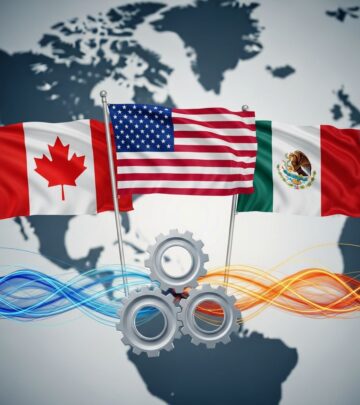
Multilateral trade agreements involve three or more countries and represent the most powerful but also the most challenging type of trade arrangement to negotiate. The United States-Mexico-Canada Agreement (USMCA) exemplifies a multilateral agreement, replacing the earlier North American Free Trade Agreement (NAFTA). These agreements require reaching consensus among multiple parties with diverse interests, making them complex to establish and modify. However, when successfully implemented, multilateral agreements create larger trading blocs with significant economic impact and influence on global commerce.
Major Types of Trade Agreements
Free Trade Agreements (FTAs)
Free Trade Agreements represent the most comprehensive form of preferential trade arrangements, generally eliminating most trade barriers between participating countries. Under an FTA, imports between participating nations typically benefit from lower or zero tariffs, making imported goods from partner countries cheaper and more accessible. FTAs focus extensively on preferential tariff treatment but also include provisions on trade facilitation and rule-making in areas such as investment, intellectual property, government procurement, technical standards, and sanitary and phytosanitary issues.
The scope of modern FTAs extends beyond simple tariff elimination. They often provide protections for investors, establish standards for labor practices and environmental protection, and create mechanisms for resolving trade disputes. These comprehensive agreements help create predictable trading environments and reduce non-tariff barriers that can impede commerce just as effectively as tariffs.
Preferential Trade Agreements (PTAs)
Preferential Trade Agreements are narrower in scope than FTAs, offering preferential tariff rates on selected goods rather than across-the-board tariff elimination. PTAs provide some of the benefits of free trade without extending them to all products and services. This approach allows countries to protect sensitive industries while still fostering trade relationships. Examples include the India-ASEAN PTA and India-Mercosur PTA, which grant preferential treatment to specified goods while maintaining higher tariffs on others. PTAs serve as stepping stones toward more comprehensive free trade arrangements and allow countries to gradually open their markets while managing domestic economic impacts.
Comprehensive Economic Cooperation Agreements (CECAs)
Comprehensive Economic Cooperation Agreements typically involve deeper economic integration than standard FTAs, extending beyond trade in goods to include cooperation in investment, services, intellectual property, and technology transfer. CECAs represent a more expansive approach to economic integration, addressing not only tariff reductions but also regulatory alignment and cooperation in various economic sectors. Examples include the India-Singapore CECA, India-South Korea CECA, and India-Malaysia CECA. These agreements aim to create comprehensive frameworks for economic cooperation that facilitate business expansion, investment flows, and technological collaboration among member nations.
Comprehensive Economic Partnership Agreements (CEPAs)
Comprehensive Economic Partnership Agreements are similar to CECAs but typically offer broader scope, often including provisions on labor mobility, intellectual property, and regulatory matters beyond those covered in standard economic cooperation agreements. CEPAs represent the most expansive form of preferential trade arrangements, encompassing virtually all aspects of economic integration between countries. Examples include the India-Japan CEPA and India-UAE CEPA. These agreements reflect a deeper commitment to economic integration and are often developed between nations seeking to build more extensive economic relationships and strategic partnerships.
Key Features and Benefits of FTAs
Tariff Reduction and Elimination
The primary mechanism through which FTAs function is the reduction or elimination of tariffs on traded goods. By removing these barriers, FTAs make products more competitive and accessible, ultimately benefiting consumers through lower prices and increased product availability. Businesses gain access to larger markets without facing prohibitive tariff costs, which encourages expansion and investment in export-oriented industries.
Enhanced Market Access
FTAs provide opportunities for businesses to access government procurement markets in partner countries, allowing companies to bid on certain government contracts that might otherwise be reserved for domestic suppliers. This market access extends to various sectors and can significantly expand business opportunities for exporters.
Investment Protection and Services
Modern FTAs include provisions protecting foreign investment and establishing standards for service suppliers. These provisions allow U.S. service suppliers to offer their services in FTA partner countries under conditions that encourage competition and fair treatment. Investment chapters typically include dispute settlement mechanisms that protect investors from unfair treatment by host governments.
Intellectual Property Rights
FTAs establish and protect intellectual property rights, ensuring that patents, trademarks, copyrights, and trade secrets receive adequate protection across borders. These provisions are particularly important for technology companies and creative industries that depend on intellectual property protection for their competitive advantage.
U.S. Free Trade Agreements: Overview
The United States maintains an extensive network of trade agreements. Currently, the U.S. has comprehensive free trade agreements in effect with 20 countries. These agreements build upon the foundation of the World Trade Organization (WTO) Agreement, establishing more comprehensive and stronger disciplines than the basic WTO framework. The U.S. also maintains Trade and Investment Framework Agreements (TIFAs) and Bilateral Investment Treaties (BITs) with various nations to facilitate trade and investment discussions and protect private investment.
Major U.S. Free Trade Agreements
The United States has established FTAs with numerous countries across different regions:
– USMCA (United States-Mexico-Canada Agreement) — A multilateral agreement that replaced NAFTA, covering three of the world’s largest economies and establishing comprehensive trade rules for North America- Australia — A bilateral agreement facilitating trade between two developed economies with complementary trade interests- Chile — An early bilateral FTA establishing trade relationships with a major South American economy- Colombia, Peru — Bilateral agreements with South American nations expanding U.S. trade reach in the region- CAFTA-DR (Central America-Dominican Republic Agreement) — A multilateral agreement involving Costa Rica, Dominican Republic, El Salvador, Guatemala, Honduras, and Nicaragua- Israel, Jordan — Middle Eastern bilateral agreements with strategic partners- South Korea — A significant bilateral agreement with a major Asian economy- Singapore — An agreement with a key Southeast Asian trading hub- Morocco, Bahrain, Oman — Additional agreements reflecting diverse geographic trade partnerships
Global Examples of Free Trade Agreements
ASEAN-Australia-New Zealand Free Trade Agreement (AANZFTA)
The AANZFTA demonstrates how regional free trade agreements work at the multilateral level, involving multiple Southeast Asian nations along with Australia and New Zealand. This agreement facilitates substantial trade flows and investment throughout the Asia-Pacific region, benefiting from the region’s economic dynamism and diverse complementary economies.
EU-Japan Free Trade Agreement
This agreement between the European Union and Japan represents one of the most significant bilateral FTAs, connecting two of the world’s largest developed economies. The EU-Japan FTA demonstrates how comprehensive trade agreements can facilitate trade between advanced industrial nations with sophisticated regulatory systems.
Regional Trade Agreements
Beyond bilateral and multilateral governmental FTAs, regional agreements like MERCOSUR in South America and various African trade agreements create broader trading blocs that facilitate commerce across multiple nations within geographic regions. These regional arrangements often serve as foundations for deeper economic integration over time.
Comparison of Trade Agreement Types
| Agreement Type | Tariff Treatment | Scope | Benefits to Importers | Examples |
|---|---|---|---|---|
| FTA | Full elimination or significant reduction | Comprehensive coverage of most goods | Minimal or zero tariffs on most products | USMCA, EU-Japan FTA, AANZFTA |
| PTA | Partial reduction on selected goods | Limited to specific product categories | Preferential rates on designated items | India-ASEAN PTA, India-Mercosur PTA |
| CECA | Tariff reduction plus cooperation | Trade, investment, services, IP, and technology | Tariff cuts plus enhanced cooperation benefits | India-Singapore CECA, India-South Korea CECA |
| CEPA | Comprehensive reduction with broad integration | Broadest scope including labor, IP, regulations | Maximum integration benefits across all sectors | India-Japan CEPA, India-UAE CEPA |
Trade and Investment Framework Agreements
In addition to comprehensive FTAs, the United States maintains Trade and Investment Framework Agreements (TIFAs) with numerous countries. These agreements provide frameworks for governments to discuss and resolve trade and investment issues at early stages, identify capacity-building needs, and lay groundwork for potential future comprehensive trade agreements. TIFAs serve as precursors to deeper trade relationships and allow countries to build confidence and establish working relationships before pursuing more comprehensive negotiations.
Bilateral Investment Treaties
Bilateral Investment Treaties (BITs) represent another important category of trade-related agreements. These treaties help protect private investment, develop market-oriented policies in partner countries, and promote exports. BITs typically establish investor protections, dispute settlement mechanisms, and commitments to fair and equitable treatment of foreign investors. The United States maintains a series of BITs that complement its FTA network.
How FTAs Impact International Trade
Market Expansion and Economic Growth
FTAs enable businesses to access larger markets with reduced barriers, spurring business expansion and investment. Countries that participate in FTAs typically experience increased trade volumes, economic growth, and job creation in export-oriented sectors.
Consumer Benefits
Consumers benefit from FTAs through lower prices on imported goods, increased product variety, and enhanced competition. The elimination of tariffs reduces costs for businesses, savings that are often passed along to consumers through competitive pricing.
Supply Chain Development
FTAs facilitate the development of integrated supply chains across partner countries. Manufacturers can source components from the most cost-effective locations without facing tariff penalties, leading to more efficient production and lower final product costs.
Frequently Asked Questions
Q: What is the main difference between an FTA and a PTA?
A: The primary difference is scope. FTAs aim to eliminate or significantly reduce tariffs on most traded goods across all sectors, while PTAs offer preferential tariff rates on only selected goods, allowing countries to protect sensitive industries while still fostering trade.
Q: How does USMCA differ from the older NAFTA?
A: USMCA, which replaced NAFTA in 2020, includes stronger provisions on digital trade, labor standards, environmental protection, and intellectual property. It also updated rules of origin for automobiles and included new chapters addressing e-commerce and government procurement.
Q: What is the difference between a bilateral and multilateral FTA?
A: Bilateral FTAs involve two countries or customs territories, making them easier to negotiate. Multilateral FTAs involve three or more countries, making them more complex to establish but potentially creating larger trading blocs with greater economic impact.
Q: How do CEPAs differ from standard FTAs?
A: CEPAs are broader in scope than FTAs, typically including provisions on labor mobility, intellectual property protection, regulatory cooperation, and other aspects of economic integration beyond traditional tariff reduction.
Q: What role do Trade and Investment Framework Agreements play?
A: TIFAs provide frameworks for governments to discuss and resolve trade and investment issues, identify capacity-building opportunities, and establish working relationships that may eventually lead to more comprehensive trade agreements.
Q: How many free trade agreements does the United States currently maintain?
A: The United States currently has comprehensive free trade agreements in effect with 20 countries, along with numerous Trade and Investment Framework Agreements and Bilateral Investment Treaties.
References
- Types of International Trade Agreements — TaxTMI. 2025. https://www.taxtmi.com/article/detailed?id=13354
- Free Trade Agreement Overview — U.S. International Trade Administration, U.S. Department of Commerce. 2025. https://www.trade.gov/free-trade-agreement-overview
- Trade Agreements — United States Trade Representative. 2025. https://ustr.gov/trade-agreements
- Trade Agreements, Explained — Council on Foreign Relations. 2023. https://www.cfr.org/article/trade-agreements-explained
- Free Trade Agreement — Wikimedia Foundation. 2025. https://en.wikipedia.org/wiki/Free_trade_agreement
Similar Articles








Read full bio of Sneha Tete