Free Trade Agreements: Pros and Cons Explained
Understand the advantages and disadvantages of free trade agreements for global economies and businesses.
Understanding Free Trade Agreements: A Comprehensive Guide to Pros and Cons
Free trade agreements (FTAs) represent pivotal instruments in modern international commerce, reshaping how nations conduct business with one another. An FTA is essentially a contract between two or more countries that aims to reduce or eliminate trade barriers such as tariffs, quotas, and import restrictions. These agreements facilitate the cross-border movement of goods and services, creating a more predictable and stable trading environment for businesses operating across national boundaries. By removing or significantly reducing trade obstacles, FTAs enable countries to strengthen their economic ties and foster mutual growth.
The scope of free trade agreements extends beyond simple tariff elimination. Modern FTAs typically address multiple trade-related issues, including intellectual property protection, labor standards, environmental regulations, and investment protections. Each agreement is uniquely tailored to the specific needs and circumstances of the participating nations, though they all share the common objective of promoting economic cooperation and creating advantageous trading conditions.
What Are Free Trade Agreements?
Free trade agreements function as formal contracts wherein member countries commit to reducing trade barriers and establishing clear rules governing commerce between them. The primary mechanism involves the elimination or substantial reduction of tariffs on goods and services that originate from partner nations. For instance, if a country normally charges a 12% tariff on imported products, an FTA may eliminate that tariff entirely for products originating from FTA partner countries, making those products significantly more competitive in the marketplace.
Beyond tariff reduction, FTAs typically include provisions addressing intellectual property protection, ensuring that companies’ innovations and proprietary technologies receive legal protection in partner countries. Additionally, these agreements often facilitate the participation of exporters in developing product standards and grant service companies the ability to supply their services across borders. Many FTAs also include government procurement provisions, allowing companies to bid on certain government contracts in partner nations.
Key Differences: FTA vs. Customs Union vs. Single Market
Understanding the distinctions between different types of trade arrangements is crucial for grasping the scope and implications of free trade agreements. A free trade area represents the most basic form of trade cooperation, where member countries agree to minimize or eliminate tariffs among themselves while each nation maintains its own independent trade policies with non-member countries. This structure allows for maximum flexibility but limited integration.
In contrast, a customs union goes further by establishing a common external tariff that all member nations apply to imports from outside the union. A single market represents the deepest form of integration, not only eliminating internal trade barriers but also allowing the free movement of labor, capital, and services among member states. These distinctions affect the degree of economic integration and the benefits available to participants.
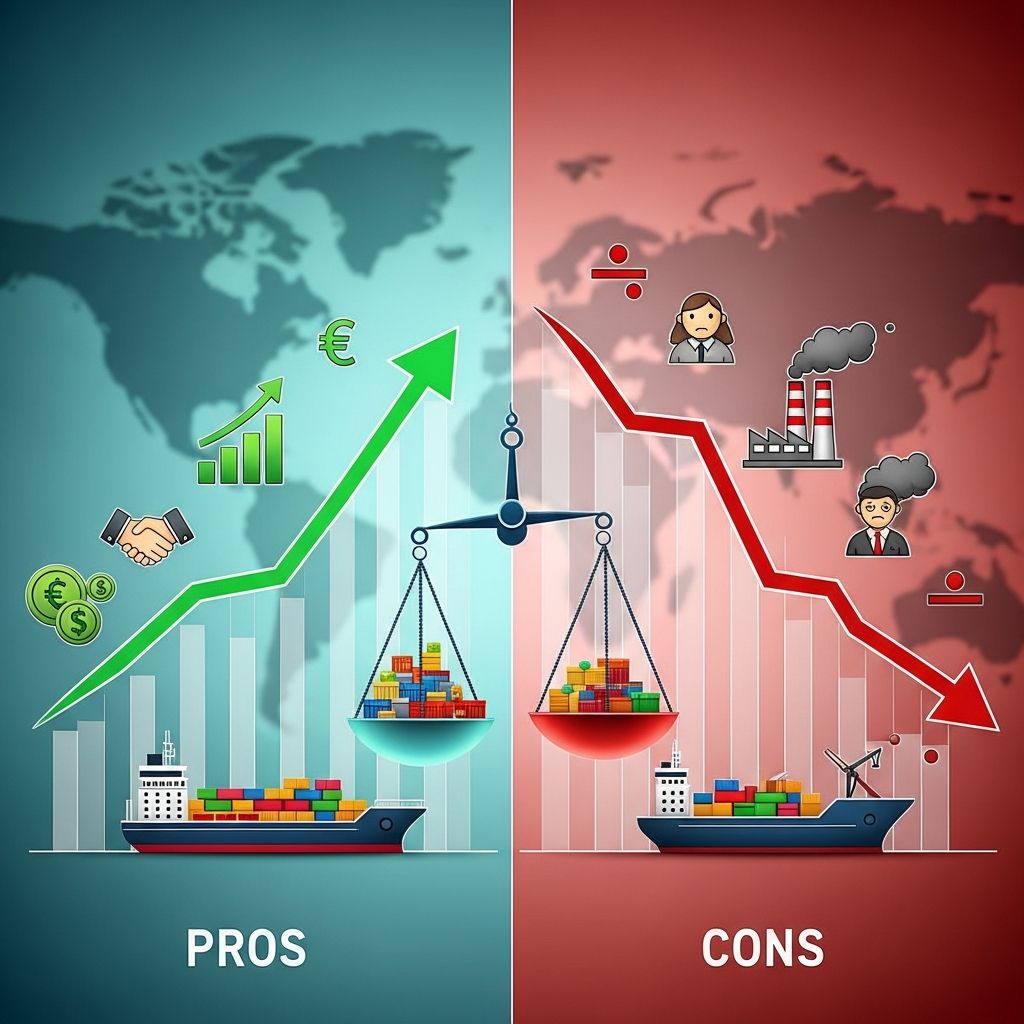
The Advantages of Free Trade Agreements
Increased Market Access and Economic Growth
One of the most significant benefits of free trade agreements is the substantial increase in market access for participating nations. By eliminating tariffs and import quotas, FTAs make products more competitive and affordable in foreign markets. This expanded market access is particularly valuable for industries such as information technology, aviation, and healthcare, which traditionally face high export duties. When companies can access larger markets without tariff barriers, they can increase their production volumes and revenue streams, leading to substantial economic growth.
The economic growth stimulated by FTAs extends throughout the economy. According to trade data, the Office of the U.S. Trade Representative reported that trade with FTA partners generated an estimated 3.9 million U.S. jobs in 2019, demonstrating the substantial employment benefits these agreements can provide. This job creation occurs across multiple sectors as companies expand operations to meet increased international demand.
Consumer Benefits and Lower Prices
Free trade agreements deliver substantial benefits to consumers by increasing competition and reducing prices. When tariffs are eliminated and import quotas removed, more competitors enter the market, driving down prices and forcing businesses to improve product quality to remain competitive. This competitive pressure ensures that consumers enjoy access to a wider variety of products at lower costs.
The reduction in import costs directly translates to consumer savings. Companies that previously paid tariffs on imported materials can now pass those savings to consumers, and the enhanced competition prevents monopolies from forming and maintaining artificially high prices. For example, consumers may access technology products, automotive components, or healthcare services at significantly reduced prices compared to a protectionist environment.
Specialization and Comparative Advantage
Free trade agreements enable countries to specialize in industries where they possess a comparative advantage, leading to increased efficiency and productivity. Rather than attempting to produce everything domestically, nations can focus resources on sectors where they excel, trading for goods they can obtain more efficiently from partners. This specialization maximizes resource utilization, reduces waste, and increases overall production efficiency across trading blocs.
When countries concentrate on their comparative advantages, the entire global economy becomes more efficient. Production moves to locations where it can be accomplished most cost-effectively, resources are allocated optimally, and consumers worldwide benefit from the resulting increased availability of goods and services.
Foreign Investment and Business Stability
Free trade agreements attract foreign direct investment by providing stability and predictability to the business environment. International investors are more likely to establish operations in countries with predictable trade rules and secure market access. This influx of foreign investment creates additional job opportunities, transfers technology and expertise, and stimulates further economic development. The stability provided by FTAs signals to multinational corporations that long-term investments will be protected and that market access is assured.
Global Cooperation and Peace
Beyond economic metrics, free trade agreements foster stronger relationships between countries and promote global cooperation. Economic interdependence creates mutual incentives for maintaining peaceful relations, as conflict would disrupt beneficial trade flows and harm all parties involved. When nations have substantial economic ties, they are more inclined to resolve disputes through negotiation rather than confrontation, contributing to greater international stability.
The Disadvantages of Free Trade Agreements
Job Displacement and Industry Disruption
Despite significant benefits, free trade agreements present substantial challenges, most notably job displacement. Industries that cannot compete with lower-priced imports may experience significant disruptions, particularly in manufacturing sectors such as textiles and basic production. When tariffs are eliminated, cheap imports can flood domestic markets, forcing less efficient domestic producers to reduce operations or close entirely, resulting in job losses for workers in those industries.
The transition costs are often severe and concentrated geographically, affecting specific communities more than others. While the overall economy benefits, workers in declining industries may face long-term unemployment, wage reductions, or the need to relocate or retrain—outcomes that create real hardship for affected individuals and families.
Economic Inequality and Unequal Distribution of Benefits
While free trade can boost overall economic growth, it often exacerbates inequality within countries. The benefits tend to accrue disproportionately to capital owners, highly skilled workers, and companies operating in competitive industries, while workers in declining sectors bear most of the adjustment costs. This unequal distribution of benefits can create social tension and political backlash against trade agreements.
Different regions experience vastly different impacts from free trade agreements. Coastal areas with major ports may experience significant benefits, while inland regions dependent on protected industries may suffer substantial economic decline. This geographic inequality can widen the gap between prosperous and struggling communities.
Intellectual Property and Counterfeiting Risks
Free trade agreements present substantial risks to intellectual property protection. When imports are freely traded, domestic producers can often copy products and sell them as knock-offs without fear of legal repercussions unless the FTA includes specific provisions for intellectual property laws and enforcement. Without robust IP protections embedded in the agreement, exporting companies face the risk of having their innovations stolen and marketed by competitors in partner countries.
This challenge is particularly acute for companies in technology, pharmaceuticals, and branded goods sectors. If an FTA lacks comprehensive intellectual property enforcement mechanisms, companies may hesitate to invest in research and development, knowing their innovations could be easily replicated by competitors operating in jurisdictions with weak IP protections.
Complex Regulatory Compliance
Free trade agreements introduce significant regulatory complexity for businesses operating across borders. Companies must navigate rules of origin requirements, which specify where products must be manufactured or processed to qualify for preferential tariff treatment. These complex compliance requirements demand substantial record-keeping, documentation, and administrative resources.
Understanding which shipments qualify for free trade agreement benefits requires careful interpretation of rules of origin and other compliance provisions. Companies must determine whether their products meet the specific origin requirements established in each FTA, and failure to comply can result in tariffs being applied retroactively and other penalties.
Environmental and Labor Standard Challenges
While modern FTAs increasingly include provisions addressing environmental standards and labor rights, implementation and enforcement remain challenging. Countries may have very different environmental and labor regulations, creating concerns that free trade will lead to a race to the bottom, where manufacturers relocate to jurisdictions with the weakest standards to minimize costs. Without effective enforcement mechanisms, these provisions may remain largely symbolic rather than producing meaningful improvements.
Frequently Asked Questions About Free Trade Agreements
What are the main goals of free trade agreements?
The primary goals of FTAs are to reduce or eliminate trade barriers, increase market access for exports, promote economic growth, encourage specialization based on comparative advantage, and create more stable and predictable trading conditions for businesses and investors.
How do free trade agreements affect employment?
FTAs can both create and destroy jobs. While they generate overall economic growth and employment gains, certain industries face job displacement due to increased competition from imports. The challenge lies in managing the transition for affected workers through retraining programs and adjustment assistance.
What is the difference between an FTA and a preferential trade agreement?
A preferential trade agreement (PTA) confers trade advantages to specific products from participating countries, while a free trade agreement removes or substantially reduces tariffs on most goods and services traded between member nations.
Do free trade agreements protect intellectual property?
Modern FTAs increasingly include intellectual property provisions, but the strength of these protections varies significantly. Effective protection requires both legal provisions and enforcement mechanisms, which may be weak in some partner countries.
How can businesses determine if their shipments qualify for FTA benefits?
Companies must interpret the rules of origin specified in the FTA and ensure their products meet the defined requirements. This typically involves maintaining detailed documentation regarding where components are sourced and how products are manufactured or processed.
What industries benefit most from free trade agreements?
Industries with high export potential and those facing significant trade barriers generally benefit most from FTAs. These include information technology, aviation, healthcare, automotive manufacturing, and agricultural sectors. However, traditional manufacturing industries like textiles may face increased competition.
Conclusion
Free trade agreements represent complex policy instruments with substantial potential benefits and significant challenges. On the positive side, FTAs expand market access, stimulate economic growth, lower consumer prices, attract foreign investment, and promote global cooperation. These agreements enable specialization and efficiency gains that benefit the overall economy.
However, policymakers must carefully consider the disadvantages, including job displacement in vulnerable industries, unequal distribution of benefits, intellectual property risks, regulatory complexity, and environmental and labor standard challenges. Successful FTAs require robust enforcement mechanisms, comprehensive safeguards for workers and communities, and serious commitment to environmental and labor provisions.
The key to maximizing FTA benefits while minimizing harms involves thoughtful design of agreements, strong enforcement of all provisions, and complementary domestic policies that support affected workers through transition assistance and retraining programs. When structured and implemented effectively, free trade agreements can serve as powerful engines for economic growth and international cooperation while ensuring that the benefits are more widely shared across society.
References
- Free Trade Agreements | Challenges & Advantages — One Union Solutions. https://oneunionsolutions.com/blog/free-trade-agreements-challenges-advantages/
- Free Trade Area – Overview, Advantages and Disadvantages — Corporate Finance Institute. https://corporatefinanceinstitute.com/resources/economics/free-trade-area/
- Free Trade Agreement Overview — International Trade Administration, U.S. Department of Commerce. https://www.trade.gov/free-trade-agreement-overview
- Free Trade Agreements (FTAs) | Meaning, Example, Benefits & More — Drip Capital. https://www.dripcapital.com/en-us/resources/blog/what-is-a-free-trade-agreement
- Pros and Cons of Free Trade Agreements Explained — The Muse. https://www.themuse.com/advice/pros-and-cons-of-free-trade
Similar Articles








Read full bio of medha deb