Free on Board (FOB): Definition and Shipping Terms
Master FOB shipping terms: Understand liability, costs, and risk transfer in international trade.
Free on Board (FOB): Definition and Shipping Terms Explained
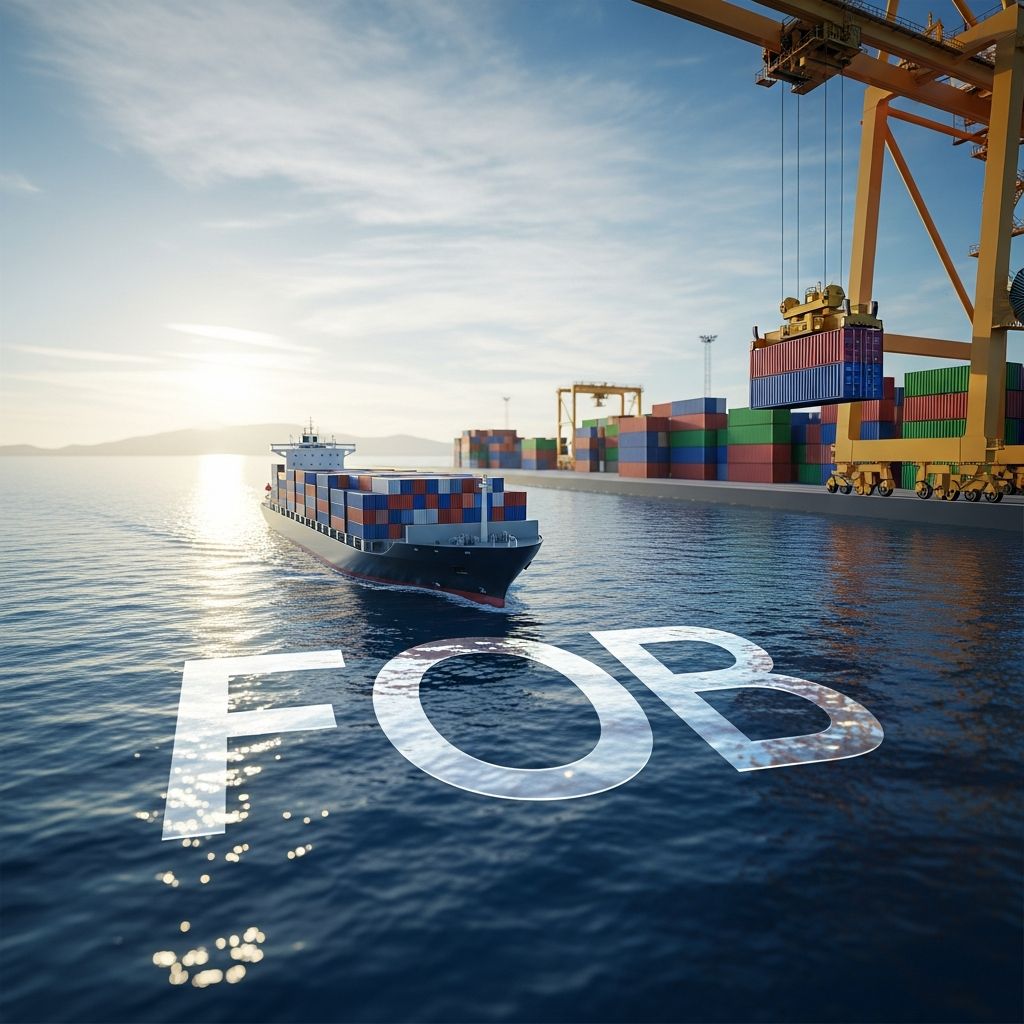
Free on Board, commonly abbreviated as FOB or F.O.B., is a critical shipping term used in both domestic and international commerce to determine when the responsibility, risk, and costs of goods transfer from the seller to the buyer. This term is essential in trade negotiations and helps establish clear expectations between parties involved in the shipment process. Understanding FOB terms can significantly impact your supply chain management, insurance costs, and overall logistics strategy.
The International Chamber of Commerce established FOB as one of the 11 Incoterms (International Commercial Terms) to standardize shipping practices globally. By clearly outlining the liabilities of each party, FOB terms help simplify negotiations and minimize disputes in international trade. Whether you are a buyer or seller, understanding how FOB works is crucial for managing your shipping responsibilities effectively.
What Does Free on Board Mean?
Free on Board specifies at what point respective obligations, costs, and risk involved in the delivery of goods shift from the seller to the buyer. The term indicates that goods are placed on a vessel for shipment at a designated place without buyer expense for packing, cartage, or other initial preparation costs. At the designated FOB point, the legal title, the rights that come with that title, and the risk of loss passes from seller to buyer.
It is important to note that FOB does not define the point at which ownership of the goods is transferred. Ownership transfer is typically stated in the bill of sale or a separate agreement. Instead, FOB focuses on when responsibility, risk, and costs shift between parties during the shipping process.
FOB is one of the most commonly used Incoterms in international trade. It is specifically applied to goods transported by sea or inland waterway, distinguishing it from other Incoterms designed for different transportation methods.
Two Main Types of FOB Terms
FOB can be modified in two primary ways to further specify when each party assumes liability and responsibility. These modifications are crucial for parties to understand exactly when their obligations begin and end.
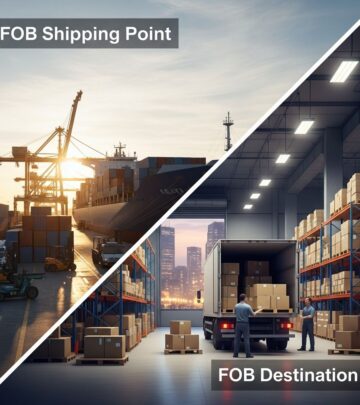
FOB Origin (Shipping Point)
FOB Origin, also known as FOB Shipping Point or FOB Place of Origin, indicates that the buyer assumes liability for the goods and receives ownership at the origin point. Under FOB Origin terms, the buyer becomes the official owner of the cargo starting at its origin location and assumes all liabilities and risks associated with the cargo’s transportation from that point forward.
When FOB Origin is selected, the seller’s responsibilities are clearly defined and limited. The exporter is responsible for:
– Loading the goods onto the vehicle that will transport them to the port- Covering the transportation costs to the specified port- Paying for port and loading expenses for placing the goods on the ship- Covering customs clearing expenses for export
Once the goods are loaded onto the ship and customs formalities are complete, the risk transfers entirely to the buyer. From that point forward, all logistical processes, costs, and risks become the buyer’s responsibility, and the seller has fully fulfilled their obligations in the export process.
The buyer then assumes responsibility for costs until final delivery, including international freight, insurance, port expenses at the destination country, unloading fees, internal taxes, and freight costs to the final delivery point.
FOB Destination
FOB Destination, also regularly notated as FOB Place of Destination, appoints the liability and ownership of products in transit to the seller until they are received by the buyer. Under FOB Destination terms, the seller retains ownership of the freight and maintains responsibility for any lost, stolen, or damaged products from origin all the way to the final delivery point.
This arrangement differs significantly from FOB Origin because the seller bears the risk throughout the entire shipping journey. The seller is responsible for arranging transportation, paying freight costs, maintaining insurance, and handling any claims for loss or damage that occur during transit. The buyer only assumes responsibility once the goods are officially received and accepted.
FOB and Freight Payment Options
FOB terms can be further refined by combining them with freight payment designations. These combinations provide even greater clarity about cost allocation and responsibility:
FOB Origin, Freight Prepaid
Under this arrangement, the buyer (consignee) becomes the official owner of the cargo at its origin and assumes all liabilities at that point. However, the seller (shipper) pays for all transportation costs upfront. This arrangement is beneficial when sellers want to offer competitive pricing by covering initial shipping expenses while transferring risk to the buyer.
FOB Origin, Freight Collect
With this term, the buyer (consignee) becomes the owner of the cargo at its origin and assumes all liabilities. Additionally, the buyer is responsible for paying the transportation costs. This arrangement is common when buyers want complete control over their logistics and carrier selection.
FOB Destination, Freight Prepaid
The seller (shipper) retains ownership of the freight until it delivers, making them liable for any loss, theft, or damage from origin to destination. Under this term, the seller also pays any freight bills. This arrangement places maximum responsibility on the seller but can be attractive to buyers seeking minimal involvement in logistics.
FOB Destination, Freight Collect
A shipment’s buyer (consignee) agrees to pay for its transportation costs under this arrangement. However, the seller (shipper) remains the shipment’s owner until its final delivery, making them liable for the goods throughout transit. This combination balances cost responsibility and ownership risk between parties.
Seller Responsibilities Under FOB Terms
When FOB is selected for a transaction, the exporter assumes specific responsibilities that must be completed before the goods leave the port of origin. These obligations are fundamental to the FOB agreement and include:
– Loading the goods onto the transport vehicle- Covering transportation costs to the designated port- Paying for port and loading expenses- Handling and paying for export customs clearance- Ensuring proper documentation for international shipment- Managing any pre-shipment inspections or certifications
The seller’s role concludes once the goods are successfully placed on the vessel and all export customs formalities are completed. At that critical moment, responsibility transfers entirely to the buyer, and the seller is no longer liable for the shipment.
Buyer Responsibilities Under FOB Terms
Once goods are on the vessel and leave the port of origin, the buyer assumes comprehensive responsibility for the shipment. Buyer obligations include:
– Arranging and paying for international freight and insurance- Managing port expenses at the destination country- Paying unloading fees- Handling internal taxes and duties at destination- Arranging freight costs to the final delivery point- Accepting responsibility for loss or damage during transit- Organizing customs clearance at the destination
The buyer maintains these responsibilities until the goods are officially delivered and received. This comprehensive responsibility gives buyers significant control over their supply chain but also requires careful attention to logistics and insurance arrangements.
How Shipping Costs Are Allocated in FOB Agreements
Shipping costs in Free on Board agreements are allocated depending on the specific type of FOB agreement established. In FOB Origin agreements, the buyer pays shipping costs from the seller’s point of origin to the final destination. These costs include:
– Transportation and handling charges- Loading goods onto the shipping vessel- Marine freight transport fees- Unloading services- Insurance for the cargo- Custody and clearing services- Transportation to the final destination point
Understanding these cost allocations is essential for accurate pricing and budgeting. Buyers must factor all potential costs into their purchasing decisions, while sellers must clearly communicate what costs are included in their pricing structures.
Benefits of FOB Terms for Different Parties
Benefits for Buyers: FOB arrangements offer several advantages for purchasing organizations. Buyers can better manage their transportation costs by choosing preferred carriers and routes. They assume responsibility for loss or damage but can select insurance providers that meet their specific needs and risk tolerance. Buyers directly manage logistics, which can streamline their supply chain operations. Additionally, buyers can negotiate with carriers for more favorable shipping terms and costs, leveraging their volume or frequency of shipments.
Benefits for Sellers: Sellers also gain significant advantages from FOB arrangements. They transfer shipping costs to the buyer, which simplifies their pricing models and removes the additional responsibility of managing complex international logistics. Sellers aren’t responsible for goods once they leave the origin point, which minimizes claims and disputes over loss or damage. This arrangement allows sellers to avoid complex logistics operations, enabling them to focus their resources solely on production and order fulfillment.
When to Use FOB Terms
FOB arrangements are particularly useful in specific business scenarios. They are ideal for domestic shipments or when the buyer wants complete control over shipping logistics. FOB Origin is commonly used when buyers have established relationships with preferred carriers or when they want to consolidate shipments from multiple suppliers. FOB Destination is preferred when sellers want to maintain control over the delivery process or when they operate with established logistics networks that provide competitive advantages.
The choice between FOB Origin and FOB Destination often depends on industry practices, buyer-seller relationships, and the nature of the products being shipped. For example, FOB Origin is typical in many commodity markets, while FOB Destination is common in specialized manufacturing where quality control during shipping is critical.
How FOB Simplifies B2B Trade Negotiations
FOB terms significantly simplify business-to-business trade negotiations by clearly defining the responsibilities of buyers and sellers during shipping. Specifically, FOB establishes the point at which responsibility, risk, and costs transfer from the seller to the buyer. This clarity can save considerable time spent on lengthy negotiations, while also reducing ambiguity and minimizing potential disputes that might otherwise arise during the shipping process.
By establishing standardized terms recognized internationally, FOB provides a common language for trade partners across different countries and industries. This standardization reduces misunderstandings and facilitates smoother commercial relationships.
Important Considerations for FOB Agreements
When establishing FOB agreements, parties must address several important considerations. Since there can be various rules and legal definitions of FOB, the parties involved should specify which governing laws apply to the shipment. FOB agreements should clearly identify the specific port or location where goods will be loaded onto the vessel, as this designation is critical for determining when risk transfers.
Additionally, parties should establish clear communication protocols regarding documentation, inspection procedures, and notification requirements. Insurance arrangements should be explicitly detailed, including who is responsible for obtaining coverage and at what point coverage becomes active.
Frequently Asked Questions About FOB Shipping
Q: What does FOB stand for?
A: FOB stands for “Free on Board.” The term sometimes appears as “Freight on Board,” though “Free on Board” is the standard designation used in international commerce. It specifies when responsibility, risk, and costs of goods transfer from seller to buyer.
Q: Does FOB apply to all types of shipping?
A: No, FOB is specifically used only for goods transported by sea or inland waterway. Different Incoterms are used for other transportation methods such as air freight, rail, or truck shipments.
Q: Does FOB determine when ownership transfers?
A: No, FOB does not define the point at which ownership of the goods transfers. Ownership transfer is typically stated in the bill of sale or a separate agreement distinct from FOB terms.
Q: Which is better for buyers: FOB Origin or FOB Destination?
A: FOB Origin is better when buyers want control over carrier selection and shipping logistics. FOB Destination is preferable when buyers want minimal involvement in shipping arrangements and prefer sellers to manage the entire process.
Q: How does insurance work with FOB terms?
A: Under FOB Origin, the buyer is responsible for arranging and paying for insurance once the goods leave the seller’s location. Under FOB Destination, the seller maintains responsibility for insurance until the goods reach their final destination.
Q: Can FOB terms be modified?
A: Yes, FOB can be combined with freight payment designations such as “Freight Prepaid” or “Freight Collect” to provide additional clarity about cost allocation and payment responsibilities between parties.
References
- What is Free on Board (FOB) Shipping? — StoneX. 2024. https://www.stonex.com/en/financial-glossary/free-on-board/
- What Does Free on Board (FOB) Mean in Freight Shipping? — ATS Inc. https://www.atsinc.com/blog/free-on-board-fob-definition
- Free on Board (FOB) — Cornell Law School Legal Information Institute. https://www.law.cornell.edu/wex/free_on_board_(fob)
- Free on Board Shipping (FOB Incoterms® Meaning) — Maersk. 2023. https://www.maersk.com/logistics-explained/customs-and-compliance/2023/10/05/free-on-board-shipping
- FOB (Shipping) — International Chamber of Commerce. https://en.wikipedia.org/wiki/FOB_(shipping)
Similar Articles








Read full bio of Sneha Tete