Free Market: Definition, Characteristics, and Economic Impact
Understanding free markets: How supply, demand, and competition drive economic growth.

What Is a Free Market?
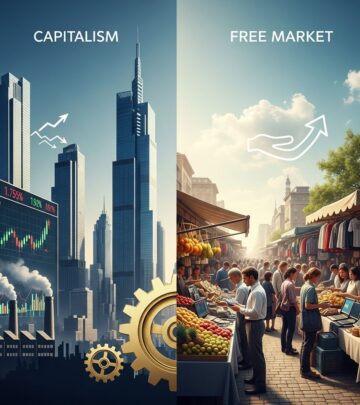
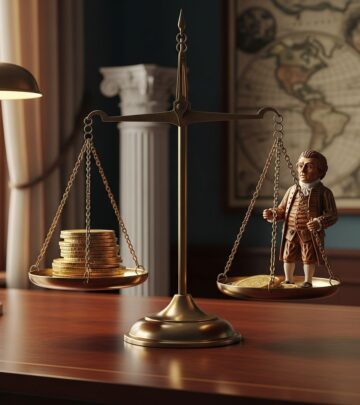
A free market is an economic system in which prices are determined by supply and demand with minimal government intervention. In a free market economy, consumers and businesses make decisions about production, distribution, and consumption of goods and services based on voluntary exchange and competition. The fundamental principle underlying a free market is that individuals acting in their own self-interest will generate optimal outcomes for society as a whole through the mechanism known as the “invisible hand,” a concept popularized by economist Adam Smith.
Free markets operate on the basis that both buyers and sellers have the freedom to enter and exit transactions without coercion or unnecessary restrictions. This contrasts with centrally planned economies, where government authorities make decisions about what is produced, how much is produced, and at what price goods and services are sold. The free market system has become the dominant economic model in most developed nations and represents a cornerstone of capitalist economies worldwide.
Key Characteristics of Free Markets
Free markets are distinguished by several defining characteristics that differentiate them from other economic systems:
- Supply and Demand: Prices are determined through the interaction of supply and demand rather than by government decree or central planning authorities.
- Competition: Multiple producers and sellers compete with one another, which drives innovation and efficiency while keeping prices competitive.
- Consumer Choice: Individuals have the freedom to choose what products and services they purchase based on their preferences and budgets.
- Voluntary Exchange: All transactions occur through mutual agreement between buyers and sellers without force or coercion.
- Private Property Rights: Individuals and businesses have the right to own property and keep the profits derived from their economic activities.
- Minimal Government Intervention: While some regulation exists to prevent fraud and protect competition, government involvement in economic decisions is limited.
- Price Mechanism: Prices serve as signals that guide producers and consumers in making economic decisions about resource allocation.
- Profit Motive: Businesses are motivated by the desire to earn profits, which incentivizes efficiency and innovation.
How Free Markets Work
The mechanics of free markets operate through the fundamental economic principle of supply and demand. When consumers demand a product and there is limited supply, prices tend to rise. This higher price encourages producers to increase production to meet demand and capture the additional revenue. Conversely, when supply exceeds demand, prices decline, prompting producers to reduce production or improve product quality and features to attract buyers.
This price mechanism acts as an invisible hand that coordinates economic activity without central planning. Producers respond to price signals to decide what to produce, how much to produce, and what resources to allocate. Consumers respond to prices in deciding what to purchase and how much to spend. Through this decentralized process of price discovery and resource allocation, markets achieve an equilibrium where quantity supplied equals quantity demanded.
Competition plays a crucial role in the functioning of free markets. When multiple sellers offer similar products or services, they must compete on price, quality, and innovation to attract customers. This competition benefits consumers through lower prices, better products, and improved service. It also incentivizes businesses to operate efficiently, minimize waste, and invest in research and development to maintain their competitive advantage.
Advantages of Free Markets
Free market economies offer numerous advantages that have contributed to their widespread adoption:
- Efficiency: Competition and the profit motive drive businesses to operate efficiently and allocate resources where they are most productive and valued by consumers.
- Innovation: The desire to earn profits and gain competitive advantage encourages companies to invest in research, development, and new technologies.
- Consumer Benefit: Competition leads to lower prices, higher quality products, and better customer service as businesses strive to attract and retain customers.
- Economic Growth: Free markets generally produce higher levels of economic growth and productivity compared to centrally planned economies.
- Personal Freedom: Individuals have the freedom to choose their occupations, start businesses, and make consumption decisions according to their preferences.
- Decentralized Decision-Making: Economic decisions are made by millions of individuals rather than a central authority, reducing the risk of catastrophic policy errors.
- Responsiveness: Markets quickly adapt to changes in consumer preferences and technological developments.
Disadvantages and Limitations of Free Markets
Despite their many advantages, free markets face certain limitations and challenges:
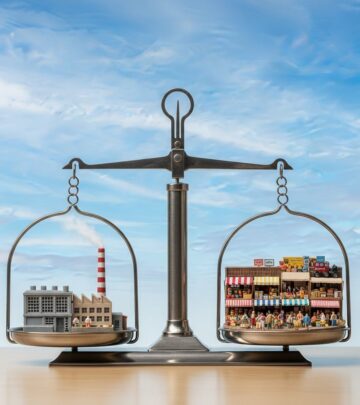
- Market Failures: Free markets may fail to produce optimal outcomes in cases of externalities (such as pollution), public goods, and information asymmetries.
- Monopolies and Oligopolies: Without adequate regulation, markets can become dominated by a small number of large firms that restrict competition and raise prices.
- Income Inequality: Free markets may generate significant disparities in wealth and income, as market rewards are based on productivity and market value.
- Instability: Unregulated markets can experience cycles of boom and bust, leading to economic instability and recessions.
- Externalities: Market transactions may impose costs on third parties not involved in the exchange, such as environmental pollution.
- Information Asymmetry: Buyers and sellers may not have equal access to information, leading to inefficient outcomes and potential fraud.
- Social Welfare: Markets may not adequately provide for basic needs like healthcare, education, and social safety nets, requiring government intervention.
Free Markets vs. Planned Economies
Free markets differ fundamentally from planned or command economies, where government authorities make decisions about production, pricing, and distribution. In a planned economy, the state owns most productive resources and directs economic activity according to a central plan. Government officials determine what goods are produced, in what quantities, at what prices, and how resources are allocated.
Planned economies attempt to eliminate market failures and reduce inequality by having the state control economic activity. However, they often struggle with inefficiency because central planners lack the information and incentives needed to allocate resources optimally. Without the price mechanism to coordinate supply and demand, planned economies frequently experience shortages of some goods and surpluses of others.
In practice, most modern economies are mixed economies that combine elements of both free markets and government planning. Governments regulate markets to prevent fraud, protect competition, and address market failures, while relying on market mechanisms for most resource allocation decisions. The degree of government intervention varies significantly across countries based on their political and cultural values.
The Role of Government in Free Markets
Although free markets emphasize minimal government intervention, government still plays important roles in maintaining and regulating market economies:
- Enforcing Contracts: Government courts enforce contracts and protect property rights, which are essential for voluntary exchange.
- Preventing Fraud: Regulatory agencies work to prevent deceptive and fraudulent business practices that undermine market efficiency.
- Protecting Competition: Antitrust laws prevent monopolies and anticompetitive behavior that would restrict consumer choice and raise prices.
- Addressing Externalities: Environmental regulations address pollution and other negative externalities not reflected in market prices.
- Providing Public Goods: Governments provide goods like national defense and infrastructure that markets alone cannot efficiently supply.
- Consumer Protection: Regulations ensure product safety and require accurate labeling and disclosure of information.
- Monetary Policy: Central banks manage the money supply and interest rates to promote economic stability and growth.
Examples of Free Market Systems
Several countries are recognized as having relatively free market economies:
United States: The U.S. has one of the world’s most developed free market economies, with minimal price controls and strong protection of property rights. However, it includes regulations in areas like environmental protection, workplace safety, and financial markets.
United Kingdom: The UK operates a market economy with limited government control over business decisions. The government provides essential services and regulates industries to protect consumers and competition.
Singapore: Known for its pro-business policies and low tax rates, Singapore has developed one of the world’s freest market economies with efficient government services.
Switzerland: Switzerland maintains a free market economy with strong protection of property rights and limited government intervention in business decisions.
Australia: As a developed market economy, Australia combines free market principles with government provision of social services and regulation of key industries.
Modern Challenges to Free Markets
Contemporary free market economies face several emerging challenges:
- Globalization: Increased global trade and capital flows create winners and losers, potentially leading to political pressure for protectionist policies.
- Technology and Automation: Rapid technological change can displace workers faster than new jobs are created, raising questions about market outcomes.
- Climate Change: Markets have not adequately priced in environmental costs, leading to calls for government intervention through carbon pricing and regulation.
- Financial Instability: Complex financial markets and instruments have created risks of systemic instability, as demonstrated by the 2008 financial crisis.
- Digital Economy: Large technology platforms create network effects that can lead to market concentration and reduced competition.
Frequently Asked Questions
What is the primary difference between a free market and a command economy?
In a free market, prices and production are determined by supply and demand through voluntary exchange, while in a command economy, the government makes these decisions through central planning.
Why is competition important in free markets?
Competition encourages businesses to innovate, improve quality, and lower prices. It ensures that resources are allocated efficiently and that consumers have choices.
Can free markets exist without any government regulation?
In theory, yes, but in practice, some minimal government role is necessary to enforce property rights, prevent fraud, and address market failures like pollution and monopolies.
How do prices work as signals in free markets?
Rising prices signal producers to increase supply and consumers to reduce demand, while falling prices do the opposite. This price mechanism coordinates economic activity without central planning.
What are market failures in free markets?
Market failures occur when free markets fail to allocate resources efficiently, such as with externalities (pollution), public goods (national defense), and information asymmetries.
Is the United States a pure free market?
No, the United States is a mixed economy. While it relies heavily on market mechanisms, the government regulates industries, provides public goods, and intervenes to address market failures.
References
- The Wealth of Nations — Adam Smith. 1776. Foundational work on free market economics and the invisible hand concept. Available through academic archives.
- Economic Report of the President — Executive Office of the President of the United States. 2024. https://www.whitehouse.gov/wp-content/uploads/2024/03/ERP-2024.pdf
- Index of Economic Freedom — The Heritage Foundation and The Wall Street Journal. 2024. https://www.heritage.org/index/
- Principles of Economics — N. Gregory Mankiw. Cengage Learning, 9th Edition, 2021. Academic textbook on economic principles including free market mechanisms.
- OECD Economic Outlook — Organisation for Economic Co-operation and Development. December 2024. https://www.oecd.org/economic-outlook/
- Competition Policy and Market Failures — Federal Trade Commission. 2024. https://www.ftc.gov/
Similar Articles








Read full bio of Sneha Tete