Fracking: Definition, Process, Benefits, and Environmental Impact
Understanding hydraulic fracturing: How it unlocks oil and gas reserves underground.
What Is Fracking?
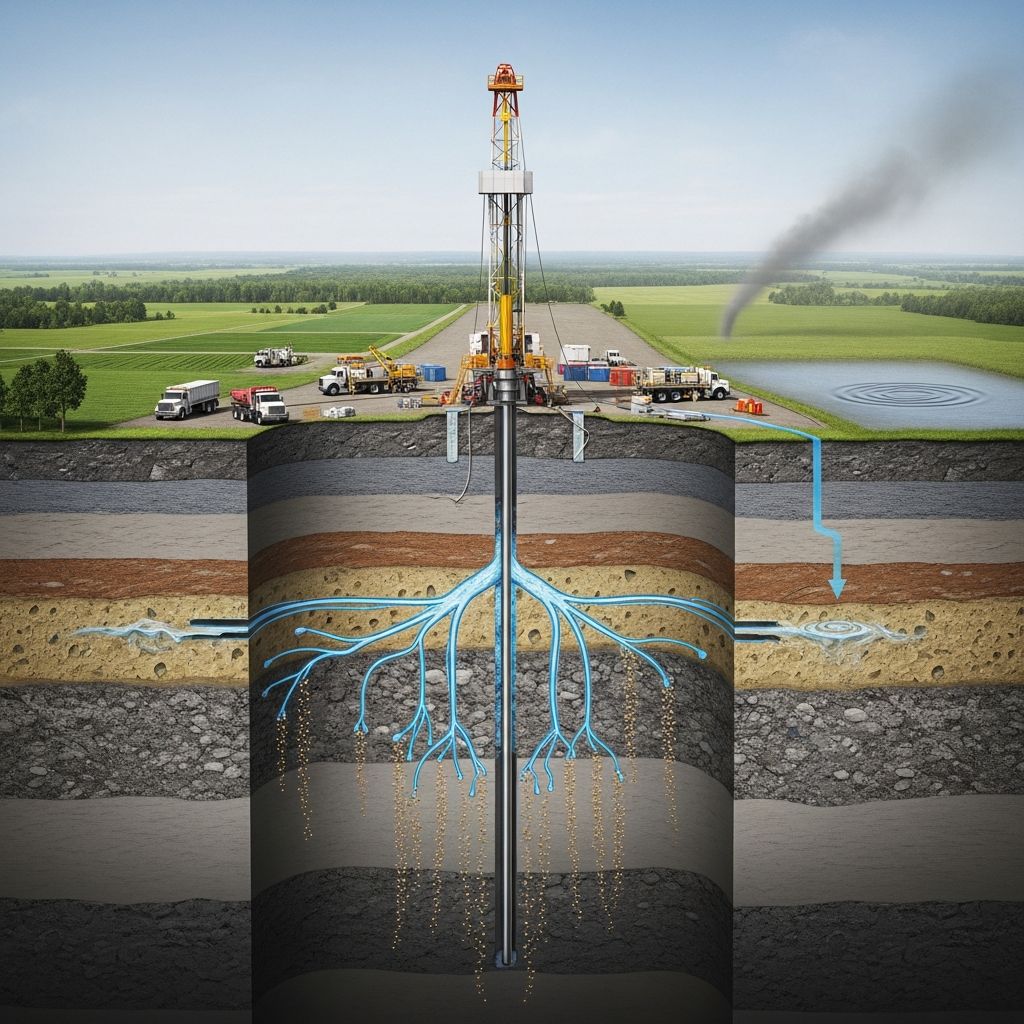
Fracking, formally known as hydraulic fracturing, is a well-stimulation technique employed to enhance the productivity of oil and natural gas wells. The process involves injecting highly pressurized liquids—typically a mixture of water, sand, and various chemical additives—deep into rock formations to create fractures and fissures. These fractures allow trapped hydrocarbons (oil and gas) to flow more freely toward the wellbore, making extraction economically viable from formations that would otherwise be unproductive. Fracking has revolutionized the energy industry over the past two decades, particularly in North America, by unlocking vast reserves of shale gas and tight oil that were previously inaccessible.
The term “fracking” is derived from the fracturing process itself and has become synonymous with modern unconventional oil and gas extraction. While the technique has existed in various forms since the 1940s, its large-scale application combined with horizontal drilling technology only became commercially viable in the early 2000s. This technological advancement has fundamentally transformed energy markets and geopolitical dynamics globally.
How Fracking Works: The Process Explained
Understanding the fracking process requires knowledge of several interconnected stages. The operation begins with drilling either a vertical or horizontal wellbore into the targeted rock formation. In contemporary applications, horizontal drilling is preferred because it allows operators to access a larger area of the productive formation from a single surface location.
Key Stages of the Fracking Process
- Well Preparation: The wellbore is lined with steel casing and cemented in place to prevent fluid migration into surrounding groundwater zones and to isolate different geological layers.
- Perforation: Small holes are created in the casing and surrounding rock at predetermined depths where hydrocarbons are suspected to be present.
- Fluid Injection: A slurry of water, sand (proppant), and chemical additives is pumped into the wellbore at high pressure, typically exceeding 5,000 pounds per square inch (psi).
- Fracture Propagation: The extreme pressure forces the rock to rupture, creating a network of fissures that extend hundreds of feet away from the wellbore.
- Proppant Placement: As the fractures form, sand particles remain embedded within them, propping them open once pressure is released and preventing the fractures from closing.
- Production Phase: Once pressure is released, natural reservoir pressure pushes oil and gas through the open fractures into the wellbore for extraction.
Fracking Fluid Composition
The fluid mixture used in fracking serves multiple critical functions in the extraction process. Typically, the composition breaks down as follows:
| Component | Percentage | Purpose |
|---|---|---|
| Water | 85-90% | Primary carrier fluid and pressure medium |
| Sand (Proppant) | 9-12% | Keeps fractures open after pressure release |
| Chemical Additives | 0.5-2% | Reduces friction, prevents bacterial growth, controls viscosity |
While the chemical component represents a small percentage, these additives play crucial roles in optimizing the fracking process. Common additives include friction reducers, biocides, scale inhibitors, and surfactants. The specific formulation varies depending on geological conditions, target formation characteristics, and operator preferences.
Economic Benefits and Impact
Fracking has generated substantial economic benefits across multiple sectors of the energy industry and broader economy. The shale revolution, enabled by fracking technology, has had transformative effects:
- Energy Independence: Fracking has dramatically increased domestic oil and natural gas production in the United States, reducing dependence on foreign energy imports and enhancing national energy security.
- Job Creation: The oil and gas extraction industry has expanded significantly, creating hundreds of thousands of direct and indirect jobs in drilling, transportation, refining, and related sectors.
- Economic Growth: Increased production has contributed to economic expansion in energy-producing regions, generating tax revenue and royalty payments to landowners and governments.
- Lower Energy Prices: Increased supply of oil and natural gas has exerted downward pressure on energy prices, benefiting consumers and reducing heating and electricity costs.
- Industrial Development: Abundant and affordable natural gas has attracted petrochemical manufacturing and other energy-intensive industries to regions with strong supply.
- Investment Opportunities: The fracking industry has created investment opportunities in energy companies, technology providers, and service providers in the supply chain.
Environmental and Health Concerns
Despite significant economic benefits, fracking has generated considerable environmental and health-related concerns that merit serious consideration. These concerns encompass multiple dimensions:
Water Contamination Risks
One of the most significant concerns involves potential groundwater contamination. The injection of fracking fluids containing various chemical additives raises questions about environmental safety. Additionally, the disposal of produced water (saline water brought to the surface during production) requires careful management. Improper disposal or migration of fracking fluids through geological faults could potentially compromise drinking water supplies.
Seismic Activity
Scientific research has documented correlations between hydraulic fracturing operations and increased seismic activity in certain regions. The injection of large volumes of fluid into deep rock formations can trigger minor earthquakes. While most induced earthquakes are small and not felt at the surface, some have been significant enough to cause concern and property damage in affected communities.
Air Quality and Emissions
Fracking operations release volatile organic compounds (VOCs) and methane into the atmosphere, contributing to air pollution and climate change. Methane, a potent greenhouse gas, can be released during drilling, production, and transportation of natural gas. Leakage rates and fugitive emissions from fracking operations have been subjects of environmental research and regulatory scrutiny.
Land Use and Habitat Disruption
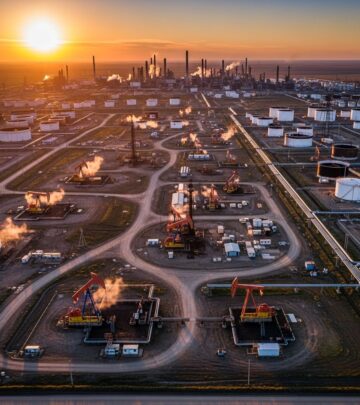
Large-scale fracking operations require extensive infrastructure including wellheads, pipelines, compressor stations, and access roads. This development can fragment ecosystems, disrupt wildlife habitats, and alter landscapes in environmentally sensitive areas. The cumulative impact of multiple drilling operations in tight geographical areas raises concerns about ecosystem integrity and biodiversity.
Regulatory Framework and Oversight
Fracking operations are subject to various regulatory frameworks that vary significantly by jurisdiction. In the United States, regulation occurs at both federal and state levels, with states typically exercising primary regulatory authority over oil and gas operations on state and private lands. Key regulatory aspects include:
- Well drilling standards and casing requirements
- Wastewater disposal and management protocols
- Environmental impact assessments and monitoring
- Disclosure of fracking fluid composition
- Bonding and financial assurance requirements
- Water use and withdrawal restrictions
- Air quality emission standards
Technological Advancements in Fracking
The fracking industry continues to evolve with ongoing technological innovations aimed at improving efficiency and reducing environmental impact. Recent developments include:
- Advanced Monitoring: Real-time data collection and analysis during fracking operations enable better optimization and enhanced safety.
- Proppant Innovation: Development of new proppant materials and designs improves conductivity and reduces environmental footprint.
- Fluid Alternatives: Research into less toxic and more environmentally friendly fracking fluid formulations continues.
- Horizontal Drilling Enhancements: Extended reach drilling and more precise well placement maximize resource recovery from individual wells.
- Wastewater Treatment: Improved treatment technologies enable water recycling and reduce fresh water consumption.
Fracking vs. Conventional Drilling
Fracking differs fundamentally from conventional oil and gas extraction methods. Conventional drilling targets reservoirs where hydrocarbons naturally flow toward the wellbore due to existing permeability and pressure. Fracking is employed in “tight” or “unconventional” formations where natural permeability is extremely low, making conventional extraction uneconomical. Fracking artificially creates pathways for hydrocarbon flow, making these previously unproductive formations economically viable. This distinction has enabled the extraction of resources from shale formations that contain enormous reserves but would otherwise remain inaccessible.
Global Fracking Activity
While the United States has been the global leader in fracking technology deployment, the technique is being adopted internationally. Significant unconventional shale reserves exist in Canada, Argentina, China, India, Russia, and Europe. However, adoption varies due to geological conditions, regulatory environments, public acceptance, and geopolitical factors. Some countries have imposed moratoriums or bans on fracking due to environmental concerns, while others are actively developing their shale resources.
Market Impact and Future Outlook
Fracking has fundamentally altered energy market dynamics. The shale boom in North America has changed global oil and gas supply dynamics, impacting commodity prices and geopolitical relationships. Looking forward, the role of fracking in energy markets will be influenced by climate change policies, renewable energy adoption rates, and long-term energy demand projections. The transition toward carbon neutrality and renewable energy may reduce fracking’s long-term relevance, though natural gas—often extracted through fracking—may serve as a transitional fuel during the energy transition.
Frequently Asked Questions
Q: Is fracking safe for drinking water?
A: While proper well construction and regulatory oversight aim to protect groundwater, concerns remain. Studies show that when wells are properly constructed with multiple cement layers and appropriate well design, the risk of direct contamination is minimized. However, operational failures and poor practices have been documented in some cases. Ongoing monitoring and stringent regulation are essential safeguards.
Q: How much water does fracking use?
A: A single fracking operation typically uses 2 to 10 million gallons of water, depending on well depth, rock formation characteristics, and operational design. While substantial, this represents a fraction of total water use in agriculture and other industries. In water-stressed regions, however, fracking water demand can be significant relative to local water availability.
Q: Can fracking cause earthquakes?
A: Scientific evidence indicates that hydraulic fracturing and wastewater injection can trigger induced seismic activity. Most induced earthquakes are minor (magnitude 3.0 or less) and not felt by people. However, some regions have experienced larger earthquakes. Geological conditions, injection volumes, and injection pressure all influence seismic risk.
Q: What chemicals are used in fracking fluid?
A: Fracking fluids contain water, sand, and chemical additives including friction reducers, biocides, surfactants, scale inhibitors, and clay stabilizers. Specific formulations vary by operator and geological conditions. Many states now require disclosure of chemical compositions, improving transparency and enabling better environmental monitoring.
Q: How long has fracking been used?
A: Hydraulic fracturing has been used since the 1940s, but commercial deployment at scale began in the early 2000s with technological advances in horizontal drilling. The combination of horizontal drilling and fracking enabled the shale revolution that transformed energy markets in North America.
Q: What is the difference between shale gas and conventional natural gas?
A: Conventional natural gas is found in permeable rock formations where it can flow naturally to the wellbore. Shale gas is trapped in tight, low-permeability rock and requires fracking to be commercially extracted. Both are chemically identical natural gas; extraction method differences relate to reservoir characteristics.
References
- Hydraulic Fracturing and Horizontal Drilling — U.S. Energy Information Administration (EIA). 2024. https://www.eia.gov/energyexplained/oil-and-natural-gas/
- Induced Seismicity Associated with Hydraulic Fracturing — U.S. Geological Survey (USGS). 2024. https://www.usgs.gov/programs/vhp/induced-seismicity
- Environmental Protection Agency: Hydraulic Fracturing — EPA. 2024. https://www.epa.gov/hfstudy
- Shale Gas Extraction and Environmental Impacts — Nature Energy. 2023. https://www.nature.com/articles/s41560-023-01234-7
- Global Shale Gas and Tight Oil Resources Assessment — U.S. Energy Information Administration. 2023. https://www.eia.gov/analysis/studies/worldshalegas/
Similar Articles








Read full bio of medha deb