The Four Ps of Marketing: A Complete Guide
Master the marketing mix: Product, Price, Place, and Promotion strategies.
Understanding the Four Ps of Marketing
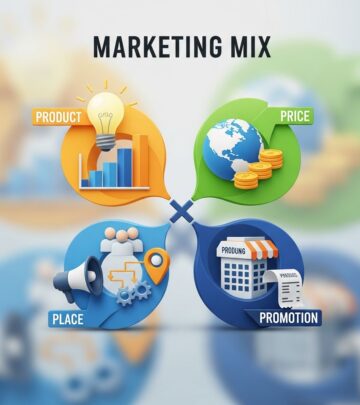
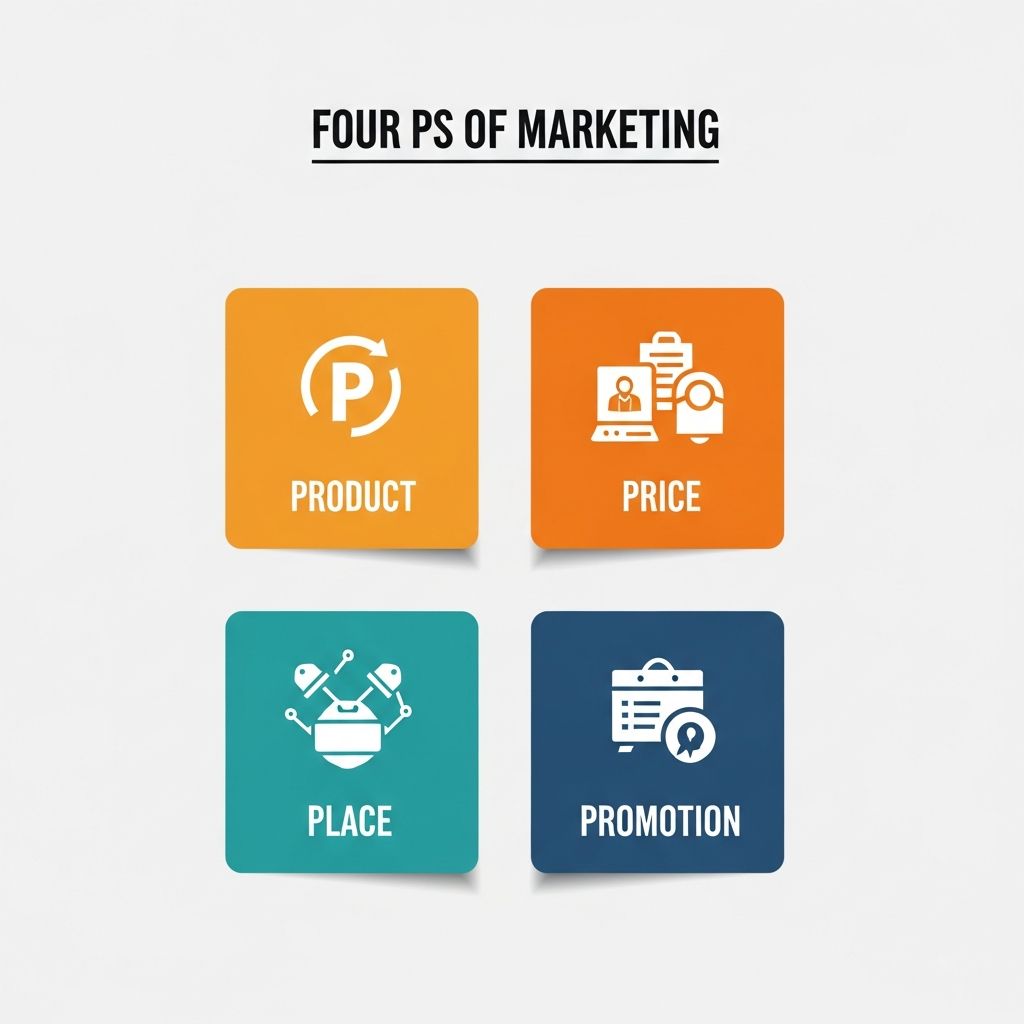
The four Ps of marketing represent one of the most fundamental and widely recognized frameworks in business strategy. This concept, formally introduced by E. Jerome McCarthy in his 1960s influential text Basic Marketing: A Managerial Approach, has become the cornerstone of modern marketing education and practice. The four Ps—product, price, place, and promotion—constitute the marketing mix, which refers to the combination of controllable factors that a company uses to influence consumer behavior and achieve its marketing objectives.
Understanding and effectively implementing the four Ps framework allows businesses to create a comprehensive marketing strategy that addresses all critical dimensions of bringing a product or service to market. Rather than focusing on isolated marketing activities, the four Ps encourage companies to think holistically about their market position and customer engagement. This integrated approach helps businesses develop the “right” product and make it available at the “right” place with the “right” promotion and at the “right” price, ultimately satisfying target consumers while meeting business objectives.
Product: Creating Value for Customers
The product represents the first and perhaps most foundational element of the marketing mix. It encompasses not only the physical good or service itself but also its features, benefits, design, quality, packaging, and brand identity. A product is essentially anything—tangible or intangible—that a company offers to satisfy customer needs and wants.
Developing an effective product strategy requires extensive market research and cross-departmental collaboration. Marketing teams work closely with product development, research and development, and engineering departments to understand evolving customer needs and competitive offerings. This process involves:
- Analyzing competitive products and identifying market gaps
- Gathering customer feedback and preferences
- Recommending ideal features and benefits
- Designing attractive and functional product packaging
- Establishing quality standards
- Creating unique value propositions
Companies must ensure their products differentiate them from competitors while remaining aligned with customer expectations and business goals. Product innovation and continuous improvement are essential for maintaining market competitiveness and customer satisfaction.
Price: Determining the Right Value Point
Pricing strategy represents the second critical component of the marketing mix. Price refers to the amount customers must pay to acquire a product or service. Determining the appropriate price requires balancing multiple considerations and understanding customer psychology, production costs, and competitive dynamics.
Marketing departments work with finance and sales teams to establish pricing strategies that serve multiple objectives:
- Maximizing revenue and profitability
- Increasing sales volume and market share
- Reflecting perceived customer value
- Considering production and distribution costs
- Analyzing competitor pricing strategies
- Accounting for customer willingness to pay
Effective pricing goes beyond simply covering costs; it requires understanding how customers perceive value and what they’re willing to pay for specific benefits. Companies may employ various pricing strategies, including premium pricing for high-value products, competitive pricing to match market rates, penetration pricing to enter new markets, or psychological pricing to influence purchasing behavior.
Place: Strategic Product Distribution
Place, also known as distribution, refers to how and where customers can access products. This element encompasses all channels and touchpoints through which a company makes products available to consumers. Place decisions determine whether customers purchase directly from the manufacturer, through retailers, distributors, or online platforms.
Marketing professionals evaluate several factors when making place decisions:
- Distribution channel effectiveness and reach
- Regional marketplace dynamics and competition
- Distribution costs and logistics efficiency
- Customer preferences regarding where they shop
- Geographic coverage and market penetration
- Online versus offline sales opportunities
Modern businesses often employ multiple distribution channels to maximize market coverage. A company might sell products directly through its website, through brick-and-mortar retail locations, via third-party retailers, or through distribution partners. Each channel serves different customer segments and offers distinct advantages in terms of convenience, accessibility, and customer experience.
Promotion: Building Awareness and Driving Sales
Promotion encompasses all communication and persuasion activities designed to inform customers about products and encourage purchasing decisions. Effective promotion creates awareness, generates interest, and ultimately drives customer action. The promotional element includes diverse marketing activities and channels.
Companies utilize multiple promotional tools to reach target audiences:
- Advertising across traditional and digital media
- Public relations and media coverage
- Direct marketing and email campaigns
- Social media marketing and content creation
- Sales promotions and special offers
- Website and web marketing initiatives
- Sales support and training for company salesforces
Successful promotion requires understanding target audience media preferences, creating compelling marketing messages, and selecting appropriate communication channels. Companies must develop integrated promotional campaigns that communicate their value proposition consistently across multiple touchpoints while supporting their salesforce in effectively selling the product.
The Interconnection of the Four Ps
While each P represents a distinct marketing element, they function most effectively when working together as an integrated system. The four Ps are interdependent; decisions made regarding one component influence and constrain decisions about the others.
For example, a premium product positioned at a high price point requires distribution through upscale retail channels and promotion emphasizing quality and exclusivity. Conversely, a budget product needs efficient distribution through high-volume retailers and promotional messaging focused on value and affordability. This interconnection means marketers must view the marketing mix as a cohesive strategy rather than isolated tactics.
Comparing Marketing Mix Models
| Framework | Components | Best For | Key Difference |
|---|---|---|---|
| Four Ps | Product, Price, Place, Promotion | Product-focused businesses | Core marketing fundamentals |
| Five Ps | Product, Price, Place, Promotion, People | Service and customer experience | Emphasizes customer and staff experiences |
| Seven Ps | Product, Price, Place, Promotion, People, Process, Physical Evidence | Service industry marketing | Includes processes and physical evidence |
| Five Cs | Customer, Company, Competition, Collaborators, Climate | External market analysis | Focuses on external competitive factors |
Modern Applications and Evolution
While the four Ps framework remains foundational, modern marketing has evolved to incorporate additional considerations. Many contemporary marketers supplement or expand the traditional four Ps with related frameworks. The five Ps add “people” to emphasize customer behavior, product experience, and satisfaction. The seven Ps further expand the model by including “process” and “physical evidence,” recognizing the importance of customer service quality and tangible brand representations in influencing purchasing decisions.
These extensions acknowledge that in today’s experience-driven market, successful marketing extends beyond product features and pricing to encompass entire customer journeys and organizational cultures. However, the original four Ps remain the essential foundation upon which these expanded models build.
Building Your Marketing Strategy Around the Four Ps
To effectively apply the four Ps framework to your business, follow a structured approach:
Step 1: Analyze Your Product Evaluate your offerings, unique value propositions, quality standards, and packaging. Understand how customers perceive your product relative to competitors.
Step 2: Determine Your Pricing Strategy Research production costs, analyze competitor pricing, assess customer willingness to pay, and select a pricing model that aligns with your market positioning and business objectives.
Step 3: Select Distribution Channels Identify where your target customers shop, evaluate channel efficiency and costs, and choose distribution methods that provide convenient access while supporting business goals.
Step 4: Develop Promotional Campaigns Create integrated marketing communications that build awareness, generate interest, and drive customer action through appropriate channels and messaging.
Frequently Asked Questions
Q: Who developed the four Ps marketing framework?
A: E. Jerome McCarthy formally conceptualized the four Ps framework in his influential 1960s text, Basic Marketing: A Managerial Approach. This foundational work established the marketing mix concept that remains central to business education and practice today.
Q: Why are the four Ps still relevant in digital marketing?
A: The four Ps remain relevant because they address fundamental business questions about what to sell, how to price it, where to distribute it, and how to promote it. These core considerations apply whether marketing occurs through traditional or digital channels.
Q: Which P is most important in the marketing mix?
A: All four Ps are equally important and work together as an integrated system. You need a product to market, pricing to generate revenue, place for customers to purchase, and promotion for customers to learn about your offering. Neglecting any element undermines overall marketing effectiveness.
Q: How does the four Ps framework differ from the seven Ps?
A: The four Ps focus on core product marketing elements, while the seven Ps expand this framework by adding people, process, and physical evidence. The seven Ps are particularly relevant for service-based industries where customer experience and service delivery are crucial.
Q: Can small businesses use the four Ps framework?
A: Yes, absolutely. The four Ps framework is scalable and applicable to businesses of any size. Small businesses can use this framework to develop strategic marketing plans that address each element systematically and ensure they’re not overlooking critical marketing components.
References
- Marketing Definition 4P by Investopedia — Investopedia. https://www.youtube.com/watch?v=MoQz3SaWY9s
- The 4 Ps of Marketing: What They Are and How to Use Them — Coursera. https://www.coursera.org/articles/4-ps-of-marketing
- What Are the 4 Ps of Marketing and Are They Relevant? — Southern New Hampshire University. https://www.snhu.edu/about-us/newsroom/business/the-four-ps-of-marketing
- What is the Marketing Mix & the 4 Ps of Marketing? — Salesforce. https://www.salesforce.com/marketing/mix/
Similar Articles








Read full bio of medha deb