Form 1065 Instructions: A Step-by-Step Guide
Complete guide to filing Form 1065: Master partnership tax returns with detailed instructions.
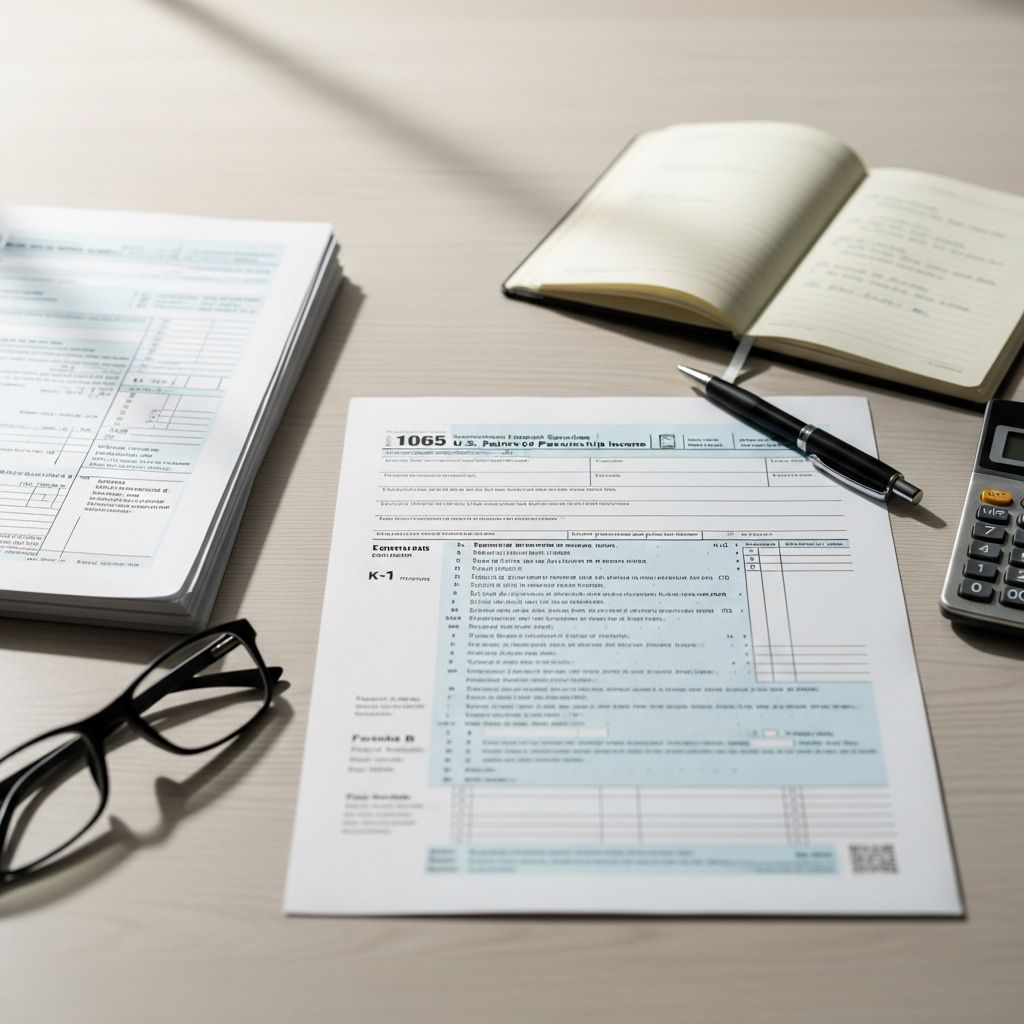
Understanding Form 1065: U.S. Return of Partnership Income
Form 1065, officially known as the U.S. Return of Partnership Income, is a critical tax document that partnerships and certain limited liability companies (LLCs) must file with the Internal Revenue Service (IRS) to report their income, deductions, gains, and losses. Unlike sole proprietorships or C corporations, partnerships are considered pass-through entities, meaning the partnership itself does not pay income taxes. Instead, the partnership’s profits and losses “pass through” to each partner’s personal tax return, where they are taxed at the individual level. Understanding how to properly complete and file Form 1065 is essential for maintaining compliance with federal tax law and avoiding penalties.
The form serves as a comprehensive financial summary of the partnership’s operations for the tax year. It requires detailed information about the business’s income, expenses, credits, and the allocation of profits and losses among partners. The deadline for filing Form 1065 is typically March 15 for partnerships following a calendar year. If additional time is needed, partnerships can file Form 7004 to request a six-month extension, moving the deadline to September 15. Proper preparation and timely filing are crucial to avoid late-filing penalties and ensure the partnership maintains good standing with the IRS.
Preparing to File: Gather Your Documents
Before beginning the Form 1065 filing process, it is essential to gather all relevant financial documents and IRS forms. This preparation phase is critical to ensuring accuracy and completeness when completing the form. The following documents should be collected:
- Employer Identification Number (EIN): The partnership’s unique EIN, issued by the IRS, is required for filing and appears in multiple places on the form.
- Partner Information: Names, addresses, and taxpayer identification numbers (TINs) of all partners, along with each partner’s ownership percentage and profit/loss allocation.
- Income Records: Documentation of all business income, including gross receipts, sales, service revenue, and any other income sources for the tax year.
- Expense Documentation: Records of all business expenses, such as salaries, rent, utilities, depreciation, insurance, supplies, and other allowable deductions.
- Balance Sheet Information: Financial statements showing assets, liabilities, and partners’ equity at the beginning and end of the tax year.
- Prior Year Tax Returns: The previous year’s Form 1065, if applicable, helps ensure consistency and accuracy in reporting.
- Bank Statements and Accounting Records: Monthly or quarterly statements and general ledger entries that support the income and expense figures reported.
Having all necessary documentation organized before starting the form ensures a smoother filing process and reduces the likelihood of errors or omissions that could trigger an IRS audit or require amendments.
Section-by-Section Filing Instructions
Page One: General Information and Income Section
The first page of Form 1065 begins with identification information and progresses through the income and deduction sections. Start by filling in boxes A through J at the top of the form, which include:
- Partnership Name and Address: The legal name and principal business location of the partnership.
- Employer Identification Number (EIN): The partnership’s unique identification number.
- Principal Business Activity and Code: A description of the partnership’s primary business activity and its corresponding IRS business code number. The IRS instructions provide a detailed list of codes to reference.
- Date Business Started: The date the partnership was formed or began operations.
- Total Assets: The partnership’s total assets as reported on the books.
- Type of Tax Return and Accounting Method: Indication of whether the partnership uses the cash or accrual method of accounting.
- Number of Schedule K-1 Forms: The total number of partners for whom Schedule K-1 forms are being attached.
Following the identification boxes, the income section requires reporting of all revenue streams. This includes gross receipts and sales, cost of goods sold (COGS), and other business income. The partnership must report its total income before deductions, providing a clear picture of the business’s earning capacity.
Income, Deductions, and Tax Calculation Section
Continuing on page one, partnerships must report all allowable business deductions and calculate the net income or loss. This section includes line items for:
- Salaries and wages paid to employees
- Repairs and maintenance expenses
- Rent or lease payments
- Utilities and telephone costs
- Depreciation and amortization
- Insurance premiums
- Office supplies and equipment
- Professional services (accounting, legal, consulting)
- Advertising and marketing expenses
- Other ordinary and necessary business expenses
The form then calculates the partnership’s taxable income before special deductions. This is a critical calculation as it forms the basis for determining each partner’s share of income and losses.
Schedule B: Additional Information About the Partnership
Pages two and three of Form 1065 contain Schedule B, which collects important information about the partnership’s structure and operations. Schedule B consists primarily of yes/no questions addressing:
- Whether the partnership owns any foreign partnerships or has foreign partners
- The nature of the partnership (general, limited, LLC, etc.)
- Whether the partnership made distributions to partners during the year
- Whether the partnership took out any loans or made significant investments
- The accounting method used (cash or accrual)
- Whether the partnership is a publicly traded partnership
- Whether the partnership has any liabilities or unusual transactions requiring explanation
Accurate completion of Schedule B ensures the IRS has a complete picture of the partnership’s organizational structure and financial activities. Some affirmative responses may require additional schedules or explanations.
Schedule K: Summary of Partner Income, Deductions, and Credits
Page four of Form 1065 contains Schedule K, which summarizes the partnership’s total income, deductions, and credits. Schedule K forms the foundation for preparing each partner’s individual Schedule K-1. This schedule includes:
- Ordinary business income or loss
- Net rental real estate income or loss
- Other rental income or loss
- Portfolio income (interest, dividends, capital gains)
- Qualified dividend income
- Guaranteed payments to partners
- Tax credits (research, work opportunity, energy, investment, etc.)
- Alternative minimum tax (AMT) adjustments
Schedule K consolidates all the partnership’s income and deductions into categories that can be distributed to individual partners based on their ownership percentages or profit-sharing agreements.
Schedule K-1: Partner’s Share of Income, Deductions, and Credits
While the partnership files only one Form 1065, each partner receives an individual Schedule K-1 showing their separate share of the partnership’s income, losses, deductions, and credits. The partnership must prepare and distribute a Schedule K-1 to each partner, and copies must be attached to the Form 1065 filed with the IRS. Each Schedule K-1 includes the partner’s name, address, identification number, profit/loss percentage, and their share of:
- Ordinary business income or loss
- Capital gains and losses
- Section 1231 gains and losses
- Charitable contributions
- Qualified business income deductions
- Foreign tax paid
Partners use the information from their Schedule K-1 to complete their individual tax returns and report their share of partnership income and losses.
Supporting Schedules and Additional Forms
Schedule L: Balance Sheet
Schedule L presents the partnership’s balance sheet, showing total assets, liabilities, and partners’ capital accounts at the beginning and end of the tax year. The balance sheet must reconcile with the partnership’s books and accounting records. If there are discrepancies, an explanation must be provided. This schedule ensures that the partnership’s financial position is accurately reflected and that assets and liabilities are properly accounted for.
Schedule M-1: Reconciliation of Income
Schedule M-1 reconciles the net income reported on the partnership’s accounting records with the net income reported on Form 1065. This schedule identifies any timing differences or adjustments made for tax purposes, such as depreciation differences, loan forgiveness income, or disallowed expenses. Proper reconciliation ensures that the partnership’s book income and tax income are properly aligned.
Schedule M-2: Analysis of Partners’ Capital Accounts
Schedule M-2 tracks changes in partners’ capital accounts throughout the tax year, including contributions, distributions, income allocations, and other adjustments. This schedule provides transparency regarding how each partner’s equity in the partnership has changed during the year. For partnerships with significant capital transactions or partner changes, accurate tracking through Schedule M-2 is essential.
Schedule M-3: Additional Reconciliation (Large Partnerships)
Schedule M-3 is required for partnerships with over $10 million in total assets and provides a more detailed reconciliation of the partnership’s financial and tax accounting records. This schedule is more comprehensive than Schedule M-1 and helps identify specific reconciling items and permanent adjustments. Larger partnerships with complex transactions must ensure Schedule M-3 is completed accurately.
Filing and Submission Process
Electronic Filing (E-Filing)
The IRS encourages electronic filing for Form 1065, as it provides faster processing, reduces errors, and generates automatic confirmation of receipt. Partnerships with more than 100 partners are required to e-file. Many professional tax preparation software providers and accounting firms offer e-filing services for Form 1065.
Paper Filing
Partnerships that qualify as small employers or have limited resources may file Form 1065 by mail. When filing by paper, it is crucial to use the correct mailing address based on the partnership’s location, as specified in the IRS instructions. Paper-filed returns take longer to process and require more manual handling, increasing the risk of errors or delays.
Review and Verification
Before submitting Form 1065, carefully review the entire form and all attached schedules. Verify that all income and deduction figures are accurate, that all partner information is correct, and that all required schedules are included. Common errors include:
- Mismatched totals on Schedule K and individual Schedule K-1 forms
- Incorrect partner identification numbers or addresses
- Mathematical errors in income calculations
- Missing or incomplete supporting schedules
- Failure to sign the form or obtain partner certifications
Taking time to review and verify the form before submission significantly reduces the likelihood of IRS inquiries or audits.
Important Dates and Deadlines
The filing deadline for Form 1065 is March 15 for calendar-year partnerships. This date is strictly enforced, and partnerships that fail to file by this date are subject to penalties. However, if March 15 falls on a weekend or holiday, the deadline is automatically extended to the next business day.
Partnerships requiring additional time to prepare their return can file Form 7004 to request a six-month extension, moving the deadline to September 15. However, it is important to note that while an extension provides additional time to file the return, it does not extend the time for paying any taxes owed. Estimated taxes should still be paid by the original deadline to avoid penalties and interest.
Best Practices and Common Mistakes
To ensure accurate and timely filing of Form 1065, partnerships should follow these best practices:
- Maintain Detailed Records: Keep comprehensive documentation of all income, expenses, and capital transactions throughout the year.
- Reconcile Books to Tax Return: Ensure that accounting records align with amounts reported on Form 1065.
- Coordinate with Partners: Communicate with all partners regarding their share of income and losses and provide timely Schedule K-1 forms.
- Use Professional Assistance: Consider engaging a certified public accountant (CPA) or tax professional to prepare the form, especially for complex partnerships.
- File Timely: Submit the form by the deadline to avoid penalties and maintain good standing with the IRS.
- Keep Copies: Retain copies of Form 1065 and all schedules for at least three to seven years for audit purposes.
Frequently Asked Questions About Form 1065
Q: What is the difference between Form 1065 and Schedule K-1?
A: Form 1065 is the partnership’s overall tax return reporting total income and deductions. Schedule K-1 is an individual document provided to each partner showing their specific share of income, losses, and credits based on their ownership percentage.
Q: Do all partnerships need to file Form 1065?
A: Most partnerships must file Form 1065, but some exceptions exist for certain investment partnerships or partnerships with no taxable income. Consult the IRS instructions or a tax professional to determine if your partnership qualifies for an exemption.
Q: What happens if a partnership fails to file Form 1065 on time?
A: Late filing of Form 1065 results in penalties that increase based on the length of the delay. Additionally, partners may face issues if they cannot report their partnership income on their individual returns. Filing an extension using Form 7004 can help avoid these penalties.
Q: Can partnerships file Form 1065 electronically?
A: Yes, the IRS encourages electronic filing through authorized e-file providers. Partnerships with more than 100 partners are required to e-file. Electronic filing provides faster processing and automatic confirmation of receipt.
Q: How long should partnerships retain copies of Form 1065?
A: Partnerships should retain copies of Form 1065 and supporting documentation for at least three years from the filing date, though seven years is recommended to protect against potential audits or inquiries from the IRS.
Q: What is Schedule M-3 and when is it required?
A: Schedule M-3 is a detailed reconciliation schedule required for partnerships with total assets exceeding $10 million. It provides a more comprehensive analysis of differences between book and tax accounting compared to Schedule M-1.
References
- IRS Form 1065 Instructions — Internal Revenue Service. 2024. https://www.irs.gov/pub/irs-pdf/i1065.pdf
- About Form 1065, U.S. Return of Partnership Income — Internal Revenue Service. https://www.irs.gov/forms-pubs/about-form-1065
- IRS Form 1065 Explained: Partnership Tax Filing Guide — TaxAct Blog. https://blog.taxact.com/guide-to-form-1065/
- Form 1065: Partnership Tax Return — TurboTax Tax Tips & Videos. https://turbotax.intuit.com/tax-tips/irs-tax-forms/what-is-form-1065/
- File Form 1065: Guide to partnership returns 2025 — Commenda. https://www.commenda.io/compliance/form-1065-return-of-partnership-income/
Similar Articles








Read full bio of medha deb