Forgot to File Form 8606 for Non-Deductible IRAs
Learn what happens when you miss Form 8606 filing and how to correct this costly tax mistake.

Understanding Form 8606 and Non-Deductible IRA Contributions
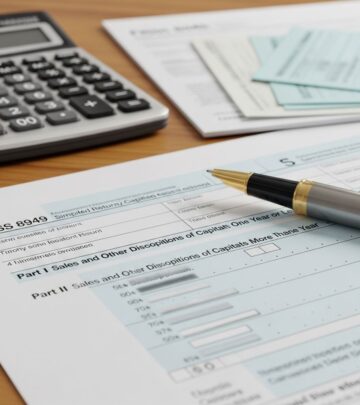
Form 8606, officially titled “Nondeductible IRAs,” is a critical tax document that many IRA account holders overlook or forget to file. This form serves as your official notification to the Internal Revenue Service that you have made nondeductible contributions to a traditional IRA, converted funds to a Roth IRA, or taken distributions from IRAs containing after-tax money. Understanding the importance of this form can help you avoid significant tax complications and penalties down the road.
When you contribute money to a traditional IRA without receiving a tax deduction, you must report this nondeductible contribution using Form 8606. This documentation is essential because it establishes your tax basis in your IRA accounts, which directly affects how your future distributions will be taxed. Without proper filing of this form, you risk paying income tax twice on the same money—once when you originally earned it and again when you withdraw it from your IRA.
Who Needs to File Form 8606
Several scenarios require you to file Form 8606 with your annual tax return. You must file this form if:
– You made nondeductible contributions to a traditional IRA for the current tax year- You converted funds from a traditional, SEP, or SIMPLE IRA to a Roth IRA- You received distributions from a traditional, SEP, or SIMPLE IRA and have a basis (meaning you’ve made nondeductible contributions)- You’re taking early distributions from a Roth IRA before age 59½ or before the account has been open for five years
Nondeductible contributions become necessary when your modified adjusted gross income (MAGI) exceeds certain limits, which vary by filing status and year. For example, if you’re single, your ability to deduct traditional IRA contributions phases out when your income reaches approximately $89,000. Similarly, married couples filing jointly see their deduction phase out starting around $146,000. Even when you cannot deduct your contribution, you can still contribute to a traditional IRA—you just must report this nondeductible amount on Form 8606.
What Happens When You Forget to File Form 8606
Forgetting to file Form 8606 when required can trigger serious tax consequences. The most immediate penalty is a $50 fine for failing to file the form, unless you can demonstrate reasonable cause for your oversight. Additionally, if you overstate your nondeductible contributions on the form, you may face a separate $100 penalty.
Beyond the direct penalties, however, the real cost comes from double taxation. If you don’t file Form 8606 to establish your basis in your traditional IRA accounts, the IRS has no record of your nondeductible contributions. When you eventually take distributions from these accounts, the IRS may treat the entire distribution as taxable income, even though a portion consists of money you already paid taxes on. This means you pay income tax twice on the same dollars—a costly mistake that can add thousands to your tax bill.
Understanding the Pro-Rata Rule
A critical concept for IRA account holders with both deductible and nondeductible contributions is the pro-rata rule. This rule affects how distributions from your IRAs are taxed. The pro-rata rule requires you to calculate the ratio of your after-tax (nondeductible) contributions to your total IRA balance across all your traditional IRAs. This ratio determines what percentage of your distributions will be considered nondeductible basis and what percentage will be taxable income.
For instance, if you have $100,000 in traditional IRAs total, with $20,000 in nondeductible contributions, then 20% of any distribution you take will be treated as your basis (tax-free), while 80% will be taxable income. This rule applies to the aggregate of all your traditional IRAs—you cannot isolate nondeductible contributions to specific accounts to avoid taxation. Many taxpayers are unaware of this rule, which can lead to unexpected tax bills when they begin taking distributions.
The Consequences of Missing Your Filing Deadline
When you fail to file Form 8606 in the year you make a nondeductible contribution or take a qualifying distribution, you create a gap in your tax records. The IRS tracks this information, and when you eventually file Form 8606 in a later year, it may trigger correspondence or audits to verify your claims. The delay in filing can also complicate your ability to claim reasonable cause for the initial failure.
Moreover, if you never file Form 8606 and continue taking distributions from your IRAs, you compound the problem each year. Every distribution taken without proper documentation of your basis increases your tax liability and the potential for penalties and interest charges accumulating over time.
How to Correct a Missed Form 8606 Filing
If you realize you forgot to file Form 8606 for a previous tax year, swift action is necessary. You should amend your tax return for that year by filing Form 1040-X, the amended income tax return form. When filing your amended return, include the Form 8606 that should have been filed originally. The amended return will recalculate your tax liability based on the proper basis in your IRA accounts, potentially resulting in a refund if you paid too much tax.
When filing your amended return, clearly explain in your cover letter or notes that you are filing Form 8606 for the first time due to an oversight. This explanation can help demonstrate reasonable cause to the IRS, which may result in waiver or reduction of the $50 penalty. Many taxpayers successfully negotiate penalty waivers by showing they made a good-faith effort to correct the error.
Amended Form 8606 Filing Process
To file an amended Form 8606, follow these steps carefully:
– Complete a new Form 8606 for the tax year(s) in question, accurately reporting all nondeductible contributions and distributions- File Form 1040-X (Amended U.S. Individual Income Tax Return) for that same tax year- Attach the Form 8606 to your amended return- Include documentation supporting your nondeductible contributions, such as bank statements or IRA custodian records- Mail your amended return to the IRS address listed in the Form 1040-X instructions
The process typically takes several months for the IRS to process. You may receive correspondence requesting additional documentation or clarification of your contributions. Respond promptly to any IRS inquiries to avoid further complications.
Record-Keeping Requirements for IRA Contributions
Maintaining accurate records is essential for properly filing Form 8606. You should keep documentation for all IRA contributions, whether deductible or nondeductible, for as long as you own the IRA and indefinitely after you take distributions. Required records include:
– Annual statements from your IRA custodian showing contributions and distributions- Documentation of the source of nondeductible contributions (such as paycheck stubs or bank transfer records)- Records of any conversions between IRA types- Copies of all previously filed Form 8606s- Documentation of any rollovers from employer-sponsored retirement plans
These records become crucial if the IRS ever questions your filing or if you need to file amended returns. They also protect you by providing clear evidence of your tax basis in your accounts, which is fundamental to proving you paid taxes on nondeductible contributions.
Common Scenarios Requiring Form 8606
Several specific situations require Form 8606 filing beyond basic nondeductible contributions. A “backdoor Roth” strategy, popular among high-income earners, involves contributing nondeductible funds to a traditional IRA and immediately converting them to a Roth IRA. This strategy requires Form 8606 filing to report both the nondeductible contribution and the conversion. Similarly, if you make after-tax contributions to your employer’s 401(k) and later roll those after-tax funds into a traditional IRA, you must report this on Form 8606.
Another scenario involves repayments of qualified disaster or birth/adoption distributions. If you took a distribution from your IRA under these provisions and later repaid it, you must report the repayment as a nondeductible contribution using Form 8606. Additionally, if you received a qualified reservist distribution and repaid it, Form 8606 reporting is required.
Preventing Future Form 8606 Filing Mistakes
To avoid the complications of forgetting to file Form 8606, consider these preventive measures. First, work with a qualified tax professional or use comprehensive tax software that automatically flags Form 8606 requirements based on your inputs about IRA activity. Second, maintain detailed records of all IRA transactions throughout the year and review them before filing your tax return.
Third, set calendar reminders about your tax filing deadlines, particularly if you’ve made nondeductible contributions or conversions during the year. Finally, communicate clearly with your IRA custodian and tax preparer about all your IRA activities to ensure nothing is overlooked.
Frequently Asked Questions About Form 8606
Q: What is the deadline for filing Form 8606?
A: Form 8606 must be filed by the tax return deadline, typically April 15 (or later if you receive an extension). It’s filed as part of your Form 1040.
Q: Can I file Form 8606 electronically?
A: Yes, when you file your tax return electronically using tax software or a tax professional, Form 8606 can be included in your e-filed return.
Q: How far back can I file an amended Form 8606?
A: You can generally file amended returns for the past three years without IRS approval. Beyond three years, you may file, but the IRS has discretion in accepting them.
Q: Do I need to file Form 8606 every year?
A: Yes, you must file Form 8606 for every tax year you have qualifying transactions, including all years you take distributions from IRAs containing nondeductible contributions.
Q: What records should I keep to support Form 8606?
A: Keep IRA statements, contribution records, conversion documentation, and copies of all previously filed Form 8606s. Maintain these records indefinitely after distributions end.
Q: Can the $50 penalty be waived?
A: Yes, if you can demonstrate reasonable cause for not filing Form 8606. Filing an amended return and explaining the oversight can result in penalty waiver.
Key Takeaways
Form 8606 is a vital tax form that protects you from double taxation on your nondeductible IRA contributions. Forgetting to file it can result in a $50 penalty and potential tax liability on amounts that should have been tax-free. If you’ve missed filing this form, amend your return immediately by filing Form 1040-X with the missing Form 8606. Going forward, maintain excellent records of all IRA transactions and work with a tax professional to ensure you never miss this important filing requirement. Your retirement savings depend on proper tax documentation and reporting.
References
- What Is Form 8606 and How It Affects Your IRA Contributions? — Taxfyle. 2025. https://www.taxfyle.com/blog/irs-form-8606-tax-guide-nondeductible-ira-roth-conversion
- Instructions for Form 8606 (2024) — Internal Revenue Service. 2024. https://www.irs.gov/instructions/i8606
- Understanding Form 8606 for IRA Taxes — SmartAsset. 2025. https://smartasset.com/taxes/form-8606-tax
- About Form 8606, Nondeductible IRAs — Internal Revenue Service. 2025. https://www.irs.gov/forms-pubs/about-form-8606
Similar Articles








Read full bio of medha deb