Foreign Transaction Fees: Definition, Costs & How to Avoid
Complete guide to understanding foreign transaction fees and strategies to minimize costs.
What Is a Foreign Transaction Fee?
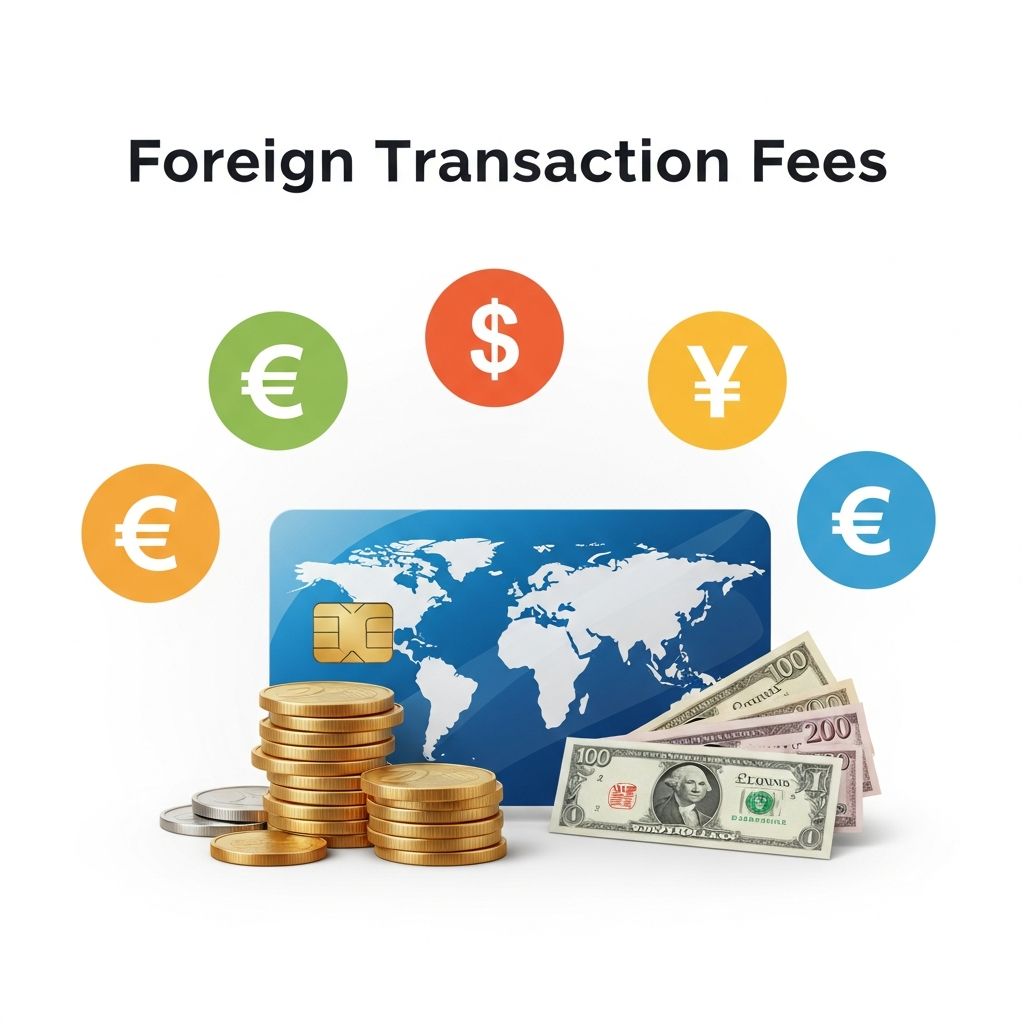
A foreign transaction fee is a surcharge that credit card issuers and payment networks impose on purchases made outside the United States or with foreign merchants online. These fees represent an additional cost added to your credit card bill when you engage in international transactions. Understanding what constitutes a foreign transaction fee is crucial for frequent travelers and online shoppers who regularly purchase from international retailers.
Foreign transaction fees apply not only when you physically travel abroad and use your credit card for purchases, but also when you shop online from foreign retailers located outside the United States. The fee is typically calculated as a percentage of your transaction amount and is charged regardless of whether you explicitly converted currencies or initiated the transaction yourself. This means you could incur foreign transaction fees even without leaving your home country if you make purchases from international merchants.
It’s important to note that foreign transaction fees can be applied to credit cards, debit cards, and prepaid travel cards. Each type of card may have different fee structures, so reviewing your specific card’s terms is essential before traveling or making international purchases.
Foreign Transaction Fees vs. Currency Conversion Fees
While foreign transaction fees and currency conversion fees are often discussed together, they are technically different charges assessed by different parties. Understanding the distinction between these two fees can help you better comprehend your total international transaction costs.
Foreign transaction fees are charged by your card issuer—the bank or financial institution that issued your credit card. These fees cover the costs associated with processing international transactions and are typically calculated as a percentage of your purchase amount.
Currency conversion fees are charged by credit card payment networks such as Visa, Mastercard, or American Express for converting one country’s legal tender into another. These network fees are separate from the issuer fees and are applied during the currency conversion process. In many cases, both fees may be combined and referred to together as a single foreign transaction fee on your statement, which can make it difficult to distinguish between them.
This distinction matters because some credit card issuers may waive their foreign transaction fees but still charge currency conversion fees through the network, or vice versa. By understanding what fees you’re being charged and by whom, you can make more informed decisions about which credit cards to use for international transactions.
How Much Do Foreign Transaction Fees Cost?
Foreign transaction fees are typically calculated as a percentage of your transaction amount and generally range from 1% to 3%. Most credit card issuers charge around 3% per transaction, though some may charge on the lower end at 1% or in the middle range at 2%. The specific percentage varies depending on your card issuer and the type of credit card you hold.
While a percentage-based fee might seem modest at first glance, these costs can accumulate significantly for frequent international travelers or those making multiple online purchases from foreign merchants. For example, a $100 purchase with a 3% foreign transaction fee would result in an additional $3 charge. If you’re spending substantial amounts abroad or making numerous international purchases, these fees can substantially increase your total spending.
Additionally, it’s worth noting that foreign transaction fees typically do not count toward rewards programs such as cash-back bonuses or points accumulation. This means you’re essentially paying extra without any opportunity to earn rewards on the fee itself, further reducing the value proposition of using your credit card for international transactions.
How Foreign Transaction Fees Are Calculated
Calculating foreign transaction fees is a straightforward process once you understand the basic formula. Foreign transaction fees are structured as a percentage of the transaction amount after currency conversion has occurred.
Step-by-Step Calculation Process
To calculate a foreign transaction fee, follow these simple steps:
Step 1: Identify Your Card’s Fee Percentage
First, determine what percentage your credit card issuer charges for foreign transactions. This information is typically found in your card’s terms and conditions or fee schedule. Let’s assume your card charges a 3% foreign transaction fee.
Step 2: Convert the Percentage to Decimal Form
Move the decimal point two places to the left. For example, 3% becomes 0.03 in decimal form.
Step 3: Multiply the Transaction Amount by the Decimal
Multiply your purchase amount by the decimal figure from Step 2. For instance, if you make a $50 purchase: $50 × 0.03 = $1.50
Step 4: Add the Fee to Your Purchase Price
Add the calculated fee to your original purchase amount to determine your total cost: $50 + $1.50 = $51.50
Real-World Example
Consider a scenario where you’re traveling to Europe and purchase a 150 euro souvenir using a credit card that charges a 3% foreign transaction fee. The calculation would be: 150 euros × 0.03 = 4.50 euros in fees. When this is converted to US dollars at the time of the transaction, it might equal approximately $4.90. While this single transaction fee may seem manageable, multiple purchases throughout your trip can result in substantial additional costs.
Combined Fees Structure
In many cases, what appears as a single foreign transaction fee on your credit card statement is actually a combination of two separate fees: one from your card issuer and one from the card network. Understanding this combined structure can provide insight into where your money is going.
The card network typically charges a conversion fee of approximately 1% for converting your transaction into your home currency. Your credit card issuer then adds an additional 1-2% fee on top of the network charge. When combined, these charges result in the total 1-3% foreign transaction fee that appears on your statement. The key point is that you won’t see these charges itemized separately; instead, they’ll be combined into a single line item on your billing statement.
When Foreign Transaction Fees Apply
Understanding when foreign transaction fees are triggered is essential for anticipating costs. Many people mistakenly believe foreign transaction fees only apply when traveling abroad, but this is not entirely accurate.
Situations Where Foreign Transaction Fees Apply
International Travel Purchases: When you use your credit card to make purchases while traveling outside the United States, foreign transaction fees typically apply.
Online International Shopping: Even while sitting at home, if you purchase from an international retailer or foreign merchant online, foreign transaction fees may be charged.
Foreign Bank Processing: If your transaction is processed through a foreign bank, regardless of the transaction location or currency used, foreign transaction fees can be applied. This is an important distinction because it means you don’t have to be using a foreign currency to incur the fee.
Currency Differences: Your transaction is typically subject to foreign transaction fees whenever the transaction involves a foreign currency, even if you don’t explicitly handle the currency conversion yourself.
How to Find Out If Your Card Charges Foreign Transaction Fees
Before traveling internationally or making purchases from foreign merchants, you should verify whether your credit card charges foreign transaction fees. Several methods can help you obtain this information:
Review Your Card Agreement: The terms and conditions of your credit card, particularly the fees section, should clearly outline whether your card charges foreign transaction fees and the specific percentage charged.
Check Online: Most credit card issuers provide detailed fee information on their websites. Visit your card issuer’s website and look for the fees section or benefits summary.
Contact Your Issuer Directly: If you cannot find the information in your card agreement or online, contact your credit card issuer’s customer service department directly to ask about foreign transaction fees.
Review Recent Statements: If you’ve previously used your card internationally, check your credit card statements to see if foreign transaction fees were charged.
How to Avoid Foreign Transaction Fees
Fortunately, there are several effective strategies to minimize or completely eliminate foreign transaction fees from your international spending.
Use a No Foreign Transaction Fee Credit Card
The most straightforward approach is to use a credit card that doesn’t charge foreign transaction fees. Many card issuers offer premium travel credit cards or no-fee cards that specifically waive foreign transaction fees as a benefit. Some major financial institutions, such as Capital One, do not charge foreign transaction fees on any of their credit cards. If you frequently travel internationally or shop online from foreign retailers, obtaining a no foreign transaction fee card can provide significant savings.
Use Local Cash
Using local currency obtained through ATMs in foreign countries can help you avoid credit card foreign transaction fees entirely. However, be aware that ATM operators may charge their own fees for withdrawals, so compare the costs of ATM fees versus credit card foreign transaction fees. Many travelers find that using a combination of local cash and a no foreign transaction fee credit card provides optimal cost efficiency.
Seek Cards with Partner Bank Relationships
Some credit card issuers may waive foreign transaction fees through partnerships with local banks in certain countries. If you frequently travel to specific countries, research whether your card issuer has such partnerships that could benefit you.
Use Digital Payment Platforms
Certain digital payment platforms and fintech services are specifically designed to minimize foreign transaction fees through real-time currency conversion at market rates. These alternatives can sometimes provide better rates than traditional credit card companies.
Currency Conversion Rate Markups
Beyond the stated foreign transaction fee percentage, many credit card issuers also apply markups to currency conversion rates. This practice means the exchange rate applied to your transaction may be below the current market rate, with the card issuer profiting from the difference.
For example, if the market exchange rate is 0.90 and your issuer uses a rate of 0.85, you’re essentially paying for currency at an unfavorable rate. Over multiple transactions, these conversion rate markups can exceed the cost of the stated foreign transaction fee percentage. This hidden cost makes it even more important to select credit cards that minimize both fees and conversion rate markups.
Impact on Rewards and Benefits
One often-overlooked aspect of foreign transaction fees is that they typically do not count toward rewards programs. If your credit card offers cash-back or points rewards, foreign transaction fees are not included in the amount eligible for rewards calculation. This means you’re essentially paying extra without any opportunity to offset the cost through your rewards program. For travel rewards credit cards, this distinction is particularly important to understand.
Frequently Asked Questions
Q: Do foreign transaction fees only apply when traveling?
A: No. Foreign transaction fees apply to any transaction in a foreign currency or processed by a foreign bank, including online purchases from international merchants, not just those made while traveling abroad.
Q: Can foreign transaction fees be applied to debit cards?
A: Yes, foreign transaction fees can be applied to debit cards and prepaid travel cards in addition to credit cards. Check your specific card’s terms to understand which fees apply.
Q: How can I calculate my total foreign transaction cost?
A: Multiply your transaction amount by the decimal form of your card’s foreign transaction fee percentage, then add that result to your original purchase amount. For a $100 purchase with a 3% fee: ($100 × 0.03) + $100 = $103.
Q: Do all credit card companies charge foreign transaction fees?
A: No. Some credit card issuers, including certain cards from Capital One, do not charge foreign transaction fees. Many premium travel credit cards also waive these fees as a cardholder benefit.
Q: What’s the difference between a foreign transaction fee and a currency conversion fee?
A: Foreign transaction fees are charged by your card issuer, while currency conversion fees are charged by card networks like Visa or Mastercard for converting currency. Both may appear combined on your statement.
Q: How much do foreign transaction fees typically cost?
A: Foreign transaction fees generally range from 1% to 3% of your transaction amount, with most issuers charging around 3%.
Q: Should I avoid using my credit card internationally?
A: Not necessarily. If your credit card has no foreign transaction fees, using it internationally can be more convenient and secure than carrying large amounts of cash. The key is selecting the right card for your needs.
References
- Foreign Transaction Fees Defined & Explained — Capital One. https://www.capitalone.com/learn-grow/money-management/foreign-transaction-fees/
- Foreign Transaction Fees: Definition, Cost, and FAQs — Business Insider. https://www.businessinsider.com/personal-finance/credit-cards/what-is-foreign-transaction-fee
- Foreign transaction fee: meaning and when it applies to you — Wise. https://wise.com/us/blog/foreign-transaction-fee
- What You Should Know About Foreign Transaction Fees — American Express. https://www.americanexpress.com/en-us/credit-cards/credit-intel/foreign-transaction-fees/
- Foreign Transaction Fees: What to Know And To Avoid — Bill.com. https://www.bill.com/learning/foreign-transaction-fees
- A Guide To Foreign Transaction Fees — Bankrate. https://www.bankrate.com/credit-cards/travel/a-guide-to-foreign-transaction-fees/
Similar Articles








Read full bio of medha deb