Foreclosure Timeline Explained
Navigate the foreclosure process with a clear understanding of timelines, state variations, and strategies to protect your home and credit.
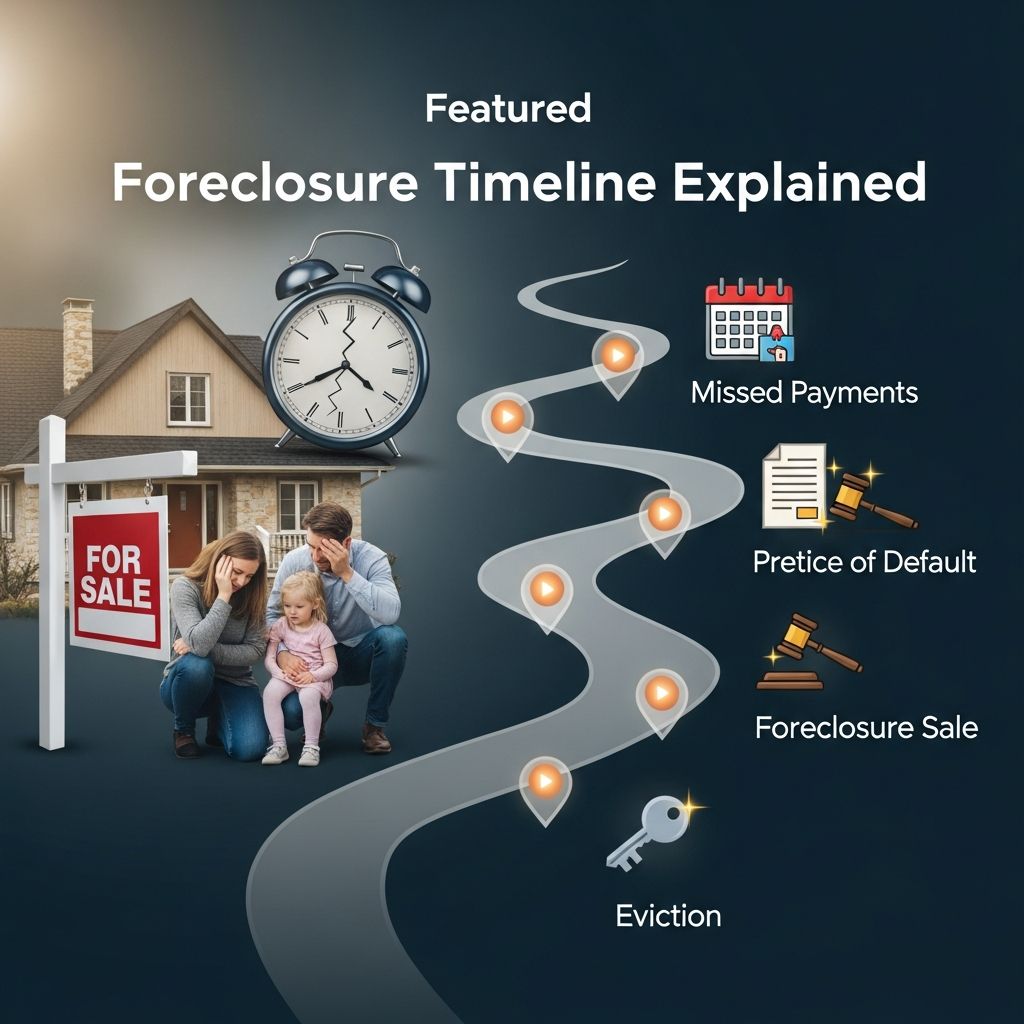
The foreclosure process is a legal mechanism lenders use to reclaim property when borrowers fail to meet mortgage obligations. While timelines vary significantly by state and loan type, understanding the sequence of events can empower homeowners to act swiftly and potentially salvage their situation. Typically, the entire process spans from several months to over a year, providing windows for intervention.
Judicial vs. Non-Judicial Foreclosure: Key Differences
Foreclosure procedures fall into two primary categories: judicial and non-judicial. Judicial foreclosures require court involvement, making them slower but offering more borrower protections. Non-judicial foreclosures, allowed in about half of U.S. states, bypass courts and proceed faster through a trustee.
- Judicial Foreclosure: Lender files a lawsuit; borrower can contest in court. Common in states like New York, Florida, and Maryland. Average duration: 12-24 months.
- Non-Judicial Foreclosure: Uses a “power of sale” clause in the mortgage deed. Prevalent in California, Texas, and Georgia. Average duration: 3-10 months.
| Aspect | Judicial | Non-Judicial |
|---|---|---|
| Court Involvement | Required | None |
| Timeline | Longer (1-2 years) | Shorter (3-12 months) |
| Borrower Defenses | Stronger (court hearings) | Limited (pre-sale challenges) |
| Example States | MD, NJ, FL | CA, TX, GA |
Initial Triggers: From Missed Payments to Default Notice
The clock starts ticking after a mortgage payment is missed. Federal rules mandate lenders wait at least 120 days before initiating foreclosure, allowing time for loss mitigation like forbearance or modification. In practice, a Notice of Intent or Default follows 30-90 days of delinquency.
In California, for instance, lenders must contact borrowers to discuss options before recording a Notice of Default (NOD), which details the overdue amount and grants 90 days to cure. Maryland requires a Notice of Intent 45 days post-default, followed by court filing. New Jersey sends a Notice of Intention to Foreclose (NOI) 30-180 days after the first missed payment, providing at least 30 days to reinstate.
Early intervention during this phase yields the highest success rates for avoiding foreclosure altogether.
Core Stages of the Foreclosure Pipeline
Reinstatement Period and Loss Mitigation
Post-NOD, borrowers enter a reinstatement window—90 days in non-judicial states like California, longer in judicial ones. Options include paying arrears, loan modification, or short sale. Lenders must review loss mitigation applications before advancing.
Notice of Sale and Auction Preparation
If unresolved, a Notice of Trustee’s Sale (or equivalent) is issued. In California, this provides 20+ days before auction; Maryland allows scheduling 45 days post-Order to Docket. The property is advertised publicly, heightening urgency for last-ditch efforts like bankruptcy.
The Auction and Post-Sale Transfer
Auctions occur at courthouses or online, with the highest bidder (often the lender) taking ownership. In California, sales finalize quickly post-auction; judicial states may delay with redemption periods.
State-Specific Timelines: A Comparative Overview
Foreclosure speed hinges on local laws. California exemplifies non-judicial efficiency: ~201 days from first missed payment (90 delinquency + 90 NOD + 21 sale notice).
- California (Non-Judicial): NOD (90 days cure), Notice of Sale (20 days), Auction. Total: 6-7 months.
- Maryland (Judicial): Default → NOI (45 days) → Order to Docket (25-45 days) → Mediation (optional) → Sale (15+ days post-mediation).
- New Jersey (Judicial): NOI (30+ days) → Complaint (35 days answer) → Mediation (60 days request) → Final Judgment → Sale (6-14 months total).
These variations underscore the need for state-specific research or legal counsel.
Post-Foreclosure Consequences: Eviction and Beyond
After sale, deed transfers occur within days to months. New owners initiate eviction via writ of possession. Maryland: Purchaser files motion, then sheriff executes. New Jersey: Negotiate move-out or face sheriff eviction 1-3 months post-deed.
Financial fallout includes credit damage (drops 100-150 points, stays 7 years) and deficiency judgments in recourse states.
Proven Strategies to Interrupt Foreclosure
Homeowners have multiple avenues to halt proceedings:
- Reinstatement: Pay full arrears before sale.
- Loan Modification: Adjust terms for affordability.
- Short Sale/Deed-in-Lieu: Transfer property to lender avoiding auction.
- Bankruptcy: Chapter 13 automatic stay; Chapter 7 delays but risks sale.
- Mediation Programs: NJ and MD offer court-facilitated talks.
Act early: Attorneys boost success in negotiations.
Frequently Asked Questions (FAQs)
What is the shortest foreclosure timeline?
Non-judicial states like California average 6-7 months.
Can I stop foreclosure after auction?
Limited options; redemption periods exist in some states, but post-sale eviction is standard.
Does bankruptcy always save my home?
It buys time via automatic stay, but requires a viable repayment plan.
How does foreclosure affect my credit?
Severely: 100-160 point drop, reportable for 7 years.
What federal protections apply?
120-day delinquency rule before starting; loss mitigation reviews.
Protecting Your Future: Resources and Next Steps
Consult HUD-approved counselors, state housing agencies, or attorneys immediately. Free resources abound via courts.ca.gov or peoples-law.org. Proactive steps preserve equity and credit recovery.
References
- Understanding the Timeline of Foreclosure in California, and When to Take Action — WS Law. 2025-09. https://www.wslaw.com/blog/2025/september/understanding-the-timeline-of-foreclosure-in-california-and-when-to-take-action/
- Foreclosure Steps and Timeline — Maryland People’s Law Library. Accessed 2026. https://www.peoples-law.org/foreclosure-steps-and-timeline
- Foreclosure Timeline (The Foreclosure Process) — Legal Services of New Jersey. Accessed 2026. https://www.lsnjlaw.org/legal-topics/housing/home-ownership/foreclosure/pages/foreclosure-process-aspx
- Understanding Notice of Foreclosure, Process, and Sale Steps — Nolo. Accessed 2026. https://www.nolo.com/legal-encyclopedia/free-books/foreclosure-book/chapter9-3.html
- Timeline to Foreclosure in California… GET SMART! — YouTube (Sternberg Law Group). Accessed 2026. https://www.youtube.com/watch?v=w3MnpLjTAnA
- The California Foreclosure Process — LA County Consumer & Business Affairs. Accessed 2026. https://dcba.lacounty.gov/portfolio/foreclosure/
- Guide to Foreclosures — California Courts Self Help. Accessed 2026. https://selfhelp.courts.ca.gov/foreclosures
Similar Articles








Read full bio of Sneha Tete