Foreclosure’s Lasting Impact on Credit Scores
Discover how foreclosure damages your credit, how long it lingers, and proven strategies to rebuild financial stability after losing your home.

Foreclosure represents one of the most severe setbacks in personal finance, triggering substantial declines in credit scores that can persist for years. This event not only results in the loss of a home but also creates long-term barriers to securing loans, rentals, and other financial products. Understanding the mechanics of this impact is crucial for anyone navigating or recovering from such a situation.
The Immediate Credit Score Devastation
When a homeowner defaults on mortgage payments, the repercussions begin well before the actual foreclosure auction. Lenders typically report delinquencies starting at 30 days past due, with each subsequent milestone—60 days, 90 days—further eroding the credit score. By the time foreclosure proceedings initiate, often after 90 days of non-payment, the credit profile may already reflect months of negative history.
A completed foreclosure can slash credit scores by 100 points or more, with the magnitude depending on the starting score. Individuals with strong profiles, such as those above 780, might lose 140 to 160 points, while those around 680 could see a 85 to 105-point drop. Paradoxically, higher initial scores suffer greater absolute losses because algorithms penalize deviations from perfection more harshly. Late payments preceding the foreclosure often compound the damage, making the final hit less incremental for already compromised profiles.
| Pre-Foreclosure Score Range | Typical Score Drop | Source Insight |
|---|---|---|
| Below 680 | 85-105 points | Less severe relative impact |
| 680-780 | 100-140 points | Moderate starting point sees balanced drop |
| Above 780 | 140-160+ points | Excellent scores hit hardest |
This table illustrates the variable nature of score reductions, highlighting why proactive financial management prior to default is vital.
Duration of Foreclosure on Credit Reports
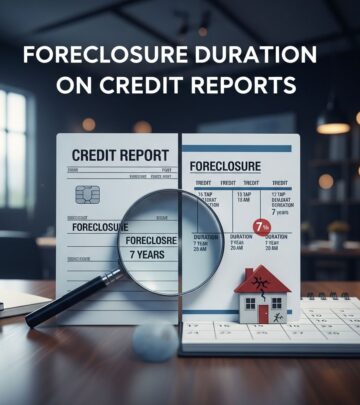
Under federal regulations, foreclosure records remain on credit reports for seven years from the date of the first missed payment that initiated the process. This timeline applies across major bureaus like Experian, Equifax, and TransUnion. While the entry eventually drops off, its influence wanes gradually: the most acute damage occurs in the initial 1-2 years, diminishing thereafter as positive behaviors accumulate.
- Year 1-2: Peak negative effect, limiting access to prime lending rates.
- Year 3-5: Moderate ongoing impact; subprime options become viable.
- Year 6-7: Minimal residual effect if rebuilding is consistent.
Unlike evictions, which may indirectly affect credit via collections, foreclosures directly appear as public records, amplifying their visibility to lenders.
Why Foreclosures Carry Such Weight
Credit scoring models, including FICO and VantageScore, weigh payment history (35% of FICO) and amounts owed heavily. A foreclosure signals chronic delinquency and potential future risk, tarnishing these factors profoundly. Public record status further elevates its severity compared to mere late payments.
Additional derogatory marks, like collections from deficiencies (remaining debt post-sale), can extend harm. In non-recourse states, lenders cannot pursue deficiencies, softening secondary blows.
Comparing Foreclosure to Alternatives
Foreclosure isn’t the only path during mortgage distress. Options like short sales or loan modifications offer varying credit consequences:
| Option | Credit Impact | Duration on Report | Key Notes |
|---|---|---|---|
| Foreclosure | 85-160+ points drop | 7 years | Direct public record; missed payments precede |
| Short Sale | Similar to foreclosure | 7 years | Avoids further delinquencies if timely |
| Loan Modification | Variable, often less severe | 7 years if negative | Can prevent full default |
| Bankruptcy (Ch. 7/13) | 130-240+ points | 7-10 years | Most damaging long-term |
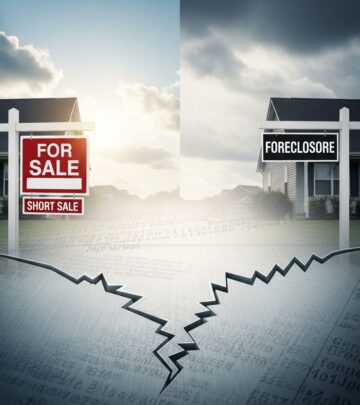
Short sales mimic foreclosure impacts but may preserve some equity and avoid auction stigma. Bankruptcy, while discharging debts, lingers longer and hits harder initially.
Strategies for Credit Rebuilding Post-Foreclosure
Recovery demands discipline but yields results within 1-3 years for committed individuals. Start by obtaining free credit reports from AnnualCreditReport.com to verify accuracy and dispute errors.
- Establish Positive Payment History: Secure a secured credit card or credit-builder loan; pay on time religiously.
- Reduce Utilization: Keep balances below 30% of limits to boost scores quickly.
- Diversify Credit Mix: Add installment loans cautiously once eligible.
- Avoid New Negatives: Steer clear of further delinquencies.
Equifax notes that consistent positive activity overshadows aged negatives over time. Target scores above 620 for FHA loans post-waiting periods (as short as 2 years with extenuating circumstances).
Future Homeownership Prospects
Foreclosure doesn’t bar homeownership forever. FHA guidelines allow mortgages after 3 years (conventional) or 2 years with documented hardship. VA/USDA may require shorter waits. Subprime loans exist but carry high rates—patience often pays via organic rebuilding.
- Renters: Expect scrutiny; provide explanations and recent positive history.
- Auto Loans: Possible sooner with co-signers or larger down payments.
- Employment: Rarely affected directly, but indirect via financing needs.
Frequently Asked Questions
How much does foreclosure drop my credit score?
Typically 100+ points; higher starting scores lose more (up to 160).
Does foreclosure ever fall off my credit report?
Yes, after seven years from the first missed payment.
Can I get a mortgage after foreclosure?
Yes, after 2-7 years depending on loan type and recovery.
Is short sale better than foreclosure for credit?
Impacts are similar, but short sales may avoid prolonged delinquencies.
How to check foreclosure status on my report?
Review reports from Equifax, Experian, TransUnion weekly for free initially.
Long-Term Financial Resilience
Beyond scores, foreclosure prompts holistic financial audits: build emergency funds (3-6 months expenses), diversify income, and consult HUD-approved counselors for prevention. Data shows most rebound fully within five years. Resilience hinges on viewing this as a pivot, not a permanent defeat.
Technological aids like credit monitoring apps and AI-driven budgeting tools accelerate recovery. Community resources, including non-profits like CESI, offer free guidance.
References
- Consequences of Foreclosure — CESI Solutions. Accessed 2026. https://www.cesisolutions.org/resources/credit-and-debt-resource-center/consequences-of-foreclosure
- How Long Does A Foreclosure Stay On Your Credit Report? — Debt Free Ohio. Accessed 2026. https://www.debtfreeohio.com/bankruptcy-information/foreclosure/how-long-foreclosure-stay-credit-report/
- How Does a Foreclosure Affect Credit? — Experian. Accessed 2026. https://www.experian.com/blogs/ask-experian/how-does-a-foreclosure-affect-credit/
- How Foreclosure Affects Your Credit — San Diego Legal Pros. Accessed 2026. https://www.sandiegolegalpros.com/other-practice-areas/foreclosure-defense/how-foreclosure-affects-your-credit/
- Which is Worse for Your FICO Score: Bankruptcy, Foreclosure, Short Sale, or Loan Modification? — Nolo. Accessed 2026. https://www.nolo.com/legal-encyclopedia/which-is-worse-your-fico-score-bankruptcy-foreclosure-short-sale-loan-modification.html
- Rebuilding Your Credit After a Foreclosure or Eviction — Equifax. Accessed 2026. https://www.equifax.com/personal/education/credit/score/articles/-/learn/rebuilding-credit-after-foreclosure-eviction/
- If I lose my home to foreclosure, can I ever buy a home again? — Consumer Financial Protection Bureau (CFPB). Accessed 2026. https://www.consumerfinance.gov/ask-cfpb/if-i-lose-my-home-to-foreclosure-can-i-ever-buy-a-home-again-what-impact-will-a-foreclosure-have-on-my-credit-report-en-326/
Similar Articles








Read full bio of Sneha Tete