Foreclosure Guide: Process and Credit Impact
Understand the foreclosure timeline, state variations, credit consequences, and proven strategies to protect your financial future effectively.

Foreclosure represents a critical legal mechanism where lenders reclaim property from borrowers who default on mortgage obligations, profoundly affecting financial stability and creditworthiness. This comprehensive guide details every phase of the process, highlights variations across states, examines credit repercussions, and outlines strategies for prevention and recovery.
Defining Foreclosure and Its Core Triggers
At its essence, foreclosure occurs when a homeowner fails to meet mortgage payments, prompting the lender to initiate proceedings to recover the outstanding debt through property sale. Federal regulations mandate a minimum 120-day delay before formal action, allowing time for resolution. Common triggers include prolonged unemployment, medical emergencies, or adjustable-rate mortgage escalations that strain budgets.
- Payment Delinquency Threshold: Typically activates after 90-120 days of missed payments.
- Initial Lender Response: Contact attempts via phone, mail, or in-person to explore hardship options.
- Documentation: Lenders record missed amounts, accruing interest, fees, and penalties.
Understanding these early signs empowers homeowners to act swiftly, potentially averting escalation.
Navigating the Preforeclosure Phase
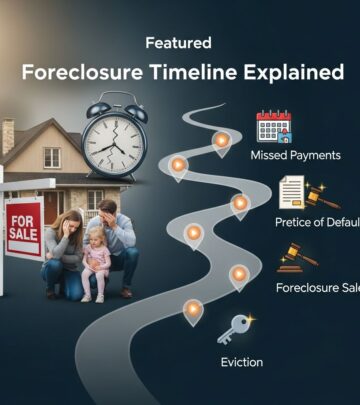
This initial stage focuses on notification and cure opportunities. Lenders issue a Notice of Default (NOD), detailing arrears and a repayment deadline, often 30-90 days depending on state law. Borrowers can reinstate the loan by paying the full overdue balance plus costs.
| State Example | Cure Period Length | Key Requirement |
|---|---|---|
| California | 3 months minimum | Recorded NOD after lender contact |
| General U.S. | 90-120 days | Federal 120-day rule applies |
| North Carolina | Varies by notice | Published in local paper |
During preforeclosure, options like loan modification or forbearance become viable, often requiring financial hardship proof.
Judicial Foreclosure: Court-Supervised Proceedings
In states mandating judicial foreclosure, lenders file a lawsuit to obtain court authorization for sale. This borrower-friendly process allows defenses such as payment disputes or lender errors. Timelines extend from months to years, providing negotiation windows.
- Complaint Filing: Lender sues in county court, serving summons.
- Response Period: Homeowner files answer within 20-30 days.
- Hearing and Judgment: Court reviews evidence; if approved, sale order issued.
Judicial processes ensure due process but prolong uncertainty for all parties involved.
Non-Judicial Foreclosure: Streamlined Power of Sale
Predominant in states like California, non-judicial foreclosure bypasses courts via a “power of sale” clause in the deed of trust. Speedier—often 3-6 months—this method requires precise notices.
- Notice of Default Recording: Publicly filed, mailed to borrower.
- Reinstatement Window: Pay full default to halt process.
- Notice of Trustee’s Sale: Scheduled 20+ days ahead, published locally.
A trustee conducts the auction, prioritizing lender recovery from proceeds.
The Auction and Post-Sale Ownership Transfer
At the public auction, the property sells to the highest bidder, who must pay cash or certified funds. Lender bids start at unpaid balance plus costs. Unsold properties become Real Estate Owned (REO) by the lender, listed for retail sale.
Bidder qualifications include deposits (often 10%) and full payment within days. New owners gain title via trustee’s deed, subject to potential redemption periods in some states.
Eviction Procedures After Foreclosure Sale
Post-sale, former owners receive a Notice to Quit, granting 3-30 days to vacate. Non-compliance triggers unlawful detainer lawsuits, culminating in sheriff-assisted removal. Cash for keys programs sometimes expedite peaceful transitions.
State-Specific Variations in Foreclosure Timelines
Foreclosure laws diverge significantly by jurisdiction, influencing speed and borrower rights.
| State | Primary Type | Avg. Timeline (Months) | Notable Feature |
|---|---|---|---|
| California | Non-Judicial | 4-6 | 3-month cure post-NOD |
| Florida | Judicial | 8-12 | Court oversight required |
| Texas | Non-Judicial | 3-5 | Power of sale clause |
| New York | Judicial | 12-24 | Lengthy defenses possible |
Consult local statutes or housing counselors for precise rules.
Critical Credit Score Damage from Foreclosure
Foreclosure devastates credit profiles, dropping scores by 100-300 points and lingering 7 years from first delinquency. It signals high risk, elevating borrowing costs or blocking approvals.
- Immediate Hit: FICO score plummets upon delinquency reporting.
- Public Record: Foreclosure filing appears on reports.
- Collections: Residual deficiencies pursued as debt.
Timely payments elsewhere can mitigate long-term effects.
Proven Strategies to Avoid Foreclosure
Proactive intervention often halts proceedings. Contact lenders early for tailored relief.
- Government Programs: FHA/VA forbearance or HAMP modifications.
- Short Sale: Sell below balance with lender approval, less damaging than foreclosure.
- Deed in Lieu: Voluntarily transfer title, forgiving debt.
- Bankruptcy: Chapter 13 halts process via automatic stay.
- Housing Counseling: Free HUD-approved advice.
Document hardships thoroughly to strengthen applications.
Rebuilding Finances Post-Foreclosure
Recovery demands disciplined habits. Prioritize secured credit cards, budget adherence, and 12+ months of positive history before new mortgages.
- Boost Scores: Pay bills on time, reduce utilization below 30%.
- FHA Loans: Eligible after 3 years vs. 7 for conventional.
- Rent-to-Own: Bridges to ownership.
Patience yields renewed opportunities.
Common Myths About Foreclosure Debunked
Misconceptions prolong distress. Truth: Lenders prefer modifications over foreclosures due to costs; defenses work if legitimate; credit rebounds faster than feared with effort.
Frequently Asked Questions (FAQs)
How long does the full foreclosure process take?
Varies by state: 3-6 months non-judicial, 6-24 months judicial.
Can I stay in my home during foreclosure?
Yes, until sale and eviction, often months post-auction.
Does foreclosure forgive the remaining mortgage debt?
No, deficiency judgments possible in some states unless waived.
What credit score is needed after foreclosure?
580+ for FHA after waiting period; higher for others.
Is there a way to buy back my foreclosed home?
Redemption rights limited to specific states and timelines.
Key Takeaways for Homeowners
Foreclosure, while daunting, is navigable with knowledge. Early action via counseling and lender dialogue preserves equity and credit. Post-event, strategic rebuilding restores stability.
References
- Foreclosure 101: What It Is, How It Works, and Your Options — Upsolve. 2023. https://upsolve.org/learn/foreclosure/
- How does foreclosure work? — Consumer Financial Protection Bureau. 2024-03-15. https://www.consumerfinance.gov/ask-cfpb/how-does-foreclosure-work-en-287/
- The Process of Foreclosure in California — Peterson Law, LLP. 2023-11-01. https://petersonlawllp.com/process-foreclosure-california/
- Foreclosure: How It Works And How To Avoid — Bankrate. 2025-01-20. https://www.bankrate.com/mortgages/what-is-a-foreclosure/
- Guide to foreclosures — California Courts Self Help. 2024. https://selfhelp.courts.ca.gov/foreclosures
- Foreclosure: What it means and how to avoid it — Rocket Mortgage. 2024-06-10. https://www.rocketmortgage.com/learn/foreclosure-definition
Similar Articles








Read full bio of Sneha Tete