Forbearance And Your Credit Reports: What To Know
Discover how forbearance agreements impact your credit reports and scores during financial hardships.
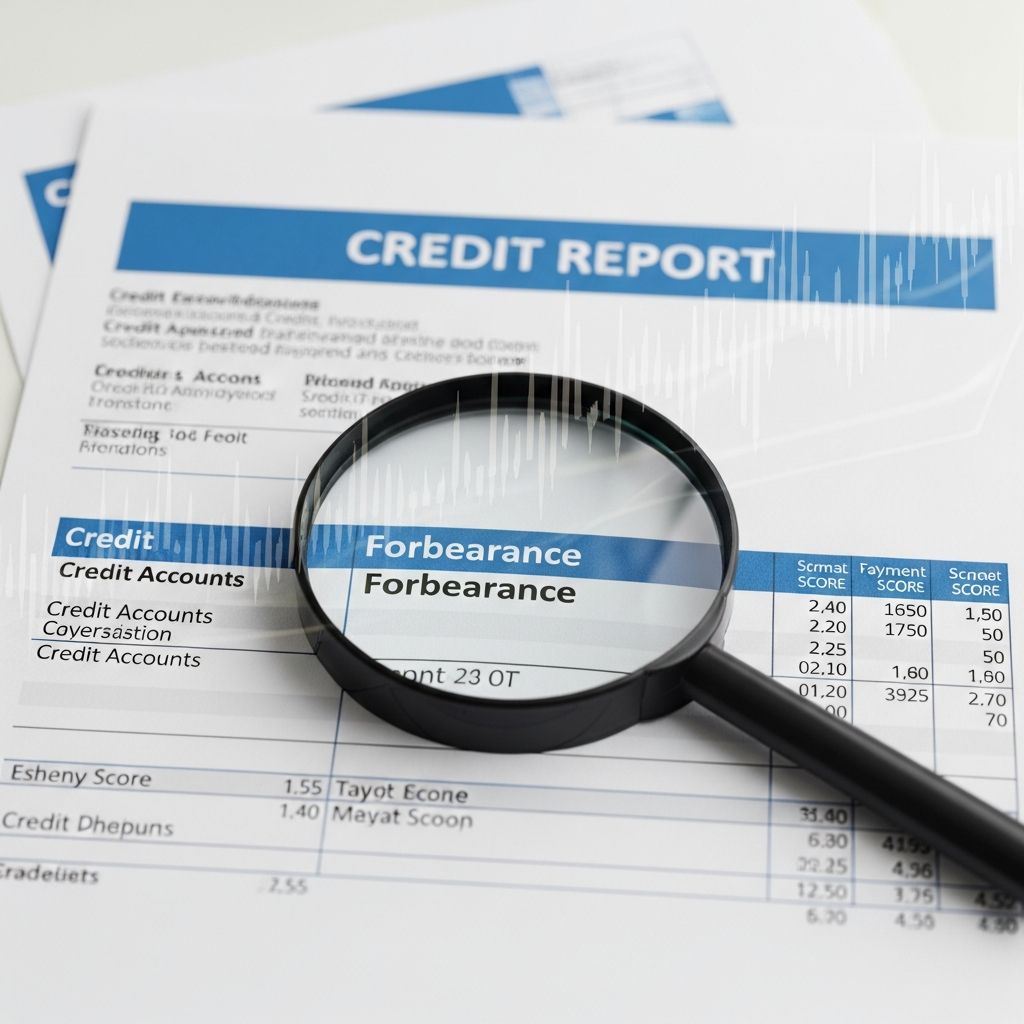
Forbearance is an agreement with a lender or creditor that allows a borrower to temporarily delay or suspend loan payments for a specified period, providing relief during financial difficulties without immediately damaging credit scores if properly arranged.
What Is Forbearance?
Life brings unexpected challenges, such as economic downturns, job loss, medical emergencies, or family crises, that can make it hard to keep up with bills like rent, utilities, insurance, and loan payments. During these times, contacting your creditors and lenders about repayment options is crucial. One common option is
forbearance
, defined as a formal agreement where the lender permits you to pause or reduce payments for an agreed timeframe, typically up to 12 months.Forbearance offers short-term breathing room to stabilize your finances. However, it’s not forgiveness of debt—any missed payments must usually be repaid later, often with accrued interest. Unlike simply missing payments, which can lead to late fees, delinquencies, and credit score drops, a proper forbearance agreement, when reported correctly, avoids negative marks on your credit reports from Equifax®, Experian®, and TransUnion®.
Forbearance vs. Deferment: Key Differences
People often confuse
forbearance
withdeferment
, but they differ significantly in how they handle payments and interest:- Deferment: Payments are delayed or reduced, and in many cases, interest does not accrue during the deferment period. This is common for federal student loans under specific conditions, keeping the total debt lower.
- Forbearance: Payments are paused or reduced, but interest continues to accrue on the outstanding balance. This increases the total amount owed over time, as the interest capitalizes onto the principal upon resumption.
Understanding this distinction is vital. For example, during the COVID-19 pandemic, federal student loans entered widespread forbearance where payments paused and interest was set to 0%, blurring lines but highlighting standard differences. Always confirm terms with your lender to avoid surprises.
| Aspect | Forbearance | Deferment |
|---|---|---|
| Payment Status | Paused or reduced | Delayed or reduced |
| Interest Accrual | Yes, continues | Often no |
| Credit Impact | Neutral if agreed | Typically neutral |
| Repayment | Lump sum or extended | Added to end |
What Debts Qualify for Forbearance?
Forbearance isn’t limited to mortgages—most consumer debts may qualify, depending on the lender’s policies:
- Mortgages: Common for homeowners facing hardship; federal programs like those under CARES Act offered up to 18 months.
- Student Loans: Federal loans frequently allow forbearance; post-2023 resumption showed score impacts for non-payers.
- Auto Loans: Dealers or banks may pause repossessions.
- Credit Cards: Issuers offer hardship programs with reduced rates or deferred payments.
- Utilities and Property Taxes: Local programs often defer without credit reporting.
- Small Business Loans: SBA-backed loans qualify under disaster relief.
No universal federal rules mandate terms, so eligibility varies. Lenders assess based on hardship proof like income statements or unemployment notices. Agreements might include interest rate reductions but require repayment plans.
How to Request Forbearance: Talk to Your Lenders
Don’t stop payments without an agreement—doing so risks delinquencies reported after 30 days, harming scores for up to 7 years. Contact lenders immediately:
- Gather Documentation: Proof of hardship (pay stubs, medical bills, layoff notice).
- Call or Apply Online: Visit issuer websites for hardship forms; e.g., credit card portals list options.
- Negotiate Terms: Ask about duration, interest accrual, fees, and credit reporting.
- Get It in Writing: Confirm no late fees and neutral credit reporting.
For mortgages, reach out before missing a payment. Credit card forbearance varies: some defer minimums while accruing interest; others lower APR temporarily. Check issuer sites regularly, as programs evolve.
How Does Forbearance Affect Your Credit Reports and Scores?
Properly arranged forbearance generally doesn’t hurt credit scores because accounts are marked as current, not delinquent. Major bureaus agreed during COVID not to penalize pandemic-related forbearances.
However, risks exist:
- Accruing Interest: Debt grows, raising utilization ratios if revolving.
- Missed Agreements: Post-forbearance default drops scores significantly (e.g., 49-82 points for student loans).
- Reporting Variations: Some lenders note forbearance; VantageScore research showed end-of-forbearance score boosts for on-time payers (up to 8 points).
Student loan forbearance ending in 2023 impacted millions: delinquencies resume reporting December 2024, risking drops for 34-76% of borrowers. Federal pauses wiped derogatory marks, boosting Equifax Risk Scores.
The Forbearance Process for Specific Debts
Mortgage Forbearance
If struggling with mortgage payments, contact your servicer promptly. Programs allow pausing for 3-12 months, with repayment via lump sum, extended terms, or partial claims. Credit unaffected if in program.
Credit Card Forbearance
Issuers like those during crises offer:
- Temporary APR reductions.
- Deferred minimum payments.
- Hardship plans lasting 6-12 months.
Interest accrues; avoid if possible by prioritizing high-interest debt. Late payments outside agreements tank scores.
Student Loan Forbearance
Federal loans via StudentAid.gov: General forbearance up to 12 months; interest accrues unless subsidized. Use pause to pay down principal. Post-pause, on-time payments improve scores; delinquencies harm.
Drawbacks and Repayment Strategies
Forbearance isn’t free:
- Increased Debt: Accrued interest capitalizes, raising future payments.
- Fees: Late fees may apply pre-agreement.
- Limited Availability: Not indefinite; multiple uses possible but scrutinized.
Post-forbearance, use snowball method: Pay smallest debts first for momentum. Budget aggressively; consider refinancing if rates drop.
Frequently Asked Questions (FAQs)
What is the main difference between forbearance and deferment?
Forbearance allows payment pauses with interest accruing, while deferment often pauses interest too.
Will forbearance hurt my credit score?
No, if formally agreed and reported as current; unauthorized misses will.
Which debts can get forbearance?
Mortgages, student loans, auto, credit cards, utilities—contact lenders.
How do I repay after forbearance?
Options: lump sum, extended payments, or capitalized into loan.
Can I get forbearance multiple times?
Yes, but lenders evaluate hardship each time; federal student limits apply.
References
- Forbearance and Your Credit Reports — Equifax. 2023. https://www.equifax.com/personal/education/personal-finance/articles/-/learn/forbearance-debt-payments-credit-scores/
- New VantageScore Research Shows Credit Score Impact of the End of Federal Student Loan Forbearance — VantageScore. 2023-06-30. https://vantagescore.com/resources/knowledge-center/press_releases/new-vantagescore-research-shows-credit-score-impact-of-the-end-of-federal-student-loan-forbearance
- Bracing for Impact: Navigating the Shifting Tides of Student Loan Repayment — Equifax. 2023. https://www.equifax.com/business/blog/-/insight/article/bracing-for-impact-navigating-the-shifting-tides-of-student-loan-repayment/
- How the Student Loan Payment Pause Affected Borrowers’ Credit — Federal Reserve Bank of Boston. 2025-01-13. https://www.bostonfed.org/-/media/Documents/Workingpapers/PDF/2025/cpp20250113.pdf
- How Forbearance Impacts Your Student Loans — Equifax. 2023. https://www.equifax.com/personal/education/loans/articles/-/learn/student-loan-forbearance/
- Keeping Up with Credit Card Debt During a Financial Crisis — Equifax. 2023. https://www.equifax.com/personal/education/credit-cards/articles/-/learn/credit-card-debt-during-financial-crisis/
Similar Articles








Read full bio of medha deb