Food Co-ops: Costs, Benefits & Drawbacks
Explore whether joining a food cooperative is worth it with detailed analysis of costs and benefits.
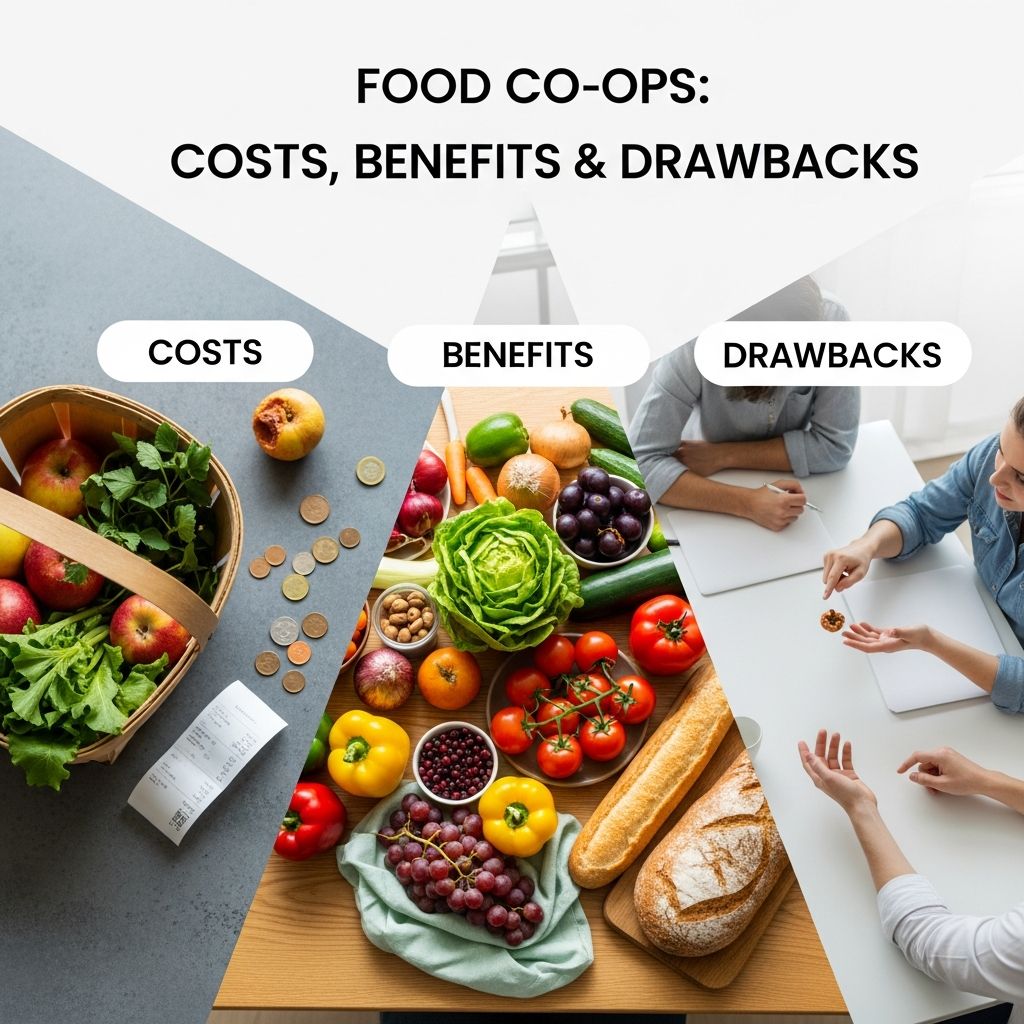
Food cooperatives have become increasingly popular in many communities as consumers seek alternatives to traditional supermarket chains. But before you invest your hard-earned money in membership, it’s important to understand what these organizations are, how they operate, and whether the benefits justify the costs. This comprehensive guide will help you evaluate whether a food co-op membership makes financial and practical sense for your household.
Understanding Food Cooperatives
A food cooperative, or food co-op, is a grocery distribution outlet organized as a cooperative rather than a private or public company. Unlike traditional supermarkets where profits go to shareholders, cooperatives are owned and governed by their members. This fundamental difference shapes everything about how these businesses operate, from their pricing strategies to their product selections and community involvement.
The cooperative model is built on a principle of democratic ownership where members typically have equal voting power regardless of the size of their investment. This “one member, one vote” structure contrasts sharply with traditional corporations where voting power correlates with the number of shares held. Members of food cooperatives not only enjoy shopping benefits but also have a voice in how the organization is run, including decisions about which products to stock, pricing policies, and community initiatives.
Food co-ops typically focus on offering local, organic, and high-quality food products that may not be available at traditional supermarkets. Many establish close relationships with local producers and farmers who may not meet the rigorous sourcing standards of larger chain groceries. This commitment to quality and locality distinguishes co-ops from mainstream grocery retailers and appeals to consumers who prioritize sustainable and ethical food sourcing.
Membership Costs and Investment Requirements
One of the first considerations when contemplating co-op membership is the financial investment required. Membership typically involves a one-time investment fee to purchase a share or shares in the cooperative, which can range from $35 to $200 depending on the specific co-op. Some cooperatives charge fees closer to $100, which represents a typical mid-range investment. This upfront cost is a significant barrier for some families and should be carefully considered in your budget.
The good news is that many cooperatives recognize that this lump sum can be burdensome and offer payment plans to ease the financial strain. For example, some co-ops allow new members to pay $10 per month over 10 months rather than requiring the full amount upfront. A few cooperatives may even waive membership fees entirely or allow you to pay only in months when you actually shop at their store.
It’s important to note that this membership investment is typically refundable. If you decide to leave the co-op at any point, you can recover your membership investment. Additionally, some cooperatives require annual dues to maintain your membership status, though this varies by organization.
Some co-ops operate on a share system where members can purchase a single share, while others allow unlimited share purchases. This flexibility means you can tailor your investment level to your financial situation and commitment level.
Financial Benefits of Co-Op Membership
Shopping Discounts and Special Deals
One of the primary financial incentives for joining a food co-op is access to member-exclusive shopping discounts. These can take various forms, such as a percentage discount on all purchases (for instance, 2% off each shopping visit or 5% off one visit per month), members-only deals on specific items, or bulk purchasing discounts. Depending on how frequently you shop at your co-op, these discounts can quickly add up and help offset your membership investment.
Patronage Refunds
Many grocery cooperatives reward loyal members with patronage refunds, which are typically distributed monthly or annually. These refunds represent a portion of your total purchases during the covered period being returned to you. Essentially, the co-op shares a percentage of its profits with members based on how much they spent at the store. For active shoppers, patronage refunds can represent a meaningful return on their membership investment.
Access to Co-op Networks
Many individual co-ops are part of larger cooperative networks that extend benefits beyond their physical locations. Members at one co-op may receive discounts when shopping at other participating cooperatives in the network. This is particularly valuable if you travel frequently or have friends and family in other parts of the city. For example, if a co-op is part of a network that includes six other grocery cooperatives in the same city, you can enjoy member discounts at any of these locations.
Additional Member Benefits
Beyond direct financial incentives, many co-ops offer other valuable benefits including discounted class fees for cooking or nutrition classes, special member appreciation events, coupons on selected products, free or reduced-cost community workshops, and discounts from partner community businesses. Some co-ops also offer case discounts for bulk purchases, making it more economical to buy in larger quantities.
Non-Financial Benefits of Co-Op Membership
Access to Local and Organic Products
Co-ops are renowned for their focus on sourcing local, organic, and high-quality food products. Members gain access to items that may have limited or no availability at traditional supermarkets, including specialty foods, locally-produced goods, and organic products grown by nearby farmers. This commitment to quality and locality resonates with consumers who prioritize sustainable and ethical food sourcing.
Democratic Governance and Community Involvement
As a member, you have the opportunity to participate in the governance of your food co-op. This includes voting in board elections, serving on advisory committees, and having input on major business decisions. For consumers who want to have a say in how their food system operates, this democratic participation is invaluable.
Beyond governance, many co-ops are deeply involved in their communities, sponsoring local CSAs (Community Supported Agriculture programs), supporting nonprofit organizations such as food banks and clinics, partnering with neighborhood development corporations, and hosting community events. By shopping at your co-op, you’re supporting these community initiatives.
Building Relationships and Community
Co-ops typically foster a stronger sense of community among members compared to anonymous chain supermarkets. Staff are often more knowledgeable about products and can provide recommendations. You’re likely to see familiar faces regularly and may develop relationships with other members who share similar values regarding food and sustainability.
Drawbacks and Challenges of Co-Op Membership
Required Financial Investment
The upfront investment required to join a co-op is a significant hurdle for many families. Unless you’re a co-op employee for whom membership may be an employment perk, joining requires opening your wallet. For households living paycheck to paycheck, even $50 to $100 can represent a meaningful financial burden. While payment plans help mitigate this issue, you cannot join without making either a financial investment or working as a co-op employee.
No Guarantee of Financial Returns
This is perhaps the most critical drawback to understand: while food co-ops have the ability to provide financial incentives, there’s no guarantee that yours will. Financial perks may not be your specific co-op’s highest priority. Instead, management might choose to allocate financial resources toward expanding product offerings, paying employees higher wages, making more generous payments to suppliers, or investing in facility improvements.
Additionally, membership shares typically don’t appreciate in value. You shouldn’t expect to earn a return on your investment by selling your share for more than its purchase price. The face value of shares remains static, and your only financial return comes through discounts, patronage refunds, and other member benefits.
Higher Prices Than Traditional Supermarkets
While member discounts and patronage refunds can help offset costs, shopping at a co-op may never be cheaper than shopping at a supermarket in pure dollar terms. Food co-ops typically operate with less buying power than national supermarket chains like Kroger and Safeway. Even co-ops that belong to regional networks have significantly less purchasing leverage than large chains.
The combination of lower buying power and the co-op’s focus on high-quality, local, and organic products typically results in higher shelf prices. If your primary goal is finding the absolute lowest prices, a co-op membership may not deliver financial savings. In some cases, even after accounting for member discounts and patronage refunds, you might pay 15-20% more for your weekly groceries compared to traditional supermarkets. For budget-conscious shoppers, this price differential can be a dealbreaker.
Limited Product Selection
Co-ops are typically smaller than national supermarket chains, which means they carry a more limited selection of products. If you have specific brand preferences or dietary needs requiring specialty items, you might not find everything at your local co-op. This often necessitates shopping at multiple stores, which can be time-consuming and defeats the purpose of joining.
Member Labor Requirements
Some co-ops, particularly smaller ones, require or incentivize member labor contributions. While this reduces paid labor costs and can theoretically lower shelf prices, it adds a time commitment for members. If you’re already stretched thin with work and family obligations, volunteering at the co-op might not be feasible, limiting potential savings.
Is Co-Op Membership Worth It for You?
Determining whether food co-op membership makes sense requires honest self-assessment and financial analysis specific to your situation. Before joining, consider these key questions:
- Will you shop there consistently? Membership only provides value if you actually use it regularly. Occasional shopping won’t generate sufficient discounts and patronage refunds to justify membership.
- Can you afford to do most of your shopping there? Given typically higher prices, determine whether your budget allows purchasing a significant portion of groceries from the co-op rather than splitting purchases between the co-op and cheaper supermarkets.
- Will you take advantage of non-shopping benefits? Do you plan to participate in governance, attend member events, take classes, or engage in other community activities that add value beyond shopping discounts?
- How important are local and organic products to you? If these items are priority purchases regardless of price, the co-op’s product focus may align well with your values, making membership more worthwhile.
- Can you recover the membership investment? Roughly calculate how long it will take for member discounts and patronage refunds to offset your membership fee.
Financial Comparison Table
| Factor | Co-Op | Traditional Supermarket |
|---|---|---|
| Membership Cost | $35-$200 one-time | $0 |
| Base Prices | 15-20% higher | Lower baseline prices |
| Member Discounts | 2-5% typical | Occasional sales for all |
| Product Quality Focus | Organic, local, high-quality | Varied quality levels |
| Patronage Refunds | Yes, if profitable | No |
| Governance Participation | Yes, one member one vote | No |
Frequently Asked Questions
Q: How long does it take for member discounts to offset my membership fee?
A: This depends on your co-op’s discount structure and your shopping frequency. If you receive a 5% discount and spend $100 weekly at your co-op, you’d earn $5 in savings weekly or roughly $260 annually. A $100 membership would be recovered in about 5 months of regular shopping. However, factor in that you’re paying higher base prices, which may extend the breakeven timeline.
Q: Do I get my membership fee back if I leave the co-op?
A: Yes, in most cases your membership investment is refundable. However, verify this with your specific co-op, as policies vary. Some co-ops may deduct any outstanding dues or fees before returning your investment.
Q: Can I pay my membership fee in installments?
A: Many co-ops offer payment plans specifically to make membership more accessible. Some allow monthly payments over 10 months, while others let you pay only in months when you shop. Contact your local co-op to inquire about their specific options.
Q: Will I save money by shopping at a co-op compared to a supermarket?
A: Not necessarily. While member discounts and patronage refunds can reduce costs, co-ops typically charge 15-20% more at baseline due to their focus on local, organic, high-quality products and lower purchasing power. You may save money if you’re purchasing items you would buy organic or local anyway, but cost savings aren’t guaranteed.
Q: What happens to patronage refunds if my co-op doesn’t make a profit?
A: If your co-op doesn’t generate a profit, there are no patronage refunds to distribute. This is why there’s no guarantee of financial returns beyond negotiated discount rates, which are typically honored regardless of profitability.
Q: Can I own multiple shares in a co-op?
A: Some co-ops allow unlimited share purchases while others restrict members to a single share. However, even if you own multiple shares, voting power typically remains equal—one member, one vote. Contact your co-op for their specific share policy.
Final Recommendations
Food co-op membership works best for consumers who prioritize access to local, organic, and high-quality food products above getting the absolute lowest prices. It’s ideal for those who value democratic participation in food system decisions and want to support community-focused businesses.
However, if your primary goal is minimizing your grocery budget, a food co-op may not be the right choice. Traditional supermarkets and discount grocers will likely offer lower overall costs despite lacking the community benefits and product quality focus of co-ops.
The best approach is to visit your local co-op before joining, carefully examine their pricing, understand their member benefit structure, and honestly assess whether you’ll shop there consistently. Only join if you’re confident the combination of discounts, patronage refunds, product access, and community involvement justifies the membership fee and typically higher prices.
References
- What Is a Food Co-op and Is It Worth Joining? – Costs, Benefits & Drawbacks — Money Crashers. Accessed November 29, 2025. https://www.moneycrashers.com/food-coop-costs-benefits-drawbacks/
- Food cooperative — Wikipedia. https://en.wikipedia.org/wiki/Food_cooperative
- What Is a Food Co-op? — Food Revolution Network. https://foodrevolution.org/blog/what-is-a-food-coop/
- Membership Is Ownership: The Cooperative Advantage — National Cooperative Grocers Association. https://archives.grocer.coop/articles/membership-ownership-cooperative-advantage
- Cooperative Benefits and Limitations — USDA Rural Development. https://www.rd.usda.gov/files/cir1sec3.pdf
- Types of Cooperatives, Benefits, and Constraints — Clemson University Extension. https://www.clemson.edu/extension/agribusiness/sccced/resources/cooperatives-benefits-constraints.html
Similar Articles








Read full bio of Sneha Tete