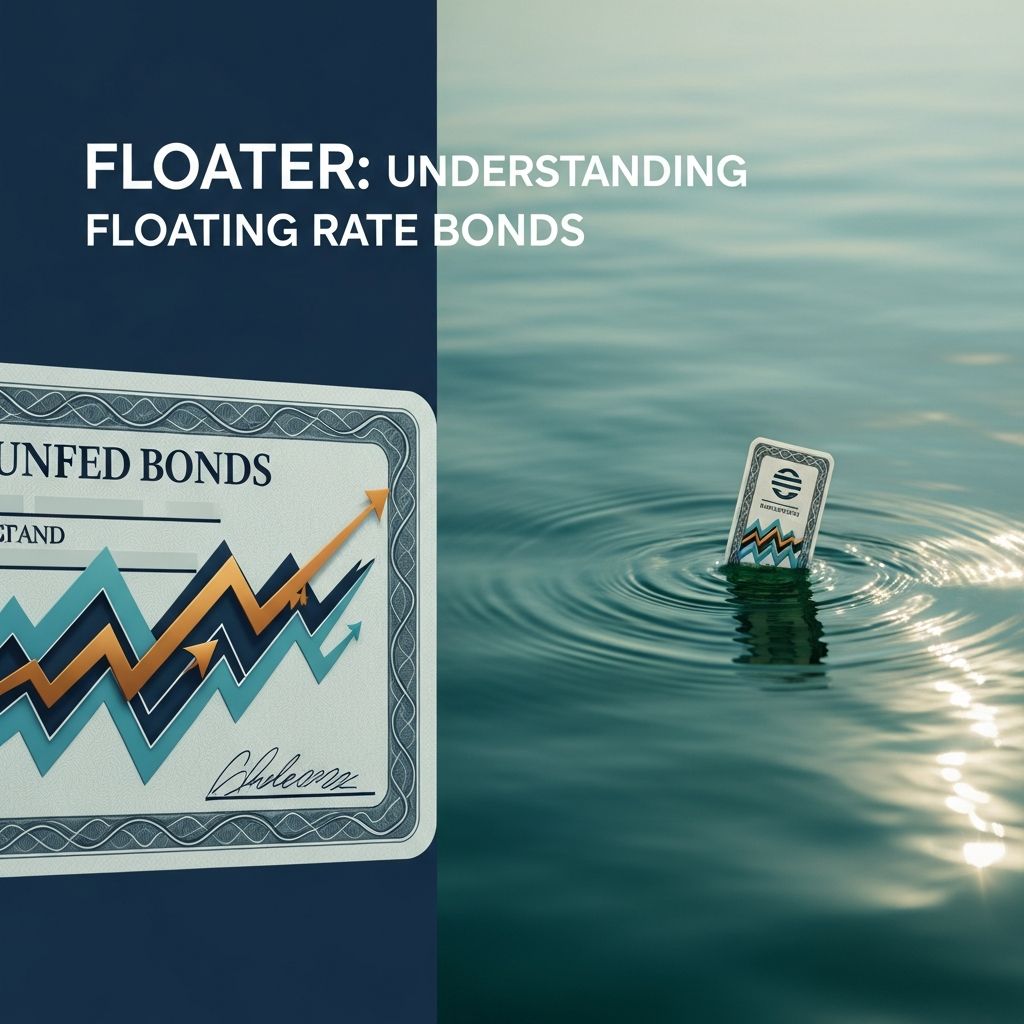
Floater: Understanding Floating Rate Bonds
Learn how floating rate bonds adjust to market conditions and manage interest rate risk.
What Is a Floater?
A floater, also known as a floating rate note (FRN) or floating rate security, is a type of bond with a variable interest rate that adjusts periodically based on a specified reset mechanism. Unlike traditional fixed-rate bonds that pay the same coupon payment throughout their life, floaters have coupon rates that change to reflect current market conditions. This dynamic pricing structure makes floaters particularly useful for investors seeking to manage interest rate risk or capitalize on changing yield environments.
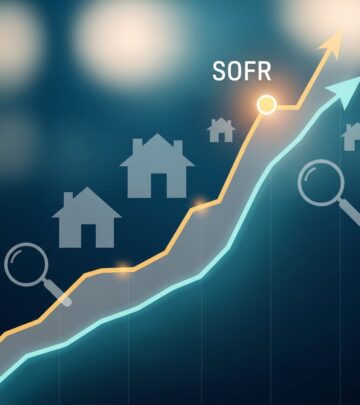
Floating rate securities are bonds whose coupon rates adjust periodically based on a specified reset mechanism and include most bank loans and some preferred stock. The coupon on a floating rate note is typically equal to a money market reference rate, such as SOFR (Secured Overnight Financing Rate) or the federal funds rate, plus a quoted spread (also known as quoted margin) that remains constant throughout the security’s life.
How Floaters Work
The mechanics of floating rate bonds are straightforward yet sophisticated. At the beginning of each coupon period, typically every three months for most FRNs, the coupon is calculated by taking the fixing of the reference rate for that specific day and adding the predetermined spread. For example, a typical coupon might look like 3-month SOFR +0.20%. This means if the current SOFR rate is 5.00%, the investor would receive a coupon of 5.20% for that quarter.
The floating rate mechanism works as follows:
- The bond references a specific benchmark index or money market rate
- The coupon adjusts at predetermined intervals (commonly quarterly)
- The spread over the benchmark remains constant
- Interest payments fluctuate as market rates change
This structure creates a dynamic investment where the holder’s income adapts to changing interest rate environments, distinguishing floaters from their fixed-rate counterparts.
Key Features and Characteristics
Quoted Spread and Margin
The quoted spread, also called the quoted margin, is the most critical component of a floater’s yield after the benchmark rate. This spread is negotiated at issuance and remains fixed for the life of the security. The combination of the variable benchmark rate plus the fixed spread determines the actual coupon payment investors receive each period.
Coupon Payment Frequency
Almost all floating rate notes have quarterly coupons, meaning they distribute interest payments every three months. This frequent reset of the coupon rate to current market conditions is one of the defining characteristics of floaters and helps explain their appeal to certain investors.
Reference Rates
Modern floaters commonly reference several benchmark rates, including SOFR (which replaced LIBOR as the primary U.S. benchmark), federal funds rates, and other money market rates. The choice of reference rate affects the floater’s sensitivity to different aspects of the interest rate environment.
Special Types of Floaters
Capped and Floored Floaters
Some floating rate notes include special features that limit the extent to which coupons can move. Capped FRNs have maximum coupon rates, while floored FRNs have minimum coupon rates. Securities with both minimum and maximum coupons are called collared FRNs. These features provide additional protection for either the issuer or the investor depending on the structure.
Leveraged and Deleveraged Floaters
A leveraged or super floater gives investors increased exposure to an underlying index, with a leverage factor greater than one. Conversely, a deleveraged floating-rate note bears a coupon that is the product of the index and a leverage factor between zero and one, giving investors decreased exposure to the underlying index. Leveraged floaters require floors since coupon rates cannot be negative.
Perpetual Floaters
Perpetual FRNs, also called irredeemable or unrated FRNs, are floating rate securities with no maturity date. These instruments function similarly to perpetual capital and offer unique considerations for long-term portfolio management.
Interest Rate Risk and Floaters
Theoretical Interest Rate Protection
One of the primary reasons investors purchase floaters is their theoretical ability to protect against interest rate risk. Many believe that floating rate notes carry minimal interest rate risk because a floating rate note’s Macaulay Duration is approximately equal to the time remaining until the next interest rate adjustment, resulting in very low price sensitivity to changes in market rates. Additionally, when market rates rise, the expected coupons on the FRN increase in line with the increase in forward rates, theoretically maintaining the price near par value.
Practical Limitations
However, the theory doesn’t always match practice. During times of extreme interest rate volatility, rates may not reset quickly enough to prevent price fluctuations. Additionally, the coupon rates of floaters are usually well below those of long-term bonds and often not particularly attractive when compared to shorter maturity bonds. This means investors sometimes accept lower yields for the interest rate protection that floaters theoretically provide.
Benefits and Advantages
Floaters offer several distinct advantages for investors and portfolio managers:
- Interest Rate Protection: Floaters adjust as market rates change, helping protect investors from the price decline that typically occurs with fixed-rate bonds when rates rise
- Portfolio Flexibility: Fund managers can use floaters to create leverage or strategic positioning in their portfolios
- Income Adaptation: As yields rise, floater coupon payments increase, allowing investors to capture higher income in rising rate environments
- Reduced Price Risk: The frequent coupon resets keep prices closer to par value compared to fixed-rate bonds
- Enhanced Returns: When used strategically through structures like Tender Option Bonds, floaters can create leverage opportunities for increased portfolio returns
Risks and Considerations
Credit Risk
Floaters are not immune to credit risk. If the issuer’s creditworthiness declines, investors will demand a higher interest rate spread over the benchmark. For example, if a 5-year FRN originally paying SOFR +0.20% experiences credit deterioration, investors might demand SOFR +0.25%, causing the bond’s price to decline.
Complexity
Floating rate securities can be highly complex instruments. As noted by financial experts, investment firms participate in floater markets 24 hours a day, yet floaters remain intricate instruments requiring deep understanding. Investors who don’t fully comprehend these securities should carefully consider whether they’re appropriate for their portfolios.
Leverage Risk
When floaters are used to create leverage through structures such as Tender Option Bonds, they magnify both returns and risks. Leverage creates the possibility that the fund could lose more than its original investment and significantly increases volatility and exposure to interest rate and credit risks.
Liquidity Risk
While many floaters have reasonable liquidity, the markets for certain types of floaters can become stressed during periods of financial market turmoil, making it difficult to exit positions at fair prices.
Floaters vs. Fixed-Rate Bonds: A Comparison
| Feature | Floaters | Fixed-Rate Bonds |
|---|---|---|
| Coupon Payment | Variable, adjusts periodically | Fixed throughout life |
| Interest Rate Risk | Lower (shorter duration) | Higher (longer duration) |
| Price Stability | Closer to par value | Fluctuates more with rates |
| Income Predictability | Variable and uncertain | Known and predictable |
| Rising Rate Environment | Income increases | Price declines, income flat |
| Falling Rate Environment | Income decreases | Price increases, income flat |
| Complexity | Higher | Lower |
Calculating Floater Yields and Spreads
Effective Spread
The effective spread represents the average margin over the benchmark rate that is expected to be earned over the life of the security. For a floating rate note selling at par value, the effective margin is simply the contractual spread over the benchmark rate specified in the note’s prospectus.
Simple Margin Calculation
A simpler approach for calculating expected returns begins with computing the sum of the quoted spread of the FRN and the capital gain or loss an investor will earn if the note is held to maturity, using the formula:
( frac{100 – text{Clean Price}}{text{Maturity in Years}} + text{Spread} )
This calculation helps investors understand their total expected return including both coupon income and any price appreciation or depreciation.
Tender Option Bonds and Floaters
Tender Option Bonds (TOBs) represent a specialized application of floating rate securities. These are special purpose trust investments that issue two types of securities: floating rate securities (floaters) and inverse floating rate securities (inverse floaters). The floaters are typically sold to money market funds, while the inverse floaters are retained by the investment fund managing the structure.
This arrangement creates leverage opportunities for fund managers who use floaters to borrow from money market investors and then invest those proceeds in longer-term, fixed-rate bonds. The expectation is that the yield on the longer-term bonds will exceed the borrowing rate paid on the floaters, creating additional income for the fund.
Frequently Asked Questions
What is the main difference between a floater and a fixed-rate bond?
The primary difference is that floaters have variable coupon rates that adjust periodically based on a benchmark index plus a fixed spread, while fixed-rate bonds maintain the same coupon rate throughout their life. This makes floaters more responsive to changing interest rate environments.
Are floaters a good investment in a rising rate environment?
Floaters can be attractive in rising rate environments because their coupon payments increase as benchmark rates rise, allowing investors to capture higher yields. Additionally, their prices remain relatively stable compared to fixed-rate bonds, which typically decline when rates increase.
What does the quoted spread on a floater represent?
The quoted spread, or quoted margin, is the fixed percentage added to the benchmark rate to determine the floater’s coupon payment. This spread remains constant throughout the security’s life and compensates investors for credit risk and other factors.
How often do floater coupon rates reset?
Most floating rate notes reset their coupons quarterly, meaning interest rate adjustments occur every three months. However, some floaters may have different reset frequencies depending on their terms.
What are collared floaters?
Collared floaters are floating rate securities with both minimum and maximum coupon rates (a floor and a cap). These limits protect both the issuer and investor by establishing boundaries on how much the coupon can increase or decrease.
Can individual investors purchase floaters?
While individual investors can purchase some floaters, many floating rate securities are complex instruments primarily held by institutional investors. Individuals should ensure they fully understand these securities before investing, as financial experts caution that uninformed investors should avoid complex floaters.
References
- Understanding Tender Option Bonds and their rules — Nuveen. 2024. https://www.nuveen.com/en-us/insights/fixed-income/understanding-tender-option-bonds
- Floating Rate Notes — Federal Reserve. 2024. https://www.federalreserve.gov/datadownload/
- Floating rate note — Wikipedia. 2024. https://en.wikipedia.org/wiki/Floating_rate_note
Similar Articles








Read full bio of medha deb