Flag Pattern: Definition, Types, and Trading Strategies
Master flag patterns in trading: Learn how to identify and trade bull and bear flags effectively.
What Is a Flag Pattern?
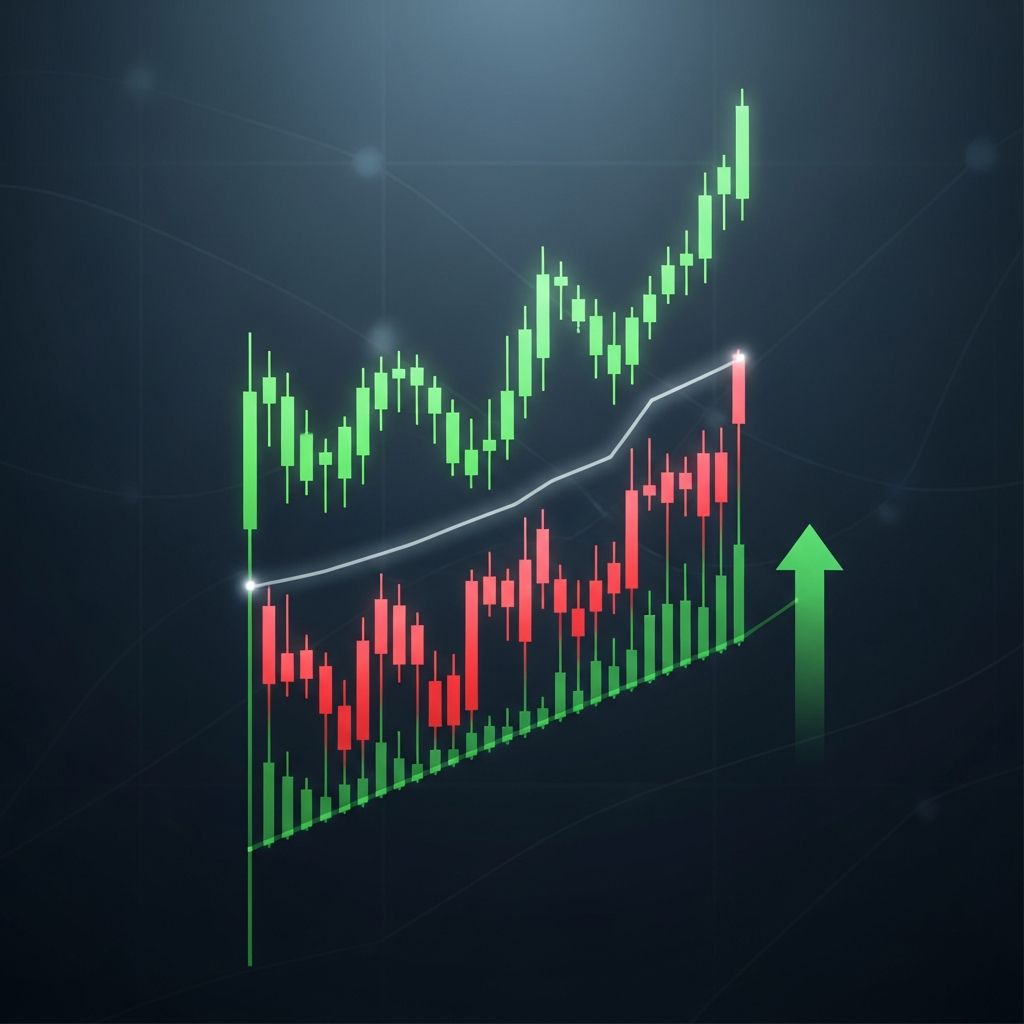
A flag pattern is a continuation pattern in technical analysis that signals the potential for a price move to continue in the direction of the prior trend after a brief consolidation or retracement period. These patterns are particularly valuable for traders who prefer trading with the trend, as they offer clear entry and exit points for establishing positions. Flag patterns appear frequently in trending markets and represent short consolidations before the trend resumes its original direction.
The flag pattern gets its name from its distinctive visual appearance on price charts, resembling a flag on a flagpole. This metaphorical structure helps traders quickly identify and recognize these patterns when analyzing market movements. Flag patterns are among the most reliable continuation signals used by technical traders across various asset classes, including stocks, cryptocurrencies, and forex markets.
Understanding the Anatomy of Flag Patterns
A flag pattern consists of two essential components that work together to create the recognizable formation. Understanding these components is crucial for identifying and trading flag patterns successfully.
The Flagpole
The flagpole represents the sharp price movement that occurs in the direction of the trend. This phase signifies strong momentum and establishes the direction in which the trend is moving. During the flagpole formation, traders observe significant buying or selling pressure that propels the price in one direction. This momentum is essential because it creates the energy necessary for the subsequent trend continuation after the consolidation phase. The steeper and more pronounced the flagpole, the more powerful the initial trend movement, which often correlates with stronger continuation potential.
The Flag
The flag is a period of consolidation or retracement that follows the flagpole. During this phase, the price moves within parallel or slightly converging trendlines and typically retraces approximately 30% to 50% of the flagpole’s movement. This consolidation represents a pause in the market before the trend resumes. The flag formation reflects a period of equilibrium where buying and selling pressures temporarily balance, causing the price to trade sideways or slightly against the prevailing trend. Volume patterns during this phase are particularly important, as trading volume tends to decrease during the consolidation and increases significantly at the breakout point, confirming the continuation of the trend.
Types of Flag Patterns
Bull Flag Pattern
A bull flag occurs during an uptrend and represents a continuation pattern in rising markets. After a sharp rise in price (the flagpole), the price begins to consolidate within a downward-sloping channel or rectangular formation (the flag). This downward-sloping consolidation might appear counterintuitive in an uptrend, but it represents profit-taking and a temporary pause before buyers regain control. The downward slope of the flag creates a natural support level that traders watch closely. A breakout to the upside, where the price moves above the upper boundary of the flag, typically follows this consolidation, continuing the uptrend with renewed momentum. Bull flags are particularly effective for identifying secondary entry opportunities in established uptrends.
Bear Flag Pattern
A bear flag forms in a downtrend and signals the continuation of declining prices. After a strong decline (the flagpole), the price consolidates in an upward-sloping channel or rectangular formation (the flag). Similar to the bull flag, this consolidation period represents a temporary equilibrium in the market. However, in a bear flag, the upward slope of the consolidation is a relief rally where short-covering and profit-taking occur before sellers regain control. When the price breaks downward below the lower trendline of the flag, it continues the downtrend. Bear flags provide traders with opportunities to add to short positions or initiate new short trades with clearly defined risk parameters.
Key Characteristics of Flag Patterns
Understanding the defining characteristics of flag patterns helps traders distinguish them from other technical formations and improves pattern recognition accuracy.
- Strong Prior Trend: Flag patterns form only within established trends. A significant price movement precedes the consolidation phase, establishing the direction for the continuation.
- Consolidation Phase: The flag represents a period where price movement slows and becomes more contained within defined boundaries. This consolidation typically lasts from a few days to several weeks.
- Parallel or Slightly Converging Lines: The consolidation forms within channel boundaries that are either parallel or slightly converging, creating a clear visual pattern on price charts.
- Volume Decrease: During the flag consolidation, trading volume typically decreases as the market enters a period of uncertainty. This volume reduction distinguishes flags from other patterns.
- Volume Surge on Breakout: As the price breaks out of the flag pattern, trading volume increases significantly, confirming the continuation of the original trend. This volume surge validates the pattern’s reliability.
- Clear Breakout Direction: The breakout occurs in the direction of the original trend, not against it. Bull flags break upward; bear flags break downward.
- Retracement Depth: The consolidation phase typically retraces 30% to 50% of the flagpole movement, creating a predictable range that traders can use for analysis.
Trading Flag Patterns: Strategies and Execution
Basic Breakout Strategy
The breakout strategy is the most straightforward approach that traders use to enter a position when the price breaks out of the flag’s consolidation range. This strategy marks the continuation of the trend and offers a high-probability setup for executing trades with defined risk parameters. When trading a bull flag, traders place entry orders above the upper trendline of the consolidation. For bear flags, entry orders are placed below the lower trendline.
Entry Points: Enter the trade when the price breaks above the upper trendline of a bull flag or below the lower trendline of a bear flag. Confirmation typically comes from increased trading volume accompanying the breakout.
Stop-Loss Placement: Place the stop-loss just outside the flag’s opposite boundary. For bull flags, set the stop below the flag; for bear flags, place it above the flag. This approach limits potential losses while allowing sufficient room for normal market fluctuations.
Take-Profit Targets: Measure the length of the flagpole and project it from the breakout point. This measurement provides a target for where the price could potentially move, creating a mathematical basis for profit objectives. This method often generates impressive risk-to-reward ratios, with some trades achieving 1:5 ratios or better, meaning potential rewards are five times greater than the initial risk taken.
Multi-Timeframe Strategy
The multi-timeframe strategy involves using multiple timeframes to analyze the flag pattern, providing more robust confirmation for entering trades. This sophisticated approach gives traders a broader perspective on the overall trend and significantly reduces false signals.
Higher Timeframe Analysis: Begin by analyzing a higher timeframe, such as the daily chart. Look for a strong trend, either bullish or bearish, and identify whether a flag pattern is forming within this trend. This analysis establishes the macro view and confirms that the pattern is forming within a legitimate trend.
Lower Timeframe Confirmation: Once the pattern is identified on the higher timeframe, zoom in on a lower timeframe, such as the 1-hour or 4-hour chart. Look for the price to break out of the flag pattern on the lower timeframe, confirming the trend continuation. This approach allows for more precise entry points while maintaining alignment with the broader market trend.
Risk Reduction Benefits: Multi-timeframe analysis reduces the risk of false breakouts by confirming the broader trend on a higher timeframe. It also allows traders to refine their entries by using a lower timeframe for greater precision. The combination of timeframes creates a powerful filter system that eliminates many low-probability setups.
Why Flag Patterns Are Effective Trading Tools
Flag patterns have earned their place as fundamental technical analysis tools for several compelling reasons. First, they provide clear entry signals when the price breaks out of the flag’s consolidation range, removing ambiguity from trade entry decisions. Second, the patterns appear frequently in trending markets, offering multiple trading opportunities for active traders. Third, flag patterns have a high probability of success when properly identified and traded with discipline, as they represent genuine continuation of established trends rather than arbitrary price movements.
Additionally, flag patterns work across multiple timeframes and asset classes, making them universally applicable. Whether trading stocks, cryptocurrencies, forex, or commodities, the principles of flag pattern trading remain consistent. The patterns also integrate well with other technical analysis tools, allowing traders to combine them with support and resistance levels, moving averages, or other indicators for enhanced confirmation.
Frequently Asked Questions About Flag Patterns
Q: How long does a flag pattern typically last?
A: Flag patterns typically last from several days to several weeks, depending on the timeframe and market conditions. Daily chart flags might last 2-4 weeks, while hourly chart flags might form over just a few hours. The duration varies based on the strength of the trend and the degree of consolidation occurring.
Q: What is the difference between a flag pattern and a pennant pattern?
A: While similar, flag and pennant patterns differ in their consolidation shape. Flags have parallel or slightly converging trendlines forming a rectangular shape, while pennants have trendlines that converge significantly toward a point, resembling a triangle. Both are continuation patterns, but pennants typically form over shorter periods.
Q: Can flag patterns fail to produce breakouts?
A: Yes, flag patterns can fail, though they’re considered reliable patterns. False breakouts can occur when the price breaks the pattern boundary but reverses before continuing significantly in that direction. This is why multi-timeframe confirmation and volume analysis are important for filtering out unreliable setups.
Q: How do I calculate my profit target using a flag pattern?
A: Measure the height of the flagpole (the distance from the beginning to the end of the sharp price movement). Project this same distance from the point where the price breaks out of the flag. For example, if the flagpole moved 100 points, project 100 additional points from the breakout level for your profit target.
Q: Are flag patterns more reliable on certain timeframes?
A: Flag patterns tend to be more reliable on higher timeframes, such as daily and weekly charts, where they reflect more significant market movements. However, they’re valid on all timeframes when properly identified. The key is ensuring the prior trend is strong and clearly established.
Q: What volume patterns should I look for with flag formations?
A: During the flag formation, volume should decrease as the price consolidates. When the breakout occurs, volume should surge significantly, confirming that buying or selling pressure is driving the trend continuation. This volume confirmation is crucial for validating the flag pattern setup.
References
- Comprehensive Guide to Bull and Bear Flag Patterns — TradingView. 2025. https://www.tradingview.com/chart/EURUSD/w6AcJ8Pq-Comprehensive-Guide-to-Bull-and-Bear-Flag-Patterns/
- Technical Analysis from A to Z — Chartschool, StockCharts Academy. https://school.stockcharts.com/doku.php?id=technical_indicators:chart_patterns
- Guide to Chart Patterns and Technical Analysis — Investopedia. https://www.investopedia.com/terms/t/technicalanalysis.asp
Similar Articles








Read full bio of Sneha Tete