Fixed vs Variable Costs: A Complete Guide
Master the distinction between fixed and variable costs to optimize your business finances and profitability.
Fixed vs Variable Costs: Understanding the Fundamentals
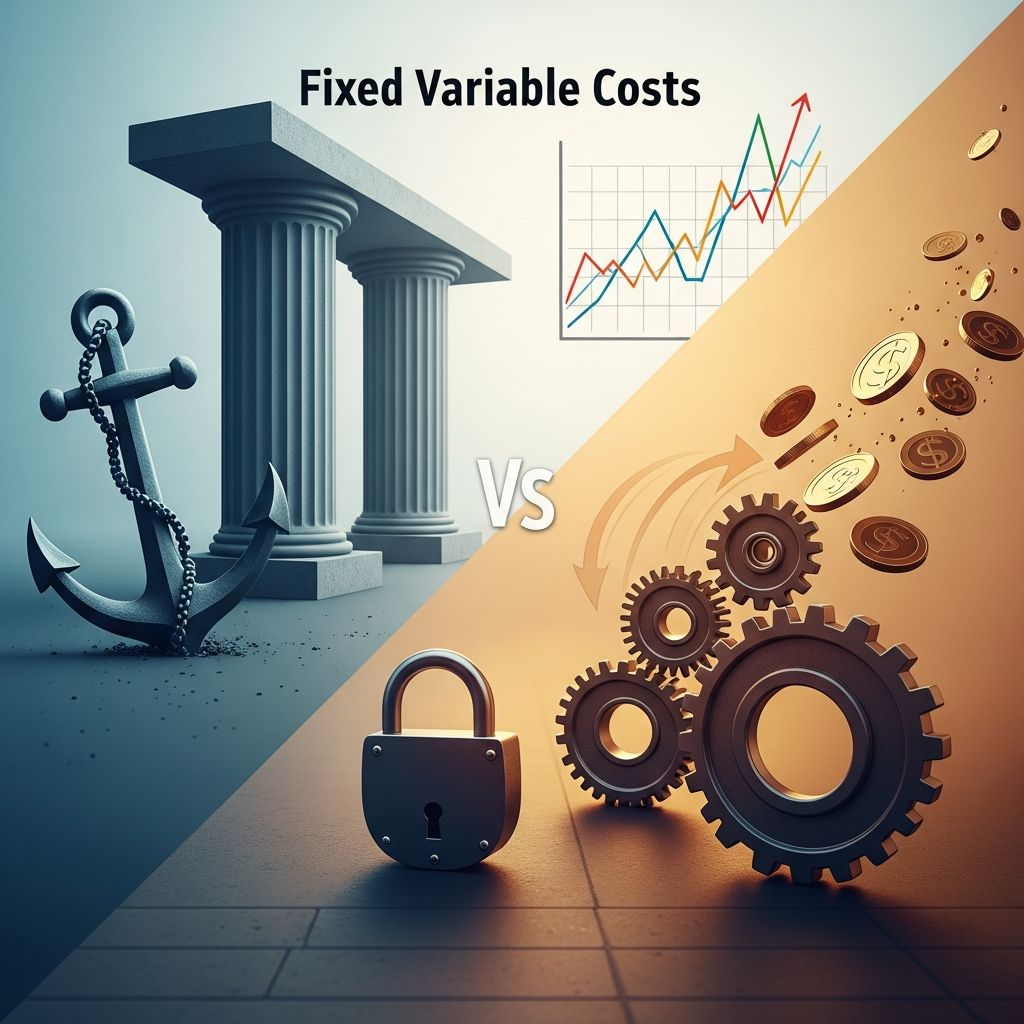
Every business incurs expenses to operate and generate revenue. However, not all expenses behave the same way. Understanding the difference between fixed costs and variable costs is crucial for effective financial planning, pricing strategies, and profitability analysis. These two categories represent the foundation of cost accounting and are essential for business owners, accountants, and financial managers to comprehend.
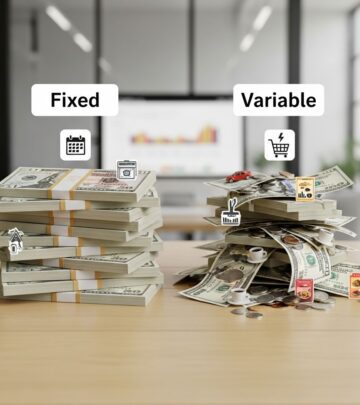
Fixed costs and variable costs are the two primary ways to categorize business expenses. While fixed costs remain constant regardless of production volume or sales activity, variable costs fluctuate directly with changes in business operations. This fundamental distinction impacts how businesses budget, forecast, and make strategic decisions about growth and expansion.
What Are Fixed Costs?
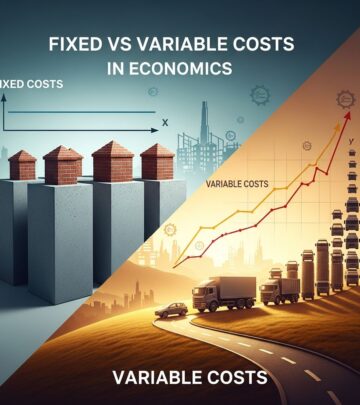
Fixed costs are expenses that remain constant over a specific period, regardless of how much your business produces or sells. These are predictable, recurring expenses that your business must pay whether you generate significant revenue or minimal output. Fixed costs represent the baseline operational expenses required to keep your business running.
The defining characteristic of fixed costs is their stability within a relevant range of business activity. While virtually no cost remains completely fixed in the long term (as everything can eventually change), fixed costs remain constant through normal business fluctuations. This predictability makes them invaluable for financial planning and budgeting purposes.
Common Examples of Fixed Costs
Fixed costs typically include:
- Rent or mortgage payments: The monthly cost of your business premises, whether leased or owned
- Employee salaries: Regular wages paid to permanent staff members
- Insurance premiums: Ongoing insurance coverage for property, equipment, and liability
- Loan repayments: Regular payments on business loans or financing
- Property taxes: Taxes assessed on business property
- Telephone and internet costs: Monthly utility expenses for business communications
- Equipment leasing: Regular lease payments for machinery or technology
Fixed Cost Example in Action
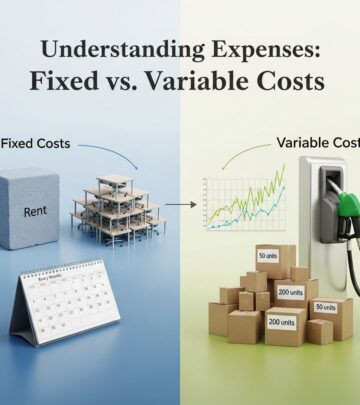
Consider a warehouse rental scenario: if you lease a warehouse for $40,000 per month, you pay that amount every month regardless of how many products you sell. Whether you produce 100 units or 10,000 units, the rent remains $40,000. This predictability is the essence of fixed costs.
What Are Variable Costs?
Variable costs are business expenses that increase or decrease in direct proportion to your production output or sales volume. These costs are directly tied to the production of goods or services and fluctuate based on operational activity. When production increases, variable costs rise; when production decreases, variable costs fall. If you produce nothing, variable costs drop to zero.
Variable costs move in lockstep with business activity. They remain consistent on a per-unit basis but fluctuate in total based on your business volume. This characteristic makes variable costs more flexible but also less predictable than fixed costs.
Common Examples of Variable Costs
Variable costs typically include:
- Direct materials: Raw materials required to produce products
- Direct labor: Wages paid to production workers based on hours worked
- Packaging costs: Materials used to package products for sale
- Sales commissions: Compensation based on sales performance
- Transaction fees: Costs associated with payment processing
- Utility usage fees: Electricity and water costs that vary with production
- Production equipment costs: Expenses that scale with production volume
Variable Cost Calculation
To calculate total variable costs, multiply the variable cost per unit by the total number of units produced. For example, if materials cost $1.50 per cupcake and you produce 100 cupcakes, your total variable cost for materials is $150. This straightforward calculation makes variable costs easier to predict once you understand your per-unit costs.
Key Differences Between Fixed and Variable Costs
While both fixed and variable costs contribute to your total business expenses, they behave differently and require different management approaches.
| Characteristic | Fixed Costs | Variable Costs | |
|---|---|---|---|
| Production Volume Impact | Remain constant regardless of output | Change directly with production volume | |
| When Incurred | Always incurred, even with zero production | Incurred only when production occurs | |
| Predictability | Highly predictable and stable | Less predictable; depends on business activity | |
| Cost Per Unit | Decreases as production increases | Remains constant per unit | |
| Financial Risk | Creates higher financial risk during downturns | Reduces financial risk as costs scale with revenue |
Understanding Break-Even Point
The break-even point is the level of sales where a company generates enough revenue to cover all its expenses, making neither profit nor loss. Understanding how fixed and variable costs interact at this crucial threshold is essential for business planning.
The higher your fixed costs, the more revenue you need to generate to break even. A business with substantial fixed costs must work harder to market and sell products to reach profitability. Conversely, with lower fixed costs, businesses can break even at lower sales volumes, providing a safety net during economic downturns.
Variable costs affect the break-even calculation differently. If you struggle to sell products, you pay lower variable costs, reducing your financial burden. Conversely, when you sell more units than normal, variable costs increase, but so does revenue, creating a more favorable profit margin at higher volumes.
Practical Examples: Fixed and Variable Costs in Real Business Scenarios
Coffee Shop Example
Anne owns a coffee shop and needs to calculate her total fixed costs. She identifies the following fixed expenses:
- Rental cost of the coffee shop: £3,250
- Salary of a barista: £2,300
- Rental cost of the coffee machine: £300
- Loan repayment of the coffee shop fit-out: £750
Total fixed costs = £3,250 + £2,300 + £300 + £750 = £6,600
Anne pays £6,600 monthly regardless of how many cups of coffee she sells. Her variable costs include espresso shots, milk, cups, and lids—expenses that increase with each sale.
Bakery Example
A bakery pays $2,000 monthly rent (fixed cost) and spends $1.50 per cupcake on raw materials (variable cost).
In a month with 100 cupcakes produced:
- Fixed costs: $2,000 (rent)
- Variable costs: $150 (100 cupcakes × $1.50)
- Total costs: $2,150
If production doubles to 200 cupcakes, variable costs rise to $300, making total costs $2,300. If the bakery produces nothing, fixed costs remain $2,000, while variable costs drop to $0.
Advanced Bakery Calculation
Consider a bakery with $2,000 monthly rent and $1,000 for equipment leasing (fixed costs) and $0.50 for ingredients per cupcake plus $0.30 for packaging (variable costs). If each cupcake sells for $3, the profit per cupcake before fixed costs is $2.20 ($3 sale price – $0.80 total variable cost).
Advantages of Fixed Costs
Despite their challenges, fixed costs offer several strategic advantages:
- Predictability: Fixed costs are stable and predictable, facilitating accurate financial planning and budgeting
- Economies of scale: As production increases, fixed costs per unit decrease, improving profitability at higher volumes
- Stability: Fixed costs remain constant during business fluctuations, providing financial predictability
- Operational leverage: Once break-even is achieved, profits accelerate rapidly as each additional sale contributes directly to the bottom line after variable costs
Advantages of Variable Costs
Variable costs provide distinct operational benefits that complement business flexibility:
- Natural alignment: Expenses decrease automatically when revenue decreases
- Lower initial capital: Reduced upfront investment requirements
- Reduced financial risk: During economic downturns, variable costs decline proportionally to revenue
- Greater flexibility: Businesses can scale operations up or down without being constrained by fixed commitments
Making Capacity Decisions: Fixed vs Variable Cost Trade-offs
Understanding the fixed versus variable cost distinction becomes critical when evaluating capacity changes and expansion decisions. A manufacturing company considering expansion faces a fundamental choice: add overtime shifts with higher labor costs (increased variable costs) or invest in additional production lines (increased fixed costs).
Higher fixed costs create greater operational leverage—magnifying profits during good times but magnifying losses during downturns. Higher variable costs reduce risk but may limit profitability during peak periods. Sophisticated financial leaders model multiple scenarios across different volume projections before committing to either approach.
Frequently Asked Questions
Q: What is the relationship between fixed costs and the break-even point?
A: The break-even point is directly influenced by fixed costs. The higher your fixed costs, the greater your revenue needs to be to break even. This is because fixed costs must be covered regardless of sales volume.
Q: Can a cost be both fixed and variable?
A: Some costs can exhibit characteristics of both fixed and variable costs, known as semi-variable or mixed costs. For example, a monthly phone plan might have a fixed base fee plus variable charges based on usage. However, for accounting purposes, businesses typically categorize them as either primarily fixed or primarily variable.
Q: How do I calculate my total business costs?
A: Total business costs equal fixed costs plus variable costs. Identify all fixed expenses and add them together for your total fixed costs. Then calculate variable costs by multiplying your per-unit variable cost by your total production volume. Add these two figures together for your total costs.
Q: Why is understanding fixed vs variable costs important for pricing?
A: Understanding these costs helps you determine appropriate pricing strategies. You need to set prices high enough to cover both variable costs per unit and contribute to covering fixed costs, ultimately resulting in profit.
Q: What happens to fixed costs during economic downturns?
A: Fixed costs remain constant during economic downturns, creating financial challenges as revenue decreases but obligations continue. This is why managing the balance between fixed and variable costs is crucial for financial stability.
Q: How can accounting software help track these costs?
A: Accounting software can automatically categorize expenses as fixed or variable, track them over time, and generate reports that help with budgeting, forecasting, and financial analysis.
References
- Fixed vs. Variable Costs: What’s the Difference — FreshBooks. 2024. https://www.freshbooks.com/hub/accounting/fixed-cost-vs-variable-cost
- What are fixed vs variable costs in a business? A guide — Indeed. 2024. https://uk.indeed.com/career-advice/career-development/fixed-vs-variable-costs
- Fixed Costs vs Variable Costs: All the Differences — Fyle. 2024. https://www.fylehq.com/blog/fixed-costs-vs-variable-costs
- Fixed and Variable Costs: Understanding Business Expenses — McCracken Alliance. 2024. https://www.mccrackenalliance.com/blog/fixed-and-variable-costs-understanding-business-expenses
- Variable vs Fixed Costs — SLATE Accounting + Technology. 2024. https://www.slateaccounting.com/insights/variable-vs-fixed-costs
Similar Articles








Read full bio of Sneha Tete