Variable Cost Vs Fixed Cost: 7 Key Differences For Businesses
Understanding the key differences between fixed and variable costs in business economics and operations.
What Is the Difference Between Variable Cost and Fixed Cost in Economics?
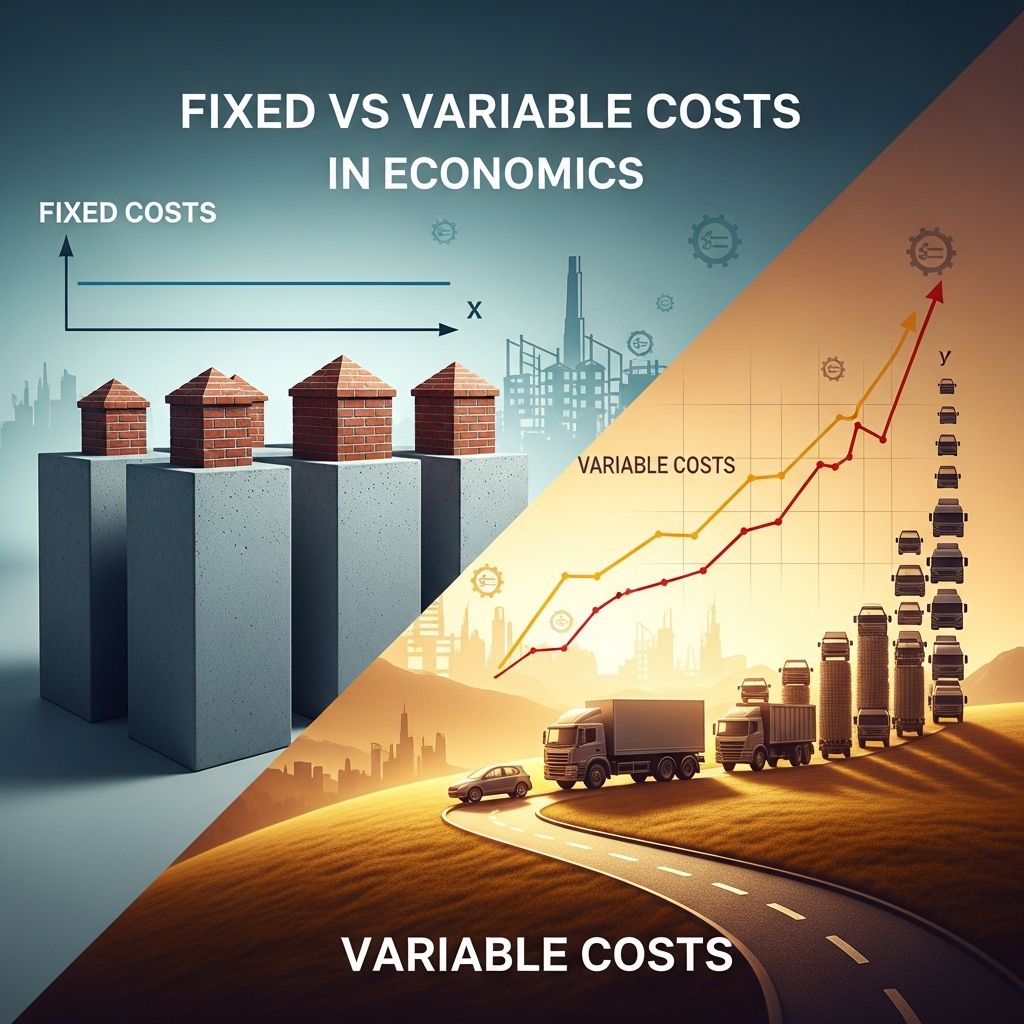
Understanding the distinction between fixed costs and variable costs is fundamental to business economics and financial management. These two categories represent the primary ways that companies classify their expenses, and distinguishing between them is essential for effective budgeting, pricing strategies, profitability analysis, and operational decision-making. Whether you’re a business owner, manager, accountant, or investor, comprehending how these costs operate and interact is critical to understanding a company’s financial health and operational efficiency.
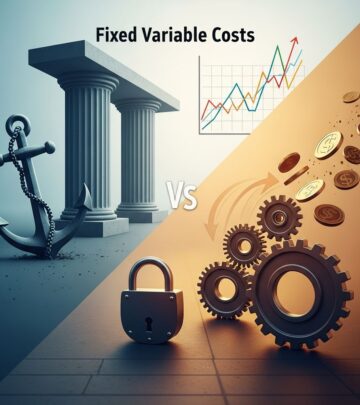
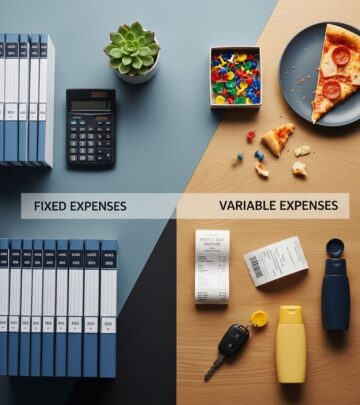
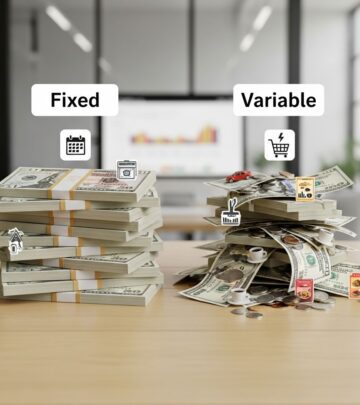
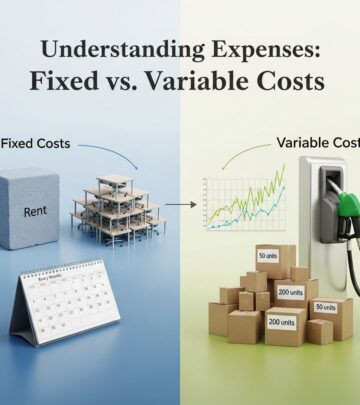
In essence, fixed costs are expenses that remain constant regardless of production volume or sales activity, while variable costs fluctuate in direct proportion to production output and sales levels. This fundamental difference has profound implications for how businesses plan, budget, and make strategic decisions about growth and expansion.
Understanding Fixed Costs
Fixed costs, also referred to as overhead costs, period costs, or supplementary costs, are business expenses that remain unchanged regardless of how many units a company produces, how many sales it generates, or what its revenue level is during a specific time period. These are predictable, recurring expenses that a business must pay even if production comes to a complete halt or sales drop to zero.
The essential characteristic of fixed costs is that they are time-dependent rather than volume-dependent. This means they are incurred over a specific period—such as monthly, quarterly, or annually—and the amount remains the same throughout that period, regardless of business activity levels. Fixed costs typically represent the foundational expenses required to keep a business operational and maintain its capacity to produce goods or services.
Common Examples of Fixed Costs
Fixed costs encompass numerous business expenses that remain constant regardless of production volume. These typically include:
- Employee salaries and wages for permanent staff members
- Rent or lease payments for office buildings, warehouses, or retail locations
- Insurance premiums for liability, property, and other coverage
- Loan repayments and debt service obligations
- Telephone and internet service subscriptions
- Property taxes and licensing fees
- Depreciation on equipment and facilities
- Utilities such as water and sewage services
To illustrate with a practical example: if a manufacturing company rents a warehouse for $40,000 per month, that rent obligation remains $40,000 whether the company produces 100 units or 10,000 units during that month. The rent is a fixed cost because it doesn’t change with sales volume or production output.
Understanding Variable Costs
Variable costs, also known as direct costs or prime costs, are business expenses that increase or decrease in direct proportion to the company’s production output, sales volume, or business activity level. Unlike fixed costs, variable costs have a direct relationship with production: when production increases, variable costs increase; when production decreases, variable costs decrease; and when production stops entirely, variable costs fall to zero.
The defining characteristic of variable costs is that they are volume-dependent rather than time-dependent. This means they fluctuate based on the level of production and sales activity rather than the passage of time. Variable costs are directly tied to the creation of goods or services, making them essential to understanding the true cost of each unit produced.
Common Examples of Variable Costs
Variable costs are directly associated with production and include:
- Raw materials and direct materials used in manufacturing
- Direct labor costs paid to production workers
- Sales commissions based on revenue generated
- Packaging and shipping materials
- Transaction fees and payment processing costs
- Production equipment usage and maintenance
- Utility usage fees tied to production (electricity, water for manufacturing)
- Cost of goods sold (COGS)
For example, consider an ice cream manufacturer. If the company produces more pints of ice cream, it must purchase more milk, cream, and chocolate. If chocolate costs $1 per cup and each pint requires one cup of chocolate, then producing 100 pints requires 100 cups of chocolate ($100 in chocolate costs), while producing 25 pints requires only 25 cups ($25 in chocolate costs). This demonstrates the direct proportional relationship between production volume and variable costs.
Key Differences Between Fixed and Variable Costs
| Aspect | Fixed Costs | Variable Costs |
|---|---|---|
| Definition | Costs that remain constant regardless of production volume or sales | Costs that change proportionally with production output or sales volume |
| Time/Volume Relationship | Time-dependent; remain the same for a specific period | Volume-dependent; change based on production quantity |
| Incurrence | Incurred even when production is zero | Incurred only when production or sales occur |
| Predictability | Highly predictable and easier to budget | More difficult to predict; requires production forecasting |
| Per-Unit Cost | Decreases as production increases (fixed total cost divided by more units) | Remains constant per unit (though total increases with volume) |
| Controllability | Less controllable; requires contract changes to alter | More controllable through production decisions and operational efficiency |
| Examples | Rent, salaries, insurance, interest payments | Raw materials, direct labor, commissions, packaging |
Why Understanding These Costs Matters
Impact on Budgeting and Financial Planning
Understanding the distinction between fixed and variable costs is crucial for effective budgeting. Fixed costs are easier to budget for because they remain predictable and stable. Managers can reliably forecast these expenses for the upcoming fiscal periods. In contrast, variable costs require more sophisticated forecasting methods because they depend on production volume, which may fluctuate based on market demand, seasonal factors, or strategic business decisions.
Pricing Strategy and Profitability
The relationship between fixed and variable costs directly influences pricing strategy. Companies must ensure that their selling price covers all variable costs while also contributing to fixed costs and generating profit. If variable costs exceed the selling price per unit, every unit produced actually loses the company money. Even if the company has invested significantly in fixed costs, such as expensive equipment, it wouldn’t be rational to continue producing units at a loss.
Decision-Making on Production Volume
Understanding variable costs helps managers determine optimal production levels. Since fixed costs are considered “sunk costs” (already incurred regardless of future decisions), they shouldn’t influence production decisions. Instead, managers focus on whether variable costs per unit are below the selling price, ensuring each unit contributes to profit rather than loss.
Break-Even Analysis
Businesses use the relationship between fixed and variable costs to calculate their break-even point—the production volume at which total revenue equals total costs (both fixed and variable). This analysis helps businesses understand the minimum sales volume needed to avoid losses and is essential for business planning and investment decisions.
Calculating Total Costs
Total business costs represent the sum of all fixed costs and variable costs combined. The formula is straightforward:
Total Cost = Fixed Costs + Variable Costs
To calculate variable costs accurately, businesses first determine the variable cost per unit (the cost to produce a single unit, including direct materials and direct labor). This per-unit cost is then multiplied by the total number of units produced during a specific period to arrive at total variable costs.
For example, if a company has $50,000 in fixed costs monthly and variable costs of $5 per unit, and produces 5,000 units, the calculation would be:
Total Cost = $50,000 + ($5 × 5,000) = $50,000 + $25,000 = $75,000
Managing Fixed and Variable Costs
Strategies for Managing Fixed Costs
While fixed costs are less controllable, there are strategies to manage them effectively. These include negotiating better rates for rent or insurance, refinancing debt to reduce interest payments, automating processes to reduce permanent staff requirements, or outsourcing certain functions. However, significant changes to fixed costs typically require renegotiating contracts or making long-term operational changes.
Strategies for Managing Variable Costs
Variable costs offer more control and flexibility. Businesses can manage these by improving operational efficiency, negotiating better rates with suppliers for materials, investing in worker training to reduce labor costs, optimizing production processes to minimize waste, and leveraging economies of scale to reduce per-unit costs as production increases.
Frequently Asked Questions
Q: What happens to fixed costs per unit as production increases?
A: The fixed cost per unit decreases as production increases. Since fixed costs remain constant in total, spreading them across more units results in a lower cost per unit. This is why businesses often benefit from increased production volume in terms of per-unit fixed costs.
Q: Can a cost be both fixed and variable?
A: Some costs can have both fixed and variable components. For example, electricity might have a base monthly charge (fixed) plus usage fees (variable). Internet service might include a base subscription (fixed) and overage charges (variable). These are sometimes called “mixed costs” or “semi-variable costs.”
Q: Why is understanding these costs important for decision-making?
A: Understanding fixed and variable costs helps businesses make informed decisions about production volume, pricing, outsourcing, and expansion. It enables accurate break-even analysis and helps determine which production decisions will be profitable.
Q: How do fixed and variable costs affect business competitiveness?
A: Businesses with lower fixed costs have more flexibility to reduce prices in competitive markets. Those with lower variable costs can maintain profitability even with lower selling prices. The balance between these determines a company’s competitive advantage.
Q: What is the relationship between fixed costs and barriers to entry?
A: High fixed costs represent significant barriers to entry for new competitors entering a market. Potential entrants must be able to afford substantial upfront investments before production begins, which limits market competition.
References
- Fixed vs. Variable Costs: What’s the Difference — FreshBooks. 2024. https://www.freshbooks.com/hub/accounting/fixed-cost-vs-variable-cost
- What is Fixed Cost and Variable Cost — BYJU’S. 2024. https://byjus.com/commerce/fixed-cost-vs-variable-cost/
- What is variable cost vs fixed cost? (With examples) — Indeed Career Advice. 2024. https://ie.indeed.com/career-advice/career-development/what-is-variable-cost
- Fixed vs. Variable Costs | Definition & Examples – Lesson — Study.com. 2024. https://study.com/academy/lesson/identifying-fixed-costs-variable-costs-for-producers.html
- Fixed and Variable Costs — Corporate Finance Institute. 2024. https://corporatefinanceinstitute.com/resources/accounting/fixed-and-variable-costs/
Similar Articles








Read full bio of medha deb