Fixed vs Variable Car Loans Guide
Discover the key differences between fixed and variable rate car loans to make a smart financing choice for your next vehicle purchase.
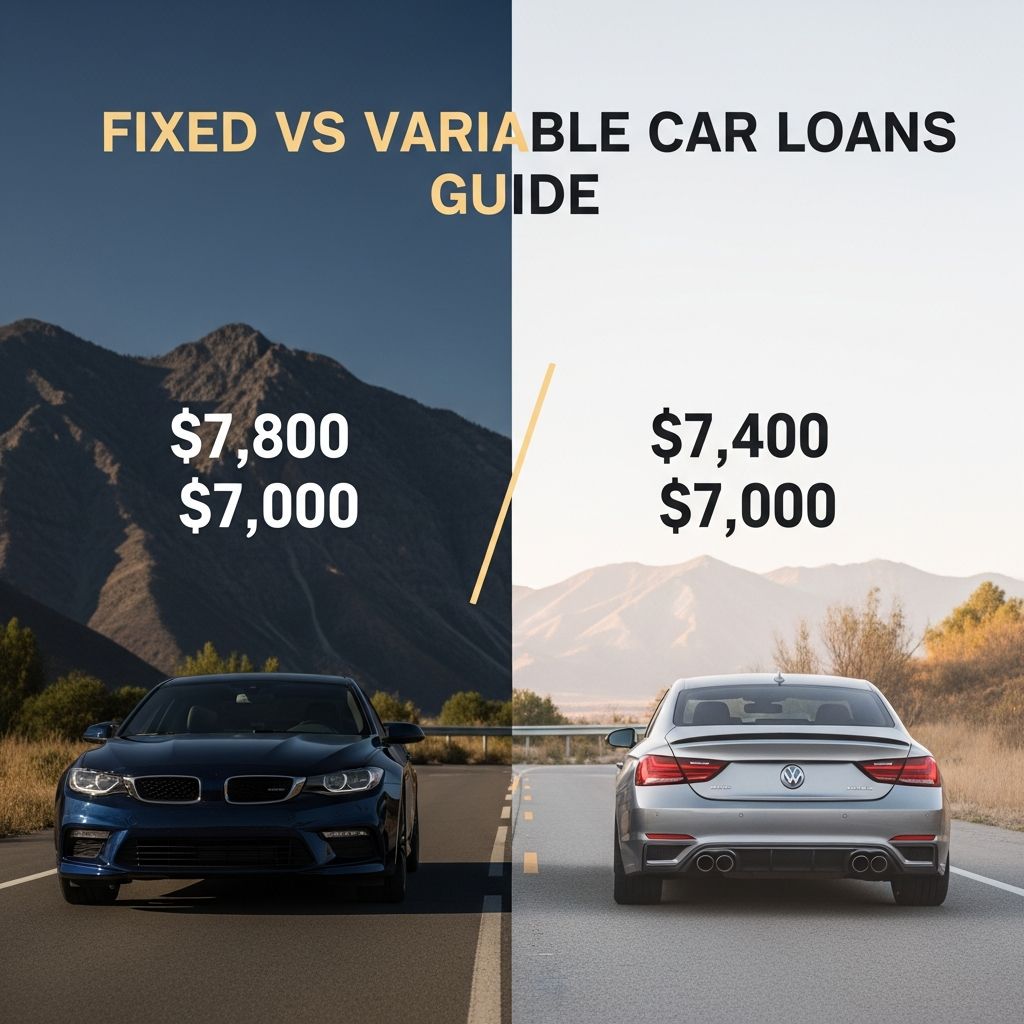
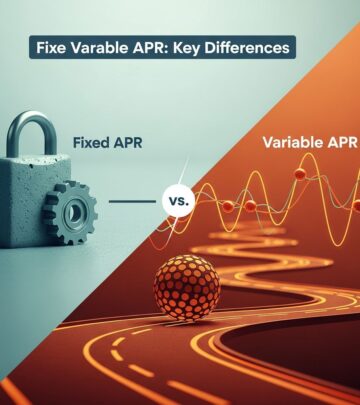
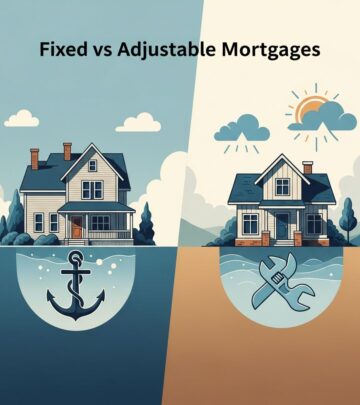
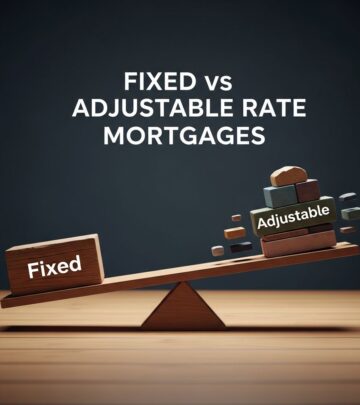
Choosing between a fixed-rate and variable-rate car loan can significantly impact your monthly budget and total costs when financing a vehicle. Fixed-rate loans offer predictable payments, while variable-rate loans adjust with market changes, potentially saving money or increasing expenses.
Understanding Fixed-Rate Car Loans
Fixed-rate car loans lock in an interest rate at the start of the loan term, remaining constant throughout the repayment period. This stability ensures monthly payments stay the same, making budgeting straightforward regardless of economic shifts.
Borrowers appreciate this predictability, especially during times of rising interest rates. For instance, current average rates for new cars hover around 6.37% to 7% APR for those with strong credit profiles. Lenders like PenFed Credit Union offer starting rates as low as 3.39% for qualified applicants using specific services.
- Benefits: Consistent payments aid financial planning.
- Suitability: Ideal for risk-averse individuals or those on tight budgets.
- Drawbacks: May not benefit from market rate drops.
Exploring Variable-Rate Car Loans
Variable-rate car loans, also known as adjustable-rate loans, have interest rates tied to a benchmark like the prime rate or LIBOR plus a margin. These rates fluctuate periodically, often monthly or quarterly, based on broader economic conditions.
In a declining rate environment, borrowers could see lower payments over time. However, if rates rise—as seen in recent years with averages climbing to 11.26% for used cars—payments increase, posing risks to affordability.
| Credit Tier | New Car APR | Used Car APR |
|---|---|---|
| Superprime (781+) | 4.66% | 7.70% |
| Prime (661-780) | 6.27% | 9.98% |
| Nonprime (601-660) | 9.57% | 14.49% |
| Subprime (501-600) | 13.17% | 19.42% |
| Source: Experian Q4 2025 data via NerdWallet | ||
This table illustrates how credit scores influence rates, a factor amplified in variable loans where adjustments compound over time.
Key Differences Between Fixed and Variable Rates
The primary distinction lies in rate stability. Fixed loans shield against hikes, while variable ones expose borrowers to market volatility. Consider a $30,000 loan: at 6% fixed over 60 months, total interest might reach $8,593. A variable rate starting at 5% but rising to 8% could add thousands more.
- Fixed: Rate and payment unchanged.
- Variable: Rate adjusts, altering payments.
Loan terms also vary; fixed options often cap at 84 months, with shorter terms yielding lower rates like 3.50% from Southeast Financial.
Current Auto Loan Market Trends in 2026
As of early 2026, new car loans average 6.96% for 60 months, used at 7.41% for 48 months. Lenders such as Capital One start at 5.00% for new vehicles. Variable rates track these benchmarks, with recent data showing February 2026 averages of 7% new and 10.9% used.
Economic factors like Federal Reserve policies influence variables more directly. With average loan amounts at $43,582 for new cars and terms near 69 months, understanding rate types is crucial.
Risks and Rewards of Each Option
Risks of Fixed-Rate Loans
Opportunity cost is the main risk—if rates fall, you’re stuck paying higher. Refinancing mitigates this but incurs fees.
Rewards of Fixed-Rate Loans
Peace of mind tops the list, with no surprises in payments. Excellent credit (800+) secures rates around 6.81%.
Risks of Variable-Rate Loans
Rate spikes can strain budgets, especially for subprime borrowers facing 16-23% APRs. Recent uptrends highlight this vulnerability.
Rewards of Variable-Rate Loans
Potential savings in falling markets; some lenders offer introductory low rates.
Financial Impact: A Comparative Analysis
Use calculators to model scenarios. For a $40,000 loan:
| Term | Fixed 6% Monthly | Variable (Avg Rise to 8%) | Total Interest Diff |
|---|---|---|---|
| 36 months | $1,218 | $1,260 | +$1,512 |
| 60 months | $773 | $809 | +$2,160 |
| 84 months | $592 | $632 | +$3,360 |
| Estimates based on standard amortization; actuals vary | |||
Shorter terms reduce interest but raise monthly outlays. Tools from Navy Federal or Bankrate help simulate these.
Factors Influencing Your Choice
- Credit Score: Higher scores unlock better fixed rates.
- Loan Term: Longer terms amplify variable risks.
- Market Outlook: Expecting cuts? Variable may appeal.
- Budget Flexibility: Fixed suits rigid incomes.
- Vehicle Type: Used cars carry higher rates (11.26% avg).
Strategies for Securing the Best Rates
Shop multiple lenders—LendingTree aggregates offers from 3.39%. Improve credit beforehand; a 700 score averages 9.13% new car. Consider down payments to lower amounts, and autopay discounts (e.g., 6.49% at LightStream).
Pre-approval strengthens negotiations. For variables, cap rate adjustments via lender terms.
When to Opt for Fixed Rates
Choose fixed if planning long-term ownership, have stable income, or anticipate rate hikes. It’s the safer bet for most, per 2026 data where new car averages favor predictability.
When Variable Rates Might Work
Short-term loans or confident economic forecasts suit variables. Risk-tolerant borrowers with buffers can capitalize on dips.
Refinancing Considerations
Switching from variable to fixed during rises saves money. Fixed-to-variable is rarer but viable in downturns. Check fees; average terms allow flexibility up to 84 months.
Common Myths Debunked
- Myth: Variables always cheaper. Fact: Recent rises prove otherwise.
- Myth: Fixed rates too high. Fact: Competitive at 4-6% for good credit.
FAQs
What is a fixed-rate car loan?
A loan with unchanging interest rate and payments throughout the term.
Are variable rates common for cars?
Less so than fixed, but available from select lenders tracking market indices.
How do credit scores affect rates?
Superprime gets 4.66% new car; subprime up to 16%.
Can I switch rate types mid-loan?
Refinancing allows it, subject to lender approval and costs.
What’s the average car loan term?
68-69 months currently.
Final Tips for Smart Borrowing
Assess your risk tolerance, run calculations, and compare offers. Prioritize total cost over monthly payments. With rates starting at 3.39%, timing and preparation yield savings.
References
- Compare the Best Auto Loan Rates in April 2026 — LendingTree. 2026-04. https://www.lendingtree.com/auto/
- Best Auto Loan Rates and Financing: Compare Lenders — NerdWallet. 2026. https://www.nerdwallet.com/auto-loans/best/auto-loans-for-good-fair-and-bad-credit
- Auto Loan Rates & Financing in 2026 — Bankrate. 2026-03-25. https://www.bankrate.com/loans/auto-loans/rates/
- Auto Loans Comparison Calculator — Allstate. Accessed 2026. https://www.allstate.com/resources/car-insurance/compare-auto-loans-calculator
- Auto Loan Comparison Calculator — Navy Federal Credit Union. Accessed 2026. https://www.navyfederal.org/makingcents/tools/car-loan-comparison-calculator.html
Similar Articles








Read full bio of Sneha Tete