Fixed vs Variable APR: Credit Card Guide
Discover the key differences between fixed and variable APRs on credit cards to make smarter borrowing choices and manage debt effectively.

The
Annual Percentage Rate (APR)
on a credit card determines the yearly cost of carrying a balance, directly affecting how much interest you pay over time. Choosing between fixed and variable APRs can significantly impact your finances, as each responds differently to market changes and personal account behavior.Understanding the Fundamentals of Credit Card APR
APR represents the total annual cost of borrowing, encompassing interest on unpaid balances. Unlike simple interest rates, APR standardizes costs for easy comparison, mandated by laws like the Truth in Lending Act. For credit cards, APR equals the interest rate since fees are often separate, though it applies daily and compounds.
Credit cards feature multiple APRs for various transactions: purchases, balance transfers, cash advances, and penalties. These rates influence monthly statements, especially if you don’t pay balances in full. Grasping APR mechanics empowers better debt management and cost prediction.
Fixed APR: Stability in Borrowing Costs
A
fixed APR
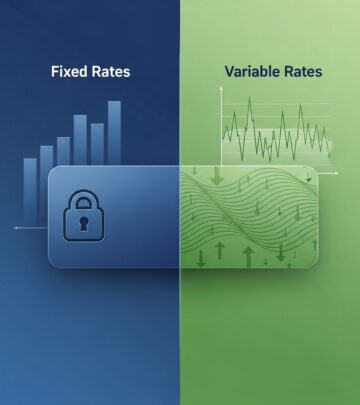
remains constant unless the issuer notifies you of changes, typically due to account terms violations rather than market shifts. It offers predictability, ideal for budgeting long-term debt repayment.- Remains unchanged based on economic indices.
- Issuer must provide advance notice (usually 45 days) for adjustments.
- Common in installment loans but rarer on revolving credit cards.
Fixed rates suit conservative borrowers avoiding surprises, though they might start higher than variable counterparts during low-rate periods.
Variable APR: Adapting to Market Dynamics
**Variable APR**, the standard for most credit cards, fluctuates with an index like the U.S. Prime Rate plus a fixed margin (e.g., prime + 3%). Changes appear on statements, reflecting economic conditions such as Federal Reserve adjustments.
- Tied to benchmarks like prime rate.
- Can rise or fall, potentially saving money in low-rate environments.
- Most prevalent, allowing issuers flexibility amid inflation or policy shifts.
Variable rates benefit from decreases but risk hikes during economic upturns, demanding vigilant monitoring.
Key Types of Credit Card APRs Explained
Credit cards apply distinct APRs by transaction type, optimizing issuer risk management.
| APR Type | Description | Typical Range |
|---|---|---|
| Purchase APR | Applies to everyday buys if balance carries over. | 15-25% |
| Balance Transfer APR | For moving debt from other cards, often with intro offers. | 0-5% intro, then 18-28% |
| Cash Advance APR | Highest rate for ATM withdrawals or cash equivalents. | 25-30%+ |
| Penalty APR | Triggers on late payments or over-limit usage. | 29.99% or higher |
Purchase APR is most common, while cash advances accrue interest immediately without grace periods.
How Credit Card Interest is Calculated Daily
Interest accrues daily via the periodic rate (APR/365), multiplied by average daily balance, then billing cycle days. Compounding amplifies costs on unpaid interest.
Example Calculation: $1,000 balance, 18% APR, 30-day cycle.
- Daily rate: 18% / 365 = 0.0493% or 0.000493.
- Daily interest: $1,000 × 0.000493 = $0.493.
- Monthly total: $0.493 × 30 = $14.79.
Adjust for purchases/payments; statements detail breakdowns. Use average daily balance method: sum daily balances divided by cycle days.
Comparing Fixed and Variable APR Side-by-Side
| Aspect | Fixed APR | Variable APR |
|---|---|---|
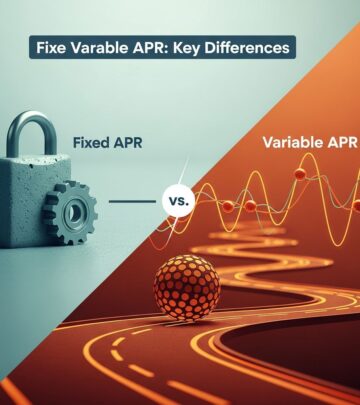
| Rate Stability | Consistent unless changed with notice | Fluctuates with prime rate + margin |
| Market Sensitivity | Low | High |
| Potential Savings | Limited to current rate | Possible if rates drop |
| Risk | Higher starting rate | Unexpected increases |
| Best For | Fixed budgeting | Short-term, low-rate bets |
Variable APRs averaged 20-25% recently, fixed slightly higher for stability.
Pros and Cons of Each APR Structure
Advantages of Fixed APR
- Predictable payments aid planning.
- Less exposure to Fed rate hikes.
- Simpler for debt consolidation.
Drawbacks of Fixed APR
- Often higher baseline rates.
- Less benefit from market drops.
- Changes still possible on violations.
Advantages of Variable APR
- Lower entry rates possible.
- Drops with economic cooling.
- Aligns with broader market trends.
Drawbacks of Variable APR
- Unpredictable spikes hurt budgets.
- Requires constant monitoring.
- Higher during inflation.
Strategies to Minimize APR Impact and Costs
Proactive steps reduce interest burdens regardless of APR type.
- Pay in Full Monthly: Avoids interest via grace period (20-25 days).
- Improve Credit Score: Higher scores unlock lower rates (FICO 670+ often sees 15% APRs).
- Balance Transfers: 0% intro offers defer costs 12-21 months.
- Negotiate Rates: Loyal customers may secure reductions.
- Debt Snowball/Avalanche: Target high-APR balances first.
Auto-payments prevent penalty APRs, which can exceed 29% and persist 6-12 months.
APR vs APY: Clarifying Common Confusions
APR measures borrowing costs on credit cards/loans;
APY (Annual Percentage Yield)
gauges savings/investment returns with compounding. Credit products use APR; don’t confuse for deposits.Frequently Asked Questions (FAQs)
What causes my APR to change?
Variable APRs track prime rate; fixed may adjust on terms breaches like late payments. Check statements.
Is a lower APR always better?
Yes for carried balances, but rewards/0% intros matter too. Calculate total costs.
How do I remove penalty APR?
Make on-time payments for 6+ months; issuers vary.
Does APR include fees?
Core APR covers interest; some fees excluded, but penalty APRs incorporate violations.
Fixed or variable: Which to choose?
Fixed for stability, variable if expecting rate cuts and monitoring closely.
Navigating APR Changes in 2026 Economy
With potential Fed adjustments, variable APRs could rise 1-3% if inflation persists. Fixed offers shields but at premiums. Review terms annually; shop competitors via credit score boosts.
Tools like online calculators simulate scenarios. Prioritize high-interest payoff; average U.S. household carries $6,000+ revolving debt at 20%+ APRs, costing hundreds yearly.
References
- How Does APR on a Credit Card Work? — Space Coast Credit Union. 2023. https://www.sccu.com/articles/personal-finance/how-does-apr-on-a-credit-card-work
- What is APR? Types of APR, How to Calculate & Lower It — Bank of America Better Money Habits. 2024. https://bettermoneyhabits.bankofamerica.com/en/credit/what-is-apr
- How Does Credit Card Interest Work? — Santander Bank. 2024. https://www.santanderbank.com/personal/resources/credit-card/how-credit-card-interest-works
- What is APR on a Credit Card? — TD Bank. 2025. https://www.td.com/us/en/personal-banking/learning/what-is-apr-on-credit-card
- What is a Good APR for a Credit Card? — Equifax. 2024. https://www.equifax.com/personal/education/credit-cards/articles/-/learn/credit-card-apr/
Similar Articles








Read full bio of medha deb