Fixed vs Adjustable-Rate Mortgages Explained
Understand how fixed and adjustable-rate mortgages work so you can choose the loan that best fits your budget and long-term plans.
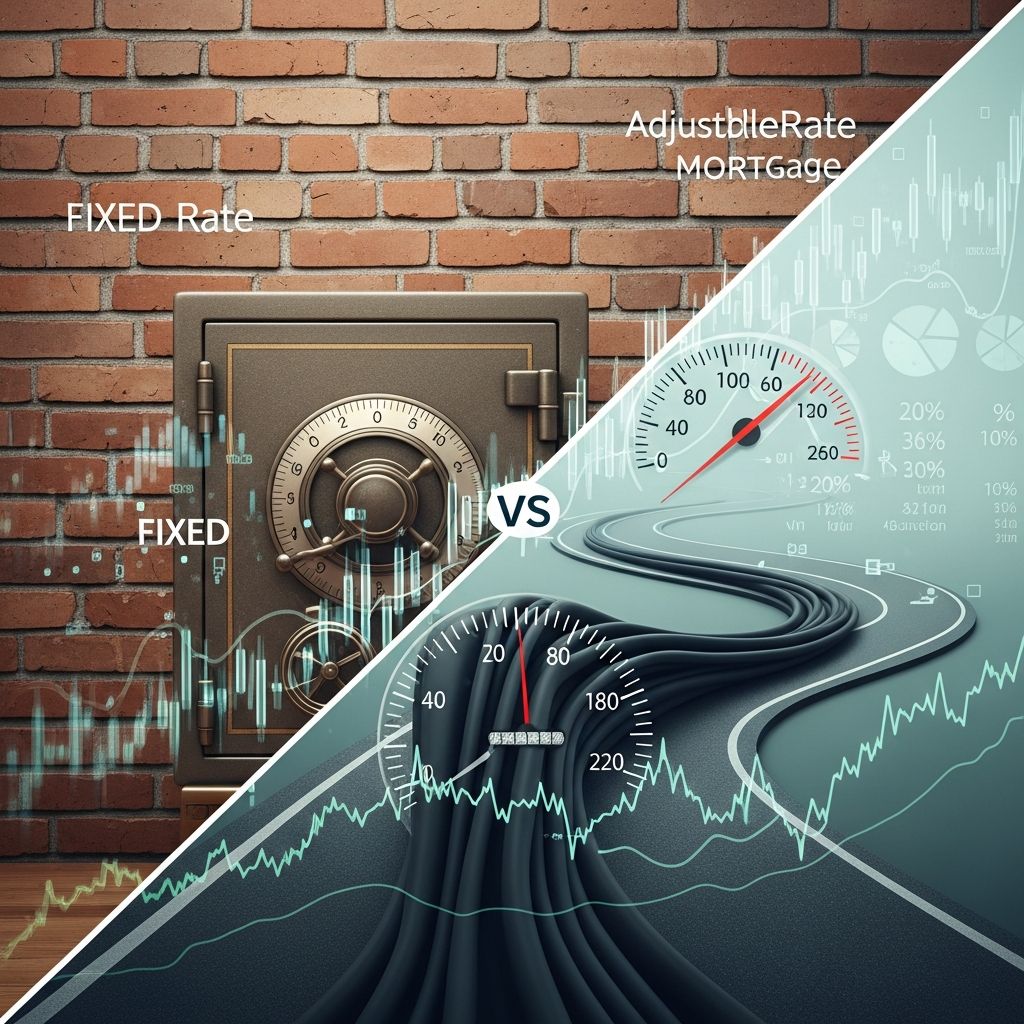
When you apply for a home loan, one of the first major decisions you face is whether to choose a fixed-rate mortgage or an adjustable-rate mortgage (ARM). This choice affects your monthly payment, how easy it is to budget, and how much interest you may pay over the life of the loan.
Both loan types can be smart options in the right circumstances. The best fit depends on your financial profile, how long you expect to keep the home, and how comfortable you are with potential changes in your payment.
Fixed-Rate vs Adjustable-Rate: Key Differences at a Glance
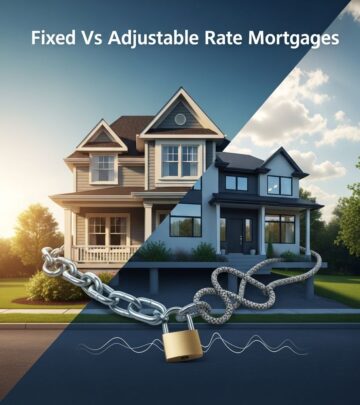
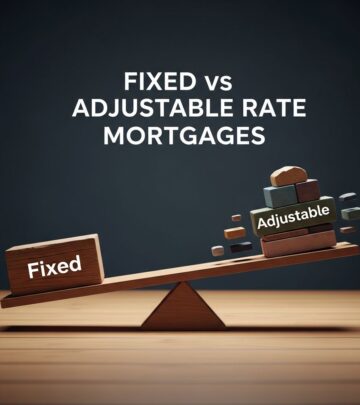
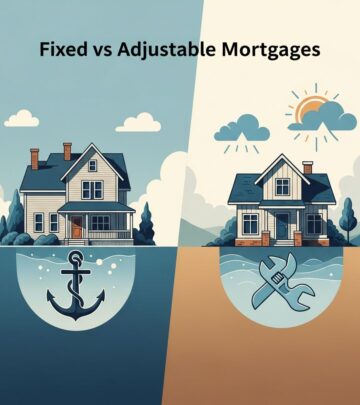
The core distinction between these mortgage types is how the interest rate behaves over time.
- Fixed-rate mortgage: The interest rate is set at closing and does not change for the entire term of the loan, typically 15 to 30 years.
- Adjustable-rate mortgage (ARM): The interest rate is fixed only for an initial period, then resets at regular intervals based on a market index plus a lender margin.
Because of this difference, fixed-rate loans provide more predictable payments, while ARMs often start with a lower introductory rate that may rise or fall later.
| Feature | Fixed-Rate Mortgage | Adjustable-Rate Mortgage (ARM) |
|---|---|---|
| Interest rate | Stays the same for the entire loan term | Fixed for an introductory period, then adjusts periodically |
| Payment stability | Principal and interest stay consistent; easier to budget | Can change after the fixed period, making long-term budgeting less certain |
| Initial rate | Generally higher than an ARM’s introductory rate | Typically lower than comparable fixed-rate loans at the start |
| Risk of rate increases | No; rate is locked for the entire term | Yes; rate can increase or decrease at each adjustment, subject to caps |
| Best for | Long-term homeowners and those prioritizing payment stability | Borrowers planning to move, sell, or refinance before the fixed period ends |
How a Fixed-Rate Mortgage Works
A fixed-rate mortgage has an interest rate that is locked in when you close on the loan and stays the same until you pay it off or refinance. Your monthly principal and interest payment remains constant throughout the term, which is typically 30 or 15 years in the U.S.
Main features of fixed-rate mortgages
- Unchanging interest rate: The rate does not move with market conditions after closing.
- Stable principal and interest payment: Your base mortgage payment is predictable month after month.
- Common terms: 30-year and 15-year fixed loans are most common, though other term lengths are available.
- Possible escrow changes: Total monthly payment can still vary slightly due to changes in property taxes and homeowners insurance if you pay them via escrow.
Advantages of a fixed-rate mortgage
Many borrowers choose fixed-rate loans because of the security they offer.
- Predictable payments: You know exactly how much principal and interest you’ll pay each month, which makes long-term budgeting easier.
- Protection from rising rates: If market rates increase in the future, your rate remains unchanged, potentially saving money compared with new loans at higher rates.
- Simplicity: There is no need to track indexes or future adjustment dates; the loan is straightforward to understand and manage.
- Long-term planning: If you expect to stay in the home for many years, the stability can be especially valuable.
Drawbacks of a fixed-rate mortgage
- Higher initial rate than ARMs: Lenders typically charge a higher rate for the certainty of a fixed loan compared with introductory ARM rates.
- Less benefit if rates fall: If market rates drop significantly, you will generally need to refinance to take advantage of lower rates, which may involve closing costs and qualification requirements.
- Potentially higher total interest: On a long-term fixed loan, particularly 30 years, you may pay more interest over the life of the loan than you would with a shorter term or a well-timed ARM strategy.
How an Adjustable-Rate Mortgage (ARM) Works
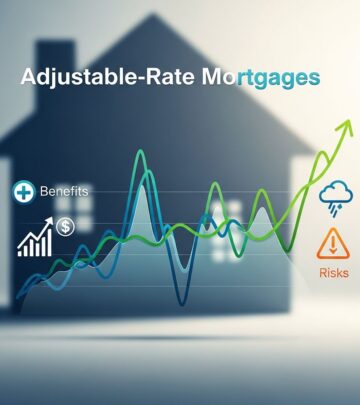
An adjustable-rate mortgage has two phases: an introductory fixed-rate period followed by a period in which the rate adjusts at set intervals. ARMs are identified by two numbers (for example, 5/1 or 7/6) that describe this structure.
Key components of an ARM
- Introductory fixed period: The rate stays constant for an initial period, commonly 3, 5, 7, or 10 years.
- Adjustment frequency: After the intro period, the rate changes at a regular interval, such as once per year (5/1 ARM) or every six months (10/6 ARM).
- Index: A published market rate (such as certain Treasury or overnight financing rate benchmarks) used as the base for adjustments.
- Margin: A fixed number of percentage points that the lender adds to the index to determine the new interest rate.
- Rate caps: Limits on how much the rate can change at the first adjustment, at each subsequent adjustment, and over the life of the loan.
How rate adjustments are calculated
When the introductory period ends, the lender recalculates your rate according to:
New rate = Index value at reset + Loan margin (subject to caps)
If the index has risen since your last adjustment, your rate and payment may go up; if the index has fallen, they may go down, as long as they remain within the cap limits.
Advantages of an ARM
- Lower initial interest rate: ARMs typically start with a lower rate than comparable fixed-rate mortgages, which can reduce your early payments.
- Shorter-term savings: If you plan to sell, move, or refinance before the first adjustment, you may benefit from the lower introductory rate without experiencing rate increases.
- Potential benefit if rates fall: After the fixed period, if market rates decline, your rate may reset lower without requiring a refinance, subject to any floors and caps.
- Flexibility for certain plans: For borrowers who know they will not stay in the home long term, an ARM can be a strategic way to lower costs during the years they expect to own the property.
Drawbacks of an ARM
- Payment uncertainty: After the introductory period, your payment can increase, sometimes significantly, making long-term budgeting more difficult.
- Interest rate risk: You bear the risk that market rates could be higher when your loan resets, which can raise your payment despite any caps in place.
- Complexity: Understanding indexes, margins, caps, and adjustment schedules is more complex than with a simple fixed-rate loan.
- Possibly higher down payment: Some conventional ARM products require a slightly higher minimum down payment than comparable fixed-rate loans.
Common ARM Structures and What They Mean
Each ARM product is labeled to indicate its fixed period and adjustment schedule.
- 5/1 ARM: Fixed rate for the first 5 years, then adjusts once per year for the remaining term.
- 7/6 ARM: Fixed rate for 7 years, then adjusts every 6 months.
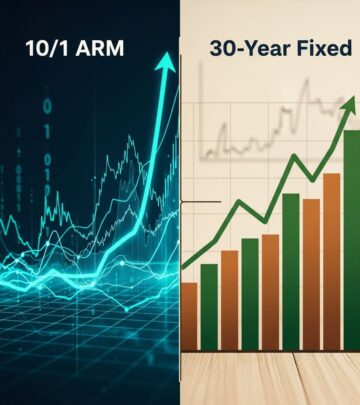
- 10/1 ARM: Fixed rate for 10 years, then adjusts annually thereafter.
These products are often offered with a 30-year overall term, meaning you have a certain number of fixed years followed by a longer adjustable period until the loan is paid off.
Comparing Fixed vs Adjustable-Rate Mortgages
To decide between a fixed-rate and an ARM, it helps to compare them across a few practical dimensions.
1. Monthly payment stability
- Fixed-rate mortgage: Offers the highest level of stability. Your principal and interest portion of the payment stays the same for the entire term.
- ARM: Stable only during the introductory period. After that, payments can go up or down with changes in the rate.
2. Cost in the early years
- Fixed-rate mortgage: Initial payments are often higher than an ARM with the same term because the rate is higher at the start.
- ARM: Generally has a lower introductory rate and lower initial payments, which can help buyers qualify for a home or manage cash flow during the first few years.
3. Long-term cost
- Fixed-rate mortgage: You know the rate for the entire term, which can be advantageous if rates rise over time.
- ARM: Long-term cost is uncertain; you may save if rates stay low or fall, but you could pay more if rates climb over the years.
4. Risk tolerance and budget flexibility
- Fixed-rate mortgage: Better suited to borrowers who prioritize predictability, have tight budgets, or are uncomfortable with payment changes.
- ARM: May fit borrowers who have more flexible budgets, expect income growth, or are willing to accept some risk in exchange for a lower initial rate.
When a Fixed-Rate Mortgage May Be Right for You
A fixed-rate mortgage tends to work best when you value stability and expect to keep the home for a long time.
- You plan to stay in the home for many years, possibly the full term of the loan.
- You prefer a set, predictable payment that is easy to budget for.
- You are concerned that interest rates might rise in the future and want protection from higher borrowing costs.
- You do not expect large increases in your income and want to avoid the risk of higher payments later.
- You value simplicity and do not want to track potential rate adjustments or future refinancing.
When an Adjustable-Rate Mortgage May Be Right for You
An ARM can be a strategic choice if your situation aligns with its structure and risks.
- You expect to move, sell, or refinance within the next 5 to 10 years, before the first few adjustments.
- You want to lower your payments in the early years to manage cash flow or qualify for a home in a higher price range.
- You anticipate a meaningful increase in income, making future payment increases more manageable.
- You are comfortable with some uncertainty and are willing to monitor interest rate trends and your loan’s adjustment schedule.
- You believe interest rates may stay the same or decline over time, potentially limiting the risk of higher payments (though this is never guaranteed).
Questions to Ask Before You Decide
Before choosing between a fixed-rate mortgage and an ARM, it can be helpful to ask yourself and your lender a few targeted questions.
- How long do I realistically expect to keep this home?
- Could I afford the payment if my ARM rate rose to the maximum allowed by the caps?
- Do I prefer stability or am I willing to accept some risk to save money upfront?
- What are current market rates and how do fixed and ARM options compare for my profile?
- What are the exact index, margin, and caps on any ARM I am considering?
Discuss these points with a loan officer or housing counselor so you understand not just your starting rate, but how the loan could behave over time.
Frequently Asked Questions (FAQs)
Q: What is the main difference between a fixed-rate mortgage and an ARM?
A: A fixed-rate mortgage has an interest rate that never changes over the life of the loan, while an ARM has a fixed rate only for an introductory period and then adjusts periodically based on a market index plus a margin, subject to caps.
Q: Why is the introductory rate on an ARM usually lower?
A: Lenders typically offer ARMs with lower initial rates to compensate borrowers for taking on the risk that the rate and payment may increase later. This lower starting rate can make ARMs attractive for borrowers who expect to move or refinance before adjustments begin.
Q: Can my payment on an ARM go down as well as up?
A: Yes. After the introductory period, if the underlying index falls, your interest rate and payment can decrease, within the limits set by the loan’s caps and any minimum rate floors.
Q: Are there limits to how much my ARM interest rate can rise?
A: Most ARMs include caps that limit how much the rate can increase at the first adjustment, at each subsequent adjustment, and over the life of the loan. These caps are important protections and should be clearly explained in your loan documents.
Q: Which is better: a fixed-rate or adjustable-rate mortgage?
A: Neither loan type is universally better. A fixed-rate mortgage may be preferable if you plan to stay in the home for the long term and want reliable payments, while an ARM may fit if you expect to move or refinance within a few years and want to take advantage of lower initial rates.
References
- Fixed-Rate Mortgage Vs. ARM: What’s the Difference? — Bankrate. 2024-06-14. https://www.bankrate.com/mortgages/arm-vs-fixed-rate/
- Fixed Rate vs. Adjustable Rate Mortgage: What’s Best for You — AllSouth Federal Credit Union. 2023-08-10. https://blog.allsouth.org/fixed-rate-vs-adjustable-rate-mortgage-whats-best-for-you
- Adjustable-rate mortgage (ARM) vs Fixed-rate mortgage — U.S. Bank. 2024-02-01. https://www.usbank.com/home-loans/mortgage/arm-vs-fixed.html
- What is the difference between a fixed-rate and adjustable-rate mortgage (ARM) loan? — Consumer Financial Protection Bureau (CFPB). 2023-05-18. https://www.consumerfinance.gov/ask-cfpb/what-is-the-difference-between-a-fixed-rate-and-adjustable-rate-mortgage-arm-loan-en-100/
- Fixed- vs. adjustable-rate mortgage (ARM): What’s the difference? — Rocket Mortgage. 2023-11-20. https://www.rocketmortgage.com/learn/arm-vs-fixed
Similar Articles








Read full bio of Sneha Tete