Fixed vs Adjustable Rate Mortgages
Discover the key differences between fixed-rate and adjustable-rate mortgages to make an informed home financing decision for your future.
Choosing between a fixed-rate mortgage and an adjustable-rate mortgage (ARM) is one of the most critical decisions when financing a home. Fixed-rate loans offer unchanging payments for predictability, while ARMs provide lower initial rates with potential fluctuations later. This guide breaks down their mechanics, compares costs, and helps you decide based on your financial situation.
Understanding Fixed-Rate Mortgages
A
fixed-rate mortgage
locks in the same interest rate from the start until the loan is paid off, typically over 15, 20, or 30 years. This stability means your principal and interest payments remain constant, shielding you from market rate shifts.Monthly payments cover principal and interest without variation, though escrow portions for taxes and insurance may adjust. For instance, on a 30-year fixed loan, borrowers enjoy budgeting ease even if rates rise economy-wide.
- Term Options: Shorter terms like 15 years often have lower rates but higher monthly payments due to faster payoff.
- Qualification: Lenders assess based on the fixed rate, which can be higher in elevated market conditions.
- Refinancing Flexibility: If rates drop, refinancing captures savings without altering the original structure.
Fixed-rate mortgages dominate the market because they align with long-term homeownership goals, providing peace of mind amid economic uncertainty.
Decoding Adjustable-Rate Mortgages (ARMs)
An
adjustable-rate mortgage (ARM)
starts with a lower introductory rate for a set period (e.g., 5 or 7 years), then adjusts periodically based on an index like SOFR plus a lender margin.Common types include 5/1 ARM (fixed 5 years, adjusts yearly after) or 7/1 ARM. Adjustments can raise or lower payments, with caps limiting increases—typically initial, periodic, and lifetime limits.
- Introductory Period: Lower rates make early payments affordable, ideal for short-term ownership.
- Adjustment Triggers: Tied to market indices, ensuring rates reflect current conditions.
- Rate Caps: Prevent drastic jumps; e.g., 2% per adjustment, 6% lifetime.
ARMs suit borrowers planning to sell or refinance before adjustments or those expecting income growth.
Key Differences at a Glance
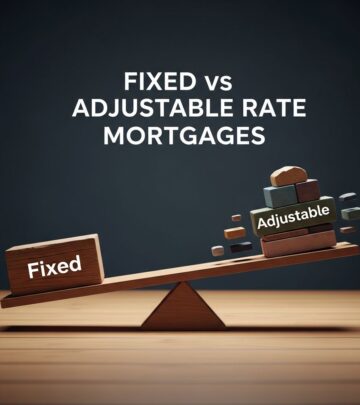
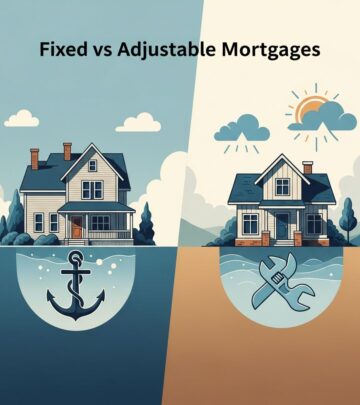
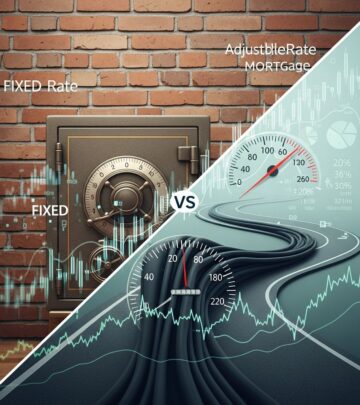
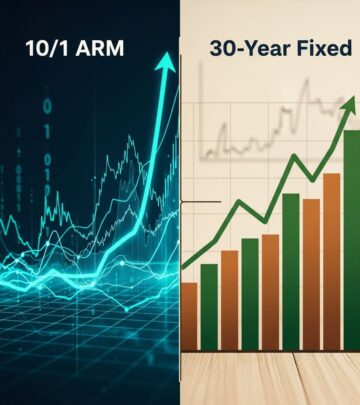
Fixed-rate mortgages prioritize consistency, while ARMs emphasize initial affordability with variability. Here’s a side-by-side comparison:
| Feature | Fixed-Rate Mortgage | Adjustable-Rate Mortgage (ARM) |
|---|---|---|
| Interest Rate | Constant for entire term | Fixed initially, then adjusts |
| Initial Rate | Higher typically | Lower for intro period |
| Monthly Payment Predictability | High (P&I fixed) | Low after intro period |
| Down Payment Minimum (Conventional) | 3% | 5% |
| Best For | Long-term owners | Short-term plans or rate drops |
Payment Scenarios: Fixed vs ARM in Action
Consider a $400,000 loan. A 30-year fixed at 7% yields $2,661 monthly P&I. A 5/1 ARM at 6.5% starts at $2,528, but post-adjustment could rise or fall.
Over time, ARMs vary widely:
| Year | Fixed-Rate ($400k @7%) | ARM High Scenario | ARM Low Scenario |
|---|---|---|---|
| Initial | $2,661 | $2,528 | $2,528 |
| Year 6+ | $2,661 | Up to $3,500+ | Down to $2,000- |
| Total Interest (30 yrs) | Higher upfront | $597k max | $248k min |
Fixed payments stay level; ARMs could save if rates fall but cost more if they rise.
Advantages and Drawbacks of Each Option
Fixed-Rate Pros and Cons
- Pros: Budget-friendly stability; no rate surprises; simpler long-term planning.
- Cons: Higher starting rates; less benefit if rates decline without refinancing.
ARM Pros and Cons
- Pros: Lower entry payments; potential savings in falling markets; covers closing costs early.
- Cons: Payment uncertainty; risk of sharp increases; requires monitoring indices.
Fixed suits conservative budgets; ARMs appeal to risk-tolerant buyers with exit strategies.
Factors to Consider Before Choosing
Your choice hinges on timeline, risk tolerance, and market outlook.
- Home Plans: Staying 10+ years? Fixed. Moving soon? ARM.
- Income Stability: Variable jobs favor fixed; rising careers suit ARMs.
- Market Trends: Expecting drops? ARM leverages adjustments.
- Financial Cushion: Can you handle max ARM payments? Use calculators to stress-test.
Down payments differ: fixed at 3% min, ARMs at 5% for conventional loans.
When ARMs Outperform Fixed-Rate Loans
ARMs shine in declining rate environments or short holds. A 5/1 ARM might save thousands initially, funding renovations. If selling post-intro, avoid adjustments entirely.
Historical data shows periods where ARMs underperformed due to hikes, but caps mitigate extremes.
Navigating Risks with ARMs
Understand adjustment details: frequency, caps, indices. Question lenders on max payment scenarios. Hybrid ARMs blend fixed intro with adjustments, balancing both worlds.
Recast or refinance ARMs if rates spike, though costs apply.
Current Market Insights and Trends
As of recent data, fixed 30-year rates hover around 6-7%, ARMs 5-6.5% intro. In rising markets, fixed protects; falling ones favor ARMs.
Frequently Asked Questions (FAQs)
What happens if ARM rates rise sharply?
Caps limit increases: e.g., 2% yearly, 5-6% lifetime. Budget for worst-case.
Can I switch from ARM to fixed later?
Yes, via refinance, subject to credit and rates.
Are ARMs riskier than fixed?
They introduce variability, but lower starts aid qualification.
How do I calculate ARM adjustments?
Index (e.g., SOFR) + margin, capped. Use online tools.
Which is cheaper overall?
Depends on rates and term; ARMs potentially save if stable/low.
Steps to Select Your Mortgage
- Assess timeline and finances.
- Compare rates from lenders.
- Model scenarios with calculators.
- Review ARM disclosures thoroughly.
- Consult advisors for personalized fit.
Empower your decision with knowledge—fixed for security, ARM for opportunity.
References
- Fixed-Rate Mortgage Vs. ARM: What’s the Difference? — Bankrate. 2024-2025. https://www.bankrate.com/mortgages/arm-vs-fixed-rate/
- Adjustable-rate mortgage (ARM) vs Fixed-rate mortgage — U.S. Bank. 2024-2025. https://www.usbank.com/home-loans/mortgage/arm-vs-fixed.html
- Comparing ARM vs Fixed Rate Mortgages — NerdWallet. 2024-2025. https://www.nerdwallet.com/mortgages/learn/arm-vs-fixed-rate-mortgage
- ARM vs. fixed-rate mortgage: What’s the difference? — Rocket Mortgage. 2024-2025. https://www.rocketmortgage.com/learn/arm-vs-fixed
- What is the difference between a fixed-rate and adjustable-rate mortgage (ARM) loan? — Consumer Financial Protection Bureau (.gov). 2024-2025. https://www.consumerfinance.gov/ask-cfpb/what-is-the-difference-between-a-fixed-rate-and-adjustable-rate-mortgage-arm-loan-en-100/
Similar Articles








Read full bio of Sneha Tete