Fixed-Rate Mortgages Explained: A Complete Guide For 2025
Discover how fixed-rate mortgages provide payment stability and protect against rate hikes for secure home financing.

Fixed-rate mortgages represent one of the most popular choices for homebuyers seeking financial certainty. These loans maintain a constant interest rate over the entire term, ensuring that principal and interest portions of monthly payments remain unchanged.
Understanding the Fundamentals of Fixed-Rate Loans
A fixed-rate mortgage is a home financing product where the interest rate is locked in at the outset and does not fluctuate with market conditions. This setup guarantees that borrowers’ principal and interest payments stay consistent from the first month to the last, facilitating straightforward budgeting. While elements like property taxes and homeowners insurance—often bundled into the total monthly payment known as PITI (principal, interest, taxes, insurance)—may vary annually, the core loan components provide unwavering reliability.
This structure appeals to those prioritizing long-term planning, as it eliminates the uncertainty associated with rate adjustments. Borrowers can input their loan details into an amortization calculator to view a complete payment schedule, revealing how early payments heavily favor interest while later ones build equity more rapidly.
Key Advantages That Make Fixed-Rate Mortgages Appealing
Opting for a fixed-rate mortgage offers several compelling benefits, particularly in volatile economic environments.
- Budgeting Confidence: Consistent payments simplify household financial management, allowing families to allocate resources predictably without fearing sudden hikes.
- Hedge Against Rate Escalations: In periods of rising interest rates, homeowners remain insulated, preserving affordability over decades.
- Straightforward Structure: The simplicity of unchanging rates reduces complexity, making it easier for first-time buyers to grasp their obligations.
- Equity Accumulation: Regular principal reductions steadily increase home equity, enhancing financial security and options for future borrowing.
- Tax Advantages: Interest payments, especially prominent in initial years, may qualify for deductions on mortgages up to specified limits, potentially lowering effective costs.
These features collectively foster peace of mind, enabling homeowners to focus on life goals rather than loan uncertainties.
Potential Drawbacks to Consider
Despite their strengths, fixed-rate mortgages have limitations that warrant evaluation.
- Higher Starting Rates: Compared to introductory offers on adjustable options, fixed rates often begin at a premium, increasing upfront costs.
- Limited Adaptability: Borrowers cannot capitalize on falling rates without refinancing, which involves fees and qualifications.
- Extended Interest Exposure: Longer terms mean more total interest paid, even if monthly outlays are manageable.
These factors highlight the importance of aligning the loan with personal financial timelines and market outlooks.
Common Term Lengths and Their Implications
Fixed-rate mortgages typically come in 15-year, 20-year, or 30-year varieties, each balancing monthly affordability against total costs differently.
| Term Length | Monthly Payment | Interest Rate (Typical) | Total Interest Paid | Equity Build Speed |
|---|---|---|---|---|
| 15-Year | Higher | Lower | Less | Faster |
| 20-Year | Moderate | Moderate | Moderate | Moderate |
| 30-Year | Lower | Higher | More | Slower |
The 30-year term dominates due to its lower payments, suiting entry-level buyers, while 15-year options attract those aiming for quicker payoff and savings on interest. Shorter terms accelerate equity growth, ideal for refinancers or those with stable incomes.
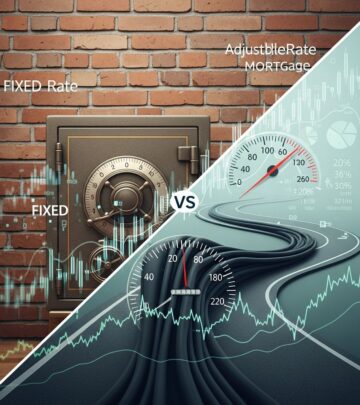
Fixed-Rate vs. Adjustable-Rate Mortgages: A Side-by-Side Analysis
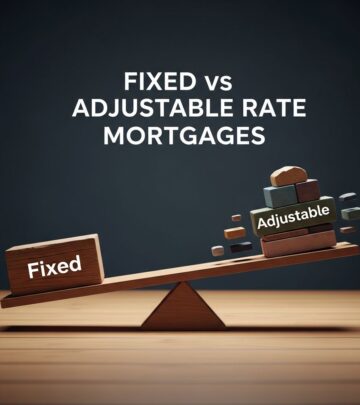
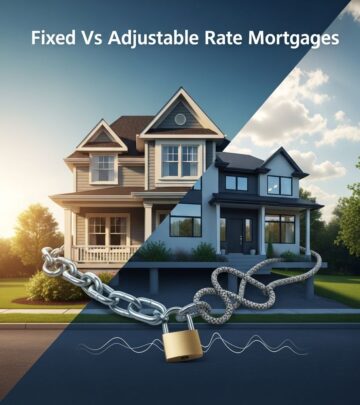
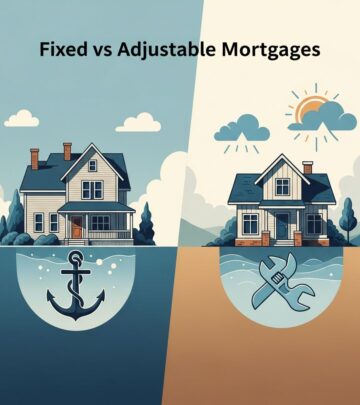
Contrasting fixed-rate mortgages with adjustable-rate mortgages (ARMs) reveals distinct risk-reward profiles.
| Feature | Fixed-Rate Mortgage | Adjustable-Rate Mortgage (ARM) |
|---|---|---|
| Rate Behavior | Constant throughout term | Fixed initially, then adjusts periodically |
| Payment Predictability | High (principal/interest fixed) | Variable after initial period |
| Initial Rate | Typically higher | Often lower |
| Rate Risk | None post-closing | Exposed to market increases |
| Best For | Long-term homeowners | Short-term stays or rate optimists |
Fixed-rate loans excel for enduring stability, whereas ARMs suit scenarios expecting quick sales or rate declines, though they carry escalation risks.
Ideal Scenarios for Selecting a Fixed-Rate Mortgage
Not every borrower needs a fixed-rate loan, but certain situations make it particularly advantageous.
- Planning to reside in the home for 10+ years, maximizing the locked rate’s value.
- Navigating rising rate environments to secure current lows.
- Prioritizing payment consistency amid variable expenses like family growth.
- Building long-term wealth through steady equity gains.
Homebuyers with fixed incomes or aversion to financial surprises often find this option aligns best with their profiles.
Navigating the Application Process
Securing a fixed-rate mortgage involves assessing creditworthiness, income stability, and debt levels. Lenders evaluate debt-to-income ratios, typically capping at 43-50%, alongside down payments from 3-20%. Shopping multiple quotes reveals rate variations, potentially saving thousands over the loan life. Pre-approvals strengthen offers in competitive markets.
Post-approval, closing locks the rate, with final payments commencing 30-60 days later. Ongoing management includes monitoring escrow for taxes/insurance adjustments.
Strategies for Refinancing Fixed-Rate Mortgages
Declining rates present refinancing opportunities to reduce payments or shorten terms. Borrowers should compare break-even points—fees recouped via savings—aiming for at least 0.5-1% rate drops. Cash-out refinances tap equity for renovations, though they extend repayment.
Frequently Asked Questions (FAQs)
Can my fixed-rate mortgage payment change?
Principal and interest remain fixed, but taxes and insurance can adjust your total PITI.
Is a 15-year or 30-year term better?
Depends on affordability: shorter saves interest; longer eases monthly cash flow.
How do I qualify for the best rates?
Strong credit (740+), low debt-to-income, and ample down payment secure optimal terms.
What if rates drop after I lock in?
Refinancing allows capturing lower rates, subject to closing costs.
Are fixed-rate mortgages only for primary homes?
No, they apply to investment properties and refinances too.
Final Thoughts on Securing Your Financial Future
Fixed-rate mortgages empower homeownership with reliability, shielding against economic shifts while promoting disciplined saving through equity. By weighing personal circumstances against market dynamics, buyers can select terms fostering lasting stability. Consulting lenders and using calculators ensures informed decisions tailored to unique needs.
References
- Understanding the Pros and Cons of Fixed-Rate Mortgages — Ascend Bank. 2023. https://ascend.bank/news/understanding-the-pros-and-cons-of-fixed-rate-mortgages/
- Considering a Fixed-Rate Mortgage? Here’s What You Should Know — Freddie Mac. 2024. https://myhome.freddiemac.com/blog/homebuying/considering-a-fixed-rate-mortgage-heres-what-you-should-know
- Pros and Cons: Fixed-Rate vs. Adjustable-Rate Mortgage Loans — Greater Alliance. 2023. https://www.greateralliance.org/pros-and-cons-of-fixed-rate-vs-adjustable-rate-mortgage-loans/
- Discover the Benefits of a Fixed-Rate Mortgage — UBank. 2024. https://u.bank/blog/post/discover-the-benefits-of-a-fixed-rate-mortgage
- Fixed-Rate Mortgages Explained – Types, and How They Work — SIRVA Mortgage. 2024. https://mortgage.sirva.com/loan-options/fixed-rate-loans
- What Is A Fixed-Rate Mortgage? — Bankrate. 2025. https://www.bankrate.com/mortgages/what-is-a-fixed-rate-mortgage/
- What is the difference between a fixed-rate and adjustable-rate mortgage (ARM) loan? — Consumer Financial Protection Bureau. 2024. https://www.consumerfinance.gov/ask-cfpb/what-is-the-difference-between-a-fixed-rate-and-adjustable-rate-mortgage-arm-loan-en-100/
Similar Articles








Read full bio of Sneha Tete