Fixed Income: Definition, Types, and Investment Guide
Understand fixed income securities, bonds, and how they generate predictable returns for investors.
What Is Fixed Income?
Fixed income refers to any type of investment security that obligates the issuer to make fixed payments to investors at predetermined times. These securities represent loans made by investors to borrowers, typically corporations, municipalities, or governments. When you purchase a fixed income security such as a bond, you become a creditor to the issuer, and the issuer commits to paying you interest at regular intervals and returning your principal investment at maturity.
Fixed income securities are one of the three primary asset classes available to individual investors, alongside equities (stocks) and cash equivalents. They are valued for their ability to provide predictable income streams and are often considered less volatile than stocks, making them an essential component of many investment portfolios.
Understanding the Basics of Fixed Income
How Fixed Income Securities Work
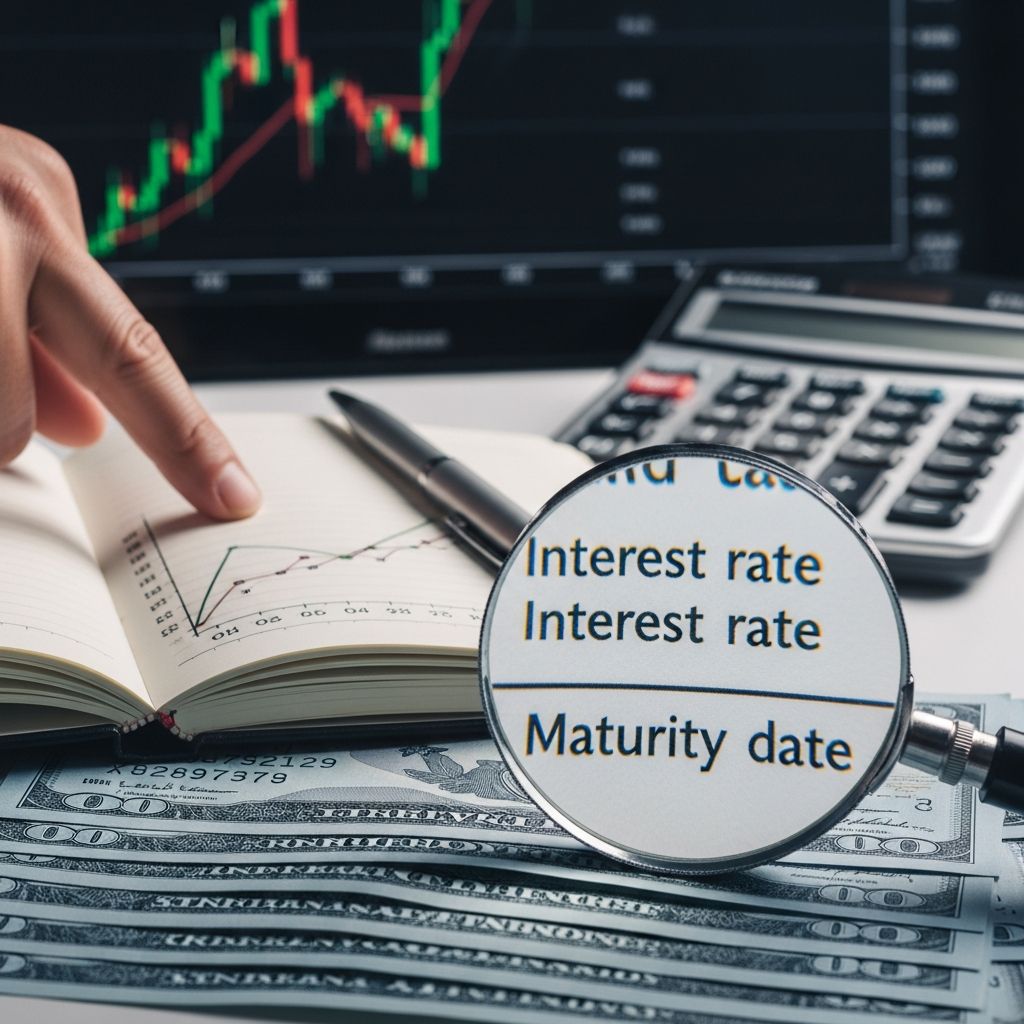
When you invest in a fixed income security, you are essentially lending money to an organization. The borrower issues a security that outlines the terms of the loan, including the interest rate, payment schedule, and maturity date. The most common type of fixed income security is a bond.
Fixed income securities can be publicly traded on financial markets or traded over-the-counter (OTC) between private parties. Unlike stocks, which represent ownership in a company, bonds represent debt obligations. This distinction is crucial because bondholders have priority claims on a company’s assets and earnings before stockholders do.
Key Characteristics of Fixed Income Investments
Several fundamental characteristics define fixed income securities:
- Face Value (Par Value): This is the principal amount that will be returned to the investor at maturity. For example, a bond with a face value of $1,000 will pay that amount back when it matures, regardless of the price paid to purchase it.
- Coupon Rate: This is the annual interest rate paid on the bond, expressed as a percentage of the face value. A bond with a 5% coupon and $1,000 face value pays $50 annually.
- Maturity Date: This is the date when the principal must be repaid in full.
- Payment Frequency: Interest payments are typically made semi-annually or annually, though other schedules are possible.
- Yield: This represents the actual return an investor receives from the bond.
Bond Pricing and Inverse Relationship with Interest Rates
One of the most important concepts for fixed income investors to understand is the inverse relationship between bond prices and interest rates. When prevailing market interest rates rise, the prices of existing bonds fall, and vice versa. This relationship exists because newly issued bonds compete with existing bonds in the market.
Consider this example: If you own a bond paying 5% interest and new bonds are issued paying 7%, your existing bond becomes less attractive to potential buyers. To compete, the price of your bond must fall to make its yield competitive with new offerings. Conversely, if new bonds are issued at 3%, your 5% bond becomes more valuable and will trade at a premium to par value.
This dynamic means that bond prices fluctuate in the secondary market, even though the coupon rate remains fixed. Investors do not need to hold bonds until maturity; they can sell them at any time in the open market, potentially at a gain or loss depending on interest rate movements.
Bond Yields Explained
Different Types of Bond Yields
Bond yield represents the return an investor realizes from a bond investment. However, yield can be calculated in several different ways, each providing different insights into the investment’s returns:
Coupon Yield
The simplest definition of bond yield is the coupon rate itself. This is the annual interest payment divided by the face value. For a $1,000 bond paying $50 in annual interest, the coupon yield is 5%. This calculation is straightforward but does not account for the price paid or the time value of money.
Current Yield
Current yield is more accurate when a bond is trading at a price different from its face value. It is calculated by dividing the annual coupon payment by the current market price of the bond. For example, if a bond with a $100 annual coupon is trading at $800, the current yield is 12.5% ($100 ÷ $800). If the same bond trades at $1,200, the current yield drops to 8.33% ($100 ÷ $1,200).
Yield to Maturity (YTM)
Yield to maturity is a more complex calculation that represents the total return an investor will receive if the bond is held until maturity. YTM accounts for the coupon payments, the principal repayment, the time value of money, and the current market price. YTM is the most comprehensive measure of a bond’s return because it considers all cash flows and the passage of time.
Bond Equivalent Yield (BEY)
Bond equivalent yield is used to compare bonds with different coupon payment frequencies. It is calculated by multiplying the semi-annual YTM by two to annualize the return. For example, if a bond has a semi-annual YTM of 5.979%, the BEY would be 11.958%. This allows investors to compare bonds with different payment schedules on an equivalent basis.
Effective Annual Yield (EAY)
The effective annual yield is another method that accounts for the time value of money and compounding of interest payments. It provides a more accurate picture of annual returns than the BEY for bonds with multiple coupon payments throughout the year.
Types of Fixed Income Securities
The fixed income market encompasses various types of securities beyond traditional bonds:
Corporate Bonds
Corporations issue bonds to raise capital for business operations and expansion. Corporate bonds typically offer higher yields than government bonds because they carry greater default risk. The credit quality of the issuing corporation significantly influences the bond’s yield.
Government Bonds
Federal, state, and local governments issue bonds to finance public projects and operations. U.S. Treasury bonds are considered among the safest investments because they are backed by the full faith and credit of the U.S. government. Municipal bonds often offer tax advantages to investors.
Treasury Securities
The U.S. Department of Treasury issues Treasury bills (short-term), Treasury notes (intermediate-term), and Treasury bonds (long-term). These are considered risk-free in terms of default because they are backed by the government.
Preferred Stock
While technically equity, preferred stock often behaves like fixed income because it pays regular dividends at a set rate. Preferred stockholders have priority over common stockholders in receiving dividends and liquidation proceeds.
Certificates of Deposit (CDs)
CDs are bank products that pay a fixed interest rate over a specified period. They are insured by the FDIC up to certain limits and offer minimal risk.
Risks Associated with Fixed Income Investments
Credit or Default Risk
Credit risk, also known as default risk, is the possibility that an issuer will fail to make required interest and principal payments. This is the most significant risk for bond investors. Companies in financial distress or countries with weak economies may have higher default risk, which is reflected in higher yields that compensate investors for the additional risk.
Interest Rate Risk
Interest rate risk refers to the potential decline in a bond’s value due to rising interest rates. Bonds with longer maturities are more sensitive to interest rate changes than shorter-term bonds. Investors who need to sell before maturity could face losses if rates have risen.
Inflation Risk
Inflation risk occurs when inflation erodes the purchasing power of future fixed income payments. If a bond pays 3% interest but inflation rises to 4%, the real return is negative. Treasury Inflation-Protected Securities (TIPS) are designed to address this risk.
Liquidity Risk
Liquidity risk is the risk that a bond cannot be sold quickly without accepting a significant discount to market price. While Treasury bonds and corporate bonds from large companies are highly liquid, many municipal and corporate bonds have limited trading activity.
Reinvestment Risk
Reinvestment risk occurs when interest rates fall and the bondholder must reinvest coupon payments at lower rates. This is particularly relevant for long-term bond investors.
Benefits of Fixed Income Investments
Fixed income securities offer several advantages to investors:
- Predictable Income: Regular coupon payments provide reliable income streams, making fixed income ideal for retirees and conservative investors.
- Capital Preservation: If held to maturity, investors receive their full principal investment back.
- Portfolio Diversification: Fixed income investments typically have low correlation with stocks, helping reduce overall portfolio volatility.
- Lower Volatility: Bond prices are generally less volatile than stock prices, making them suitable for risk-averse investors.
- Seniority: In bankruptcy, bondholders are paid before stockholders.
Fixed Income in a Diversified Portfolio
Financial advisors typically recommend that a portion of every investor’s portfolio be allocated to fixed income securities. The appropriate allocation depends on factors such as age, risk tolerance, investment timeline, and financial goals. Younger investors with longer time horizons might hold a smaller fixed income allocation, while retirees might hold a larger portion to generate stable income.
Fixed income securities serve multiple functions in a portfolio: they provide income, reduce risk through diversification, and offer capital preservation. Many investors use a bond ladder strategy, purchasing bonds with staggered maturity dates to create consistent income streams and reduce timing risk.
How to Evaluate Fixed Income Securities
When considering fixed income investments, several factors deserve attention. First, evaluate the issuer’s credit quality using ratings from agencies like Standard & Poor’s, Moody’s, or Fitch. Higher-rated securities (AAA, AA, A) offer lower yields but higher safety. Lower-rated bonds (BB and below) are considered speculative and offer higher yields to compensate for risk.
Second, consider the bond’s duration, which measures its sensitivity to interest rate changes. Longer duration bonds are riskier if rates rise. Third, compare yields across similar securities and understand why higher-yielding bonds offer greater compensation. Fourth, assess your ability to hold the bond until maturity or your willingness to accept potential price fluctuations.
Frequently Asked Questions
Q: What is the difference between a bond’s coupon rate and its yield?
A: The coupon rate is fixed at the time of issuance and represents the annual interest payment as a percentage of face value. Yield, particularly yield to maturity, accounts for the current market price and represents the actual return an investor receives if holding the bond to maturity. These can differ significantly when a bond trades at a premium or discount.
Q: Why do bond prices fall when interest rates rise?
A: When interest rates rise, newly issued bonds offer higher coupon rates. Existing bonds with lower coupon rates become less attractive, so their prices must fall to make their effective yield competitive with new issues. This inverse relationship is fundamental to bond pricing.
Q: Can I sell a bond before maturity?
A: Yes, most bonds can be sold in the secondary market before maturity. However, the price you receive depends on prevailing interest rates and market conditions. You may receive more or less than the face value depending on how rates have changed since you purchased the bond.
Q: What is duration and why does it matter?
A: Duration measures how long it takes for an investment to recoup its initial cost through coupon payments and represents the bond’s price sensitivity to interest rate changes. Longer-duration bonds are riskier because they’re more susceptible to price declines when rates rise.
Q: How much fixed income should I have in my portfolio?
A: The appropriate allocation depends on your age, risk tolerance, and financial goals. A common rule suggests holding an allocation to fixed income equal to your age (e.g., a 30-year-old holds 30%). However, personal circumstances may warrant adjustments to this guideline.
Q: What are investment-grade bonds versus high-yield bonds?
A: Investment-grade bonds have credit ratings of BBB or higher, indicating lower default risk but typically lower yields. High-yield (junk) bonds are rated BB or lower, reflecting higher default risk but offering higher yields to compensate investors for the additional risk.
References
- Bonds & Fixed Income Documentation — Investopedia ReadTheDocs. 2024. https://investopedia.readthedocs.io/en/latest/invest/Ch1/Chapter14.html
- U.S. Securities and Exchange Commission – Bonds — U.S. SEC. 2024. https://www.sec.gov/investor/alerts/ib_bonds.pdf
- Understanding Bond Ratings and Yields — Federal Reserve Board. 2024. https://www.federalreserve.gov
Similar Articles








Read full bio of Sneha Tete