Fixed Exchange Rate: Definition, Pros, Cons & Examples
Complete guide to fixed exchange rates, their benefits, drawbacks, and real-world applications.

What Is a Fixed Exchange Rate?
A fixed exchange rate, also known as a pegged exchange rate, is a system of currency exchange in which the value of one currency is tied or fixed to another currency or a basket of currencies. Under this system, a country’s government or central bank commits to maintaining the exchange rate within a specific range by using monetary policy tools and foreign exchange interventions. Unlike floating exchange rates that fluctuate based on market supply and demand, fixed rates provide predetermined values that remain relatively stable over time.
Fixed exchange rate systems have been used for centuries, with their origins tracing back to the gold standard, where currencies were directly linked to gold reserves. Today, most countries that employ fixed rates typically peg their currencies to major global currencies such as the United States dollar or the euro, or to a composite basket of multiple currencies. This approach offers stability and predictability for international trade and investment activities.
How Fixed Exchange Rates Work
In a fixed exchange rate regime, the government or central bank of a country takes active responsibility for maintaining the currency’s value at the predetermined level. This involves several key mechanisms and interventions to keep the exchange rate within the established band or range.
When market pressures threaten to push the currency’s value away from the fixed rate, the central bank intervenes by buying or selling foreign currency reserves. For instance, if the local currency becomes stronger than the pegged rate, the central bank may sell its own currency to increase supply and push the value down. Conversely, if the currency weakens, the central bank purchases its own currency to reduce supply and strengthen its value.
Additionally, central banks adjust interest rates to maintain the fixed rate. By raising interest rates, they can attract foreign investment, increasing demand for the domestic currency and preventing depreciation. Conversely, lowering interest rates can discourage excessive inflows of capital. Some countries also employ capital controls—restrictions on the movement of money into and out of the country—to support their fixed exchange rate systems and prevent destabilizing currency flows.
Examples of Fixed Exchange Rates
Several real-world examples demonstrate how fixed exchange rate systems function in practice:
The Danish Krone and Euro: The Danish krone (DKK) is pegged to the euro at a central rate of 746.038 kroner per 100 euros. The system allows for a fluctuation band of plus or minus 2.25 percent, meaning the exchange rate cannot fall below 729.252 DKK per 100 euros or exceed 762.824 DKK per 100 euros.
The UAE Dirham: The United Arab Emirates pegs its currency, the dirham, to the United States dollar at a fixed rate of 3.67 dirhams per 1 USD. This peg was established to provide stability in oil trade between the two countries, as oil is priced in dollars on international markets.
The Saudi Riyal: Saudi Arabia maintains a fixed exchange rate with the United States dollar at approximately 3.75 riyals per dollar. The Saudi government actively manages this peg by buying and selling currency or adjusting interest rates as needed to maintain the fixed relationship.
Currency Unions: Some countries participate in informal currency unions where multiple nations share a single currency or have currencies pegged at par value. For example, Gibraltar, Jersey, and Guernsey maintain currencies that are fixed to and exchangeable with the British pound.
Advantages of Fixed Exchange Rates
Fixed exchange rate systems offer several significant benefits, particularly for smaller or developing economies seeking stability and predictability in their international economic relations.
Increased Certainty for International Trade: By eliminating exchange rate fluctuations, fixed rates provide importers and exporters with predictable costs and revenues. Businesses can accurately forecast future cash flows and plan investments without worrying about sudden currency value changes that could erode profit margins or increase costs unexpectedly. This predictability encourages cross-border trade and investment.
Promotes International Investment: The stability provided by fixed rates attracts foreign direct investment and portfolio investment. Investors prefer to place capital in countries where they can predict future exchange rates, reducing investment risk and encouraging capital flows that support economic development.
Inflation Control: Fixed exchange rate systems can help governments maintain low inflation rates. When a currency is pegged to a stable foreign currency, the domestic monetary system becomes constrained by the reference currency’s inflation characteristics, effectively importing price stability. This can produce positive long-term economic effects, including lower interest rates and reduced price pressures.
Reduced Hedging Costs: Businesses engaged in international trade face lower costs for currency hedging—strategies to protect against unfavorable exchange rate movements. With a fixed rate, companies no longer need to purchase expensive financial instruments to protect against currency risk, improving their competitive position and profitability.
Disadvantages of Fixed Exchange Rates
Despite their advantages, fixed exchange rate systems present substantial challenges, particularly for larger and more developed economies.
Loss of Exchange Rate Flexibility: Fixed rates prevent the natural adjustment mechanism that occurs in floating rate systems. When a currency becomes overvalued or undervalued relative to its fundamental economic value, a floating rate system would allow the currency to depreciate or appreciate accordingly. Fixed rates eliminate this adjustment, leading to persistent misalignments that can distort trade and capital flows.
Constraints on Monetary Policy: Countries with fixed exchange rates face severe limitations in conducting independent monetary policy. When capital moves freely between countries, a central bank attempting to implement different interest rates from the anchor currency country will trigger capital flows that undermine the peg. The country must essentially mirror the monetary policy of the anchor country to maintain its fixed rate, limiting its ability to address domestic economic needs such as recession or unemployment.
Requirement for Large Foreign Reserves: Maintaining a fixed exchange rate requires central banks to hold substantial reserves of foreign currency and other assets. These reserves must be deployed to intervene in foreign exchange markets whenever the currency faces downward pressure. For smaller economies or developing nations with limited reserve accumulation, this requirement can be prohibitively expensive and may constrain other policy objectives.
Vulnerability to Speculative Attacks: Fixed exchange rate systems are susceptible to currency crises when speculators believe the peg cannot be maintained. If investors lose confidence in the government’s ability to defend the fixed rate, they may sell the domestic currency in large volumes, rapidly depleting foreign reserves and forcing the country to abandon the peg at a significant cost. Several emerging market crises in the 1990s and 2000s demonstrated this vulnerability.
Difficulty During Economic Divergence: When the economic conditions of countries diverge significantly—such as different inflation rates or growth rates—maintaining a fixed exchange rate becomes increasingly difficult and economically damaging. The anchor country’s monetary policy may be inappropriate for the pegging country’s economic situation, leading to either inflation or deflation and economic inefficiency.
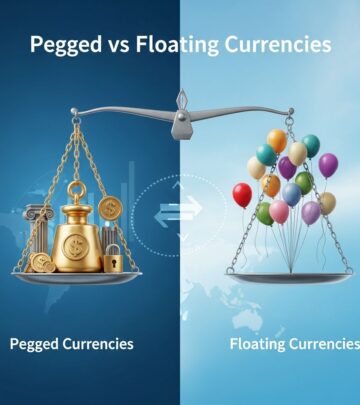
Fixed Exchange Rates vs. Floating Exchange Rates
Understanding the distinctions between fixed and floating exchange rates is essential for comprehending their different economic implications:
| Aspect | Fixed Exchange Rate | Floating Exchange Rate |
|---|---|---|
| Value Determination | Set and maintained by government/central bank | Determined by market supply and demand |
| Predictability | Highly predictable for businesses and investors | Uncertain and subject to market volatility |
| Central Bank Intervention | Frequent intervention required | Minimal or no intervention |
| Monetary Policy Freedom | Limited; must match anchor country policy | Greater independence and flexibility |
| Foreign Reserve Requirements | Substantial reserves needed | Fewer reserve requirements |
| Trade and Investment | Encourages international trade | Trade subject to currency uncertainty |
| Self-Correcting Mechanism | No automatic adjustment for imbalances | Currency adjusts automatically to rebalance economy |
Types of Fixed Exchange Rate Regimes
Not all fixed exchange rate systems are identical. The International Monetary Fund categorizes them into several types based on their flexibility and structure:
Hard Pegs: These represent the strictest form of fixed rates and include full dollarization, where a country abandons its own currency entirely and adopts another country’s currency, or currency board arrangements where the central bank maintains foreign assets equal to the monetary base. Hard pegs eliminate exchange rate risk but require complete surrender of monetary policy independence.
Soft Pegs: These maintain stable values against an anchor currency or basket of currencies but allow some flexibility. The exchange rate can be pegged within a narrow band (plus or minus 1 percent) or a wide band (up to plus or minus 30 percent). Some soft pegs adjust over time, typically reflecting differences in inflation rates between countries. Examples include Costa Rica, Hungary, and China.
Crawling Pegs: Under this system, the fixed rate gradually adjusts over time to reflect economic differences, particularly inflation differentials. This provides some flexibility while maintaining the benefits of a relatively stable exchange rate for trade and investment planning.
The Gold Standard Connection
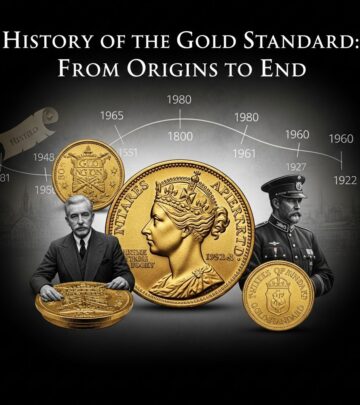
Understanding the historical context of fixed exchange rates requires examining the gold standard, which served as the foundation for modern exchange rate concepts. Under the gold standard, government-issued currency was directly linked to gold reserves, meaning currency could be exchanged for an equivalent amount of gold at any time. This system provided ultimate exchange rate stability but constrained monetary policy and proved inadequate for managing modern economies.
Most countries abandoned the gold standard during the 20th century, particularly after World War II and then definitively in the 1970s. However, the conceptual framework of fixing currency values to maintain stability evolved into modern fixed exchange rate systems where currencies are pegged to other currencies rather than gold.
When Are Fixed Exchange Rates Appropriate?
Fixed exchange rate systems work best under specific economic circumstances. Countries with similar macroeconomic factors and comparable economic strength, such as the United States and European Union members, can more easily maintain fixed rates without suffering adverse economic consequences. These countries tend to have similar inflation rates, growth rates, and policy objectives, reducing the strain on maintaining the peg.
Developing countries and smaller economies frequently adopt fixed rates to anchor inflation expectations and attract foreign investment despite the costs. Countries highly dependent on trade with a specific nation or region may benefit from fixing their currency to that major trading partner’s currency.
Conversely, large, economically independent nations with significant macroeconomic differences from potential anchor countries typically prefer floating rates that allow monetary policy autonomy. The costs of maintaining a fixed peg outweigh the trade benefits for these economies.
Frequently Asked Questions
What is the primary purpose of a fixed exchange rate?
The primary purpose of a fixed exchange rate is to provide currency stability and predictability for international trade and investment by eliminating exchange rate fluctuations. This stability reduces business costs and encourages cross-border economic activity.
How does a central bank maintain a fixed exchange rate?
Central banks maintain fixed exchange rates by intervening in foreign exchange markets through buying and selling currencies, adjusting interest rates to influence capital flows, and in some cases implementing capital controls to restrict money movement. These tools work together to keep the exchange rate within the target range.
What happens if a country cannot defend its fixed exchange rate?
If a country lacks sufficient foreign reserves or faces sustained speculative attacks, it may be forced to devalue or abandon its fixed exchange rate peg. This can occur suddenly, creating significant losses for investors and disrupting international trade and investment.
Are fixed exchange rates still used today?
Yes, many countries still employ fixed or managed exchange rate systems, though most major currencies now float freely. Developing nations, commodity exporters, and countries seeking inflation control frequently adopt fixed rates despite the constraints they impose on monetary policy.
How do fixed exchange rates affect inflation?
Fixed exchange rates can help control inflation by tying the domestic money supply to the anchor currency’s monetary policy, effectively importing price stability from the reference country. This constrains inflation but limits the country’s ability to address other economic objectives.
What is the difference between a currency peg and a currency board?
A currency peg is a commitment to maintain a fixed exchange rate, while a currency board is a harder institutional arrangement where the central bank maintains foreign assets equal to the monetary base and cannot create money beyond the foreign reserves held. Currency boards offer greater credibility but eliminate monetary policy flexibility entirely.
References
- Fixed exchange rates – What are fixed exchange rates? — SumUp Invoices. Accessed 2025. https://www.sumup.com/en-gb/invoices/dictionary/fixed-exchange-rates/
- Fixed exchange rates — Fiveable. Accessed 2025. https://fiveable.me/key-terms/international-economics/fixed-exchange-rates
- Fixed Exchange Rate – Overview, How It Works, Advantages — Corporate Finance Institute. Accessed 2025. https://corporatefinanceinstitute.com/resources/foreign-exchange/fixed-exchange-rate/
- What are exchange rates? Defined and explained — Western Union. Accessed 2025. https://www.westernunion.com/blog/en/us/how-do-exchange-rates-work/
- What is a fixed exchange rate? — CurrencyTransfer. Accessed 2025. https://www.currencytransfer.com/blog/expert-analysis/what-is-a-fixed-exchange-rate
- Exchange Rate Regimes: Fix or Float — International Monetary Fund. 2008-03. https://www.imf.org/external/pubs/ft/fandd/2008/03/pdf/basics.pdf
Similar Articles








Read full bio of medha deb