Fixed Costs: Definition, Examples, and Business Impact
Understand fixed costs and their crucial role in business planning and financial management.
Fixed costs are a fundamental concept in business accounting and financial management that every entrepreneur, manager, and investor should understand. These are expenses that remain constant regardless of how much a company produces or sells during a specific period. Understanding fixed costs is essential for accurate financial planning, pricing strategies, and determining profitability thresholds.
What Are Fixed Costs?
Fixed costs, also known as indirect costs or overhead expenses, are business expenses that do not change in total amount regardless of the level of business activity or production volume. Whether a company manufactures 100 units or 10,000 units, fixed costs remain the same. These expenses occur whether the business is operating at full capacity, partial capacity, or even if it temporarily ceases production.
The key characteristic of fixed costs is their predictability and consistency. They are typically contracted for a specific period and cannot be easily adjusted in the short term without significant operational changes or contract renegotiations.
Common Examples of Fixed Costs
Fixed costs appear across virtually all types of businesses. Here are the most common examples:
- Rent or Lease Payments: Monthly rent for office space, factory facilities, or retail locations remains constant regardless of business performance or sales volume.
- Salaries and Wages: Employee salaries, especially for administrative and management staff, are typically fixed expenses that must be paid consistently.
- Insurance Premiums: Business liability insurance, property insurance, and other insurance policies require regular fixed premium payments.
- Depreciation: The gradual reduction in value of company assets like equipment and machinery is a non-cash fixed expense recognized for accounting purposes.
- Property Taxes: Real estate and personal property taxes assessed by local governments remain relatively constant annually.
- Interest Payments: Loan interest and bond payments are typically fixed obligations that must be paid on schedule.
- Utilities: While utilities can vary slightly, many businesses negotiate fixed rates for essential services like electricity, water, and internet.
- Licensing and Permits: Professional licenses, business permits, and regulatory compliance costs are typically fixed annual or periodic expenses.
- Maintenance Contracts: Service agreements for equipment maintenance and facilities management often involve fixed monthly or annual payments.
Fixed Costs Versus Variable Costs
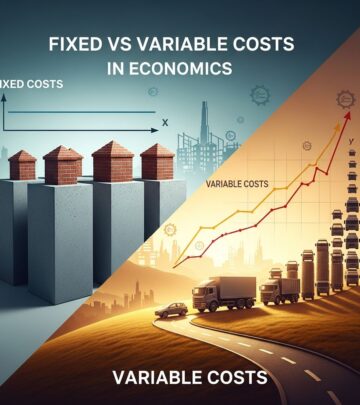
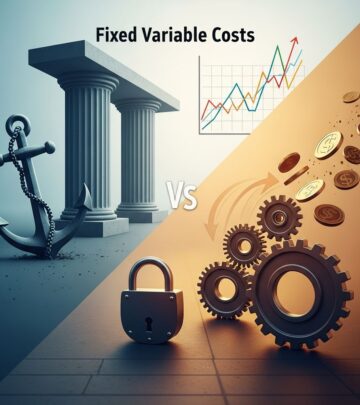
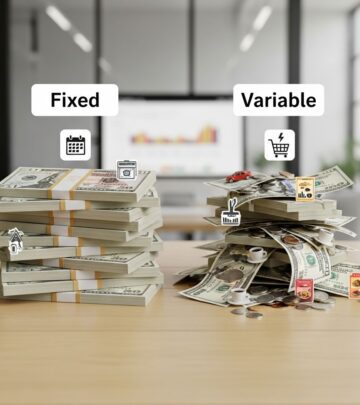
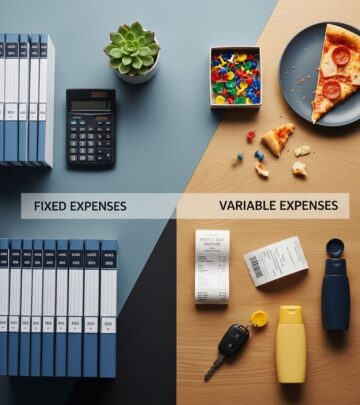
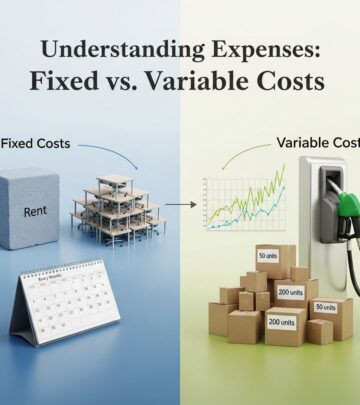
Understanding the distinction between fixed costs and variable costs is crucial for effective business management. Variable costs, unlike fixed costs, change directly with the level of production or business activity.
| Aspect | Fixed Costs | Variable Costs |
|---|---|---|
| Behavior | Remain constant regardless of production volume | Change proportionally with production or sales |
| Examples | Rent, salaries, insurance, depreciation | Raw materials, direct labor, packaging, commissions |
| Per-Unit Cost | Decreases as production increases | Typically remains constant per unit |
| Predictability | Highly predictable and budgetable | Depends on production levels and external factors |
| Controllability | Difficult to adjust in the short term | Easier to control through production adjustments |
Total costs in any business are comprised of both fixed and variable costs. Understanding this relationship is essential for break-even analysis and profit planning.
How Fixed Costs Impact Business Operations
Fixed costs have significant implications for business strategy and financial performance:
Break-Even Analysis
Fixed costs directly influence a company’s break-even point—the sales volume at which total revenues equal total costs. A business with higher fixed costs requires greater sales volume to break even and generate profit. This is calculated by dividing total fixed costs by the contribution margin per unit.
Profitability and Scalability
While fixed costs create an initial financial burden, they offer opportunities for profitability improvement through economies of scale. As production increases, the fixed cost per unit decreases, improving profit margins on each sale.
Business Leverage
High fixed costs create operational leverage—a situation where small changes in sales volume produce larger percentage changes in profits. This can amplify both gains and losses depending on market conditions.
Financial Planning and Forecasting
Fixed costs enable more accurate financial forecasting since they are predictable and contractually obligated. This allows businesses to plan budgets more effectively and prepare for financial contingencies.
Calculating Fixed Costs Per Unit
One important metric for managers is the fixed cost per unit, which is calculated by dividing total fixed costs by the number of units produced:
Fixed Cost Per Unit = Total Fixed Costs ÷ Number of Units Produced
This calculation is valuable because it shows how fixed costs distribute across output. As production increases, the fixed cost per unit decreases, which can improve overall profitability and competitiveness in pricing.
Semi-Fixed Costs: A Middle Ground
It’s important to note that some costs are considered semi-fixed or mixed costs. These expenses have both fixed and variable components. For example:
- Utility Bills: A business might have a fixed base charge with additional charges based on usage.
- Sales Commissions: A base salary (fixed) plus commission based on sales (variable).
- Equipment Leases: May include minimum fixed payments with additional charges for usage beyond specified levels.
Strategies for Managing Fixed Costs
While fixed costs cannot be easily eliminated, businesses can implement strategies to manage them effectively:
- Negotiate Better Terms: Renegotiate contracts with suppliers, landlords, and service providers to reduce fixed expenses.
- Outsourcing: Convert fixed costs to variable costs by outsourcing non-core functions like IT support or accounting.
- Facility Consolidation: Reduce real estate costs by consolidating operations or relocating to lower-cost areas.
- Automation: Invest in automation to reduce fixed labor costs and improve efficiency.
- Technology Solutions: Implement cloud-based or subscription services instead of purchasing expensive software licenses.
- Regular Audits: Conduct periodic reviews of all fixed expenses to eliminate unnecessary costs.
Fixed Costs in Different Industries
The nature and proportion of fixed costs vary significantly across industries:
Manufacturing: Capital-intensive with high fixed costs from factories, equipment, and production facilities.
Retail: Substantial fixed costs from store locations, rent, and permanent staff, though inventory represents variable costs.
Software/Technology: High upfront fixed costs for development, but relatively low variable costs once products are created.
Services: Variable fixed costs depending on whether services require physical locations or can be delivered remotely.
Transportation: Significant fixed costs from vehicles and infrastructure, with fuel and maintenance as mixed costs.
Fixed Costs and Decision Making
Understanding fixed costs is crucial for several important business decisions:
Pricing Strategy
Companies must price products and services high enough to cover both variable and fixed costs while generating desired profit margins. Break-even pricing ensures all costs are recovered.
Production Planning
Decisions about production volume should consider how fixed costs will be distributed. Higher production can lower per-unit costs but requires sufficient market demand.
Capacity Utilization
Managers must balance the benefits of economies of scale against the risks of overproducing for demand that may not materialize.
Make-or-Buy Decisions
When deciding whether to manufacture in-house or outsource, companies must consider how fixed costs affect the cost-benefit analysis.
Frequently Asked Questions About Fixed Costs
Q: Are fixed costs the same as sunk costs?
A: No. Fixed costs are ongoing expenses that recur regularly, while sunk costs are past expenditures that cannot be recovered. All sunk costs are historical, but not all fixed costs are sunk costs.
Q: Can fixed costs ever change?
A: Yes, fixed costs can change, but typically only in the long term or when business circumstances change significantly. For example, a company might negotiate lower rent or reduce its workforce permanently.
Q: How do fixed costs affect a startup’s viability?
A: Startups must carefully manage fixed costs because they often have limited revenue. High fixed costs can lead to rapid cash depletion before the business becomes profitable.
Q: What is the relationship between fixed costs and operating leverage?
A: Operating leverage increases with higher fixed costs. This means small revenue changes result in larger profit changes, creating both greater upside potential and downside risk.
Q: Why is understanding fixed costs important for investors?
A: Investors use fixed cost analysis to assess business stability, profitability potential, and risk levels. Companies with manageable fixed costs typically have more predictable earnings.
Q: How are fixed costs reported in financial statements?
A: Fixed costs are typically included in the operating expenses section of the income statement, categorized by type (rent, salaries, insurance, etc.) to provide transparency about overhead expenses.
Conclusion
Fixed costs are a critical component of business finance that directly impacts profitability, pricing strategy, and long-term viability. While they create financial obligations regardless of business performance, understanding and effectively managing fixed costs enables companies to optimize operations, improve decision-making, and enhance competitiveness. Whether you’re an entrepreneur launching a startup, a manager overseeing operations, or an investor evaluating business opportunities, comprehending the nature and impact of fixed costs is essential for financial success.
References
- Financial Accounting Standards Board (FASB) – Accounting Standards Codification (ASC) — FASB. 2024. https://www.fasb.org/
- Introduction to Managerial Accounting — Cengage Learning. 2023. https://www.cengage.com/
- Cost-Volume-Profit Analysis and Break-Even Point Calculations — Harvard Business School. 2024. https://www.hbs.edu/
- Operating Leverage and Fixed Costs in Business Strategy — MIT Sloan Management Review. 2023. https://sloanreview.mit.edu/
- Generally Accepted Accounting Principles (GAAP) – U.S. Securities and Exchange Commission — SEC. 2024. https://www.sec.gov/
Similar Articles








Read full bio of Sneha Tete