Fixed Assets: Definition, Types, and Accounting
Comprehensive guide to understanding fixed assets, depreciation, and their role in financial reporting.
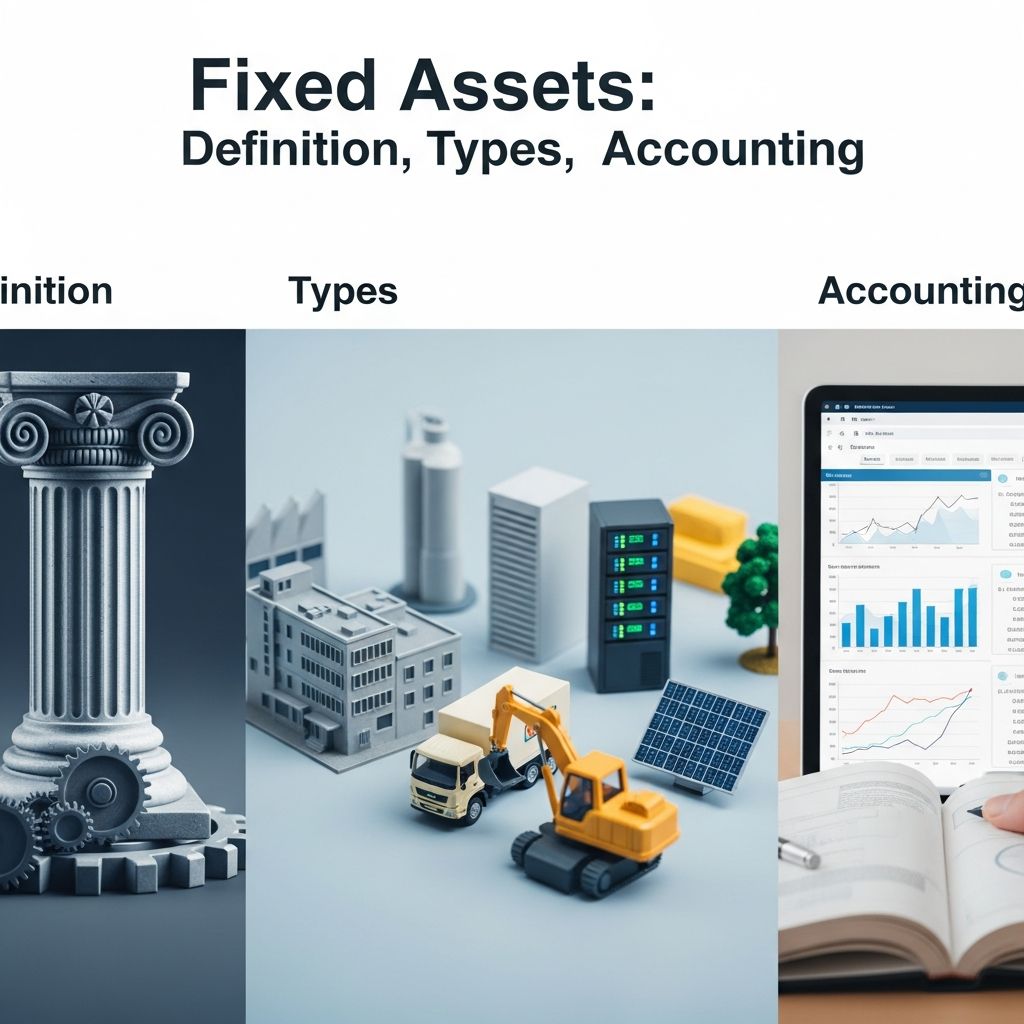
Fixed assets, also known as property, plant, and equipment (PP&E) or capital assets, represent tangible resources owned by a company that have long-term value and are expected to be used in business operations for more than one year. These assets form the backbone of many organizations’ operational capabilities and represent significant investments in the infrastructure necessary to generate revenue. Understanding fixed assets is crucial for investors, business managers, accountants, and anyone analyzing a company’s financial health and operational capacity.
Fixed assets are distinct from current assets because they are not easily converted into cash and are retained by the company for extended periods. They physically exist and can be touched, making them different from intangible assets like patents or trademarks. The management and accounting treatment of fixed assets significantly impact how financial statements are prepared and interpreted.
Understanding Fixed Assets
Fixed assets represent investments in the productive capacity of a business. When a company purchases a fixed asset, it’s essentially committing capital to something that will contribute to revenue generation over multiple years. This long-term nature distinguishes fixed assets from inventory or supplies, which are typically consumed or sold within a short timeframe.
The classification of an item as a fixed asset depends on several factors, primarily the company’s intent and the asset’s expected useful life. An asset must be expected to provide benefits for more than twelve months to qualify as a fixed asset. Additionally, the company must hold the asset with the intention of using it in operations, not for resale.
Fixed assets require significant capital expenditure upfront but provide value over many years. This extended value delivery period is why accountants use depreciation to spread the cost of fixed assets across their useful lives, matching expenses with the periods in which assets generate revenue.
Common Examples of Fixed Assets
Fixed assets appear across virtually all industries and business types. Organizations of all sizes invest in these long-term resources to support their operations. Here are common examples:
- Real Estate: Buildings, warehouses, offices, and land represent some of the largest fixed asset investments for many companies
- Manufacturing Equipment: Machinery, production equipment, and industrial tools used in manufacturing processes
- Technology Infrastructure: Computer systems, servers, networking equipment, and software licenses with multi-year terms
- Vehicles: Company cars, trucks, delivery vehicles, and fleet vehicles used for business purposes
- Furniture and Fixtures: Office furniture, shelving systems, and permanently installed fixtures
- Tools and Equipment: Hand tools, specialized equipment, and other operational resources
- Leasehold Improvements: Modifications made to leased properties that improve their functionality
Fixed Assets vs. Current Assets
Understanding the distinction between fixed assets and current assets is fundamental to financial analysis and accounting classification. Current assets are resources expected to be converted to cash or consumed within one year, while fixed assets provide value over extended periods.
| Characteristic | Fixed Assets | Current Assets |
|---|---|---|
| Time Frame | Used for more than one year | Converted to cash within one year |
| Liquidity | Low liquidity; difficult to sell quickly | High liquidity; easily converted to cash |
| Purpose | Support long-term operations | Support short-term operations |
| Depreciation | Subject to depreciation (except land) | Generally not depreciated |
| Examples | Buildings, machinery, vehicles | Cash, inventory, accounts receivable |
Depreciation of Fixed Assets
Depreciation is the accounting process of systematically allocating the cost of a fixed asset over its useful life. Because most fixed assets gradually lose value through wear, obsolescence, or aging, depreciation matches this decline in value with accounting periods. This approach follows the matching principle in accounting, which requires expenses to be recognized in the same periods they help generate revenue.
Not all fixed assets depreciate. Land, for example, is generally assumed to retain or appreciate in value, so it typically is not depreciated. However, buildings, equipment, vehicles, and other assets that deteriorate over time are subject to depreciation charges.
Depreciation Methods
Companies can choose from several depreciation methods, each providing different expense recognition patterns:
- Straight-Line Depreciation: The most common method, spreading the cost evenly across the asset’s useful life
- Declining Balance: Accelerated method that records higher depreciation in early years, declining over time
- Units of Production: Depreciation based on actual usage or production output rather than time
- Sum-of-Years-Digits: Another accelerated method that front-loads depreciation expense
The choice of depreciation method affects reported earnings and taxable income, making it an important accounting decision with significant implications for financial performance presentation.
Fixed Assets on the Balance Sheet
Fixed assets appear on the balance sheet under the non-current assets section, typically presented as “Property, Plant, and Equipment.” They are reported at their cost minus accumulated depreciation, also called net book value. This presentation allows financial statement users to see both the original investment and the cumulative depreciation recognized to date.
The balance sheet typically shows fixed assets in one of two ways: at gross value with depreciation shown separately, or at net value. The presentation method varies by company and industry but usually follows general accounting standards and company preferences. Understanding how fixed assets are presented helps stakeholders assess the company’s asset base and capital intensity.
Significant acquisitions or disposals of fixed assets are often detailed in the notes to financial statements, providing context for year-over-year changes in the fixed asset accounts. This additional disclosure helps investors and analysts understand management’s capital allocation decisions.
Capital Expenditures and Asset Acquisition
When a company acquires fixed assets, the transaction is recorded as a capital expenditure (CapEx) rather than an expense. Capital expenditures represent investments in long-term assets and appear on the cash flow statement under investing activities. This treatment contrasts with operational expenses, which are immediately recognized on the income statement.
Determining whether a cost should be capitalized or expensed requires judgment. Generally, costs that extend an asset’s useful life, increase its value, or improve its functionality are capitalized and added to the asset’s cost basis. Ordinary repairs and maintenance, which simply keep assets in working condition, are typically expensed as incurred.
The capitalization threshold varies by company but often reflects a minimum amount (such as $500 or $2,500) below which costs are routinely expensed rather than capitalized to simplify accounting.
Fixed Asset Management and Maintenance
Effective management of fixed assets ensures they continue to generate value throughout their useful lives. Proper maintenance prevents premature deterioration, extends asset life, and reduces unexpected failures that could disrupt operations. Many organizations implement asset management systems to track location, condition, maintenance schedules, and depreciation of their fixed assets.
Regular maintenance and timely repairs are typically expensed rather than capitalized, allowing companies to recognize these costs immediately. However, significant renovations or upgrades that extend an asset’s life or enhance its capability are usually capitalized as improvements to the asset.
Companies also need to track fixed assets for insurance purposes, tax depreciation deductions, and operational accountability. Many organizations conduct periodic physical inventories to ensure their accounting records accurately reflect the assets they own.
Disposal and Sale of Fixed Assets
When a company disposes of a fixed asset through sale, retirement, or abandonment, it must remove both the asset’s cost and its accumulated depreciation from the balance sheet. If the sale price differs from the asset’s net book value, the company recognizes a gain or loss on the disposition.
A gain occurs when an asset sells for more than its net book value, while a loss occurs when the sale price is less than net book value. These gains and losses are typically recognized in the operating section of the income statement, though some companies may present them separately if they are material or unusual.
Proper accounting for asset disposals ensures that the balance sheet accurately reflects only the assets currently owned and in use by the company.
Fixed Assets and Impairment
Periodically, companies must evaluate whether fixed assets have become impaired, meaning their fair value has declined below their net book value. Under accounting standards, companies must test for impairment when circumstances indicate an asset may not be recoverable. Common impairment indicators include significant physical damage, technological obsolescence, or changes in market conditions that reduce asset value.
When impairment is identified, companies write down the asset’s value and recognize an impairment charge on the income statement. This recognition ensures that financial statements reflect the current economic value of company assets rather than overstating asset values based on historical costs.
Industry Variations in Fixed Asset Investment
Different industries have dramatically different fixed asset requirements. Capital-intensive industries such as manufacturing, utilities, transportation, and telecommunications require substantial investments in plants, equipment, and infrastructure. Service-based industries may have lower fixed asset bases, focusing more on current assets like accounts receivable and inventory.
Real estate companies, in particular, often have massive fixed asset bases consisting primarily of property holdings. Conversely, software and consulting firms may have minimal fixed assets, focusing instead on human capital and intangible assets.
Analyzing fixed asset levels relative to revenue helps investors understand capital intensity and the asset base required to generate business results.
Frequently Asked Questions (FAQs)
Q: What is considered a fixed asset?
A: Fixed assets are tangible resources with a useful life exceeding one year that a company uses in operations. Examples include buildings, machinery, vehicles, equipment, and land. They are reported on the balance sheet and are typically subject to depreciation.
Q: Why is depreciation important for fixed assets?
A: Depreciation allocates the cost of fixed assets across their useful lives, matching expenses with revenue periods. This provides an accurate picture of profitability and asset value over time, ensuring financial statements reflect economic reality rather than just historical cost.
Q: Is land considered a fixed asset?
A: Yes, land is a fixed asset, but it is typically not depreciated because it is assumed to retain or appreciate in value indefinitely. Buildings and improvements on land are depreciated, but the land itself remains at original cost on the balance sheet.
Q: How do capital expenditures differ from operating expenses?
A: Capital expenditures (CapEx) are investments in long-term assets that appear on the balance sheet and are depreciated over time. Operating expenses are costs incurred in daily operations and are immediately recognized on the income statement as expenses.
Q: What is asset impairment?
A: Asset impairment occurs when a fixed asset’s fair value falls below its net book value. Companies must recognize an impairment charge to write down the asset to its current market value, ensuring the balance sheet reflects realistic asset values.
Q: Can companies change their depreciation method?
A: Generally, companies can change depreciation methods, but such changes are considered accounting changes that must be disclosed in financial statements and typically require justification as being preferable to the previous method.
References
- Accounting Standards Codification (ASC) Topic 360: Property, Plant, and Equipment — Financial Accounting Standards Board (FASB). 2024. https://www.fasb.org/
- International Accounting Standard 16: Property, Plant and Equipment — International Accounting Standards Board (IASB). 2024. https://www.ifrs.org/
- Fixed Assets Definition and Accounting Treatment — ServiceNow Community. 2024. https://www.servicenow.com/
- Corporate Finance Institute: Fixed Assets — CFI Education Inc. 2024. https://www.investopedia.com/
- Generally Accepted Accounting Principles (GAAP) Guidelines — U.S. Securities and Exchange Commission (SEC). 2024. https://www.sec.gov/
Similar Articles








Read full bio of medha deb