The $5 Challenge: Build Savings Effortlessly
Save every $5 bill you receive as change to effortlessly build a substantial savings fund without complex budgeting or cutbacks.

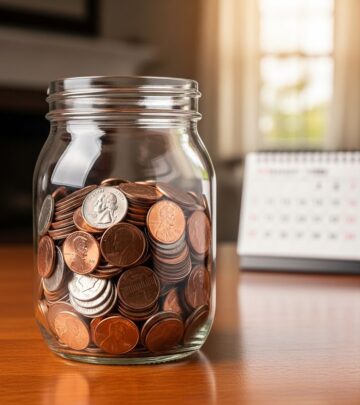
And saving $5 bills is much more lucrative than hoarding pennies.
The $5 challenge offers a straightforward path to growing your savings without demanding drastic lifestyle changes, intricate calculations, or severe spending restrictions. This method hinges on a single, intuitive action: whenever you receive a $5 bill as change from a cash transaction, set it aside immediately rather than spending it on impulse buys like coffee or fast food. Over time, these small deposits accumulate into meaningful sums. For instance, committing just two $5 bills per week results in $520 saved by year’s end. This approach leverages everyday transactions, turning routine change into a passive savings mechanism that feels almost effortless.
Unlike traditional savings plans that require monthly transfers or budgeting spreadsheets, the $5 challenge thrives on simplicity. It eliminates decision fatigue—no need to debate whether you can afford to save $20 this week. Instead, it capitalizes on windfalls from change, making saving habitual and low-pressure. Participants often report surprise at how quickly the money adds up, especially in cash-heavy environments like markets, convenience stores, or tip-based services. Financial experts note that such micro-habits foster long-term discipline, as they build momentum without overwhelming the saver.
To illustrate potential growth, consider a conservative scenario: if you snag one $5 bill weekly, that’s $260 annually. Double it to two, and you’re at $520. In a busier cash economy or with family members participating, totals can exceed $1,000 yearly. This isn’t speculative; real-world examples from savers show jars overflowing by December, funding holidays or emergencies seamlessly. The beauty lies in its scalability—participate casually for fun or intensify for aggressive goals.
How to Save Money With the 5 Dollar Challenge
The five dollar challenge boils down to discipline with change: every $5 bill from a cashier goes straight to savings, untouched. No math, no cutbacks—just redirect that Lincoln-faced bill from your wallet to a dedicated spot. Picture paying $17.50 for groceries with a $20; that $2.50 plus any $5 if overpaid stays out of circulation for spending.
- Step 1: Spot the Bill. Upon receiving change, isolate any $5 notes mentally or physically right away.
- Step 2: Stash Immediately. Transfer to your savings vessel before leaving the store to avoid temptation.
- Step 3: Track Optionally. Log the count weekly for motivation, or enjoy the end reveal.
Potential yields depend on cash usage frequency. Urban dwellers hitting delis or transit might collect 3-5 weekly, netting $780-$1,300 yearly. Rural or family scenarios amplify this. A simple calculator shows: at 2.5 bills/week (realistic average), savings hit $650. This beats penny hoarding by orders of magnitude—$520 from $5s dwarfs the $67 from pennies over 365 days.
Pro tip: Pair with cash-back apps or loyalty programs that issue $5 vouchers, treating them as ‘virtual change’ to save digitally. Consistency trumps volume; even sporadic participation yields results superior to inaction.
Where to Keep Your Money
Success demands separation: $5 bills must live apart from spendable cash. Traditionalists use jars, envelopes, or shoeboxes as ‘adult piggy banks,’ offering tangible progress via visual pile-up. A clear jar lets you watch savings swell, boosting dopamine hits that reinforce the habit.
- Jars or Boxes: Ideal for visual motivation; label ‘Challenge Fund’ for accountability.
- Envelopes: Portable, stackable; sort by month if tracking progress.
- Digital Equivalent: High-yield savings sub-account named ‘$5 Challenge’ for interest accrual.
For the surprise factor, avoid peeking—seal until goal date. Running tallies via app or notebook add gamification. Security matters: home safes or locked drawers prevent ‘borrowing.’ Once full, deposit en masse to bank, celebrating the milestone.
Participating in the Challenge When You Don’t Use Cash
Cashless lifestyles don’t disqualify you; adapt strategically. Simulate change from card swipes by estimating would-be cash scenarios. Example: $84.25 Target total with hypothetical $100 cash payment yields $15.75 back, including a $5—transfer $5 instantly via banking app.
Simplifications:
- Fixed Transfers: Move $5 per swipe, or per milestone (e.g., gas fill-up).
- Cash for Fun Spends: Reserve debit for essentials; cash for dining/shopping to generate real $5s.
- Apps & Alerts: Set reminders post-purchase; use rounding-up apps as complement.
Hybrid approach: cash envelope system for discretionary categories. Allocate weekly ‘fun cash,’ save resultant $5s. This curbs overspending while fueling the challenge. Digital natives report success equaling cash users via disciplined transfers.
Customizing the Five Dollar Challenge
Tailor for fit: if $5s are rare, pivot to coins, $1s, or $10s. Frequent $1 change? Save those—volume might surpass $5 scarcity. Coin jars build steadily; apps like Qapital automate.
| Variation | Pros | Cons | Est. Annual Savings (2/week) |
|---|---|---|---|
| $1 Bills | Abundant; easy start | Slower growth | $104 |
| Coins | No bill fatigue | Bulky storage | Varies ($50-$200) |
| $10 Bills | Faster accumulation | Less frequent | $1,040 |
Match denomination to lifestyle: vendors giving $1s? Go ones. This flexibility ensures adherence.
Save More Money Beyond the $5 Challenge
Amplify with synergies:
- Insurance Check: Tools compare rates, saving ~$500/year.
- Debt Consolidate: Loans cut interest.
- Cards: 0% balance transfers pause interest.
- Gas Apps: $40/month off fuel.
Combine with pantry/no-spend challenges for compounded effects.
Have a Goal for Your Savings
Purpose fuels persistence: earmark for vacation, debt dent, or emergency fund. Visual boards or apps track toward $1,000 trip. Milestones like $250 trigger mini-rewards (non-$5). Financial goals align savings with reality—student loans shrink, wish lists fulfill.
Frequently Asked Questions (FAQs)
Q: How much can I realistically save with the $5 challenge?
A: Two bills weekly yields $520/year; more cash use boosts to $1,000+.
Q: What if I rarely get cash change?
A: Transfer $5 equivalents post-card purchase or use cash for fun spends.
Q: Is a jar secure enough?
A: For short-term, yes; deposit regularly to bank for FDIC protection.
Q: Can families participate together?
A: Absolutely—pool $5s for shared goals like family vacations.
Q: Does it work with high-yield savings?
A: Yes; deposit monthly for compound interest gains.
References
- The $5 Challenge Is a Low-Effort Way to Build Your Savings — The Penny Hoarder. 2024. https://www.thepennyhoarder.com/save-money/five-dollar-challenge/
- 5 Money-Saving Challenges That’ll Help You Bank More Cash — The Penny Hoarder. 2024. https://www.thepennyhoarder.com/save-money/money-saving-challenges/
- The $5 Savings Challenge – Money Morning Routine — YouTube (Money Morning Routine). 2024-11-26. https://www.youtube.com/watch?v=eYwvCs_FtZA
- Got a Five? This $5 Bill Savings Plan Will Help You Save Thousands — Nasdaq. 2024. https://www.nasdaq.com/articles/got-a-five-this-$5-bill-savings-plan-will-help-you-save-thousands-no-math-required
Similar Articles








Read full bio of Sneha Tete