Five Determinants of Demand: Examples and Formula
Master the key factors influencing consumer purchasing decisions and market demand dynamics.

Understanding the Five Determinants of Demand
Demand represents the quantity of goods or services that consumers are willing and able to purchase at various price levels during a specific period. However, demand is not determined solely by price. Multiple factors influence consumer purchasing decisions and shape the overall market demand. Understanding these determinants is crucial for businesses, economists, and policymakers seeking to predict market trends and consumer behavior. The five primary determinants of demand are price, consumer income, prices of related goods, consumer preferences and tastes, and consumer expectations. Each of these factors plays a distinct role in influencing how much consumers want to buy at any given time.
What is Demand?
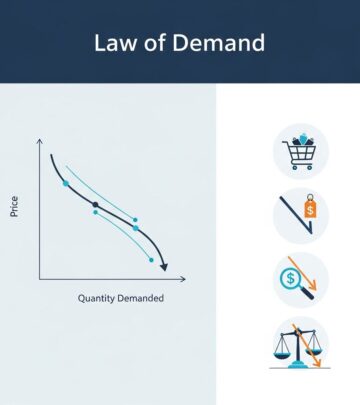
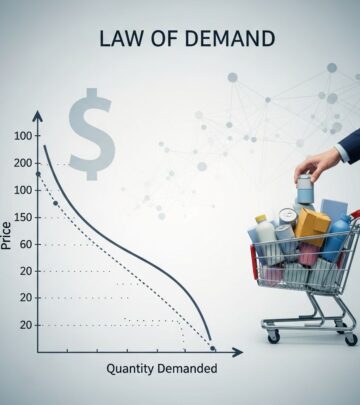
Demand is fundamentally about the relationship between the price of a product and the quantity consumers wish to purchase. The law of demand states that as the price of a good increases, the quantity demanded decreases, assuming all other factors remain constant. This inverse relationship is one of the most fundamental principles in economics. Demand is typically illustrated through a demand curve, which visually represents how quantity demanded changes in response to price changes. However, demand extends beyond just this price-quantity relationship; it encompasses the entire set of circumstances that determine consumer purchasing behavior.
The concept of demand combines both willingness and ability to purchase. A consumer might desire a luxury yacht, but without the financial means to purchase it, this desire does not constitute effective demand in economic terms. True demand requires both the desire for a product and the financial capacity to acquire it at the prevailing market price.
The Five Key Determinants of Demand Explained
1. Price of the Product
Price is the most direct and immediate determinant of demand. When the price of a product decreases, consumers tend to purchase more of it, and when the price increases, they tend to purchase less. This relationship is known as the law of demand and operates assuming all other factors remain constant. For example, when smartphone manufacturers like Apple reduce prices on older iPhone models, consumer demand for those devices increases significantly. Conversely, if a luxury brand increases its prices substantially, demand may decrease as consumers seek more affordable alternatives.
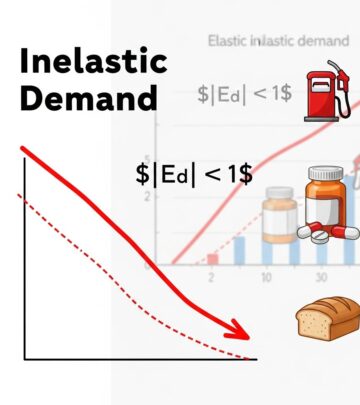
The sensitivity of demand to price changes varies across different products. Some products, called price-elastic goods, experience significant changes in demand when prices change. Others, called price-inelastic goods, show relatively stable demand despite price fluctuations. Necessities like salt or insulin tend to be price-inelastic because consumers need them regardless of price, while luxury goods tend to be more price-elastic.
2. Consumer Income
The income level of consumers is a powerful determinant of demand. Generally, as consumer income increases, the demand for goods and services also increases. This relationship holds particularly true for normal goods—products that consumers purchase more of when their incomes rise. When people receive salary increases, inherit wealth, or experience improved financial circumstances, they typically increase their consumption of many products.
However, the relationship between income and demand is not uniform across all products. For inferior goods, the opposite relationship exists—as income increases, demand for these products decreases. Examples include store-brand products, used cars, or low-cost meal options like instant noodles. As consumers become wealthier, they tend to abandon these lower-quality alternatives in favor of premium options. Understanding whether a product is a normal or inferior good is essential for predicting how demand will respond to income changes.
Income changes can stem from various sources including employment changes, business earnings, investment returns, or government transfers. The multiplier effect of income changes means that when a significant portion of the population experiences income growth, it can trigger broader shifts in market demand across multiple industries.
3. Prices of Related Goods and Services
The prices of related products significantly influence the demand for a specific good. Related goods fall into two categories: substitutes and complements. Understanding this distinction is crucial for demand analysis.
Substitute Goods: These are products that consumers can use interchangeably to satisfy similar needs. When the price of one substitute increases, demand for the other substitute typically increases. For instance, if the price of coffee increases, consumers may switch to tea, increasing tea demand. Similarly, if beef prices rise significantly, consumers might purchase more chicken or fish. Substitute goods create a competitive relationship in consumer choice.
Complementary Goods: These are products typically consumed together. When the price of one complement decreases, demand for both products tends to increase. Classic examples include hot dogs and hot dog buns, or cars and gasoline. If the price of automobiles decreases substantially, demand for gasoline and car maintenance services typically increases as well. Conversely, if one complement becomes expensive, it can reduce demand for the other.
Businesses must carefully monitor prices of related goods because changes in these prices can dramatically affect their own product demand, independent of any changes in their own pricing strategy.
4. Consumer Preferences and Tastes
Consumer preferences and tastes represent the subjective desires and aesthetic choices that drive purchasing decisions. These preferences are shaped by culture, tradition, fashion trends, advertising, social influences, and personal values. A shift in consumer preferences can dramatically alter demand for specific products without any change in price or income.
Fashion and trend cycles exemplify how preferences drive demand. The demand for certain clothing styles, music genres, or entertainment formats fluctuates dramatically as preferences evolve. For example, the surge in demand for health-conscious foods and fitness services reflects a significant shift in consumer preferences toward wellness. Similarly, the explosion in demand for streaming services reflects changing preferences away from traditional cable television and movie theaters.
Preferences can also be influenced by health consciousness, environmental concerns, ethical considerations, and lifestyle choices. The growing demand for organic and sustainable products reflects consumers’ changing preferences toward environmentally friendly options. Marketers and businesses invest heavily in shaping and understanding these preferences because favorable shifts in taste can boost demand substantially.
5. Consumer Expectations
Expectations about future economic conditions, price changes, and personal circumstances significantly influence current purchasing decisions. Consumer expectations create a forward-looking component to demand that extends beyond immediate market conditions.
Price Expectations: If consumers expect prices to increase in the future, they may increase current demand to avoid paying higher prices later. This phenomenon is particularly evident before announced price increases or during inflationary periods. Conversely, if consumers expect prices to decline, they may defer purchases, reducing current demand. During seasonal sales events, consumers knowingly time their purchases to take advantage of expected price reductions.
Income Expectations: Expectations about future income changes influence current consumption patterns. Workers anticipating salary increases or bonuses may increase current spending, while those fearing job loss may reduce consumption. Consumer confidence indices that measure these expectations are important economic indicators closely watched by policymakers and investors.
Economic Outlook: Broader expectations about economic conditions affect overall demand. During economic booms when consumers are optimistic, demand tends to increase. During recessions or when pessimism prevails, consumers reduce spending, decreasing demand across many sectors.
The Demand Curve and Function
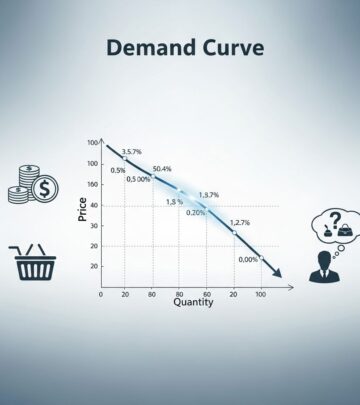
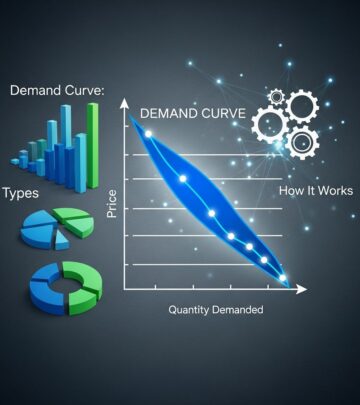
The demand curve is a graphical representation of the relationship between price and quantity demanded, typically shown as a downward-sloping line. The demand function mathematically expresses this relationship, often written as:
Qd = a − bP
Where Qd represents quantity demanded, P represents price, ‘a’ represents the intercept reflecting base demand, and ‘b’ represents the slope coefficient showing price sensitivity. Changes in the five determinants of demand shift the entire demand curve rather than moving along it. A rightward shift indicates increased demand, while a leftward shift indicates decreased demand.
Distinguishing Between Different Types of Demand
Economists recognize several types of demand based on different contexts and perspectives:
Price Demand: This refers to the quantity of goods consumers will purchase at different prices during a specific period, holding other factors constant. Price demand analysis is fundamental to understanding individual consumer behavior and forms the basis of demand curves.
Income Demand: This reflects how quantity demanded changes across different income levels. Understanding income demand helps businesses segment markets and position products for different consumer groups.
Cross Demand: This measures how demand for one product responds to price changes in related products—both substitutes and complements. Cross-demand elasticity is crucial for predicting competitive dynamics and strategic business decisions.
Direct Demand: Products with direct demand satisfy consumer wants immediately and directly. Most consumer goods like food, clothing, and entertainment have direct demand.
Derived Demand: This refers to demand for inputs and resources needed to produce final consumer goods. For example, demand for steel is derived from demand for automobiles and construction. Industries with derived demand are highly dependent on the demand for their downstream products.
Practical Applications and Examples
Understanding determinants of demand has practical applications across industries. Consider the automobile industry: when interest rates drop (affecting consumer income expectations), vehicle demand typically increases. Car manufacturers anticipate this and adjust production accordingly. Similarly, when fuel prices rise, demand for fuel-efficient and hybrid vehicles increases, reflecting both price changes for complements and changing consumer preferences.
In the technology sector, consumer preferences and expectations drive enormous demand fluctuations. When a new smartphone is announced, expectation effects drive demand for current models downward as consumers anticipate the new features. Conversely, price reductions on previous models increase demand.
Restaurants demonstrate how multiple determinants interact. During economic downturns (income effect), demand for fine dining decreases while demand for casual restaurants remains stable. When new health trends emerge (preference effect), demand for healthy menu options increases. When a competitor opens nearby (substitute effect), demand may shift between establishments.
How These Determinants Interact
The five determinants rarely operate in isolation. Their effects interact and compound. For instance, during an economic expansion, consumers experience rising incomes (determinant 2), growing confidence about future earnings (determinant 5), and often shifting preferences toward premium products (determinant 4). These effects combine to create substantial demand growth. Conversely, during recessions, declining incomes, negative expectations, and shifting preferences all reduce demand simultaneously, creating pronounced economic downturns.
Frequently Asked Questions
Q: Why is price not the only determinant of demand?
A: While price significantly influences quantity demanded, consumer decisions depend on multiple factors. Income, preferences, expectations, and related goods’ prices all shape purchasing behavior independently of price changes. Ignoring these factors leads to incomplete demand predictions.
Q: What is the difference between a change in demand and a change in quantity demanded?
A: A change in quantity demanded results from price changes, represented by movement along the demand curve. A change in demand results from changes in the five determinants, shifting the entire demand curve left or right.
Q: How do consumer expectations affect current demand?
A: If consumers expect prices to rise or incomes to increase, they may increase current purchases. If they expect prices to fall or face income uncertainty, they typically reduce current spending. Expectations create forward-looking demand patterns.
Q: Why do some products show greater demand sensitivity to income changes?
A: Luxury goods and normal goods show strong positive income relationships—demand increases substantially with income. Necessities show weaker relationships because consumers buy them regardless of income. Inferior goods show negative relationships as higher income allows consumers to purchase better alternatives.
Q: How can businesses use demand determinant knowledge?
A: Businesses can forecast demand by monitoring these determinants, adjust pricing strategies considering substitute and complement effects, time product launches based on preference trends, and position inventory before expected demand shifts driven by income or expectation changes.
References
- Demand and the Determinants of Demand — Khan Academy. Accessed November 2025. https://www.khanacademy.org/economics-finance-domain/ap-macroeconomics/basic-economics-concepts-macro/demand/a/lesson-summary-demand-and-the-determinants-of-demand
- Other Determinants of Demand: Principles of Microeconomics — eCampus Ontario. Accessed November 2025. https://ecampusontario.pressbooks.pub/uvicmicroeconomics/chapter/3-3-other-determinants-of-demand/
Similar Articles








Read full bio of medha deb