Fiscal Policy: Types, Objectives, and Tools Explained
Master fiscal policy: Learn how governments use spending and taxes to manage economic growth and stability.
What is Fiscal Policy?
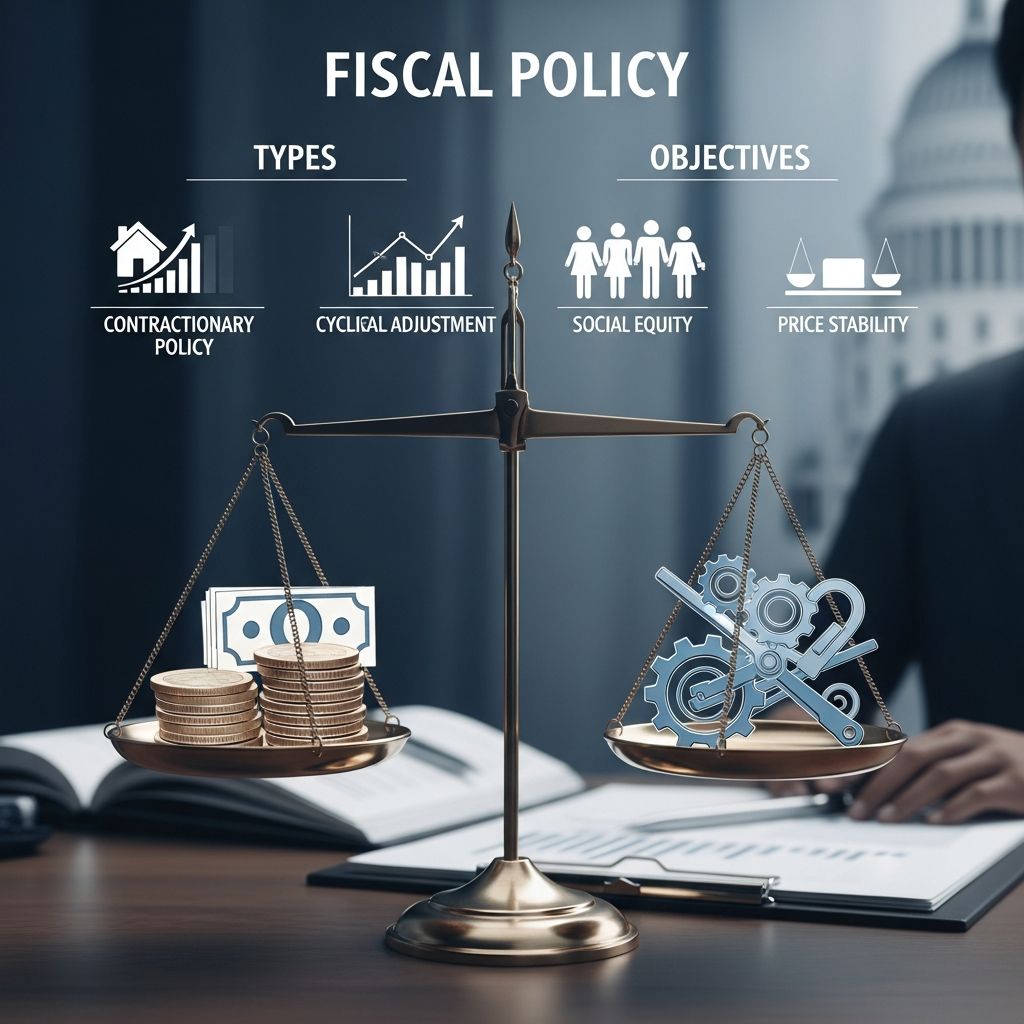
Fiscal policy refers to the government’s strategic use of taxation and spending to influence the overall level of economic activity. It is one of the most powerful macroeconomic tools available to policymakers, allowing governments to manage the economy and achieve desired economic outcomes such as promoting growth, reducing unemployment, and controlling inflation. When the government decides on the goods and services it purchases, the transfer payments it distributes, or the taxes it collects, it is engaging in fiscal policy.
The primary goal of fiscal policy is to achieve macroeconomic objectives, including price stability, full employment, and sustainable economic growth. By adjusting the budget balance through spending and revenue changes, fiscal policy influences broader economic conditions and shapes the economic landscape for businesses and households alike.
Understanding the Components of Fiscal Policy
Fiscal policy operates through three fundamental pillars: government spending, taxation, and transfer payments. Understanding these components is essential to comprehend how fiscal policy works in practice.
Government Spending
Government spending represents the total amount the government expends on products and services. This includes investments in infrastructure, education, healthcare, and defense. Government spending can be utilized to boost economic growth, and by assisting people and companies during economic downturns, it helps stabilize the economy. When the government spends money, it directly increases aggregate demand in the economy, creating a ripple effect throughout the business community.
Taxation
Taxes comprise money that individuals and organizations hand over to the government. Governments use taxes to fund public goods and services while also helping to lessen economic inequality. By raising taxes, the government can discourage consumer spending and limit inflation, effectively cooling an overheating economy. When the government taxes people, they have less money to spend, which leads to a decrease in demand. However, tax increases can also benefit the economy if the government uses the revenue to finance infrastructure improvements or programs that promote economic expansion.
Transfer Payments
Transfer payments are government programs that redistribute income to individuals and households. These include unemployment insurance, social security, welfare benefits, and subsidies. Transfer payments increase households’ disposable income without directly involving a good or service, thus stimulating consumer spending during economic downturns.
Discretionary vs. Mandatory Spending
The two main components of fiscal policy are discretionary spending and mandatory spending. Discretionary spending is the portion of the budget set each year by the legislative branch, allowing for flexibility in response to changing economic conditions. Mandatory spending, on the other hand, is the portion set by law and not subject to annual review, including programs like Social Security and Medicare.
Main Objectives of Fiscal Policy
Fiscal policy serves multiple interconnected objectives that support overall economic health and stability:
Promoting Economic Growth
One of the primary objectives of fiscal policy is to encourage healthy, long-term economic growth. Governments often use fiscal tools to expand the economy during periods of sluggish growth or recession, thereby increasing overall economic output and raising living standards.
Stabilizing Prices and Controlling Inflation
Fiscal policy promotes economic stability by working to stabilize prices and protect the dollar’s purchasing power. During inflationary periods, contractionary fiscal policy can reduce aggregate demand, thereby controlling price increases and maintaining currency value.
Achieving Full Employment
Governments employ fiscal policy to reduce unemployment and achieve full employment. Through expansionary spending or tax cuts, fiscal policy can stimulate job creation and reduce joblessness during economic downturns.
Reducing Poverty and Income Inequality
Fiscal policy tools, particularly transfer payments and progressive taxation, help redistribute wealth and reduce poverty. By targeting government spending toward disadvantaged populations and using progressive tax systems, governments can address income inequality.
Types of Fiscal Policies
Fiscal policies are generally categorized into two main types based on their economic impact: expansionary and contractionary fiscal policies.
Expansionary Fiscal Policy
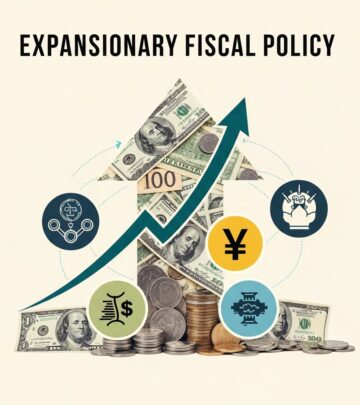
Expansionary fiscal policy refers to the use of government expenditure, transfer payments, or tax reductions to promote economic growth. This policy is frequently employed when there is a lack of demand in the economy during a recession or downturn. An expansionary fiscal strategy aims to boost economic growth and aggregate demand by injecting more money into the economy.
Examples of expansionary fiscal policy include:
- Increasing government investment in infrastructure projects
- Offering unemployment insurance and welfare benefits
- Lowering taxes for individuals and businesses
- Increasing government hiring and public sector employment
When the government implements expansionary fiscal policy by increasing spending or cutting taxes while keeping the other constant, it raises aggregate demand directly. If tax cuts are implemented, households’ disposable income rises, and they spend more on consumption, which further raises aggregate demand.
Contractionary Fiscal Policy
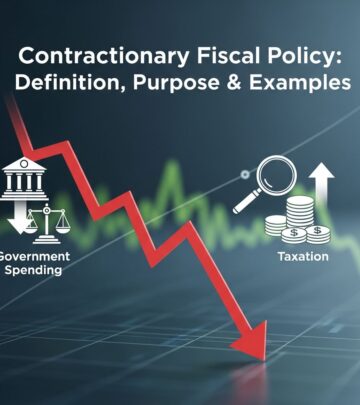
Contractionary fiscal policy is employed by the government to decrease the economy’s overall demand by utilizing tax increases, reductions in transfer payments, or spending cuts. This strategy is frequently employed during periods of economic growth to prevent inflation or cool an overheated economy. The contractionary fiscal policy seeks to lower both inflation and overall demand.
Examples of contractionary fiscal policy include:
- Reducing government spending on non-essential programs
- Cutting transfer payments like subsidies or social welfare programs
- Raising taxes on individuals or corporations
- Reducing government employment
Tools of Fiscal Policy
Governments employ three primary fiscal policy instruments to influence economic activity: taxation, government spending, and transfer payments. By changing the amount of money flowing through the economy, governments can utilize these tools to affect overall economic performance.
Taxation as a Fiscal Tool
Taxation is one of the most direct fiscal policy tools. Governments can increase or decrease taxes to influence consumer spending and investment. Lower taxes increase disposable income, encouraging consumption and investment, while higher taxes reduce disposable income, decreasing consumption. Tax policy can also be targeted toward specific sectors or income groups to achieve particular economic objectives.
Government Spending as a Fiscal Tool
Government expenditures on goods and services directly influence aggregate demand. Increasing government spending stimulates the economy during recessions, while decreasing spending helps control inflation during economic booms. Government spending can target infrastructure, education, healthcare, or defense, each with different multiplier effects on the economy.
Transfer Payments as a Fiscal Tool
Transfer payments function as indirect fiscal policy tools that redistribute income and influence aggregate demand. Increasing transfer payments during recessions supports household income and consumption, while decreasing them during booms helps control inflation.
Fiscal Policy and Economic Impact
The methodology of fiscal policy involves identifying meaningful and relevant factors such as potential returns, risk, liquidity, and tax implications, then assigning weights to each factor to prioritize trade-offs. For instance, the government may increase expenditures and lower taxes to boost economic growth during a recession. The government may cut spending and raise taxes to stop inflation during an economic boom.
Short-Term Effects
The most immediate effect of fiscal policy is to change the aggregate demand for goods and services. A fiscal expansion raises aggregate demand through two channels: first, if the government increases its purchases but keeps taxes constant, it increases demand directly; second, if the government cuts taxes or increases transfer payments, households’ disposable income rises, and they spend more on consumption.
Long-Term Effects
Fiscal policy affects the output level in the long run because it influences the country’s saving rate. A fiscal expansion entails a decrease in government saving, which means the country will either invest less in new plants and equipment or increase the amount it borrows from abroad, both leading to consequences in the long term. Additionally, expansionary fiscal policy today imposes an additional burden on future taxpayers due to increased government debt.
Tight vs. Loose Fiscal Policy
Fiscal policy can be characterized as either tight (contractionary) or loose (expansionary) based on the relationship between government revenue and spending. When revenue exceeds expenditures, the government budget is in surplus, and fiscal policy is considered tight or contractionary. When spending exceeds revenue, the budget is in deficit, and fiscal policy is considered loose or expansionary.
Who Implements Fiscal Policy?
Usually, the government or the legislative branch is in charge of fiscal policy. The treasury department or the finance ministry is often responsible for creating and carrying out fiscal policy. The government and the central bank may share responsibilities for fiscal policy in some nations, though fiscal policy typically remains separate from monetary policy, which is controlled by central banks.
Fiscal Policy vs. Monetary Policy
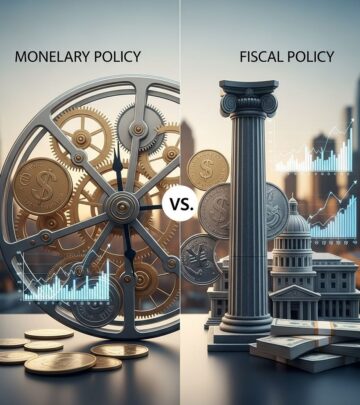
While fiscal policy involves government spending and taxation, monetary policy involves the central bank’s control of money supply and interest rates. Fiscal policy is implemented by the legislative and executive branches, while monetary policy is implemented by the central bank. Both tools aim to manage the economy but operate through different mechanisms and institutions.
Frequently Asked Questions
Q: What is the primary purpose of fiscal policy?
A: The primary purpose of fiscal policy is to achieve macroeconomic objectives including price stability, full employment, and economic growth, while also managing inflation and reducing poverty.
Q: How does expansionary fiscal policy affect the economy?
A: Expansionary fiscal policy increases aggregate demand by boosting government spending or reducing taxes, leading to higher economic output, job creation, and potentially higher prices during strong growth periods.
Q: When should a government use contractionary fiscal policy?
A: Governments should use contractionary fiscal policy during periods of economic growth and inflation to cool down an overheated economy and prevent prices from rising too rapidly.
Q: What are the main tools of fiscal policy?
A: The three main tools of fiscal policy are taxation, government spending, and transfer payments, which governments use to influence the level of economic activity.
Q: How does fiscal policy affect long-term economic growth?
A: Fiscal policy affects long-term growth by influencing the national saving rate, investment levels, and government debt, which can impact future productivity and living standards.
Q: Can fiscal policy cause crowding out?
A: Yes, when the government runs a deficit and issues bonds to finance spending, it competes with private borrowers for funds, potentially raising interest rates and reducing private investment—a phenomenon called crowding out.
References
- Fiscal policy – What is it, types, components, working — POEMS. Accessed November 29, 2025. https://www.poems.com.sg/glossary/financial-terms/fiscal-policy/
- Fiscal Policy – (Principles of Macroeconomics) — Fiveable. Accessed November 29, 2025. https://fiveable.me/key-terms/principles-macroeconomics/fiscal-policy
- Lesson summary: Fiscal policy (article) — Khan Academy. Accessed November 29, 2025. https://www.khanacademy.org/economics-finance-domain/ap-macroeconomics/national-income-and-price-determinations/fiscal-policy-ap/a/lesson-summary-fiscal-policy
- Fiscal Policy — Econlib, David N. Weil. Accessed November 29, 2025. https://www.econlib.org/library/Enc/FiscalPolicy.html
- Introduction to U.S. Economy: Fiscal Policy — Congress.gov. Accessed November 29, 2025. https://www.congress.gov/crs-product/IF11253
Similar Articles








Read full bio of Sneha Tete