First-Time Tax Filing Guide 2026: Easy Step-By-Step Checklist
Master your initial tax return with this comprehensive 2026 guide, covering documents, deadlines, methods, and tips for beginners to secure refunds effortlessly.
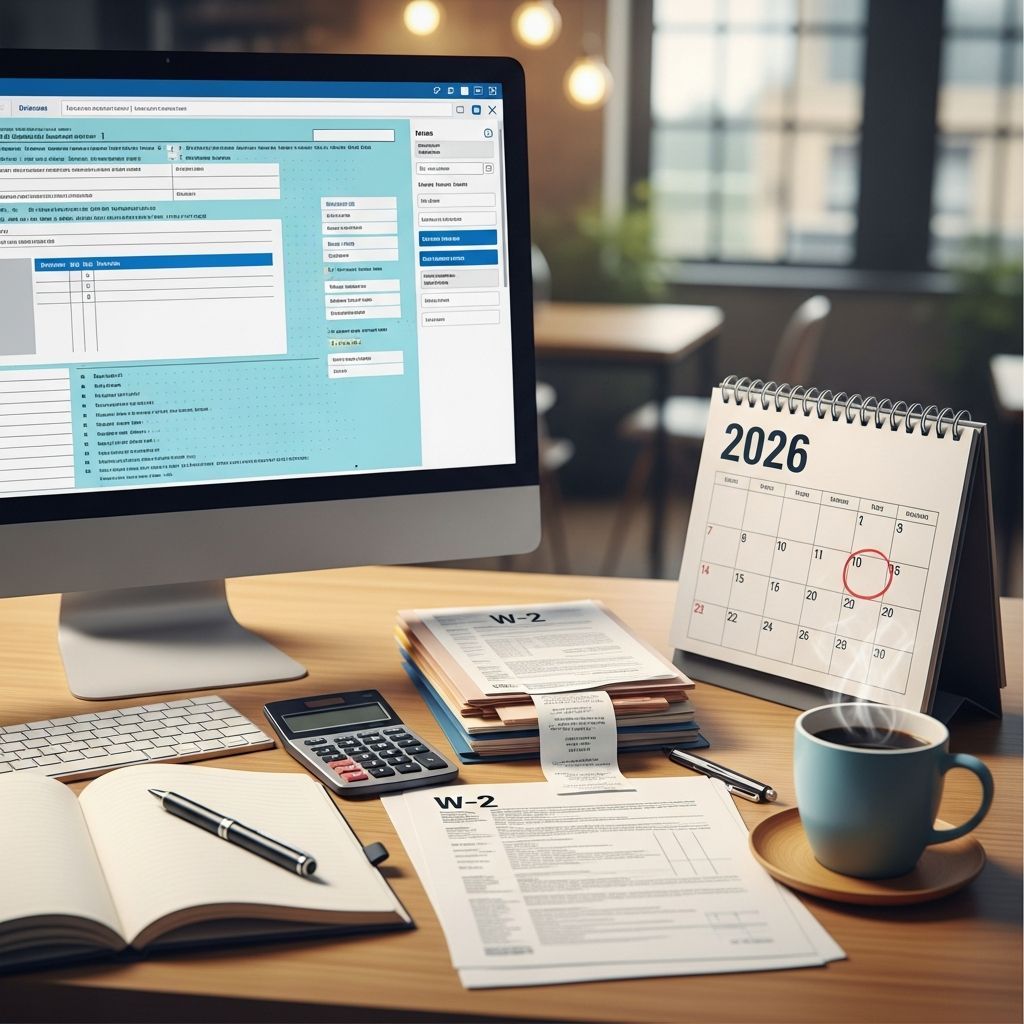
Navigating your first tax return can feel overwhelming, but with proper preparation, it becomes a straightforward process that often results in a refund. This guide outlines everything beginners need for the 2026 filing season, covering document collection, deadlines, filing options, and optimization strategies.
Essential Documents to Collect Before Starting
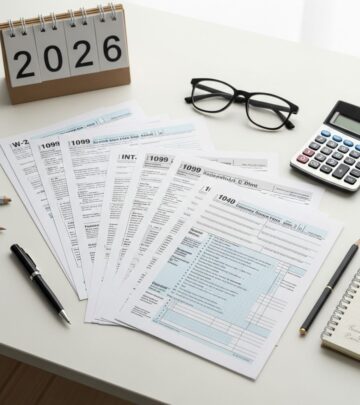
Gathering paperwork is the foundation of accurate tax filing. Start early to avoid last-minute stress, as forms like W-2s from employers typically arrive by late January.
- W-2 forms from all employers, detailing wages and withheld taxes.
- 1099 series for freelance work (1099-NEC/MISC), interest (1099-INT), dividends, or gig economy income (1099-K).
- Social Security numbers or ITINs for yourself, spouse, and dependents, plus government-issued photo ID.
- Records for deductions: IRA/HSA contributions, student loan interest, mortgage interest (Form 1098), property taxes, charitable donations, and medical expenses exceeding 7.5% of adjusted gross income.
- Health insurance forms like 1095-A for Marketplace coverage to reconcile premium tax credits.
- Prior-year return and any IRS notices for reference.
For self-employed individuals, reconcile bank statements, categorize expenses, and track mileage or home office costs. If you paid contractors $600+, ensure 1099-NEC forms were issued by early February. Major life events—births, marriages, home purchases—require additional records like birth certificates or closing statements.
Key Deadlines and Extension Options for 2026
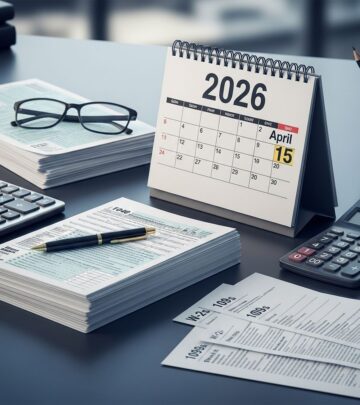
The IRS filing season opens January 2026, with most 2025 returns due by April 15, 2026. State deadlines align closely but check for disaster extensions.
| Event | Date | Details |
|---|---|---|
| Filing Season Start | January 2026 | IRS accepts returns; Free File from Jan 9. |
| Standard Deadline | April 15, 2026 | File and pay to avoid penalties. |
| Extension Request | By April 15, 2026 | Form 4868 extends filing to Oct 15; pay owed taxes to skip interest. |
| Estimated Payments | April 15, 2026 | First quarterly payment for 2026 tax year. |
Extensions grant six extra months for filing but not payment. Estimate and pay any balance due by April 15 via IRS Direct Pay or card to minimize penalties. Use your IRS online account to track balances and payments.
Choosing the Right Filing Method for Beginners
First-timers have three primary options: paper filing (slow and error-prone), tax software (user-friendly), or professional help. E-filing is fastest, with refunds in 21 days versus weeks for paper.
- IRS Free File: Free software for adjusted gross incomes under $79,000 (2025 threshold); available from Jan 9, 2026. Includes guided interviews.
- Tax Software like TurboTax: Asks life-event questions to auto-fill Form 1040; imports prior data for speed.
- Professional Preparer: Ideal for complex situations; vet via IRS directory, avoid unethical pros. Jackson Hewitt or H&R Block offer in-person support.
- Fillable Forms: Free IRS tool from Jan 26 for any income; basic but no guidance.
For military, use MilTax for free e-filing. Always opt for direct deposit with a bank account—IRS is phasing out paper checks.
Understanding Forms: From 1040 to Schedules
The core form is 1040 or 1040-SR (seniors). Attachments like Schedule 1 handle additional income/deductions; new Schedule 1-A covers 2025 changes.
- Form 1040: Reports income, deductions, credits, and tax owed/refund.
- Schedule A: Itemized deductions if exceeding standard ($14,600 single/$29,200 married for 2025).
- Schedule C: Self-employment profit/loss.
- New Deductions: No tax on tips, overtime, car loan interest; enhanced senior deduction via Schedule 1-A.
Trump Accounts: New child IRAs at trumpaccounts.gov. Gig workers report via 1099-K.
Maximizing Deductions and Credits for Bigger Refunds
Standard deduction simplifies, but itemizing saves more if qualified expenses are high. Common opportunities:
- Above-the-line: Student loan interest (up to $2,500), IRA contributions.
- Itemized: State/local taxes (SALT cap $10,000), mortgage interest, charity (up to 60% AGI), medical.
- Credits: Earned Income Tax Credit (EITC) for low/moderate income, Child Tax Credit ($2,000/child), education credits.
- Business: Home office, mileage (67¢/mile 2025), meals.
Track digital assets and gig income meticulously. Review for overlooked items like HSA contributions.
Common Mistakes to Avoid as a New Filer
Avoid these pitfalls for a smooth process:
- Missing income sources or dependents’ SSNs.
- Forgetting estimated payments if self-employed.
- Not double-checking math or e-file rejections.
- Ignoring state returns (file separately).
- Paper filing without certified mail proof.
Enable Identity Protection PIN via CP01A notice.
Special Considerations: Life Changes and New Rules
2026 brings updates: no tax on tips/overtime, senior boosts, child IRAs. Life events?
- Marriage/Birth: Update filing status, add dependents.
- Home Sale: Capital gains exclusion up to $250K/$500K.
- Gig/Self-Employed: Quarterly estimates via Form 1040-ES.
Use IRS.gov tools: Interactive Tax Assistant, withholding estimator.
Frequently Asked Questions (FAQs)
Do I need to file if I had no income?
Generally no, but check thresholds: $14,600 standard deduction for singles covers low earners.
What’s the fastest refund method?
E-file with direct deposit: 21 days.
Can I file before receiving all forms?
Wait for W-2/1099s; amend later if needed via Form 1040-X.
How do I choose single vs. married filing jointly?
Jointly often lowers tax; run scenarios in software.
What if I can’t pay by April 15?
Pay partial, set installment agreement via IRS.gov.
Final Preparation Steps
Create an IRS account for transcripts and balances. Test direct deposit info. For 2026, prioritize digital tools and early filing to beat the rush.
References
- What to Prepare for the 2026 Tax Season: A Complete Guide — HTB CPA. 2026. https://htbcpa.com/what-to-prepare-for-the-2026-tax-season-a-complete-guide/
- Tax Documents Checklist 2025-2026 — Jackson Hewitt. 2025. https://www.jacksonhewitt.com/tax-tools/free-document-checklist/
- IRS Announces First Day of 2026 Filing Season — Internal Revenue Service. 2026-01. https://www.irs.gov/newsroom/irs-announces-first-day-of-2026-filing-season-online-tools-and-resources-help-with-tax-filing
- How to File Taxes: A 2026 Tax Filing Guide — NerdWallet. 2026. https://www.nerdwallet.com/taxes/learn/tax-filing
- Get Ready to File Your Taxes — Internal Revenue Service. 2025. https://www.irs.gov/individuals/get-ready-to-file-your-taxes
- Filing 2025 Taxes in 2026: Your Go-To Guide — TurboTax Intuit. 2026. https://turbotax.intuit.com/tax-tips/tax-planning-and-checklists/filing-this-years-taxes-your-go-to-guide/L71Asyg9o
- Guide to Filing Your Taxes in 2026 — Consumer Financial Protection Bureau. 2026. https://www.consumerfinance.gov/consumer-tools/guide-to-filing-your-taxes/
Similar Articles








Read full bio of medha deb