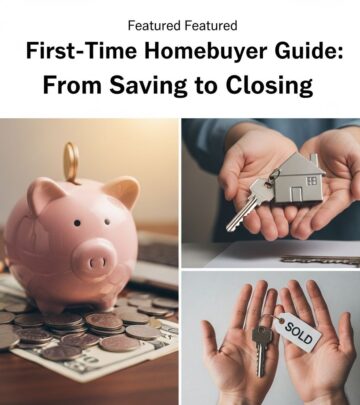
First-Time Homebuyer Guide: Steps to Homeownership
Navigate homeownership with confidence: Master finances, mortgages, and loans.

First-Time Homebuyer Guide: Your Step-by-Step Path to Homeownership
Buying your first home is one of the most significant financial decisions you’ll make in your lifetime. While the process can seem overwhelming, breaking it down into manageable steps makes it much more achievable. This comprehensive guide walks you through each essential phase of homeownership, from assessing your financial readiness to securing the right mortgage and exploring assistance programs designed specifically for first-time buyers.
Step 1: Assess Your Finances
Before you start house hunting, you need to understand your financial situation. A home represents the single largest purchase most people will make, and securing financing requires careful preparation. Your financial assessment involves examining three critical components: your credit score, your debt-to-income ratio, and your savings capacity.
Understanding Your Credit Score
Your credit score directly influences the mortgage interest rates you’ll qualify for, making it one of the most important factors in your homebuying journey. A higher credit score — ideally 760 or above — unlocks more favorable loan terms that can save you thousands of dollars over the life of your mortgage. However, don’t despair if your score isn’t perfect; you can still qualify for financing with lower scores. Conventional loans typically require a minimum credit score of 620, while Federal Housing Administration (FHA) loans may accept scores as low as 500. Keep in mind that lower scores often result in higher interest rates and may require a larger down payment, making credit improvement before applying highly beneficial.
To check your credit standing, pull a free copy of your credit report from AnnualCreditReport.com. The valuable feature of this official resource is that you can access your report every week without any cost, allowing you to monitor changes and identify errors that might be dragging down your score.
Calculating Your Debt-to-Income Ratio
Lenders use your debt-to-income (DTI) ratio to assess your ability to manage mortgage payments alongside other financial obligations. This calculation divides your total monthly debt payments by your gross monthly income. The ideal housing expense ratio — including your mortgage payment, property taxes, and homeowners insurance — should not exceed 28 percent of your gross monthly income. When including all monthly debt obligations alongside housing costs, aim to keep this figure at or below 36 percent.
For conventional loans, the most popular mortgage type, many lenders have a maximum DTI threshold of 43 percent. Some lenders may stretch this to 50 percent if you have compensating factors, such as substantial savings or significant assets. Higher DTI ratios typically result in less favorable interest rates, so managing this metric carefully is essential for securing the best loan terms.
Evaluating Your Savings
Beyond your regular income and existing debt, you’ll need to demonstrate sufficient savings for several homebuying expenses. Closing costs typically range from 2 to 5 percent of your home’s purchase price, representing a substantial sum depending on the property value. Additionally, you’ll need to provide an earnest money deposit — usually 1 percent of the purchase price — that accompanies your initial offer to demonstrate your serious intent.
Plan ahead for additional expenses beyond the down payment and closing costs. Set aside funds for moving expenses, furniture, and potential repairs or updates you’d like to make to the home. Having these reserves demonstrates financial responsibility to lenders and provides a buffer against unexpected expenses.
Step 2: Decide Which Type of Mortgage to Get
The mortgage market offers numerous options, and selecting the right one depends on your financial situation, long-term plans, and risk tolerance. Your mortgage decision involves two primary considerations: the loan type and the rate structure, along with determining an appropriate loan term.
Fixed-Rate Versus Adjustable-Rate Mortgages
Fixed-rate mortgages provide stability and predictability because your interest rate remains constant throughout the loan term. This structure works best if you plan to remain in your home for an extended period, as you’ll always know your exact monthly payment. The peace of mind that comes with rate stability appeals to many first-time homebuyers.
Adjustable-rate mortgages (ARMs) feature an initial fixed-rate period, typically three to seven years, followed by adjustments based on market conditions. While ARM initial rates are often lower than fixed rates, the unpredictability of future payments makes this option riskier. ARMs can potentially save money for buyers who don’t plan to stay in a home long-term, as they can sell or refinance before rates adjust upward.
Selecting the Right Loan Term
Loan terms typically range from 15 to 30 years, with each offering distinct advantages and tradeoffs. Shorter-term loans, such as 15-year mortgages, feature lower interest rates but require substantially higher monthly payments. This reduces your budgetary flexibility but results in significantly lower overall borrowing costs and faster equity building.
The 30-year, fixed-rate mortgage remains the most popular choice among first-time homebuyers because it balances affordability with reasonable terms. The extended timeline means lower monthly payments, providing greater flexibility for managing other financial obligations while you build equity in your home.
Step 3: Get Quotes from At Least Three Mortgage Lenders
Mortgage interest rates vary considerably among lenders and change frequently — sometimes multiple times daily. Comparing offers from multiple lenders is one of the most essential steps in securing the best possible terms for your situation. Aim to gather rate quotes from at least three different lenders to ensure you’re getting a competitive offer.
How to Request Mortgage Quotes
Many lenders offer free quotes through their websites if you provide basic information such as your desired loan amount, down payment amount, and credit score range. If the lender doesn’t have an online tool, contact them directly to request a quote. When evaluating quotes, pay careful attention to all associated fees, as they significantly impact the true cost of borrowing.
Understanding the Difference Between Rate and APR
While evaluating quotes, don’t focus solely on the interest rate. Instead, examine the annual percentage rate (APR), which includes the interest rate plus all fees associated with the loan. A loan with a lower interest rate might actually cost more overall if it carries higher fees, making the APR a better comparison metric. This distinction is crucial for understanding the true cost of each mortgage option.
Remember that mortgage quotes are not final commitments. Your rate won’t be locked in until you officially request a rate lock from your chosen lender, typically done during the application process. Rate locks protect you from rate increases during your loan processing period, usually lasting 30 to 45 days.
Exploring First-Time Homebuyer Assistance Programs
Recognizing that affordability challenges prevent many qualified buyers from entering the housing market, various entities offer assistance programs specifically designed for first-time homebuyers. These programs can make a meaningful difference in your ability to purchase a home.
Lender-Based Programs
Many mortgage lenders offer specialized programs for first-time homebuyers that feature slightly discounted mortgage rates, minimal fees, and low-down or no-down payment options for qualifying borrowers. These programs acknowledge the challenges first-time buyers face and provide concrete assistance to make homeownership achievable.
Government and Local Assistance
Beyond lender programs, many state and local governments operate down payment and closing cost assistance initiatives. These programs typically offer low-interest-rate loans, deferred loans that you don’t repay until you sell the home, or even grants that don’t require repayment. Eligibility varies by location and income level, so exploring what’s available in your area is essential.
Popular First-Time Homebuyer Loan Programs
Several standardized mortgage programs cater specifically to first-time buyers and those with modest incomes:
Conventional 97 Mortgage: Backed by Fannie Mae and Freddie Mac, this government-sponsored program requires only 3 percent down and accepts credit scores as low as 620. Private mortgage insurance (PMI) is required until you build 20 percent home equity.
HomeReady Mortgage: Fannie Mae’s HomeReady program also requires just 3 percent down and includes PMI, though the insurance may be less expensive than traditional conventional loans.
Home Possible Mortgage: Freddie Mac’s equivalent to HomeReady, this program provides similar benefits and accessibility for first-time buyers.
HomeOne Mortgage: This Freddie Mac-backed option allows 3 percent down with PMI and is available exclusively to first-time homebuyers.
HomePath ReadyBuyer: For buyers interested in foreclosed properties, Fannie Mae offers this program with 3 percent closing cost assistance. Participation requires completing an online homebuyer education course.
Energy-Efficient Mortgage (EEM): This innovative option allows you to include the cost of home energy improvements — such as insulation, efficient HVAC systems, or double-pane windows — in your primary loan without requiring a larger down payment. Both conventional and government-backed options are available, and you’ll need a professional home energy assessment to qualify.
Minimum Down Payment Requirements by Loan Type
Down payment requirements vary significantly by loan type, giving you flexibility based on your savings capacity:
| Loan Type | Minimum Down Payment | Credit Score Minimum |
|---|---|---|
| Conventional (with assistance) | 1-3 percent | 620 |
| FHA Loan | 3.5 percent | 500+ |
| VA Loan | 0 percent (usually) | Varies |
| USDA Loan | 0 percent (usually) | 620 |
The 28/36 Rule: Your Financial Compass
A practical framework for budgeting your home purchase is the 28/36 rule. This guideline suggests that your housing expenses should not exceed 28 percent of your gross monthly income, while all monthly debt obligations combined should not exceed 36 percent. Using this rule as a starting point helps you set a realistic budget for your home purchase and ensures you’re not overextending yourself financially.
Creating Your Action Plan
As you prepare to buy your first home, focus your efforts on these foundational steps:
– Examine your financial situation thoroughly: Review your credit score, calculate your DTI ratio, assess your earnings, and evaluate your available savings.- Set a realistic budget: Determine how much you can comfortably afford including down payment and closing costs.- Check available assistance: Research first-time homebuyer programs in your area that might provide grants, low-interest loans, or closing cost assistance.- Shop with multiple lenders: Obtain quotes from at least three lenders to compare rates, fees, and terms.- Choose your loan type: Select between conventional, FHA, VA, or USDA loans based on your eligibility and financial situation.- Get pre-approved: Obtain mortgage pre-approval to strengthen your offer when you find the right property.
Frequently Asked Questions (FAQs)
Q: What credit score do I need to buy a home?
A: While you can qualify for an FHA loan with a credit score as low as 500, conventional loans typically require 620 or higher. A score of 760 or above qualifies you for the most favorable interest rates and terms.
Q: How much down payment do I need?
A: Down payment requirements vary by loan type. Conventional loans may require as little as 1-3 percent, FHA loans require 3.5 percent, and VA or USDA loans often require 0 percent. Many first-time homebuyer programs offer down payment assistance.
Q: What’s the difference between rate and APR?
A: The interest rate is just the cost of borrowing the money, while APR includes the interest rate plus all associated lender fees. APR provides a more accurate picture of the true cost of the loan.
Q: Should I get a 15-year or 30-year mortgage?
A: Most first-time homebuyers choose 30-year mortgages because they offer lower monthly payments and greater budgetary flexibility. Shorter terms have higher payments but lower overall interest costs.
Q: What assistance is available for first-time homebuyers?
A: Many lenders offer specialized programs with reduced rates and minimal fees. States and local governments provide down payment and closing cost assistance through grants and low-interest loans. Research programs in your specific area.
References
- First-Time Homebuyer Guide — Bankrate. 2025. https://www.bankrate.com/mortgages/first-time-homebuyer-guide/
- Guide to First-Time Homebuyer Loans and Programs — Bankrate. 2025. https://www.bankrate.com/mortgages/first-time-homebuyer-loans-and-programs/
- 10 Tips For First-Time Homebuyers — Bankrate. 2025. https://www.bankrate.com/mortgages/tips-for-first-time-home-buyers/
- First-Time Homebuyer Qualifications — Bankrate. 2025. https://www.bankrate.com/mortgages/first-time-homebuyer-explained/
- Guide To First-Time Homebuyer Grants — Bankrate. 2025. https://www.bankrate.com/mortgages/first-time-homebuyer-grants/
- 3 Percent Down Mortgages: A Guide to Your Options — Bankrate. 2025. https://www.bankrate.com/mortgages/3-percent-down-mortgage-guide/
- Buying A House In 2025: A Step-By-Step Guide — Bankrate. 2025. https://www.bankrate.com/real-estate/how-to-buy-a-house/
Similar Articles








Read full bio of Sneha Tete