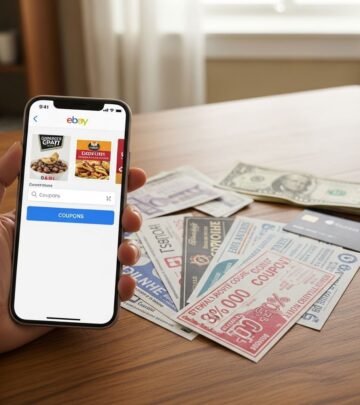
My First Extreme Couponing Experience: A Realistic Guide
Discover what really happens when you try extreme couponing for the first time and learn practical lessons from a real beginner's journey.

The television show Extreme Couponing captivated millions with its premise: shoppers walked into stores with carts piled high with hundreds of items, applied an overwhelming number of coupons at checkout, and walked away having saved 90% or more off their total bill. Some extreme couponers even received money back after applying their discounts. The allure was undeniable—imagine purchasing a shopping cart full of groceries, household items, and toiletries for just a few dollars. After falling in love with the idea of paying a little for a lot of stuff, I decided to try extreme couponing for myself—without doing any research. Here’s what I discovered about the reality of extreme couponing as a complete beginner.
Week 1: Building My Coupon Collection
I started my extreme couponing journey with pure enthusiasm and absolutely no strategy. I spent the rest of the week gathering the coupon inserts that arrived in the mail—Sunday editions typically contain the most valuable coupons and manufacturer deals. I also scoured store websites for sales, checking if Publix had a promotion on yogurt, whether Target was discounting lipstick, or if Walmart was slashing the price of cereal.
To keep track of all this information, I purchased a small notebook for $2 and scribbled down everything I wanted to remember. Keeping organized during this initial phase was crucial, even though I didn’t fully understand its importance yet. By the end of week one, my coupon pile had grown to just under 30 coupons. I decided to keep building my collection as I entered week two, convinced that the more coupons I accumulated, the better my savings would be.
However, my first shopping trip was disappointing. I used a 50-cent-off coupon for laundry detergent priced at $6.99 and a 55-cent-off coupon for toilet paper priced at $9.99. This transaction resulted in only a 6% savings—a far cry from the 90% bar set on the television show. Not thrilled with these results, I spent another hour clipping coupons from the weekday inserts and another two hours browsing store websites for sales. As week two came to a close, I was beginning to question whether couponing was truly for me.
Week 2: The Reality Check
The second week proved to be more challenging than the first. I realized that simply having coupons wasn’t enough—I needed a system. The random nature of my coupon collection meant I was spending significant time searching for deals that barely added up to meaningful savings. My initial investment of time was mounting, and my return was negligible.
I continued purchasing Sunday newspapers, each costing around $2 to $3, hoping to find better deals. I clipped coupons methodically, but without understanding store policies, deal stacking, or how to match sales with manufacturer coupons, I was essentially working blind. The reality was setting in: extreme couponing required far more strategy than I initially thought.
Despite the disappointing results, I pressed on. The promise of those television show transformations kept me motivated. Surely, if I just collected enough coupons and invested more time, I would start seeing the dramatic savings advertised on television.
Week 3: Accepting My Extreme Couponing Fate
By the third Sunday, my stockpile contained exactly two items: laundry detergent and toilet paper. I purchased another Sunday newspaper, clipped new coupons, and added them to my growing pile. At this point, I realized that my approach was fundamentally flawed. My stockpile was minimal, and my storage space was becoming cluttered.
Recognizing the need for better organization, I decided to invest in a coupon book to organize my findings by product type and expiration date. Lacking a coupon for a coupon book itself, I purchased one at Walmart for $6.96 and spent two hours carefully placing my coupons in the little slots. This organizational system helped me see exactly what I had and prevented coupons from expiring unused. However, this was yet another investment in both money and time without corresponding returns.
What I Learned From Trying Extreme Couponing
Extreme couponing is not impossible, but it does require hours of preparation and practice, a bit of investment and dedicated storage space—especially if you’re a newbie like me. After three weeks, I had sacrificed roughly 50 hours, $29.39 (for newspapers, a notebook, a coupon book and my two-item stockpile), and a good portion of my closet to finding, clipping and sorting coupons. And I’d saved $1.05.
The math was devastating. I had invested approximately 50 hours of my time plus $29.39 in materials to save just $1.05 on groceries. That equated to a return of approximately 3.6 cents per hour—far below minimum wage in any state. This was a critical moment of realization: extreme couponing, as shown on television, was not a realistic financial strategy for beginners without proper planning and knowledge.
The Gap Between Television and Reality
The show Extreme Couponing portrayed a highly edited, unrealistic version of couponing. Television producers selected the most dramatic transformations—people who saved 90% or received money back at checkout. These individuals typically had been couponing for years, had perfected their systems, and had extensive knowledge of store policies and deal-stacking techniques. The show did not highlight the hundreds of hours of learning, the failed transactions, or the misses along the way.
What I learned through my experience was that the television version and the reality of extreme couponing are vastly different. The show doesn’t show the exhaustion of hours spent clipping and organizing. It doesn’t show the embarrassment of a coupon being declined at checkout. It doesn’t show the trial-and-error process of learning which stores accept which coupons or how to properly stack deals.
Key Mistakes I Made as a Beginner
Not Reading Store Coupon Policies
I jumped into couponing without understanding individual store policies. Each retailer has different rules about how many coupons can be used per transaction, whether competitor coupons are accepted, and what types of coupons can be combined. Reading and understanding the coupon policy at every store you visit is essential. I should have printed out these policies and carried them with me to understand the parameters of what I could and couldn’t do.
Failing to Stack Deals Effectively
Deal stacking multiplies your savings by combining discounts from manufacturers, stores, competitors and rebate apps. It’s the best way to save the most money, but I didn’t understand this concept. I was using coupons in isolation rather than strategically combining them with sales and store promotions. This fundamental misunderstanding was the primary reason my savings were so minimal.
Not Doing the Math Beforehand
If you do your homework before shopping, you’ll be better prepared to evaluate your success and plan your purchases strategically. I should have taken time before each shopping trip to calculate exactly how much I would save and whether my purchases made financial sense. Making a list and doing some math before hitting the store can help you determine how much you can save and if your shopping list truly fits your grocery budget.
Buying Without a Clear Strategy
I was collecting coupons for items I didn’t necessarily need or want, simply because I had a coupon for them. This approach led to wasteful spending and a cluttered stockpile. Successful extreme couponing requires a clear strategy: identify the items you actually use and need, then find coupons for those specific products.
Essential Preparation for Beginning Extreme Couponing
Gather Your Supplies
If you want to use coupons here and there, minimal supplies are needed. But if you want to elevate your game to true extreme couponing, don’t rely on your ordinary inkjet printer. Invest in a laser printer to take advantage of the multitude of coupons you can find online and print at home. Additionally, you’ll need:
- A coupon organizer or binder system
- Scissors or a craft knife
- A notebook or spreadsheet for tracking deals
- Adequate storage space for your stockpile
Find Competitor Coupons
While evaluating competitor coupons used to mean taking the time to comb through newspaper circulars, the internet has come to your rescue. Some stores advertise that they accept competitor coupons; others don’t advertise it because it’s only available in certain markets. Figuring out your local stores’ policies is as easy as asking at the customer service counter. Always check online first for competitor coupons. Some stores are stingy about which coupons they put online, but you might be surprised to learn that even high-end grocery chains such as Whole Foods accept them.
Finding coupons online is fairly simple, though the selection can be overwhelming. Popular coupon websites include Couponaholic, Krazy Coupon Lady, Coupon Mom, Coupons.com, and Red Plum. Each site organizes information differently, so exploring several options helps you find the format that works best for your learning style.
Learn Deal Stacking
Deal stacking is where your real savings will come from. This strategy involves combining discounts from multiple sources: manufacturer coupons, store coupons, competitor coupons, and rebate apps. When executed properly, deal stacking can result in significant reductions from your total bill.
Be willing to mix up brands, but stick with the quality you’re comfortable with. You can’t have brand loyalty and expect couponing success when you’re trying to stack the most extreme coupons. However, this doesn’t mean settling for poor quality. It means being flexible about which brands you purchase based on where the best deals are located.
Do the Math
Using a coupon here or there can feel good, but making a list and doing some math before you hit the store can help you determine how much you can save. If you do your homework, you’ll be better prepared to evaluate your success. After each shopping trip, take a few moments to review your haul. Did you make any mistakes or learn any lessons? Did your total come to what you expected to spend?
If you’re off by more than a dollar, something needs investigation. Check your receipt against your initial math to learn how to save in the future. If your total is way off, verify that the cashier didn’t miss any of your coupons. Cashiers are human and sometimes miss one or two. Many stores have no problem adding the coupon after the sale is complete and refunding you the value of the coupon. Simply stop by the customer service desk and ask for help.
Getting Organized for Success
Get organized before you get to the register. Find an empty aisle of the store to sort through your coupons and check your list. Every cashier has a different system for scanning coupons, so your only rule here is to be observant and ask if you don’t see something scan through properly.
Organization systems can include binders with plastic sleeves sorted by category, filing boxes with dividers, or digital coupon apps organized by expiration date. The specific system matters less than having one that works for you and that you’ll actually use consistently.
Realistic Expectations for Beginners
Based on my experience, beginners should expect the following:
| Factor | Expected Timeframe | Realistic Result |
|---|---|---|
| Initial time investment (weeks 1-3) | 40-60 hours | 5-15% savings on purchases |
| Initial financial investment | $25-$50 | Organizational supplies and newspapers |
| Learning curve | 2-3 months | Understanding store policies and deal stacking |
| Savings improvement | 3-6 months with practice | 20-50% savings on purchases |
Common Couponing Mistakes to Avoid
Beyond my own errors, there are several well-documented couponing mistakes beginners should avoid:
- Letting coupons change your healthy diet: One problem with extreme couponing is the temptation to buy something just because you could save money on it. Avoid purchasing unhealthy items simply because you have high-value coupons for them.
- Using coupons for large sizes unnecessarily: You often get a much lower unit-cost using coupons for the smallest qualifying sizes. Buying a large tube of toothpaste with a coupon doesn’t necessarily save you more than buying a small size.
- Buying more expensive brands: Coupons can easily tempt you to buy more expensive brands that remain more expensive even after the discount. If the store brand sells for just $1.25 and tastes the same, you’re overspending even with a 50-cent coupon on the name brand.
- Not checking expiration dates: Coupons expire, and expired coupons cannot be used. Organize your coupons by expiration date to ensure you use them before they become worthless.
- Ignoring store limits: Many stores have limits on how many of a single coupon can be used per transaction. Understanding these limits prevents embarrassment at checkout.
The Bottom Line
Extreme couponing is not impossible, but it requires significant time investment, careful planning, and a genuine commitment to learning the strategies that work. The television show presents an unrealistic, highly edited version of couponing that doesn’t represent the typical beginner’s experience.
For someone just starting out, the key is to begin slowly, learn the basics, and gradually build your skills and stockpile. My experience taught me that jumping in without research and strategy is counterproductive. Success requires understanding store policies, learning deal-stacking techniques, getting organized, and doing the math beforehand.
If you’re willing to invest the time and effort to learn the systems, extreme couponing can provide meaningful savings. However, set realistic expectations, prepare thoroughly, and remember that the dramatic television transformations are the exception rather than the rule. With patience and practice, you can develop couponing skills that lead to genuine savings for your household.
Frequently Asked Questions (FAQs)
Q: Is extreme couponing worth the time investment?
A: For beginners, the initial time investment may exceed your savings. However, once you learn the strategies and get organized, extreme couponing can provide 20-50% savings on groceries. It’s worth pursuing if you’re patient and willing to learn the system.
Q: How much money should I spend to get started with extreme couponing?
A: Budget $25-$50 for initial supplies including newspapers, a coupon organizer, scissors, and a notebook. You may want to invest in a laser printer eventually, but this is optional for beginners.
Q: Where can I find coupons online?
A: Popular coupon websites include Couponaholic, Krazy Coupon Lady, Coupon Mom, Coupons.com, and Red Plum. Each site offers different deals and organizational formats.
Q: How long does it take to become skilled at extreme couponing?
A: Most beginners need 2-3 months of consistent practice to understand store policies, deal stacking, and organizational systems. Significant savings typically improve after 3-6 months of practice.
Q: Can I achieve the 90% savings shown on television?
A: The television show represents highly edited, exceptional cases. Most realistic extreme couponers save 20-50% on their purchases. The 90% savings requires years of experience, specific product knowledge, and exceptional deal stacking ability.
Q: Do all stores accept competitor coupons?
A: No, not all stores accept competitor coupons. Check with your local stores’ customer service desk or review their policies online to understand what coupons they accept.
References
- Here’s How to Start Extreme Couponing Without Getting Overwhelmed — The Penny Hoarder. https://www.thepennyhoarder.com/save-money/how-to-start-extreme-couponing/
- I Tried Extreme Couponing for the First Time. Here’s What Happened — The Penny Hoarder. https://www.thepennyhoarder.com/save-money/first-time-extreme-couponing/
- Are You Making These 15 Common Couponing Mistakes? — The Penny Hoarder. https://www.thepennyhoarder.com/save-money/15-common-couponing-mistakes/
- 7 Reasons We Always Check The Krazy Coupon Lady Before Shopping — The Penny Hoarder. https://www.thepennyhoarder.com/save-money/the-krazy-coupon-lady/
Similar Articles








Read full bio of Sneha Tete