First Resume Example With No Work Experience
Master creating your first resume with practical examples and proven strategies for landing your first job.
How to Write Your First Resume With No Work Experience
Landing your first job can feel daunting, especially when you’re staring at a blank resume template and wondering what to fill in. The truth is, even without formal work experience, you have more to offer employers than you might realize. Your education, skills, projects, volunteer work, and extracurricular activities all tell a compelling story about your abilities and potential. This guide will walk you through creating a professional, impactful first resume that showcases your strengths and captures the attention of hiring managers.
Understanding the Core Components of a First Resume
Before diving into the specifics, let’s establish what a first resume should include. Your resume is a marketing document designed to highlight your qualifications and persuade an employer to interview you. When you lack traditional work experience, your strategy shifts to emphasizing education, transferable skills, academic achievements, and relevant projects.
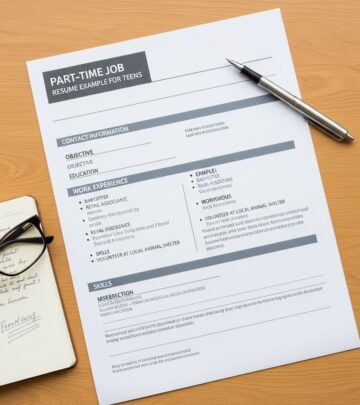
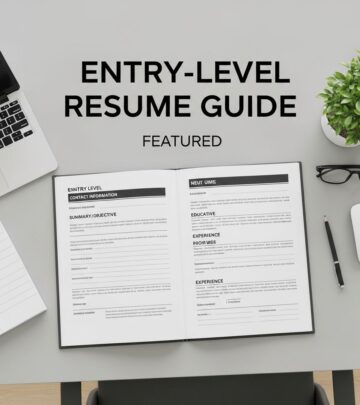
A well-structured first resume typically contains the following sections: contact information, a professional summary or objective, education, experience (which can include volunteer work and internships), skills, projects, and optionally, additional sections like certifications or languages. The key is to present information in a way that demonstrates your value to potential employers.
Step 1: Create a Strong Header With Contact Information
Your resume header is the first thing employers see, so make it count. Include your full name at the top in a larger font size, followed by your contact information. This should include:
– Your phone number (make sure your voicemail greeting is professional)- Your email address (use a professional email, not a username like “partygirl2025”)- Your city and state (you don’t need your full address for privacy reasons)- Your LinkedIn profile URL (optional but recommended)- Your professional website or portfolio (if applicable)
Keep this section clean and organized. Employers should be able to contact you easily, and your header should create a positive first impression with clear formatting and professional presentation.
Step 2: Write a Compelling Resume Objective or Summary
Your resume objective is your chance to make an immediate impact. This is a 2-3 sentence statement that explains your career goals and highlights your most relevant skills for the specific position. For a first-time job seeker, this section is particularly important because it helps employers understand your enthusiasm and potential.
A strong objective should:
– Clearly state the position you’re seeking- Highlight 2-3 key skills relevant to the job- Demonstrate your enthusiasm and commitment- Show how you can add value to the organization
Example Resume Objective:
“Dedicated recent graduate with a bachelor’s degree in business administration seeking an entry-level marketing coordinator position to apply analytical skills, creative problem-solving abilities, and strong communication expertise. Eager to contribute fresh perspectives and data-driven strategies to support marketing campaigns and enhance customer engagement while growing professional experience in a dynamic business environment.”
Notice how this objective combines hard skills (analytical skills, data-driven strategies), soft skills (communication expertise, creative problem-solving), and demonstrates specific career goals. Tailor your objective for each job application to align with the employer’s needs.
Step 3: Highlight Your Education Effectively
Your education section is crucial when you have limited work experience. This is where you showcase your academic credentials and achievements. Format your education section clearly with the following information:
– Institution name- City and state- Degree and major- Expected graduation date (or graduation date)- GPA (if 3.5 or higher)- Relevant honors or achievements
Education Examples:
Bachelor of Science in Computer Science
State University, Cleveland, Ohio
Expected Graduation: May 2026
GPA: 3.8 | Dean’s List: 2023-2024
If you’re still in high school or recently graduated, include that as well:
Hometown High School
Boston, Massachusetts
Graduated: June 2024 | Honors Graduate
Don’t overlook relevant coursework, certifications, or online courses you’ve completed. If you took classes directly related to your target job, include them. For example, if applying for a web development position, mention “Web Design and Development” or “JavaScript Programming” courses you completed.
Step 4: Reframe Your Experience Section
This is where many first-time resume writers get stuck. “I don’t have work experience!” they think. But experience extends far beyond paid employment. Employers want to see what you’ve accomplished and contributed, regardless of whether you were paid. Your experience section can include:
– Internships- Volunteer work- Freelance projects- Class projects and capstone work- Leadership roles in clubs or organizations- Community service- Research projects- Event planning or fundraising activities
For each experience, use this format:
Position Title | Organization Name | Month Year – Month Year
– Accomplished X, which resulted in Y- Managed Z responsibility that demonstrated specific skill- Initiated project that showcased your capability
Practical Example:
Marketing Intern | Local Non-Profit Organization | June 2024 – August 2024
– Developed social media content strategy across three platforms, increasing followers by 45% over eight weeks- Coordinated email marketing campaigns reaching 2,000+ subscribers, achieving 28% open rate- Assisted in planning community fundraiser event that raised $5,000 for organizational initiatives
Notice the use of action verbs (developed, coordinated, assisted) and quantifiable results. This approach demonstrates your impact even without formal employment history.
Step 5: Showcase Your Skills Section
Your skills section should highlight both hard skills (technical abilities) and soft skills (interpersonal qualities). When you don’t have extensive work experience, your skills section becomes a powerful way to show employers what you can do.
Hard Skills to Include:
– Programming languages (Python, Java, C++, JavaScript)- Software proficiency (Microsoft Office, Adobe Suite, Salesforce)- Data analysis and visualization tools- Foreign languages- Technical certifications- Design or multimedia skills
Soft Skills to Highlight:
– Communication- Teamwork and collaboration- Problem-solving- Time management- Leadership- Adaptability- Critical thinking- Customer service
Organize your skills in a clear, scannable format. You might use a skills matrix or simply list them by category. Prioritize skills that directly relate to the job description of positions you’re applying for. Many employers use applicant tracking systems (ATS) that scan for specific keywords, so matching the language in the job posting increases your chances of being selected.
Step 6: Include Your Academic and Personal Projects
If you’ve completed significant projects during your studies or personal time, create a dedicated projects section. This is particularly valuable for fields like software development, design, journalism, marketing, or engineering. Include:
– Project title- Project type (capstone, thesis, class project, personal project)- Brief description of what you accomplished- Technologies or tools used- Results or outcomes
Project Example:
E-Commerce Website Design | Class Capstone Project | December 2024
Designed and developed a fully functional e-commerce website for a local retail business using HTML, CSS, and JavaScript. Implemented user-friendly navigation, product catalog system, and checkout functionality. The design increased the business’s online visibility, resulting in a 30% increase in online inquiries within the first month of launch.
Step 7: Use Action Verbs and Quantifiable Results
The language you use in your resume matters significantly. Start each bullet point with a strong action verb that conveys accomplishment and initiative. Instead of saying “Responsible for,” say “Spearheaded,” “Implemented,” “Developed,” or “Orchestrated.”
Weak: “Responsible for organizing school event”
Strong: “Coordinated school fundraiser event that raised $5,000 for the scholarship fund, managing vendor relationships and promoting event through three social media platforms”
Whenever possible, use numbers to quantify your impact. Numbers stand out in resumes and provide concrete evidence of your contributions. Instead of “improved customer satisfaction,” say “increased customer satisfaction scores by 20%” or “received positive feedback from 95% of customers.”
Step 8: Format for Readability and ATS Optimization
Your resume should be visually clean and easy to scan. Use consistent formatting, proper spacing, and clear section headers. Keep your resume to one page if you’re a high school graduate or early college student; recent college graduates can extend to one and a half pages if necessary, but avoid going over two pages.
Consider these formatting best practices:
– Use a standard font like Arial, Calibri, or Times New Roman- Keep font size between 10 and 12 points- Use consistent bullet points and indentation- Leave adequate white space for readability- Avoid graphics, unusual fonts, or colorful designs (unless applying to creative fields)- Save your resume as a PDF to preserve formatting- Name your file professionally (e.g., “FirstName_LastName_Resume.pdf”)
Remember that many employers use ATS software to screen resumes before a human reads them. To optimize for ATS:
– Use standard section headers- Include keywords from the job description- Avoid tables, columns, or text boxes- Use standard bullet points rather than special characters- Save your file in a compatible format
Step 9: Tailor Your Resume for Each Application
While you’ll have a master resume template, customize it for each job you apply for. Review the job description and identify the key skills and qualifications they’re seeking. Rearrange your resume to emphasize the most relevant information first, adjust your objective to match the specific position, and use language from the job posting.
If the job description emphasizes “strong communication skills” and “team leadership,” make sure those terms appear in your resume. If they mention specific software or technical skills you possess, highlight those prominently. This targeted approach increases your chances of passing the ATS screening and catching the hiring manager’s attention.
Common First Resume Mistakes to Avoid
As you craft your first resume, watch out for these common pitfalls:
– Too generic: A one-size-fits-all resume is less effective than tailored versions- Vague descriptions: Avoid statements like “helped with projects” – be specific about your role- Typos and grammatical errors: These immediately signal carelessness to employers- Unprofessional email or LinkedIn: Use appropriate usernames and profile photos- Irrelevant information: Leave out personal details, hobbies unrelated to the job, or outdated information- Lies or exaggerations: Always be honest; employers may verify your claims- Poor formatting: Inconsistent fonts, sizes, or spacing hurt readability- No contact information: Ensure employers can easily reach you
Resume Examples for Different Scenarios
Let’s look at how different types of first-time job seekers can structure their resumes:
High School Graduate Seeking Entry-Level Position
Focus on academic achievements, volunteer work, leadership roles in clubs, and relevant coursework. Emphasize soft skills like reliability, attention to detail, and willingness to learn. Include any part-time or summer work, even if it was unpaid or volunteer.
Recent College Graduate Seeking Professional Role
Highlight your degree and academic honors prominently. Include internships, student organization leadership, significant class projects, and relevant coursework. If you participated in research or completed a capstone project, feature these prominently. Use your education and projects section to demonstrate subject matter expertise.
Career Changer or Student Seeking Specialized Position
Include relevant certifications, online courses, and projects that demonstrate your knowledge in the new field. A software developer with no professional experience should feature coding projects and GitHub portfolio prominently. A graphic designer should include a portfolio website link and design projects.
Sample No-Experience Resume Template Structure
[YOUR NAME]
[City, State] | [Phone] | [Email] | [LinkedIn URL]
PROFESSIONAL OBJECTIVE
[2-3 sentence summary of your goals and key skills]
EDUCATION
[Degree, Institution, Graduation Date, GPA/Honors]
EXPERIENCE & VOLUNTEER WORK
[Position | Organization | Dates]
– Accomplishment with results
SKILLS
[Technical Skills] | [Soft Skills] | [Languages/Certifications]
PROJECTS
[Project Title | Type | Brief Description]
ADDITIONAL SECTIONS (if applicable)
Certifications, Languages, Volunteer Work, Leadership Roles
Frequently Asked Questions About First Resumes
Q: Should I include my GPA on my first resume?
A: Include your GPA if it’s 3.5 or higher, as this demonstrates academic achievement. If your GPA is lower, you can omit it or focus on other achievements like Dean’s List honors, scholarships, or specific academic strengths relevant to the position.
Q: How long should my first resume be?
A: Keep your first resume to one page if you’re still in school or a recent graduate. If you have multiple internships, volunteer experiences, or significant projects, one and a half pages is acceptable. Avoid exceeding two pages; employers typically spend 6-8 seconds on initial resume screening.
Q: What if I’ve never had a job, internship, or volunteer experience?
A: You can still create a strong resume by emphasizing your education, academic projects, class achievements, leadership in school clubs or organizations, community service, and personal projects. Employers understand that first-time job seekers lack professional experience and focus on potential and demonstrated abilities.
Q: Should I include a cover letter with my first resume?
A: Yes, when possible. A cover letter allows you to explain your interest in the specific position and company, and to highlight skills particularly relevant to the role. It’s especially important when you lack direct work experience, as it gives you space to demonstrate your communication skills and enthusiasm.
Q: How do I make my resume stand out without work experience?
A: Stand out by being specific and quantifiable in your descriptions, using strong action verbs, tailoring your resume to each job, highlighting relevant skills and projects, and maintaining professional formatting. Include a compelling objective that shows your enthusiasm and understanding of the role.
Q: Can I include volunteer work on my resume?
A: Absolutely. Volunteer work demonstrates commitment, skills development, and character. List it under your experience section with the same professional format as paid positions, focusing on your accomplishments and the value you provided to the organization.
Q: What file format should I use for my resume?
A: Save your resume as a PDF to preserve formatting across different devices and programs. Use a clear filename like “FirstName_LastName_Resume.pdf.” Some online application systems require Word format, so keep a .docx version available as well.
Q: Should I list references on my first resume?
A: No, don’t include references directly on your resume. Instead, prepare a separate reference list with 2-3 professional contacts (professors, volunteer supervisors, advisors) who can speak to your abilities. Provide this when the employer specifically requests it during the interview process.
References
- How to Write Resume With No Experience — MyPerfectResume. Accessed 2025. https://www.myperfectresume.com/career-center/resumes/how-to/first-job-no-experience
- How to Write a Resume with No Experience: 21+ Examples — Novo Resume. Accessed 2025. https://novoresume.com/career-blog/resume-advice-for-students-with-no-experience
- How To Write a Great Resume With No Experience — Indeed Career Advice. Accessed 2025. https://www.indeed.com/career-advice/resumes-cover-letters/writing-a-resume-with-no-experience
- How to Write a Resume with No Experience: 5 Helpful Steps — Coursera. Accessed 2025. https://www.coursera.org/articles/resume-with-no-experience
- 24 Best Entry-Level Resume Examples and Templates for 2025 — ResumeBuilder. Accessed 2025. https://www.resumebuilder.com/resume-examples/entry-level/
Similar Articles








Read full bio of medha deb