Your Complete First Car Purchase Roadmap
Master the essentials of buying your first vehicle with confidence and financial wisdom
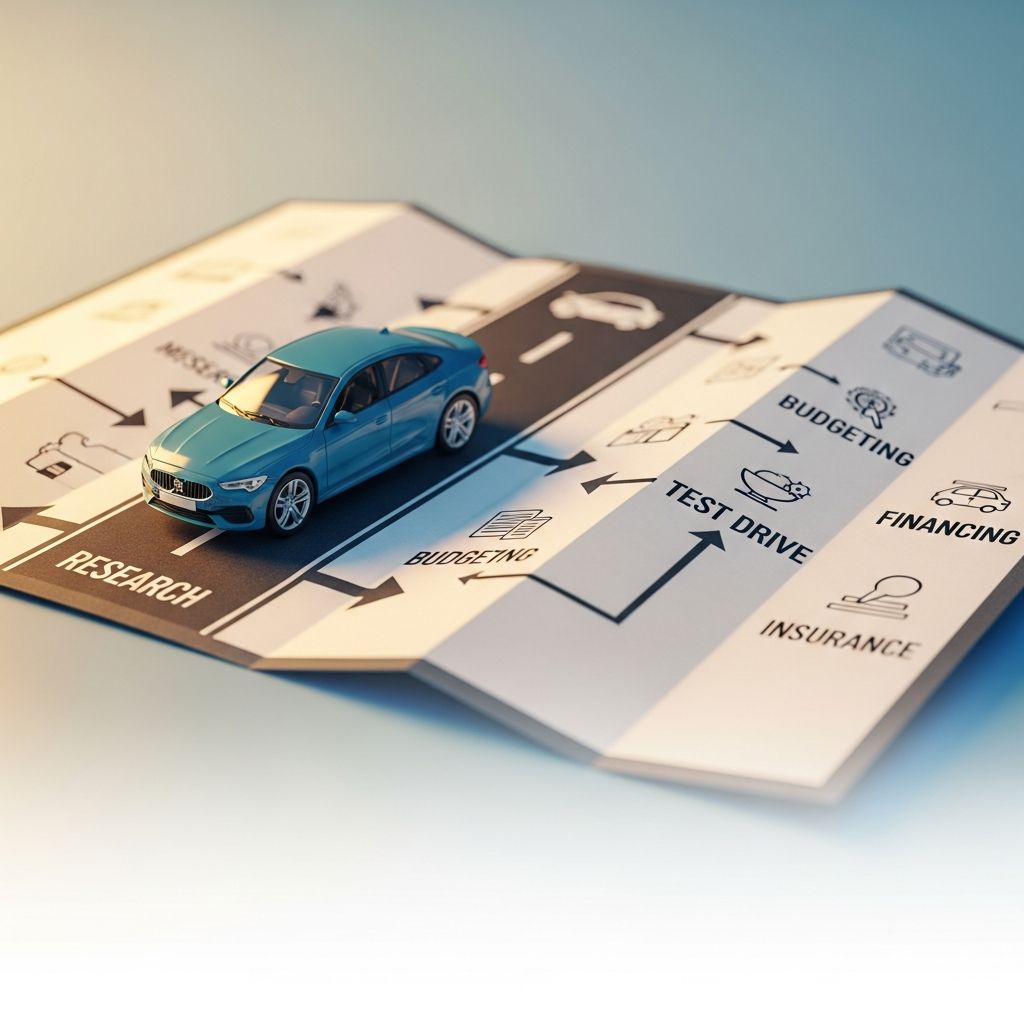
Purchasing your first vehicle represents a significant financial milestone and personal achievement. Unlike renting or leasing, ownership comes with substantial responsibilities and long-term financial commitments. The process can feel overwhelming without proper preparation, but following a structured approach will help you make informed decisions and avoid common pitfalls that trap inexperienced buyers. This comprehensive guide walks you through every stage of the vehicle acquisition journey, from initial planning through delivery day.
Establishing Your Financial Foundation
Before visiting a dealership or browsing online listings, you must establish a realistic financial framework. Your budget serves as the anchor for all subsequent decisions and prevents impulse purchases that exceed your means. Begin by calculating your monthly disposable income after accounting for essential expenses like housing, food, utilities, and existing debt obligations.
The total cost of vehicle ownership extends far beyond the purchase price. Insurance premiums, fuel consumption, regular maintenance, unexpected repairs, registration fees, and property taxes all require monthly funding. First-time buyers should allocate funds for all these categories within their overall budget before committing to a specific vehicle. Many financial experts recommend limiting your total vehicle investment to no more than 50% of your gross annual income, particularly for initial purchases.
Consider your down payment capacity carefully. While some buyers can pay cash for their entire purchase, most will require financing. A substantial down payment reduces your loan amount, lowers monthly obligations, and may qualify you for better interest rates from lenders. Aim to save at least 10-20% of your target vehicle price as a down payment before beginning your search.
Conducting Thorough Market Research
Once you understand your financial limits, research becomes your most valuable tool for making smart purchasing decisions. The automotive market offers thousands of options across different price points, fuel types, vehicle sizes, and feature sets. Narrowing this universe requires systematic evaluation of your actual needs versus aspirational wants.
Begin by listing non-negotiable requirements for your situation. If you live in a snowy climate, four-wheel drive may be essential. If you commute long distances, fuel efficiency becomes paramount. If you have a growing family, cargo space and safety ratings matter most. Distinguish these genuine needs from appealing luxuries that will strain your budget.
Leverage automotive research platforms to compare specifications, pricing, and owner experiences. Websites like Edmunds, Autotrader, and Kelley Blue Book provide estimated market values, reliability ratings, and customer satisfaction scores. Read actual owner reviews to understand real-world performance, maintenance costs, and common issues with specific models. Check safety ratings from agencies like the National Highway Traffic Safety Administration to ensure your candidates meet modern protection standards.
New Versus Used: Weighing the Trade-Offs
The decision between new and used vehicles involves comparing different risk profiles and financial outcomes. New cars arrive with manufacturer warranties, latest technology features, and zero mileage uncertainty. However, new vehicles experience immediate depreciation upon purchase, sometimes losing 20% of their value within the first year.
Used vehicles cost less upfront and exhibit slower depreciation rates, but carry inherent risks around hidden damage, deferred maintenance, and shorter remaining lifespan. When considering used options, prioritize vehicles with documented service histories and low-impact accident records. Request CARFAX or AutoCheck reports to verify ownership history and identify potential problems. For first-time buyers, used vehicles in the three to five-year age range often provide the best balance of affordability, remaining warranty coverage, and modern safety features.
Reliability and dependability should guide this decision regardless of your choice. A poorly maintained used car or an unreliable new model will generate unexpected expenses that undermine your financial planning. Research which manufacturers and specific models demonstrate consistent reliability across owner reviews and third-party assessments before narrowing your options.
Understanding Credit and Securing Financing
Your credit score fundamentally shapes the financing opportunities available to you. Lenders use credit information to determine interest rates and loan eligibility, directly impacting your monthly payment amount. Before visiting dealerships, check your credit score through free services and review your credit report for errors.
If your credit needs improvement, take steps to strengthen it before applying for an auto loan. Paying down existing debts, correcting report errors, and avoiding new credit inquiries can gradually raise your score. Even modest score improvements reduce your interest rate, potentially saving thousands over the loan term.
Explore financing options beyond dealership offers. Banks, credit unions, and online lenders frequently provide competitive rates that beat dealer financing. Obtaining preapproval from multiple lenders before visiting dealerships strengthens your negotiating position and clarifies your actual purchasing power. Compare annual percentage rates, loan terms, and monthly payments across different lenders rather than accepting the first offer presented.
Review all loan documents carefully for hidden fees or unfavorable terms. The “out-the-door” price should account for all costs including interest, taxes, registration, and documentation fees. Request written contracts detailing every term before signing anything.
Evaluating Purchase Channels
You have three primary options for acquiring your first vehicle: franchised dealerships, private sellers, or lease buyouts. Each path presents distinct advantages and challenges.
Dealership purchases provide structured processes with test-driving opportunities, inspection facilities, and established financing relationships. Dealers typically warrant their vehicles for specified periods, offering some protection against immediate mechanical failure. However, dealership pricing reflects dealer overhead, and sales staff employ persuasion techniques designed to increase your expenditure. Having financing preapproval before visiting dealerships strengthens your negotiating position and reduces pressure to accept dealer-favorable terms.
Private seller transactions often feature lower purchase prices since sellers avoid dealership markups. However, private sellers rarely offer warranties or guarantees, and the “as-is” nature of these sales shifts maintenance risk entirely to you. Insist on pre-purchase inspections from independent mechanics before committing to private sales. Request maintenance records, accident history reports, and clear titles to verify the vehicle’s condition and legal status.
Lease buyouts allow you to purchase the vehicle you’ve been driving, giving you intimate knowledge of its maintenance history. Since you’ve driven the specific vehicle, you understand its actual condition better than any other purchase option. Buyout prices reflect predetermined residual values, though these may exceed current market rates for similar vehicles.
Mastering the Test Drive Experience
Never finalize a vehicle purchase without thoroughly driving the specific car you plan to own. Test drives reveal handling characteristics, acceleration response, braking performance, visibility, comfort factors, and potential mechanical issues that specifications cannot convey.
Test-drive multiple vehicles to develop comparison points for handling, noise levels, and overall driving experience. Drive during varied conditions including city streets, highway segments, and parking situations to fully understand vehicle behavior. Some dealerships now offer home delivery for test drives, providing comfortable and distraction-free evaluation environments.
For used vehicle test drives, ask specific questions about maintenance timing and any known issues. Listen for unusual sounds, feel for vibration patterns, and observe how the vehicle responds to acceleration and braking. Request vehicle history reports to investigate accident records and mileage verification.
Conducting Pre-Purchase Vehicle Inspection
Before leaving the dealership with your new or used vehicle, perform a comprehensive physical inspection to ensure everything meets specifications and functions properly. Check fluid levels in the engine compartment, including oil, coolant, brake fluid, and windshield washer fluid. Inspect wipers, headlights, brake lights, turn signals, and any other exterior lighting.
Verify all locks function smoothly, power seats operate properly, and the trunk opens and closes securely. Confirm the spare tire is present with its accompanying jack and lug wrench. Test all entertainment systems, climate controls, and safety features to ensure proper operation.
Review all paperwork before departing the dealership. Your documentation package should include the purchase contract, warranty information, registration paperwork, title documentation, keys and key codes, and any supplemental instruction booklets. Don’t leave until everything matches your expectations.
Effective Negotiation Strategies
Price negotiation determines how much you’ll ultimately pay for your vehicle. Effective negotiation requires preparation, patience, and clear communication of your budget constraints.
Research market values for your target vehicle using multiple pricing sources. Knowing the true market value prevents overpaying and provides ammunition for price reduction discussions. Use competing dealer pricing and alternative vehicle options as leverage points during negotiations.
Never rush negotiations. Dealers may pressure you toward quick decisions, but taking time to evaluate options gives you negotiating power. State your budget clearly and honestly while remaining open to reasonable counteroffers. Avoid emotional attachments to specific vehicles that cloud your judgment.
Negotiate the vehicle price separately from financing terms. Once you agree on the purchase price, only then explore available financing options. This separation prevents dealers from adjusting vehicle prices based on financing terms.
Documentation and Post-Purchase Considerations
After finalizing your purchase, take time to understand your new vehicle thoroughly. Read the owner’s manual completely to learn all features, maintenance requirements, and proper operation procedures. Many owners miss valuable features and misunderstand maintenance needs by skipping this crucial step.
Establish a regular maintenance schedule based on manufacturer recommendations to preserve your vehicle’s reliability and resale value. Keep detailed records of all service work performed, including scheduled maintenance and repairs. These records prove proper maintenance to future buyers if you eventually sell the vehicle.
Review your insurance coverage to ensure adequate protection. Understand what your policy covers, your deductible amounts, and any gaps in protection. Comprehensive and collision coverage protect your financial investment, while liability coverage protects others if you cause accidents.
Common Mistakes to Avoid
First-time buyers frequently make avoidable errors that compromise their financial situations. Don’t purchase without preapproved financing, as this eliminates your negotiating leverage. Don’t skip vehicle inspections or history reports, as hidden problems become your expensive responsibility after purchase. Don’t exceed your established budget despite dealer pressure or emotional desire for upgrades.
Avoid focusing exclusively on monthly payment amounts while ignoring total loan costs. A $500 monthly payment over 84 months costs significantly more than $600 over 60 months. Don’t overlook ongoing ownership costs when calculating affordability. Don’t trade-in vehicles at dealerships without researching private sale values, as dealers typically offer below-market trade-in prices.
Summary of Key Action Items
- Calculate your total monthly income and expenses to establish realistic budget parameters
- Factor all ownership costs including insurance, maintenance, fuel, and registration into your budget
- Research specific vehicles using automotive platforms and owner reviews
- Check your credit score and address issues before applying for financing
- Obtain preapproval from multiple lenders before visiting dealerships
- Test-drive multiple vehicles under varied driving conditions
- Request vehicle history reports and maintenance records
- Negotiate price separately from financing terms
- Perform thorough pre-purchase inspections before finalizing ownership
- Review all documentation and read the owner’s manual completely
- Establish maintenance records and insurance coverage immediately
References
- First-Time Car Buyer Guide — Experian. 2025-04-02. https://www.experian.com/blogs/ask-experian/tips-for-first-time-car-buyers/
- Car Buying Hacks for 1st-Time Car Buyers — YouTube. https://www.youtube.com/watch?v=Kzkhr7SXMXw
- Buying a Car: A Guide for First Time Car Buyers — WSADA. https://wsada.org/news/buying-a-car
- First Time Car Buyer’s Guide: What to Know Before You Buy — PNC. https://www.pnc.com/insights/personal-finance/spend/first-time-car-buyer-guide.html
- A First-Time Car Buyer’s Guide — NerdWallet. https://www.nerdwallet.com/auto-loans/learn/first-time-car-buyer
- First-Time Car Buyer’s Guide — Neighborhood Automotive Pearisburg. https://neighborhoodautomotivepearisburg.com/bdp/79203/car-buying-tips/first-time-car-buyer%E2%80%99s-guide
- Tips on Buying Your First Car — Navy Federal Credit Union. https://www.navyfederal.org/makingcents/auto/buying-first-car-tips.html
- First Time Car Buyer Guide — FFCCU. https://www.ffcommunity.com/first-time-car-buyer-guide
Similar Articles








Read full bio of medha deb