Finding and Calculating Your Credit Card APR
Master the essentials of locating your credit card's APR and computing interest charges to take control of your finances effectively.

Your credit card’s
APR
(Annual Percentage Rate) determines the cost of borrowing money when you carry a balance. Understanding where to find it and how it’s applied empowers you to make informed payment decisions and minimize expenses.Understanding APR Fundamentals
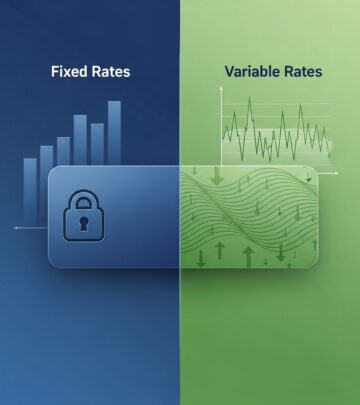
The APR represents the yearly cost of credit, expressed as a percentage. Credit cards typically feature variable APRs tied to the prime rate, which fluctuates with economic conditions, though fixed options exist with potential changes under specific terms. Different APRs apply to purchases, cash advances, and balance transfers, so identify the relevant one for your needs.
Interest accrues daily on unpaid balances, compounding over time, which can significantly increase your debt if not addressed. Federal regulations require issuers to disclose APRs clearly in statements and agreements.
Locating Your Credit Card APR
Accessing your APR is straightforward through several channels. Here’s how:
- Monthly Statements: Look toward the end for sections labeled ‘Interest Charge Calculation’ or ‘Rates and Fees.’ It lists APRs, often marked with (V) for variable or (F) for fixed.
- Online Portals and Apps: Log into your issuer’s website or mobile app. Navigate to account details or settings for current APRs, which reflect the latest updates.
- Cardmember Agreements: Review the terms provided upon approval or via download from the issuer’s site for initial and ongoing rates.
- Customer Service: Call the number on your card’s back for verbal confirmation, ideal for quick queries or clarifications.
Online access often provides the most current figures, as statements may lag slightly.
Step-by-Step Guide to Calculating Interest
Issuers compute interest using the average daily balance method, converting APR to a daily rate. Follow these steps manually to verify charges.
Step 1: Compute the Daily Periodic Rate (DPR)
Divide the APR by 365 (or 360, per issuer policy). Example: For a 20% APR, DPR = 20 / 365 ≈ 0.0548% or 0.000548 in decimal.
| APR | Days in Year | DPR (%) | DPR (Decimal) |
|---|---|---|---|
| 11.24% | 365 | 0.0308% | 0.000308 |
| 20% | 365 | 0.0548% | 0.000548 |
| 16% | 365 | 0.0438% | 0.000438 |
Confirm your issuer’s divisor to ensure accuracy.
Step 2: Determine Average Daily Balance (ADB)
Sum each day’s balance during the billing cycle and divide by cycle days. Statements may not list daily figures, so reconstruct from transactions.
Example: 30-day cycle with balances starting at $200, adding purchases to reach $400 by end. Approximate ADB: ($200 x 15 days + $400 x 15 days) / 30 = $300.
Step 3: Calculate Daily Interest
Multiply ADB by DPR. Using 0.000548 DPR and $300 ADB: $300 × 0.000548 = $0.1644 daily interest.
Step 4: Aggregate for Billing Cycle
Multiply daily interest by cycle days. $0.1644 × 30 = $4.93 monthly interest.
Step 5: Account for Compounding
Some methods add prior day’s interest to the next balance, amplifying charges. Total owed includes principal plus accrued interest.
Full example: $400 purchases, 11.24% APR, $266.67 ADB, 30 days. DPR 0.000308 × $266.67 = $0.082/day × 30 = $2.46 interest. New balance: $402.46.
Types of Balance Calculation Methods
Issuers vary in approaches:
- Daily Balance: Interest on each day’s ending balance × DPR.
- Average Daily Balance (No Compounding): ADB × DPR × days.
- Average Daily Balance (Compounding): Includes prior interest in balances.
Review your agreement for the method used.
Strategies to Manage and Reduce Interest
Proactive steps keep costs low:
- Pay balances in full monthly to avoid interest entirely.
- Make multiple payments to lower ADB.
- Target high-APR cards first in debt payoff plans.
- Seek balance transfers to 0% intro APR offers.
- Request APR reductions after consistent on-time payments.
- Monitor year-to-date interest on statements.
Fixed vs. Variable APRs Explained
Fixed APR: Remains constant, but issuers can adjust with 45 days’ notice or delinquency.
Variable APR: Adjusts with prime rate changes, potentially increasing costs during rate hikes. Statements denote these clearly.
Common Pitfalls and How to Avoid Them
- Misidentifying APR types (purchases vs. advances).
- Ignoring grace periods: No interest if paid in full by due date.
- Overlooking promo APR expirations.
- Assuming 360 vs. 365-day years—verify with issuer.
Frequently Asked Questions (FAQs)
What is a good credit card APR?
Averages range 15-25% for purchases; below 15% is excellent, especially for good credit holders.
Does APR differ from interest rate?
APR encompasses interest plus certain fees, providing a fuller cost picture.
How often do APRs change?
Variable rates shift monthly with prime; fixed rarely, per terms.
Can I negotiate my APR?
Yes, polite calls citing payment history often succeed.
Is interest charged on new purchases if balance exists?
Typically yes, unless a grace period applies.
Tools and Resources for Tracking
Use issuer calculators or third-party tools for simulations. Apps track spending and project interest. Regularly review statements for discrepancies.
References
- How to Check the Interest Rate on Your APR — Chase. 2023. https://www.chase.com/personal/credit-cards/education/interest-apr/how-to-check-interest-rate-on-apr
- Understanding Credit Card Interest Rates — CSE Federal Credit Union. 2024. https://www.csefcu.com/blog/post/understanding-credit-card-interest-rates
- What Is My Credit Card Interest Rate? — NerdWallet. 2025-01-15. https://www.nerdwallet.com/credit-cards/learn/what-is-my-credit-card-interest-rate
- Credit Card Interest Calculator — Discover. 2024. https://www.discover.com/credit-cards/credit-card-calculator/credit-card-interest-calculator/
- How to Calculate Credit Card Interest — Citi. 2024. https://www.citi.com/credit-cards/understanding-credit-cards/how-to-calculate-credit-card-interest
- How to Calculate Credit Card Interest Rates — American Express (YouTube). 2023. https://www.youtube.com/watch?v=tafHhXbIqBo
- How Does Credit Card Interest Work? — Capital One. 2025-02-01. https://www.capitalone.com/learn-grow/money-management/calculate-credit-card-interest/
Similar Articles








Read full bio of medha deb