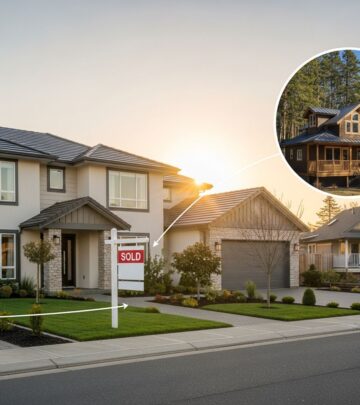
Financing Your Second Home: 6-Step Guide To Qualify
Explore proven strategies and loan options to secure funding for your vacation retreat or additional property without financial strain.

Acquiring a second home offers opportunities for relaxation, family gatherings, or future retirement planning, but it demands careful financial planning. Unlike primary residences, second homes come with stricter lending standards and unique financing paths. This guide outlines key strategies, eligibility factors, and practical steps to make informed decisions.
Understanding Second Homes and Lender Perspectives
Lenders classify second homes as properties intended for personal use, such as vacation retreats, distinct from investment rentals. This distinction affects loan terms: second homes typically require larger down payments and higher reserves compared to primary homes, reflecting increased risk due to non-occupancy.
- Personal Use Focus: Must be usable by the owner within reasonable travel distance, often within 100 miles of your primary home.
- No Rental Intent: Primarily for vacations; frequent renting shifts it to investment status with tougher terms.
- Property Limits: Single-family homes, condos, or up to four-unit properties qualify, but luxury or non-conforming locations may face restrictions.
Primary Financing Options for Second Homes
Several loan products cater to second home buyers, each with pros, cons, and suitability based on your financial profile. Conventional mortgages dominate, but equity from your primary home opens additional doors.
| Option | Down Payment | Key Features | Best For |
|---|---|---|---|
| Conventional Second Home Mortgage | 10-25% | Fixed or adjustable rates; no PMI with 20% down | Strong credit buyers seeking stability |
| Cash-Out Refinance | N/A (uses equity) | Replaces primary mortgage; cash for down payment | Homeowners with substantial primary equity |
| Home Equity Loan | N/A | Lump-sum second mortgage on primary home | Those avoiding primary mortgage changes |
| HELOC | N/A | Flexible line of credit against equity | Buyers needing variable draw amounts |
Conventional Second Home Mortgages in Detail
These loans mirror primary residence financing but with elevated requirements. Expect down payments starting at 10%, rising to 25% for weaker credit. Interest rates are marginally higher than primary loans but lower than rentals. No private mortgage insurance (PMI) applies if you put down 20% or more.
Qualification hinges on debt-to-income (DTI) ratios under 45%, credit scores above 640 (ideally 700+), and 2-6 months of reserves. Lenders like Navy Federal offer terms from 5% down on select products, excluding VA loans.
Leveraging Primary Home Equity Effectively
If saving a large down payment proves challenging, tap your primary residence’s equity, which has likely grown over time. A cash-out refinance replaces your existing mortgage with a larger one, providing cash for the second home purchase. This keeps rates low since it’s secured by your primary property.
Home equity loans provide a fixed lump sum as a second lien, with separate payments and typically higher rates. HELOCs offer revolving credit, ideal for phased funding. Note: Lenders cap borrowing at 80-90% of equity to maintain a buffer.
Qualification Requirements and Financial Readiness
Securing approval demands robust finances. Lenders scrutinize your ability to manage dual payments without strain.
- Credit Score: Minimum 640; 700+ unlocks better rates and lower down payments.
- DTI Ratio: Preferably below 36%, max 45% including new mortgage.
- Cash Reserves: 2-6 months of payments post-closing, higher for jumbo loans.
- Income Stability: Verified via tax returns, pay stubs; self-employed face extra hurdles.
Prepare by boosting credit, reducing debt, and building reserves. Pre-approval strengthens offers in competitive markets.
Creative and Alternative Financing Strategies
Beyond standard loans, innovative approaches can bridge gaps. Shared ownership with family splits costs and responsibilities, enhancing affordability. Seller financing negotiates direct terms with the property owner, bypassing banks—though it requires caution for legal protections.
Gifts from relatives or equity gifts from family-owned primaries can fund down payments without repayment. Rare zero-down options exist via assumptions or niche programs, but government loans like FHA/VA are off-limits except in transitions to new primaries.
Costs Beyond the Mortgage: Budgeting Holistically
Second homes incur dual expenses: expect 1-2% annual maintenance, higher utilities if seasonal, property taxes, insurance (often 20-50% pricier), and HOA fees. Factor in travel costs and potential vacancy insurance.
| Expense Type | Estimated Annual Cost (% of Value) | Notes |
|---|---|---|
| Property Taxes | 0.5-2% | Varies by location |
| Homeowners Insurance | 0.3-1% | Higher for coastal/vacation areas |
| Maintenance/Repairs | 1-2% | Includes seasonal prep |
| HOA Fees | $200-500/month | Common in resorts |
Step-by-Step Process to Purchase Your Second Home
- Assess Affordability: Calculate total costs using mortgage calculators; aim for payments under 28% of income.
- Get Pre-Approved: Shop multiple lenders for competitive rates.
- Search Strategically: Focus on desired locations; hire a local agent.
- Make an Offer: Include earnest money; negotiate contingencies.
- Finalize Financing: Submit full docs; appraisal confirms value.
- Close and Enjoy: Review HUD-1, sign, and take keys.
Investment Potential and Tax Implications
Second homes can appreciate, providing equity growth. Limited rentals (e.g., 14 days/year) preserve status while generating income, deductible under IRS rules. Mortgage interest and property taxes remain deductible if itemizing, up to caps. Consult a tax advisor for personalized advice.
Frequently Asked Questions
What’s the minimum down payment for a second home?
Typically 10%, but 20% avoids PMI and eases approval. Some lenders offer 5% for top-tier borrowers.
Can I use a VA or FHA loan for a second home?
No, these are for primary residences only, with rare exceptions like relocation.
How does a second home mortgage differ from an investment property loan?
Second homes need lower down payments (10-25% vs. 15-25%+), better rates, and prove personal use.
Is now a good time to finance a second home?
Depends on rates, equity, and markets; 2026 forecasts stable conditions for qualified buyers.
What if I can’t afford a large down payment?
Use cash-out refi, HELOC, or shared ownership to fund it.
Common Pitfalls to Avoid
Overextending finances tops the list—stress-test budgets for rate hikes. Neglecting reserves leads to denials. Misclassifying as rental invites stricter terms. Always compare lenders; loyalty to your primary servicer isn’t always cheapest.
Financing a second home rewards preparation with lasting value. Engage a lending advisor early to tailor options to your situation.
References
- Buying a Second Home: Ways to Finance It — Chase Bank. 2023. https://www.chase.com/personal/mortgage/education/financing-a-home/how-to-finance-a-second-home
- Should You Buy A Second Home? What To Consider — Bankrate. 2025-02-05. https://www.bankrate.com/mortgages/things-to-know-before-you-buy-a-second-home/
- Second Home Mortgage Rates — Navy Federal Credit Union. 2025. https://www.navyfederal.org/loans-cards/mortgage/mortgage-rates/second-home-financing.html
- Second Home Mortgage | Requirements & Guide 2026 — The Mortgage Reports. 2026. https://themortgagereports.com/21116/second-home-mortgage-qualify-for-vacation-residence
- Second Mortgages | What To Know 2026 — My Mortgage Insider. 2026-02-05. https://mymortgageinsider.com/how-does-a-second-mortgage-work/
- Buy a second home with no down payment — Rocket Mortgage. 2025. https://www.rocketmortgage.com/learn/buy-second-home-with-no-down-payment
Similar Articles








Read full bio of medha deb