Financing: Definition, Types, and How It Works
Complete guide to financing: Learn types, methods, and strategies for funding businesses and personal needs.

What Is Financing?
Financing refers to the process of providing funds or capital for a particular purpose, whether for a business venture, personal project, or large purchase. It is the act of supplying money or credit to enable individuals, companies, or governments to undertake projects, expand operations, or manage cash flow needs. Financing can come from various sources and take multiple forms, each with distinct characteristics, advantages, and disadvantages.
At its core, financing allows entities to acquire resources they don’t currently possess in cash. Whether purchasing equipment, funding research and development, or expanding into new markets, financing provides the necessary liquidity to achieve financial goals. The financing landscape has evolved significantly with technological advancements, making capital more accessible than ever before.
Understanding Financing Fundamentals
Financing operates on a fundamental principle: borrowed funds must eventually be repaid, often with interest, or investors expect returns on their capital contributions. This creates an obligation for the borrower or issuer to meet specific terms and conditions.
The three main components of any financing arrangement include:
- Principal: The original amount of money borrowed or invested
- Interest Rate: The cost of borrowing expressed as a percentage of the principal
- Term: The time period over which the financing must be repaid or the investment horizon
Understanding these components helps borrowers evaluate different financing options and make informed decisions about which arrangement best suits their needs and financial situation.
Types of Financing
Financing generally falls into two broad categories: debt financing and equity financing. Each serves different purposes and carries unique implications for the borrower or investor.
Debt Financing
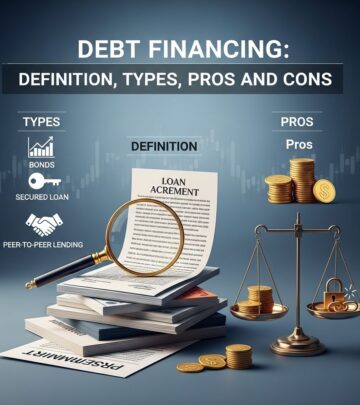
Debt financing involves borrowing money that must be repaid with interest over a specified period. The lender receives predetermined interest payments and eventual repayment of the principal amount. Common forms of debt financing include:
- Bank Loans: Traditional loans from commercial banks for business expansion, equipment purchase, or working capital
- Bonds: Debt securities issued by corporations or governments, allowing investors to lend money in exchange for periodic interest payments
- Lines of Credit: Flexible borrowing arrangements allowing access to funds as needed up to a predetermined limit
- Mortgages: Long-term loans secured by real estate property, typically used for home purchases
- Credit Cards: Revolving credit facilities with variable interest rates and flexible repayment options
- Equipment Financing: Loans specifically designed for purchasing machinery, vehicles, or other business equipment
Debt financing has several advantages: it allows the borrower to maintain ownership and control, interest payments may be tax-deductible, and the cost of borrowing is fixed and predictable. However, debt obligations create financial liability and require regular payments regardless of business performance.
Equity Financing
Equity financing involves raising capital by selling ownership stakes in the business. Investors receive a proportional claim on company profits and assets but typically have no obligation to be repaid. Equity financing sources include:
- Venture Capital: Investment from specialized firms providing capital to high-growth potential startups in exchange for significant equity stakes
- Angel Investors: Wealthy individuals investing personal funds in early-stage companies
- Initial Public Offerings (IPOs): Public sale of company shares to raise capital from multiple investors
- Private Equity: Investment from firms specializing in acquiring and managing established private companies
- Crowdfunding: Raising capital from large numbers of people, typically through online platforms
Equity financing offers advantages including no repayment obligation, shared risk with investors, and potential access to valuable expertise from experienced investors. The primary disadvantage is dilution of ownership and reduced control over business decisions.
Short-Term vs. Long-Term Financing
Financing can also be classified by duration, affecting how organizations manage their capital structure and cash flow.
Short-Term Financing
Short-term financing covers obligations due within one year and typically finances working capital needs. Common short-term financing options include:
- Trade credit from suppliers
- Commercial paper issued by corporations
- Accounts receivable financing or factoring
- Short-term bank loans or revolving credit facilities
- Bridge loans providing temporary funding
Long-Term Financing
Long-term financing extends beyond one year and typically funds capital investments and major projects. Options include:
- Term loans with multi-year repayment schedules
- Corporate and government bonds
- Mortgage loans for real estate
- Equity investments and share issuance
- Lease arrangements for equipment and property
Financing Methods and Sources
Organizations can access financing through internal and external sources, each with distinct characteristics.
| Financing Method | Description | Key Advantages | Key Disadvantages |
|---|---|---|---|
| Internal Financing | Using retained earnings or operational cash flow | No debt or equity dilution, maintains control | Limited by available cash, slower growth potential |
| Bank Loans | Borrowing from financial institutions | Relatively quick process, fixed terms, tax benefits | Requires creditworthiness, collateral often needed |
| Bonds | Debt securities issued to public investors | Access to large capital amounts, fixed interest costs | Complex issuance process, ongoing reporting requirements |
| Venture Capital | Investment from specialized venture firms | Large funding amounts, experienced investor support | Significant equity dilution, loss of control |
| Crowdfunding | Capital from many small investors online | Validates market demand, diverse investor base | Time-consuming campaigns, success not guaranteed |
Factors Affecting Financing Options
Several critical factors influence which financing options are available and most suitable:
- Credit Score and History: Determines eligibility for debt financing and affects interest rates offered
- Business Stage: Startups typically rely on equity or personal financing, while established companies access diverse sources
- Industry and Risk Profile: Higher-risk industries face stricter lending requirements and higher interest rates
- Economic Conditions: Interest rates, credit availability, and investor appetite vary with economic cycles
- Asset Base: Collateral availability affects ability to secure loan financing
- Cash Flow: Ability to make regular payments influences debt financing options
- Growth Trajectory: High-growth companies attract venture capital, while stable companies suit traditional lending
The Financing Process
Regardless of the financing type selected, most processes follow a similar trajectory. First, the entity seeking financing must determine the specific amount needed and timeline requirements. Next, potential sources are identified and contacted with detailed information about the funding purpose and repayment ability. Application materials are submitted, including financial statements, business plans, and credit histories. Lenders or investors then conduct due diligence, evaluating risk and viability. Upon approval, terms are negotiated and documented in legally binding agreements. Finally, funds are disbursed and the borrower begins fulfilling their obligations.
Advantages and Disadvantages of Different Financing Types
Each financing approach offers distinct benefits and drawbacks requiring careful consideration:
Debt Financing Advantages:
- Borrower retains full ownership and control
- Interest payments provide tax deductions
- Fixed repayment schedules enable predictable budgeting
- Investors don’t share company profits or decision-making
Debt Financing Disadvantages:
- Creates legal obligations and potential default risk
- Interest expenses reduce profitability
- Excessive debt increases financial risk and limits flexibility
- May require personal guarantees or collateral
Equity Financing Advantages:
- No repayment obligation reduces financial pressure
- Investor expertise and networks provide valuable benefits
- Successful companies generate unlimited investor returns
- Equity capital strengthens balance sheet
Equity Financing Disadvantages:
- Ownership dilution reduces founder control
- Investor involvement in strategic decisions
- Profit sharing reduces company earnings
- Complex negotiations and legal structures required
Impact of Financing on Business Operations
Financing decisions significantly influence company trajectory and operational capabilities. Excessive debt burdens cash flow and limits investment in growth opportunities. Conversely, too much equity financing dilutes ownership without providing operational flexibility. Optimal capital structures balance debt and equity to minimize costs while maintaining financial stability. Strategic financing decisions enable companies to invest in innovation, hire talent, and compete effectively in their markets.
Frequently Asked Questions
What is the primary difference between debt and equity financing?
Debt financing requires repayment with interest but allows the borrower to maintain ownership and control. Equity financing involves selling ownership stakes without repayment obligations but dilutes ownership and gives investors decision-making authority.
Which financing option is best for startups?
Startups typically begin with founder capital or personal loans, then progress to angel investors or venture capital as they scale. The best choice depends on growth ambitions, industry, and founders’ risk tolerance.
How does credit score affect financing options?
Higher credit scores qualify for lower interest rates and more favorable terms. Poor credit scores may limit debt financing options or require collateral and higher interest rates.
Can businesses use both debt and equity financing?
Yes, most established businesses use blended capital structures combining debt and equity financing. This approach optimizes cost of capital while maintaining operational flexibility.
What is the role of collateral in financing?
Collateral reduces lender risk by providing an asset they can claim if the borrower defaults. Securing loans with collateral typically results in lower interest rates and better terms.
How long does the financing approval process typically take?
Timeline varies significantly: personal loans and credit cards may be approved within days, while business loans typically require 1-2 weeks, and bond issuances may take several months including SEC approval.
References
- Capital Structure and Financing Decisions — Harvard Business School Publishing. 2023. https://www.hbs.edu
- Small Business Administration Loan Programs — U.S. Small Business Administration. 2024. https://www.sba.gov/funding-programs/loans
- Understanding Equity and Debt Financing for Startups — Kauffman Foundation Center for Entrepreneurship. 2023. https://www.kauffman.org
- Federal Reserve Guide to Business Financing — Board of Governors of the Federal Reserve System. 2024. https://www.federalreserve.gov
- Credit Markets and Financing Options in 2024 — Securities and Exchange Commission. 2024. https://www.sec.gov/investor
Similar Articles








Read full bio of Sneha Tete