Financing a Vehicle Post-Repossession
Discover practical strategies to secure auto financing after a repossession and rebuild your financial future effectively.

Acquiring a new vehicle after a lender has repossessed your previous one is feasible, though it often involves higher costs and stricter lender scrutiny. A repossession signals to potential lenders a history of missed payments, prompting many to impose elevated interest rates or deny applications outright.
Understanding Repossession and Its Lasting Effects
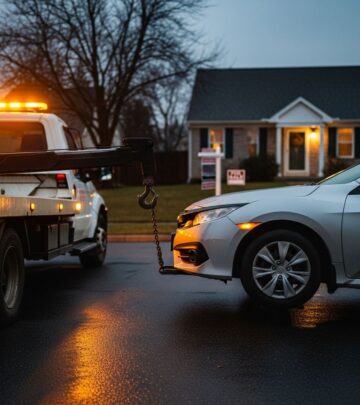
Repossession occurs when a lender seizes a vehicle due to defaulted loan payments, a process that can severely impact your financial profile. This event remains on your credit report for up to seven years, potentially lowering your FICO score by 100 points or more, classifying you as a subprime borrower. Lenders prioritize payment history, the dominant factor in credit scoring, making recent repossessions particularly damaging.
Beyond the score drop, you may owe a deficiency balance—the gap between the auction sale price of the repossessed vehicle and your outstanding loan, plus fees for storage and repairs. Failing to address this debt can lead to collections, further harming your credit. Even voluntary surrender doesn’t erase late payments or the repossession notation from your record.
Primary Pathways to Vehicle Ownership After Repossession
Several avenues exist for obtaining a car post-repossession, each balancing accessibility, cost, and long-term benefits differently. Here’s a breakdown:
- Cash Purchase: Opting for an affordable used car paid in full avoids loans entirely, sidestepping credit checks and interest. This approach allows time to repair your credit without added debt pressure.
- Large Down Payment: Contributing a substantial upfront amount reduces the loan principal, signaling commitment to the lender and mitigating their risk. For used cars, this strategy proves especially persuasive.
- Cosigner Support: Partnering with someone possessing strong credit lets lenders evaluate combined profiles, boosting approval likelihood and potentially securing better rates. Note that the cosigner shares liability if payments falter.
- Dealership In-House Financing: ‘Buy here, pay here’ lots approve based on income and employment rather than credit history. While accessible, these often feature steep interest rates and fees, inflating total costs.
Strategic Steps to Enhance Financing Prospects
Proactive measures can significantly improve your position before applying for a loan. Start by settling any lingering deficiency balances from the prior repossession to halt further credit deterioration.
Next, prioritize credit enhancement. Consistent on-time payments across all obligations form the bedrock of score recovery. Reduce existing debts to lower utilization ratios, and consider secured credit cards for positive history building.
Comparing lenders is crucial, as policies vary. Credit unions and online platforms sometimes offer subprime programs with terms superior to aggressive dealerships. Shorter loan durations, like 36 months, may attract lower rates by demonstrating quicker repayment intent.
| Strategy | Pros | Cons | Best For |
|---|---|---|---|
| Cash Buy | No interest; quick ownership | Requires savings | Short-term needs |
| Large Down Payment | Lower loan amount; better rates | Upfront capital needed | Moderate savers |
| Cosigner | Improved terms | Relies on others | Those with networks |
| In-House Financing | Easy approval | High costs | Immediate transport |
Navigating Lender Evaluations and Loan Terms
Lenders assess risk holistically post-repossession. Traditional banks and credit unions often shy away from recent events, favoring applicants with scores above 670. Subprime specialists, however, cater to lower scores but compensate with annual percentage rates (APRs) exceeding 20% in many cases.
Prepare documentation thoroughly: proof of stable income, employment verification, and residence details. A debt-to-income ratio under 40% strengthens applications, as does referencing utility bills or rent payments for alternative history.
Anticipate unfavorable terms—higher down payments (10-20%), elevated APRs, and briefer repayment periods. Use online pre-qualification tools to gauge offers without credit dings.
Long-Term Credit Recovery Roadmap
Securing a loan is merely the start; rebuilding sustains future opportunities. Automate payments to ensure timeliness, targeting 35% of your score from payment history.
Monitor reports from Equifax, Experian, and TransUnion weekly via official portals. Dispute inaccuracies promptly, as errors compound damage. Diversify credit mix judiciously—avoid new debt unless affordable.
After 12-24 months of positive behavior, scores often rebound sufficiently for prime lending. Track progress with free annual reports and VantageScore tools.
Potential Pitfalls and Protective Measures
Beware predatory practices at some dealerships, where hidden fees and balloon payments lurk. Always review contracts meticulously, calculating total payable amounts.
Bankruptcy, like Chapter 13, might restructure debts but doesn’t universally prevent repossession and carries its own credit stigma. Consult certified counselors via nfcc.org for tailored advice.
Insurance and maintenance budgeting prevents recurrence. Gap coverage protects against total loss shortfalls.
Frequently Asked Questions
Is immediate car purchase possible after repossession?
Yes, through cash buys or in-house financing, though terms will be costly.
How long does repossession affect credit?
Up to seven years, but impact diminishes with time and positive actions.
Can a cosigner fully offset repossession damage?
It improves odds and terms by blending profiles, not erasing history.
Are buy-here-pay-here lots advisable?
Useful for access, but high rates demand caution and price comparisons.
What if deficiency balance remains unpaid?
It pursues via collections, worsening credit; settle promptly.
Empowering Your Path Forward
Post-repossession vehicle acquisition demands strategy, patience, and discipline. By leveraging cash reserves, alliances, or specialized financing while aggressively repairing credit, you reclaim mobility without perpetuating cycles of debt. Focus on sustainable habits for enduring financial health.
References
- Can I Get a Car Loan After a Repossession? — Experian. 2023-10-15. https://www.experian.com/blogs/ask-experian/can-you-buy-a-car-with-a-repossession-on-your-credit-report/
- Repossession Car Loan Options — Hawthorne Auto Square. 2024-02-20. https://hawthorneautosquare.com/car-loans-after-repossession/
- What You Need to Know About Buying a Car After a Repossession — Capital One. 2024-05-10. https://www.capitalone.com/cars/learn/finding-the-right-car/what-you-need-to-know-about-buying-a-car-after-a-repossession/1573
- Vehicle Repossession — Federal Trade Commission (FTC). 2023-11-01. https://consumer.ftc.gov/articles/vehicle-repossession
- What Is Repossession and How Does It Work? — Equifax. 2024-01-12. https://www.equifax.com/personal/education/personal-finance/articles/-/learn/what-is-reposession/
Similar Articles








Read full bio of Sneha Tete