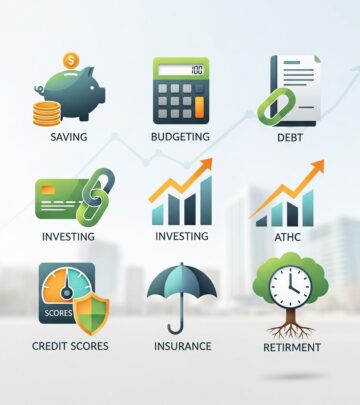
Financial Term Dictionary: Essential Terms Explained
Master key financial terminology with comprehensive definitions and explanations.

Understanding Financial Terms: A Comprehensive Dictionary
Financial literacy is fundamental to making informed investment decisions, managing personal finances, and understanding economic principles. Whether you’re a seasoned investor, a business professional, or someone beginning your financial journey, understanding common financial terminology is essential. This comprehensive financial term dictionary provides clear definitions and practical explanations of key concepts that shape the world of finance.
Core Investment Concepts
Investment terminology forms the foundation of financial understanding. These core concepts help investors evaluate opportunities and assess risk.
Bankability and Investment-Ready Projects
Bankability refers to whether a project or investment has the financial viability and risk profile necessary to attract financing from financial institutions. An investment-ready or finance-ready project demonstrates that regulatory, environmental, social, and economic factors will not prevent successful completion. The risk-return profile of a project is critical to bankability, as financiers need confidence that their capital investment will generate appropriate returns while managing identified risks.
Equity and Ownership Interests
Equity represents an ownership stake in a project or company. When investors hold equity, they receive revenue from the project and can sell their ownership position to other investors. Equity represents the value that would be returned to shareholders if all assets were liquidated and all debts paid. Importantly, equity is considered junior to debt instruments, meaning if funding falls short, debt holders are repaid before equity investors, making equity a higher-risk investment.
Capital Assets
Capital assets include tangible properties such as land, infrastructure (roads, bridges, water and sewer lines), easements, buildings, vehicles, machinery, and equipment. These assets typically have an initial useful life extending beyond a single financial reporting period and are not easily converted into cash.
Financing and Funding Mechanisms
Understanding the distinction between financing and funding is crucial for project development and investment.
Financing vs. Funding
Financing refers to the short, medium, or long-term provision of funds required to undertake a project, such as covering construction costs. Financing can come from the private sector, government cash surpluses or borrowings, multilateral agencies, bilateral agencies, International Financial Institutions (IFIs), and Development Finance Institutions. Funding, by contrast, refers to how a project will ultimately be paid for in the long term. Projects are typically funded through taxes providing subsidies or user charges creating revenue from the service provided.
Types of Financing Instruments
Multiple instruments are available for financing infrastructure and development projects:
- Grants: Non-repayable funds provided to support project implementation
- Loans: Debt instruments where a financier provides capital upfront in return for scheduled payments of principal plus interest at pre-negotiated rates
- Concessional Loans: Loans with lower interest rates than typical market rates, often provided by development finance institutions
- Guarantees: Risk mitigation instruments that protect lenders if borrowers default
- Lines of Credit: Open-ended credit arrangements up to a specified ceiling amount
Financial Feasibility Studies
Financial feasibility is the ability of a project to repay financing from sources such as user fees, subsidies, and grants. A comprehensive feasibility study identifies what financing costs and structures make a project viable and whether those structures align with available financial market options.
Climate Finance and Environmental Concepts
As climate change becomes increasingly central to investment decisions, understanding climate-related financial terminology is essential.
Climate Finance
Climate finance specifically aims to reduce emissions and enhance greenhouse gas sinks while reducing vulnerability to negative climate change impacts. This category of finance also seeks to maintain and increase resilience of human and ecological systems against climate-related threats.
Carbon Dioxide Equivalent (CO2-eq)
CO2-eq is a metric measure used to compare emissions from various greenhouse gases based on their global warming potential. This measure converts amounts of other gases to the equivalent amount of carbon dioxide with the same global warming potential, allowing standardized comparison across different greenhouse gases.
Project Development and Planning
Successful project implementation requires systematic planning, evaluation, and preparation.
Project Concept Notes
A concept note is a short document outlining a project’s fundamental concept, including problem identification, proposed solutions, timeframe, project developer information, targeted beneficiaries, expected outcomes, and capital and operating expenditure estimates. Concept notes serve as communication tools for project preparation funders and interested parties.
Budget and Expenditure Planning
Detailed budgets outline all expenditures needed to implement a project. Capital expenditures cover tangible capital assets and debt repayment, while operating expenditures represent ongoing costs necessary for project operation.
Cost-Benefit Analysis
Cost-benefit analysis is a decision-making tool that allows comparison of options based on benefits derived and costs to achieve those benefits from different alternatives. This framework helps stakeholders evaluate which approach delivers maximum value for resources invested.
Financial Institutions and Support Systems
Various institutional actors play critical roles in project financing and development.
International Financial Institutions (IFIs)
An International Financial Institution is an organization set up and capitalized by one or more countries. Prominent IFIs include multilateral development banks (MDBs) funded by multiple countries, and bilateral institutions established by single countries. IFIs typically provide investment through grants, loans, and concessional loans to cities and local authorities, though some work directly with cities.
Project Preparation Facilities (PPFs)
Project Preparation Facilities are organizations that support cities in developing bankable, investment-ready projects. PPFs typically support projects from the concept, design, and scoping stages through to financial close. These facilities may provide technical and financial support depending on a project’s stage and sector.
Equity and Social Considerations
Beyond financial metrics, equity plays an important social role in project development.
Social Equity
Distinct from financial meaning, social equity in project contexts refers to the inclusion of all community members so they can participate, prosper, and reach their full potential. Due to social, financial, and physical marginalization, achieving equity may require different levels of support for different groups, ensuring inclusive participation and benefit distribution.
Project Preparation and Development
The process of transforming a project concept into a financeable investment requires systematic preparation and refinement.
From Concept to Bankability
Project preparation is the comprehensive process of defining a project concept, studying and refining that concept to develop it to the point where it can raise financing from public or private sources. This preparation transforms projects into bankable investments ready for capital deployment. Successful preparation requires attention to financial viability, regulatory compliance, environmental considerations, and social benefits.
Frequently Asked Questions
Q: What determines whether a project is bankable?
A: A project’s risk-return profile determines bankability. Financiers assess whether a project is financially viable and whether regulatory, environmental, social, and economic factors are unlikely to prevent successful completion.
Q: What is the difference between financing and funding?
A: Financing refers to short, medium, or long-term provision of funds needed for project implementation, such as construction costs. Funding refers to how projects will ultimately be paid for in the long term through mechanisms like taxes, user charges, or international development aid.
Q: Why is equity considered riskier than debt?
A: Equity is junior to debt, meaning if funding falls short, debt holders are repaid before equity investors. This subordinated position makes equity investments higher risk.
Q: What role do Project Preparation Facilities play?
A: PPFs support cities in developing bankable, investment-ready projects through technical and financial assistance from conception through financial close.
Q: What is the purpose of CO2-eq measurements?
A: CO2-eq provides a standardized metric for comparing different greenhouse gas emissions based on their global warming potential, enabling consistent measurement across different gases.
Q: How do concessional loans differ from standard loans?
A: Concessional loans carry interest rates lower than typical market rates and are often provided by development finance institutions to support priority projects that might not otherwise attract commercial financing.
Q: What should a project concept note include?
A: A concept note should outline the project concept, problem identification, proposed solutions, timeframe, developer information, targeted beneficiaries, expected outcomes, and estimated capital and operating expenditures.
Key Financial Terms Reference Table
| Term | Definition | Key Application |
|---|---|---|
| Bankability | Financial viability and risk profile of an investment | Determining financing eligibility |
| Equity | Ownership stake in a project or company | Investment and ownership transfer |
| Capital Assets | Tangible long-term property and infrastructure | Balance sheet valuation |
| Financing | Provision of funds for project implementation | Construction and development funding |
| Funding | Long-term payment mechanisms for projects | Operating cost recovery |
| Concessional Loan | Below-market interest rate financing | Development project support |
| Climate Finance | Investment reducing emissions and building resilience | Environmental sustainability initiatives |
| CO2-eq | Standardized greenhouse gas measurement | Emissions comparison and tracking |
Practical Applications of Financial Terminology
Understanding financial terminology extends beyond academic knowledge. Investors use these concepts to evaluate opportunities, project developers employ them in fundraising, and financial institutions apply them in lending decisions. Mastering this vocabulary enables better communication with financial professionals, more informed decision-making, and deeper understanding of economic structures shaping modern commerce and investment.
References
- Glossary – Cities Climate Finance Leadership Alliance — Cities Climate Finance Leadership Alliance. 2024. https://citiesclimatefinance.org/resources/project-preparation-glossary
Similar Articles








Read full bio of medha deb