Financial Statement Analysis: Definition and Methods
Master financial statement analysis to evaluate company performance and investment potential effectively.

What is Financial Statement Analysis?
Financial statement analysis is a systematic process of evaluating a company’s financial performance and position by examining its financial statements. This analytical approach involves reviewing audited financial documents including the income statement, balance sheet, and cash flow statement to assess the company’s profitability, liquidity, solvency, and overall financial health. Investors, creditors, management, and other stakeholders utilize financial statement analysis to make informed decisions about lending money, investing capital, or managing business operations.
The primary objective of financial statement analysis is to transform raw financial data into meaningful information that reveals insights about a company’s operational efficiency, financial stability, and growth potential. By systematically analyzing these statements, stakeholders can identify trends, benchmark performance against competitors, and evaluate whether a company represents a sound investment opportunity or poses financial risks.
Key Components of Financial Statements
Understanding the three primary financial statements is essential for conducting thorough financial analysis:
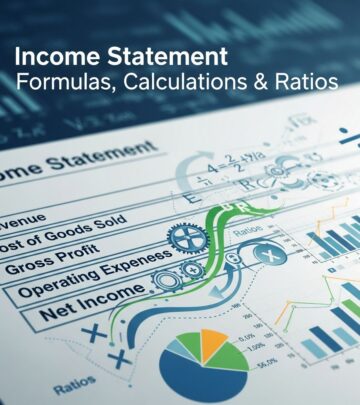
- Income Statement: Also known as the profit and loss statement, it reveals a company’s revenues, expenses, and net income over a specific period, showing profitability during the reporting timeframe.
- Balance Sheet: Presents a snapshot of the company’s assets, liabilities, and shareholders’ equity at a specific point in time, providing insight into the company’s financial position and capital structure.
- Cash Flow Statement: Tracks the movement of cash in and out of the business, categorized into operating, investing, and financing activities, demonstrating how the company generates and utilizes cash.
These three statements work together to provide a comprehensive view of a company’s financial condition, operational performance, and cash management efficiency.
Types of Financial Analysis Methods
Horizontal Analysis
Horizontal analysis, also called trend analysis, compares financial data across multiple periods to identify patterns and trends in company performance. This method examines changes in specific line items year-over-year or over several years, allowing analysts to determine whether revenues are growing, expenses are increasing, or profitability is improving or declining. By calculating percentage changes in key metrics, horizontal analysis reveals the trajectory of business performance and helps predict future trends.
Vertical Analysis
Vertical analysis evaluates the relative proportion of each line item in a financial statement, typically expressing components as a percentage of a base figure. For instance, in an income statement, all line items might be expressed as a percentage of total revenue, while in a balance sheet, all items are shown as percentages of total assets. This method facilitates comparison between companies of different sizes and helps identify structural changes in financial composition over time.
Ratio Analysis
Ratio analysis involves calculating mathematical relationships between financial data points to assess company performance in key areas. Financial ratios are grouped into several categories:
- Liquidity Ratios: Measure a company’s ability to meet short-term obligations, including the current ratio and quick ratio.
- Profitability Ratios: Assess how efficiently the company generates profits from revenues and assets, such as gross margin and return on equity.
- Solvency Ratios: Evaluate the company’s long-term financial stability and ability to service debt, including debt-to-equity ratio and interest coverage ratio.
- Efficiency Ratios: Measure how effectively the company utilizes assets to generate revenue, such as asset turnover and inventory turnover.
Important Financial Ratios and Metrics
Several key ratios are essential for comprehensive financial analysis:
| Ratio Type | Formula | What It Measures |
|---|---|---|
| Current Ratio | Current Assets ÷ Current Liabilities | Short-term liquidity and ability to pay current obligations |
| Return on Equity (ROE) | Net Income ÷ Shareholders’ Equity | Profitability relative to shareholder investment |
| Debt-to-Equity Ratio | Total Debt ÷ Total Equity | Financial leverage and long-term solvency |
| Earnings Per Share (EPS) | Net Income ÷ Shares Outstanding | Profit allocated to each share of common stock |
| Price-to-Earnings Ratio (P/E) | Stock Price ÷ Earnings Per Share | Valuation relative to profitability |
Methods for Analyzing Financial Statements
Common-Size Statement Analysis
Common-size analysis converts all financial statement items to percentages of a base value, making it easier to compare different companies or evaluate changes within a single company. This method normalizes financial data, allowing meaningful comparisons regardless of company size or currency differences. For example, expressing all balance sheet items as percentages of total assets enables comparison of capital structure across companies of varying sizes.
Trend Analysis
Trend analysis examines how key financial metrics change over multiple periods to identify patterns and forecast future performance. By tracking metrics such as revenue growth, operating expense ratios, and profit margins over several years, analysts can determine if the company is improving, declining, or remaining stable. This historical perspective provides valuable context for evaluating management effectiveness and business trajectory.
Benchmarking Analysis
Benchmarking compares a company’s financial metrics against industry peers, industry averages, or broader market indices to determine relative performance. This comparative approach reveals whether a company is outperforming or underperforming its competitors and industry norms. Understanding how a company’s efficiency, profitability, and growth rates compare to competitors provides insight into competitive positioning and market standing.
Key Considerations for Financial Statement Analysis
Effective financial statement analysis requires attention to several important factors:
- Accounting Methods: Different companies may use different accounting methods (such as LIFO versus FIFO inventory valuation), which can affect comparability. Understanding these differences is crucial for accurate analysis.
- One-Time Items: Unusual gains or losses that are not part of regular operations can distort financial results and should be identified and adjusted for when conducting analysis.
- Industry Context: Financial metrics must be interpreted within the context of the specific industry, as different sectors have different profitability margins, capital requirements, and operational characteristics.
- Economic Factors: Macroeconomic conditions, interest rates, inflation, and market cycles influence company performance and must be considered when analyzing financial statements.
- Management Quality: The competence and integrity of management directly impact financial results and future performance, making management assessment an important component of financial analysis.
Applications of Financial Statement Analysis
Investment Decision Making
Investors use financial statement analysis to evaluate investment opportunities and determine whether to buy, hold, or sell securities. By analyzing a company’s profitability, growth trajectory, and financial stability, investors can estimate intrinsic value and compare it to the current market price to identify undervalued or overvalued investment opportunities.
Credit Analysis
Lenders and creditors rely on financial statement analysis to assess a company’s creditworthiness and ability to repay borrowed funds. By evaluating liquidity ratios, solvency metrics, and cash flow patterns, creditors determine appropriate interest rates and lending terms or decide whether to approve credit requests.
Management Performance Evaluation
Financial statement analysis helps boards of directors and shareholders evaluate management effectiveness. By tracking key performance metrics and comparing results to strategic goals and competitor performance, stakeholders can assess whether management is creating shareholder value and operating the company efficiently.
Business Valuation
Financial analysts use statement analysis to support business valuations, whether for acquisition purposes, mergers, or financial planning. Analyzing historical financial performance, growth trends, and earnings quality provides the foundation for estimating future cash flows and determining fair business value.
Limitations of Financial Statement Analysis
While financial statement analysis is a powerful tool, it has certain limitations that analysts should recognize:
- Historical Focus: Financial statements are backward-looking documents that report past performance. While historical trends inform future expectations, they cannot guarantee future results.
- Accounting Flexibility: Companies have discretion in choosing accounting methods within generally accepted accounting principles (GAAP), which can affect reported results and comparability.
- Intangible Factors: Financial statements do not capture intangible assets such as brand strength, customer loyalty, management quality, or innovation capability, which significantly impact long-term performance.
- Market Conditions: Sudden changes in market conditions, technological disruption, or regulatory changes may not be reflected in financial statements until their impact becomes evident in subsequent periods.
- Estimation Uncertainty: Many financial statement items involve estimates and assumptions, such as depreciation methods or allowances for doubtful accounts, which introduce measurement uncertainty.
Frequently Asked Questions
Q: What is the primary purpose of financial statement analysis?
A: The primary purpose is to evaluate a company’s financial health, profitability, and operational efficiency by systematically examining its financial statements, enabling informed decision-making by investors, creditors, and management.
Q: What are the three main financial statements analyzed?
A: The three main financial statements are the income statement (showing profitability), the balance sheet (showing financial position), and the cash flow statement (showing cash movements).
Q: What is the difference between horizontal and vertical analysis?
A: Horizontal analysis compares financial data across multiple time periods to identify trends, while vertical analysis expresses financial statement items as percentages of a base figure to assess relative composition and structure.
Q: Why is ratio analysis important in financial statement analysis?
A: Ratio analysis converts financial data into meaningful relationships that reveal company performance in key areas such as liquidity, profitability, solvency, and efficiency, facilitating comparison and trend evaluation.
Q: How does financial statement analysis help investors make better decisions?
A: Financial statement analysis provides investors with quantitative data on profitability, growth, financial stability, and valuation metrics, enabling them to compare investment opportunities and identify undervalued or overvalued securities.
Q: What should analysts consider when comparing companies using financial ratios?
A: Analysts should consider industry context, company size, accounting method differences, economic factors, and one-time items that may affect comparability and interpretation of financial ratios.
Q: Can financial statement analysis predict future company performance?
A: While financial statement analysis reveals historical trends and patterns that inform expectations, it cannot guarantee future performance as external factors, market conditions, and unexpected events can significantly impact future results.
References
- Financial Accounting Standards Board (FASB) – Accounting Standards Codification — FASB. 2024. https://www.fasb.org/
- U.S. Securities and Exchange Commission (SEC) – Office of Investor Education and Advocacy — SEC. 2024. https://www.sec.gov/investor
- CFA Institute – Analysis of Financial Statements — CFA Institute. 2024. https://www.cfainstitute.org/
- International Financial Reporting Standards (IFRS) – Foundation Standards — IFRS Foundation. 2024. https://www.ifrs.org/
- American Institute of CPAs (AICPA) – Accounting Standards Resources — AICPA. 2024. https://www.aicpa.org/
Similar Articles








Read full bio of medha deb